

2026 Boiler Spare Parts Buying Guide: OEM vs Compatible Components
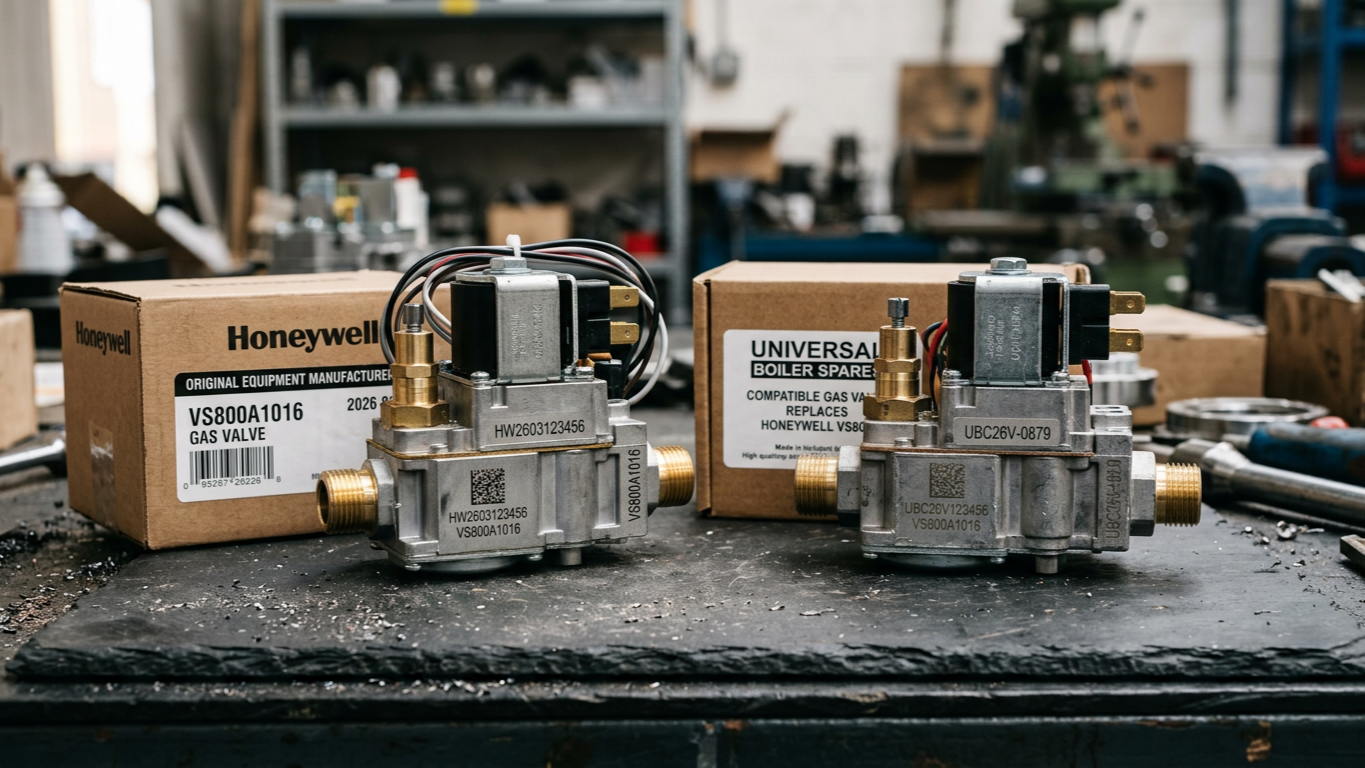
When a boiler component fails on a commercial installation, the clock starts ticking. Every hour of downtime costs money, and the pressure to source the right part quickly can push even experienced engineers toward hasty decisions. The choice between original equipment manufacturer (OEM) parts and compatible alternatives isn't just about price; it's about warranty protection, system longevity, and whether that replacement will still be performing reliably in five years.
We've seen this scenario play out countless times: an engineer calls needing a heat exchanger for a commercial boiler, faces a three-week lead time for the OEM part, and discovers a compatible alternative available the next day. The decision isn't always straightforward. We cut through the marketing claims and examine the real-world factors that should influence your choice between OEM and compatible boiler components.
Understanding the True Difference Between OEM and Compatible Parts
Original equipment manufacturer components come directly from the boiler manufacturer or their authorised suppliers. When you fit a specific pump into a system designed for that exact model, you're using an OEM part. These components are manufactured to the original design specifications, often in the same facilities that produce parts for new boilers.
Compatible parts, sometimes called pattern parts or aftermarket components, are manufactured by third-party suppliers to fit specific boiler models. A compatible gas valve for a domestic boiler might be produced by a specialist manufacturer who reverse-engineers the OEM design, ensuring it fits the same mounting points and performs the same function. The quality varies dramatically between manufacturers.
Here's where it gets interesting: not all aftermarket parts are created equal. Some are manufactured to identical specifications as OEM components, and occasionally in the same factories under different branding. Others cut corners on materials or quality control to hit lower price points. The challenge is identifying which category a specific part falls into.
Think of a diverter valve replacement like changing the brake pads on a fleet vehicle. You can buy unbranded aftermarket pads that technically fit, but when system safety and long-term reliability are on the line, the manufacturer's certified components provide guaranteed stopping power without the liability risk.
The Warranty Implications Nobody Mentions
Most boiler warranties contain specific clauses about replacement parts. Fit a non-OEM component during the warranty period, and you'll typically void coverage, not just for that part, but potentially for the entire boiler. This isn't just manufacturer protectionism; it's about strict liability.
Consider a scenario where a compatible heat exchanger fails and causes water damage to a commercial property. If the boiler was under warranty when you fitted the aftermarket part, the manufacturer will almost certainly refuse any claim. You're then looking at potential liability for the consequential damage, which can dwarf the cost of the original component.
Once an appliance is out of warranty, the calculation changes completely. On an older domestic hot water system that has already exceeded its expected service life, fitting a £40 compatible printed circuit board instead of a £180 OEM replacement makes perfect economic sense. The owner isn't concerned about warranty protection. They're extending the life of an appliance that may only need another two or three years of service.
The grey area appears with extended warranties or service contracts. Some maintenance agreements explicitly require OEM parts, whilst others are silent on the issue. Always check the contract terms before making substitutions, especially on commercial installations where service agreements can be worth thousands annually.
Where Compatible Parts Actually Make Sense
Certain boiler components are essentially commoditised: they're simple, standardised parts where the OEM version offers no meaningful advantage beyond the badge. Pump seals, O-rings, basic thermistors, and standard pressure relief valves often fall into this category.
Take an expansion vessel as an example. An aftermarket unit designed for heating systems performs the exact same function as the OEM vessel supplied with a specific boiler model. Both are manufactured to the same pressure vessel standards, both use similar diaphragm materials, and both will provide equivalent service life when correctly sized to meet expansion vessel installation regulations. The £30 price difference reflects branding, not performance.
Wear parts on older boilers represent another sensible application for compatible components. Electrode assemblies, ignition leads, and burner seals on boilers more than ten years old rarely justify OEM pricing. These parts have well-understood specifications, multiple manufacturers produce them, and the risk of premature failure is offset by the boiler's age.
However, critical safety components demand more caution. Gas valves, air pressure switches, and flame supervision devices directly affect safe boiler operation. While compatible versions exist, the consequences of failure are severe. On commercial installations or any situation where safety is paramount, OEM parts for these components aren't just preferable; they're essential.
The Hidden Costs of Cheap Parts
A compatible PCB that costs £60 instead of £200 looks attractive until you factor in the callback. We've tracked failure rates across different component categories, and the pattern is clear: electronic components show the widest quality variation in the aftermarket sector.
One heating engineer shared a costly lesson when sourcing boiler replacement parts for a small commercial building. He fitted compatible PCBs to three identical units, attracted by the 70% cost saving. Within six months, two had failed completely. The cost of the callbacks, including travel time, labour, and the eventual original equipment manufacturer replacements, exceeded what he would have spent fitting OEM parts initially. Worse, the building owner lost confidence and moved to a competitor for ongoing maintenance.
This isn't an argument against all compatible parts, but rather a warning about false economy. The true cost calculation must include the failure probability, your valuable travel time, immediate availability of spares, and the customer's perception if a second failure occurs. For high-value commercial contracts, the risk calculation often favours OEM parts simply because the cost of callbacks outweighs any parts savings.
Identifying Quality Compatible Suppliers
Not all aftermarket suppliers are equal. The best compatible parts manufacturers focus on specific component categories where they can genuinely match or exceed OEM quality. They typically offer warranties comparable to OEM parts, often two years, and maintain consistent supply chains.
Look for suppliers who provide detailed technical specifications, not just basic compatibility lists. A quality aftermarket provider of danfoss heating components or similar control systems will specify the exact components used, provide wiring diagrams, and offer technical support. They're competing on quality and service, not just price.
Conversely, suppliers who constantly change branding, offer no warranty, or can't provide technical documentation are red flags. These are often importers of generic components with minimal quality control. The £20 you save becomes irrelevant when the part fails during commissioning. Building relationships with reliable aftermarket suppliers takes time, but it's worth the investment. Start with non-critical components on lower-risk installations and gradually expand your use of compatible parts where they prove reliable.
The 2026 Regulatory Landscape
Boiler efficiency regulations continue to tighten across the UK, and this affects the parts market in ways most engineers haven't considered. When you replace a component, you're responsible for ensuring the boiler still meets its original efficiency rating and emissions standards.
OEM parts are certified as part of the complete boiler system. Fit an OEM replacement, and you maintain that certification. Compatible parts exist in a regulatory grey area; they may perform identically, but they haven't undergone the same certification process as part of the complete system. For domestic installations, this distinction rarely matters in practice. For commercial boilers subject to regular emissions testing or installations requiring Building Regulations compliance documentation, OEM parts provide clearer regulatory protection.
The modern range of components for a radiator heating system illustrates this point. These components are widely used across multiple boiler brands, often as OEM parts in the original installation. When you fit a certified valve as a replacement, you're using a component with clear certification and documentation, even if it wasn't the original brand fitted to that specific boiler.
Making the Decision: A Practical Framework
Stop thinking about OEM versus compatible as a binary choice. Instead, it's about using a decision framework based on the specific situation. You should strictly use OEM parts if the boiler is under manufacturer warranty or if the component is safety-critical. It's also the only logical choice for high-value commercial service contracts.
You can safely consider quality compatible parts when the boiler is out of warranty and approaching end-of-life, or when the component is a highly standardised, commoditised part. This framework shifts the conversation from "which is better?" to "which is appropriate for this specific situation?". A compatible pump seal on a 12-year-old domestic boiler makes perfect sense, whereas the same compatible seal on a two-year-old commercial installation would be professional negligence.
The Role of Supplier Relationships
Your relationship with parts suppliers matters more than most engineers acknowledge. A good supplier doesn't just sell parts; they provide technical support, honest advice about compatible alternatives, and rapid access to emergency stock.
Heating and Plumbing World maintains relationships with both OEM suppliers and vetted aftermarket manufacturers precisely because different situations demand different solutions. Having access to both options, with transparent information about the trade-offs, lets you make informed decisions rather than being forced into whatever's available on the shelf.
Real-World Cost Comparison
Let's examine actual costs for common boiler components across OEM and compatible options to understand where the real value lies:
- Safety-Critical Components: OEM prices range from £180-240, while compatibles sit around £90-140. Recommendation: Always use OEM for safety-critical functions.
- Electronic Boards: OEM prices range from £180-280, while compatibles sit around £60-120. Recommendation: OEM during warranty; quality compatible acceptable post-warranty with customer agreement.
- Pumps: OEM prices range from £200-350, while compatibles sit around £120-200. Recommendation: Consider heating system components from reliable brands as quality alternatives.
- Hydraulic Valves: OEM prices range from £80-150, while compatibles sit around £50-90. Recommendation: Quality compatible acceptable if correctly sized.
These figures demonstrate that the percentage saving varies dramatically by component type. The smaller the price difference, the stronger the case for OEM parts.
Future-proofing Your Parts Strategy
The heating industry is shifting toward modular, standardised components. Heat pumps, hybrid systems, and newer boiler designs increasingly use common parts across multiple models and manufacturers. This trend favours the aftermarket parts sector, as standardisation makes it easier to produce quality compatible components.
Smart controls and connectivity present new challenges. Modern boilers with integrated WiFi and proprietary boiler components often communicate with manufacturer-specific apps and cloud services. Compatible alternatives for these parts are rare, and even when available, they may not support the full functionality of the original system.
Conclusion
The OEM versus compatible parts debate isn't about finding a single right answer; it's about developing the judgment to make appropriate decisions for each specific situation. A compatible O-ring on a 15-year-old domestic boiler and an OEM gas valve on a commercial installation under warranty are both correct choices because they match the context.
Build relationships with suppliers who provide both options and honest advice about when each makes sense. Track your own experience with specific compatible parts and suppliers, creating an evidence base for future decisions. Communicate clearly with customers about the trade-offs, especially when recommending compatible parts, so they understand exactly what they're getting.
The right part isn't always the cheapest or the most expensive. It is the one that balances cost, reliability, and risk for the specific situation you're facing. When you need guidance on specific parts or want to discuss options for a particular installation, speak to our team for advice grounded in real-world experience, not just sales targets.