

Andrews FASTflo: Continuous Flow Gas Water Heater Sizing For Gym Facilities
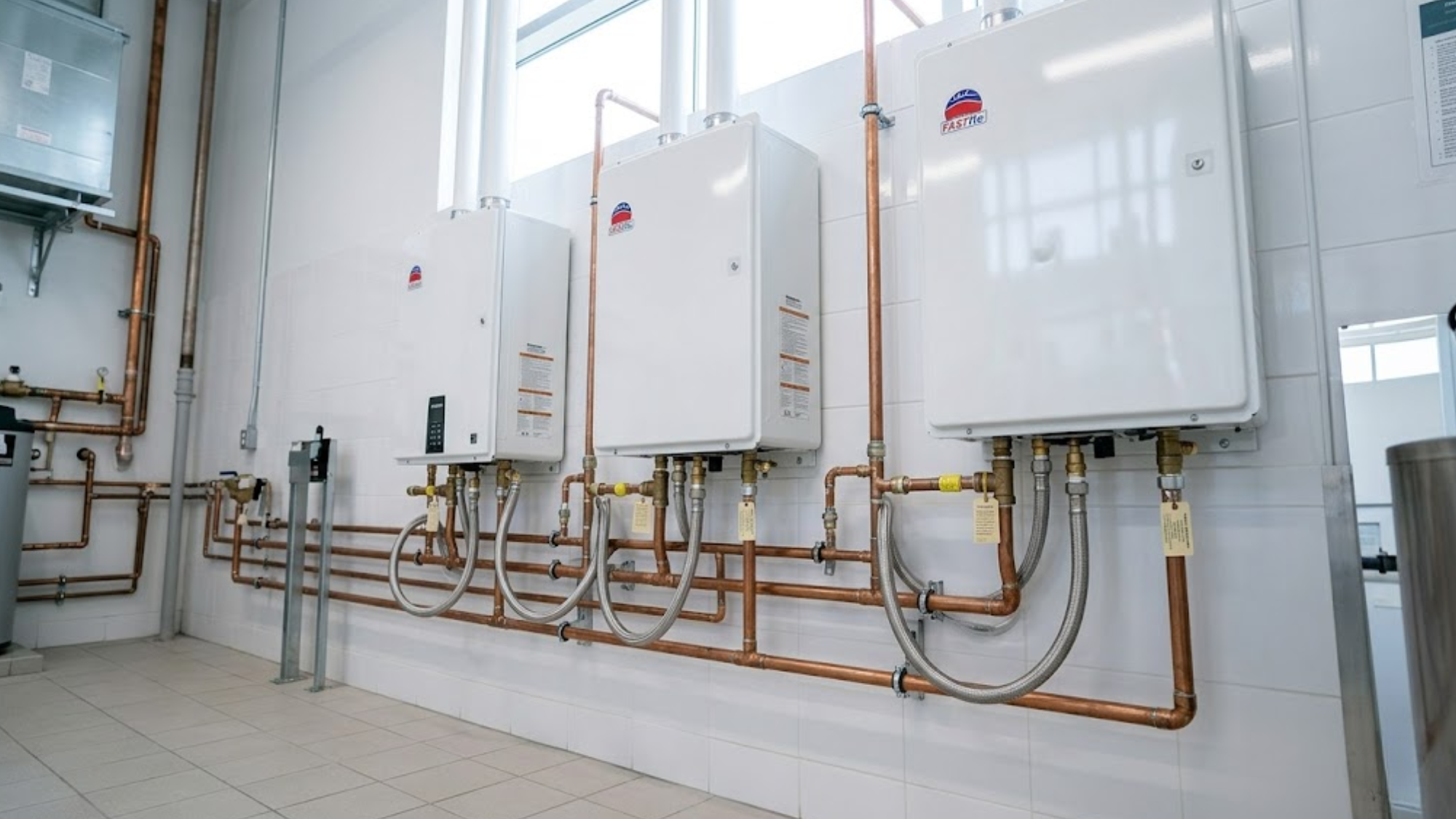
Gym facilities demand hot water systems that can handle extreme peak loads without missing a beat. When fifty members finish a spin class and hit the showers simultaneously, your water heating system either delivers or creates immediate member complaints. Proper andrews fastflo continuous flow gas water heater sizing ensures you meet these spikes efficiently without the wasted energy of massive storage tanks.
Why Standard Sizing Methods Fail for Gyms
Most commercial water heater sizing calculations use average daily usage figures. This approach works for hotels or office buildings where hot water demand spreads throughout the day. However, gyms operate differently. A typical 5,000 square foot facility might see 80% of its daily hot water consumption compressed into three 90-minute windows. Standard formulas that calculate based on "members per day" often undersize the system by 40 to 60%.
Professional suppliers like Heating and Plumbing World support engineers who measure actual flow rates rather than relying on averages. Peak shower usage frequently hits 8 to 12 litres per minute per active head. With ten showers running during a class changeover, you need 80 to 120 litres per minute of hot water output just for the shower block.
How the FASTflo System Handles Peak Loads
The range uses a sophisticated modulating burner design that adjusts output from 20% to 100% capacity based on real-time demand. When two showers are running, the system operates at partial capacity. When ten showers activate, the burner ramps to full output within 3 to 4 seconds.
Think of this modulating burner design like the engine in a modern car with cruise control. When you hit a steep hill, the engine does not just run at one speed; it senses the increased load and provides exactly enough power to maintain your speed without over-revving. The FASTflo senses the "hill" of hot water demand and adjusts its flame intensity to maintain a steady temperature.
This stability is essential for member comfort. The system maintains setpoint temperature within ±2°C regardless of how many taps open or close. This precision reduces the constant heating valve control adjustments required in older systems.
Calculating Your Actual Peak Demand
To get your andrews fastflo continuous flow gas water heater sizing right, start with your shower facilities. Count every shower head, then multiply by a realistic simultaneous usage factor. For most gyms, this factor ranges from 60 to 80% during peak periods.
For example, if you have 12 shower heads and apply a 75% simultaneous usage factor, you are planning for 9 concurrent users. At 10 litres per minute, your peak shower demand is 90 litres per minute. You should then add 15 to 20% for basin usage and cleaning. If you are using standard radiator valves for any local temperature adjustments, ensure they are factored into the flow resistance.
Temperature rise matters significantly. Heating cold mains water from 18°C to a target of 60°C requires a 42°C rise. The heater's capacity rating must be verified against this specific temperature rise to ensure it can deliver the required volume during winter months.
Cascaded Systems for Maximum Reliability
Facilities with peak demand exceeding 200 litres per minute benefit from cascaded configurations. This approach uses multiple units controlled by a master sequencing system. As demand increases, the controller activates additional units to maintain temperature and flow.
These cascaded configurations offer significant load balancing benefits. The controller rotates which unit serves as the lead, distributing operating hours evenly across all heaters. Redundancy is another advantage: if one unit requires service, the facility retains partial capacity, ensuring members still have hot water. Integrating high-quality pipework fittings in these manifolds prevents leaks during the high-velocity surges typical of gym usage.
Installation Requirements That Impact Performance
The system delivers rated performance only when supported by adequate gas supply and water pressure. A FASTflo 180 consumes 180 MJ/hour at peak demand. Your gas meter and supply lines must deliver this input plus a 20% safety margin. Undersized gas lines are the leading cause of "cold-water sandwich" effects where the heater cannot maintain temperature.
Water pressure is equally vital. The system requires a minimum 200 kPa inlet pressure to achieve rated flow. If your building uses a roof-mounted tank, verify the pressure at the heater location under peak demand. An inadequate temperature control system cannot compensate for a physical lack of water pressure at the heat exchanger.
Cost Analysis: Operating Economics for Gym Facilities
The FASTflo's higher purchase price compared to storage tank systems often creates initial hesitation. However, the operating economics are superior. A storage tank system maintains hundreds of litres at 60°C continuously, resulting in significant standing losses. Even with high-grade insulation, standing losses can cost between £800 and £1,200 in gas consumption annually that delivers zero benefit to members.
On a recent commercial project, a gym owner installed a 400-litre storage tank because it was cheaper upfront. After six months of complaints about cold water at 7:00 AM and gas bills that were 40% higher than expected, they swapped to a FASTflo 180. The new system eliminated the standing losses and provided endless hot water during the morning rush. It was a clear lesson that "cheaper" hardware often leads to "expensive" operations.
Modern gyms often pair these heaters with a high-efficiency combi boiler for space heating to create a unified thermal solution. A well-designed domestic hot water system that uses continuous flow usually sees a break-even point within three to four years.
Maintenance Schedules That Prevent Failures
Scale buildup on heat exchanger surfaces reduces efficiency by 15 to 20% annually without intervention. Annual descaling is non-negotiable in areas with moderate to high water hardness. Consistent maintenance prevents the efficiency degradation that turns an economical system into an expensive one.
Verify consistent hot water temperature at peak demand during your annual service. Check for error codes and confirm the exhaust flue remains clear. These checks take 15 minutes but identify developing problems before they cause system failures during the evening rush.
Conclusion
Correct andrews fastflo continuous flow gas water heater sizing requires understanding your facility's actual usage patterns rather than relying on generic formulas. Calculate peak concurrent usage, apply a realistic simultaneous usage factor, and select a model with 20 to 30% reserve capacity for future growth.
While purchase costs exceed storage tank alternatives, the savings from eliminated standing losses and superior member experience justify the investment. If you require assistance with cascaded designs or flow rate calculations, get expert advice from our technical team today.