

Anti-Vibration Mounts for Quieter Shower Pump Operation
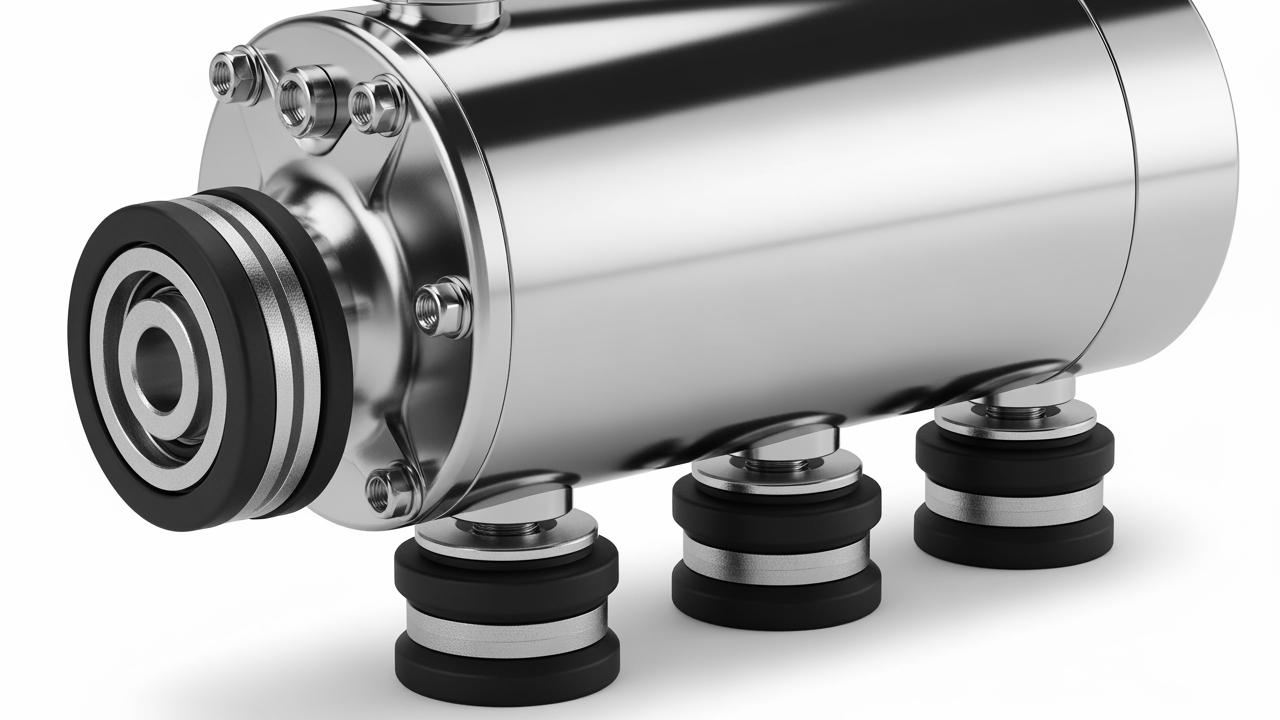
Shower pump noise disrupts households more than most plumbing issues. The vibration travels through pipes, walls, and floors, turning every shower into an announcement heard throughout the house. Noise levels exceeding 65 decibels in poorly mounted installations, comparable to a busy restaurant, have been measured, when the same pump with proper shower pump anti-vibration mounts produces just 40 decibels.
The problem isn't the pump itself. Most modern shower pumps operate efficiently and quietly when isolated from the building structure. The issue is mechanical vibration transfer. When pump vibrations reach solid surfaces, those surfaces amplify the sound, broadcasting it through your home's framework.
How Vibration Creates Noise in Shower Pump Installations
Shower pumps generate two types of vibration: rotational imbalance from the motor and pressure pulses from water flow. Both create oscillating forces that seek the path of least resistance through your plumbing system.
Without proper isolation, these vibrations travel directly into mounting surfaces. A pump bolted to wooden joists turns those joists into sounding boards. The wood grain structure amplifies certain frequencies, creating the characteristic hum or whine that penetrates multiple rooms. Concrete floors fare slightly better but still conduct low-frequency vibrations that residents feel as much as hear.
Cases have been documented where pump vibration travelled 12 metres through pipework before reaching a radiator that acted as a secondary resonator. The homeowner initially suspected the heating system rather than the shower pump, which was located on a different floor.
The solution requires breaking this vibration pathway. Anti-vibration mounts create a mechanical barrier between the pump and building structure, absorbing oscillating forces before they propagate.
Types of Anti-Vibration Mounts for Shower Pumps
Rubber isolation mounts remain the most common solution. These mounts use natural or synthetic rubber compounds to absorb vibration through material deformation. When vibration enters the rubber, molecular friction converts kinetic energy into heat, dissipating it before reaching the mounting surface.
Standard rubber mounts reduce vibration transmission by 70-85% across frequencies between 20-200 Hz, the range where shower pumps generate most noise. They cost £8-15 per mount and last 5-8 years before the rubber hardens and loses effectiveness.
Spring isolators provide superior performance for heavier pumps or installations requiring maximum shower pump noise reduction. Steel springs compress and extend to absorb vibration, with rubber or neoprene pads at contact points to dampen high-frequency oscillations.
Spring isolators are specified for pumps exceeding 15 kg or installations where noise reduction below 35 decibels is required. They reduce vibration transmission by 90-95% but cost £25-40 per mount. The investment proves worthwhile in noise-sensitive environments like bedroom ceilings or shared walls with neighbours.
Neoprene pads offer a budget option for lighter pumps in less critical applications. These flat pads sit between the pump feet and mounting surface, providing basic vibration damping. They reduce transmission by 50-60%, adequate for pumps in utility rooms or garages, but insufficient for living spaces.
Cork composite mounts combine cork granules with rubber binders, creating mounts that handle both vibration and minor installation irregularities. The cork structure absorbs high-frequency vibration whilst the rubber binder manages low-frequency oscillations. These work particularly well on uneven surfaces where rigid mounts might rock, creating additional noise.
Selecting the Right Mount for Your Installation
Pump weight determines mount capacity. A 10 kg pump requires mounts rated for at least 15 kg total capacity. Distributing the load across four mounts means 3.75 kg per mount, but the 50% safety margin accounts for uneven weight distribution and dynamic loading during operation.
Operating frequency matters more than most installers recognise. Pumps running at 2,800 RPM generate vibration at approximately 47 Hz. The isolation mounts must have a natural frequency below this operating frequency to effectively dampen vibration rather than amplify it through resonance.
This is calculated using the formula: Natural Frequency = √(k/m) / 2π, where k represents mount stiffness and m represents pump mass. For effective isolation, the mount's natural frequency should be less than 40% of the pump's operating frequency. This typically means selecting mounts that feel softer than initially seems appropriate.
Installation location influences mount selection significantly. Pumps mounted on suspended wooden floors require softer mounts than those on concrete slabs because the floor itself already flexes. Rubber mounts rated for 50-60 Shore A hardness work best on timber, whilst 60-70 Shore A suits concrete installations.
Environmental factors affect mount longevity. Pumps in damp locations need mounts resistant to water absorption and mould growth. Neoprene outperforms natural rubber in these conditions, maintaining elasticity despite moisture exposure. Temperature fluctuations in unheated spaces require mounts that remain flexible across a wide temperature range, typically -20°C to +80°C for quality synthetic rubber compounds.
Installation Techniques That Maximise Noise Reduction
Mount placement affects isolation effectiveness as much as mount quality. Position mounts directly under the pump feet or mounting points to create the shortest vibration path. Offset mounts create leverage that can actually amplify certain vibration frequencies.
Mounts should be spaced to align with the pump's centre of gravity. For rectangular pumps, this typically means positioning mounts slightly inward from the corners rather than at the extreme edges. This prevents the rocking motion that generates additional noise and accelerates mount wear.
Flexible pipe connections prove essential for complete vibration isolation. Rigid copper pipes directly connected to an isolated pump create a vibration bridge that bypasses the mounts entirely. Flexible hoses at least 300mm long on both inlet and outlet connections allow the pump to oscillate minutely on its mounts without transferring vibration to the pipework.
The hoses must be long enough that they bend rather than stretch during pump operation. A 150mm flexible connection pulled taut acts like a solid pipe, defeating the isolation system. Vibration transmission through taut flexible hoses has been measured at 70% of rigid pipe levels, compared to just 15% for properly installed, relaxed hoses.
Pipe clips require attention throughout the system. Standard metal clips bolted directly to joists create multiple vibration transfer points that undermine pump isolation. All clips within 3 metres of the pump should use rubber-lined versions or add rubber inserts to standard clips. This costs an additional £12-18 per installation but prevents the entire pipe run from becoming a vibration conductor.
Mounting surface preparation affects results. Uneven surfaces create point loads that compress mounts unevenly, reducing their vibration absorption capacity. Mounting surfaces should be flat within 2mm across the pump footprint, adding shims or levelling compound where necessary before installing mounts.
Common Installation Mistakes That Reduce Mount Effectiveness
Over-tightening mounting bolts compresses rubber mounts beyond their optimal working range. When compressed more than 25%, rubber loses its ability to deform in response to vibration, effectively creating a rigid connection. Mounting bolts should be torqued to compress mounts by 15-20%, firm enough to prevent pump movement but loose enough to preserve isolation properties.
Many installers position pumps too close to walls or other surfaces. A pump isolated by mounts but sitting 30mm from a wall still transfers vibration through air pressure waves at low frequencies. Maintaining 150mm clearance on all sides where possible allows air to circulate and prevents acoustic coupling to nearby surfaces.
Mixing mount types under a single pump creates uneven isolation that can increase certain vibration frequencies. Four rubber mounts provide predictable isolation characteristics, but combining two rubber mounts with two spring isolators creates differential movement that generates new vibration patterns. Identical mounts should be specified for all positions under each pump.
Neglecting to secure the pump's electrical cable allows it to become a vibration transmitter. A cable zip-tied directly to a joist creates a mechanical connection between the pump and the structure. Cables should be looped loosely and secured to nearby surfaces using cable clips with rubber grommets, positioned at least 400mm from the pump body.
Measuring Installation Success
Sound level measurements quantify isolation effectiveness. Noise is measured at 1 metre from the pump before and after installing the shower pump anti-vibration mounts, using a calibrated sound level meter set to A-weighting to match human hearing sensitivity.
Successful installations achieve 15-25 dB reduction. A pump measuring 62 dB before isolation should read 37-47 dB afterwards, the difference between a normal conversation and a quiet library. Reductions below 10 dB indicate installation problems: compressed mounts, vibration bridges through pipes, or resonance with the mounting surface.
Frequency analysis reveals specific issues. Spectrum analysers identify which frequencies remain problematic after mounting installation. A spike at the pump's operating frequency suggests insufficient mount softness. Peaks at lower frequencies indicate structural resonance with the building, requiring additional isolation of the mounting surface itself.
Tactile assessment provides immediate feedback. Place your hand on the mounting surface with the pump running. Properly isolated installations produce barely perceptible vibration; you should feel less movement than when placing your hand on a running refrigerator. Strong vibration indicates a mount failure or bypassing through pipes or cables.
Maintenance Requirements for Anti-Vibration Systems
Rubber mounts degrade over time through oxidation and mechanical fatigue. Annual inspection should check for:
- Surface cracking indicating UV or ozone damage
- Permanent compression exceeding 30% of the original thickness
- Hardening that prevents finger indentation
- Separation between the rubber and the mounting plates
Mounts showing these signs require replacement. Continuing operation with degraded mounts not only increases noise but can damage the pump through excessive movement and misalignment.
Cleaning mounting surfaces prevents accelerated wear. Oil, chemicals, or debris trapped between mounts and surfaces creates point loads that compress rubber unevenly. Mounting surfaces and mount contact areas should be wiped during annual inspections, removing any contamination.
Checking flexible pipe connections reveals early failure signs. These hoses experience constant flexing and eventually develop fatigue cracks. Inspection should look for:
- Visible cracks in the outer rubber layer
- Bulging indicates internal reinforcement failure
- Hardening at bend points
- Weeping around connection fittings
Replace flexible connections showing any deterioration. A failed flexible hose creates both a leak risk and a rigid vibration path that compromises the entire isolation system.
Cost-Benefit Analysis of Anti-Vibration Installation
A complete anti-vibration installation for a standard shower pump costs £60-120, including mounts, flexible connections, and rubber-lined pipe clips. This represents 8-12% the typical pump installation cost but delivers disproportionate value.
Noise complaints from family members or neighbours create stress that affects the household's quality of life. Clients have restricted shower use to specific times or avoided evening showers entirely due to noise concerns. The £80 investment in proper isolation eliminated these restrictions.
Property value considerations matter for landlords and homeowners planning to sell. Prospective buyers or tenants notice noisy plumbing immediately during viewings. Rental properties have struggled to attract tenants due to shower pump noise, resulting in void periods costing far more than proper isolation.
Pump longevity improves with vibration reduction. Excessive vibration accelerates bearing wear and can cause motor mounting failures. Pump lifespan increases of 30-40% in properly isolated installations compared to rigid mounting have been documented, offsetting isolation system costs through delayed replacement.
Shower pump anti-vibration mounts transform shower pump installations from household disturbances into unobtrusive systems that operate virtually unnoticed. The 70-95% vibration reduction these mounts provide eliminates the structural noise transmission that plagues poorly installed pumps.
Success requires matching the mount type to pump weight, operating frequency, and installation location. Rubber isolation mounts suit most residential applications, whilst spring isolators deliver maximum shower pump noise reduction for demanding installations. Proper installation, including flexible pipe connections, rubber-lined clips, and adequate clearances, proves as important as mount selection itself.
The £60-120 investment in complete vibration isolation delivers immediate noise reduction, improves household comfort, and extends pump lifespan. Annual inspection and timely replacement of degraded components maintain performance throughout the system's service life.
Shower pump noise isn't an inevitable consequence of boosted water pressure. It's a solvable problem that responds predictably to proper vibration isolation. The technology exists, the costs remain modest, and the results prove consistently effective across thousands of installations.
Heating and Plumbing World supplies shower pump solutions and plumbing components from leading manufacturers, including Stuart Turner water pumps, Grundfos circulation systems, Gledhill cylinders, and quality fittings for professional installations. For technical advice on reducing pump noise and selecting the correct mounting systems, get in touch with the team.