

Are Hydrogen Boilers the Future of Green Heating?
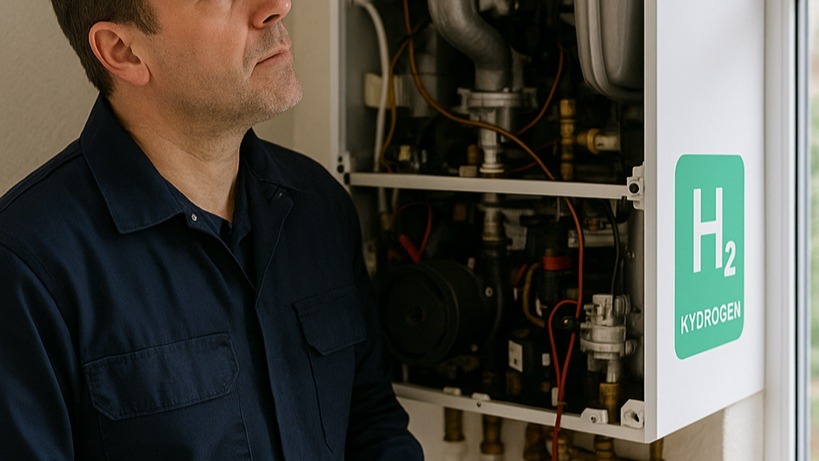
Talk of Net Zero dominates nearly every conversation in the heating trade. As the UK looks for practical ways to decarbonise homes and businesses, engineers are being asked the same question time and again: is hydrogen really the answer?
Hydrogen heating is no longer just a laboratory experiment. Field trials, prototype appliances, and network conversions are now showing what green hydrogen heating systems could mean in the real world. But are hydrogen-ready boilers a genuine solution or a distraction from electrification?
This piece cuts through the speculation to look at what’s happening on the ground, how hydrogen boilers work, their potential benefits, and what installers need to know as the UK tests a new era of low-carbon heating.
Why Hydrogen Is Back on the Agenda
For years, natural gas has been the backbone of British heating. Around 85% of homes are connected to the gas grid. That network represents billions of pounds in existing infrastructure, pipelines, meters, valves, and boilers.
Switching completely to electric heat pumps would require enormous grid reinforcement. Hydrogen, by contrast, promises a drop-in solution that uses much of what’s already in place.
Government and industry have poured investment into hydrogen demonstration projects such as HyDeploy, H100 Fife, and the Keele University campus trial. These projects are testing whether existing appliances can safely run on blends of natural gas and hydrogen.
The ambition is simple: if boilers and pipework can handle increasing hydrogen content, the UK could convert to a low-carbon fuel with minimal disruption.
Understanding the Basics: What Is Hydrogen Heating?
Hydrogen is the lightest and most abundant element in the universe. When burned, it produces water vapour instead of carbon dioxide. That alone makes it attractive as a clean fuel.
A hydrogen boiler works much like a modern gas condensing boiler, but uses hydrogen gas instead of natural gas. Combustion releases heat energy, which warms the primary heat exchanger and transfers heat to the water circuit.
The crucial point lies in how the hydrogen is produced. There are two main routes:
- Grey hydrogen – made from natural gas using steam methane reforming, releasing CO₂ in the process.
- Green hydrogen – created by splitting water into hydrogen and oxygen through electrolysis powered by renewable electricity.
Only the latter can truly be called part of a green hydrogen heating system. Grey hydrogen might burn cleanly, but it’s far from zero-carbon overall.
Hydrogen Boiler Advantages
There’s no shortage of debate over hydrogen boiler advantages, but the following points often come up in both trials and policy discussions.
1. Familiar Installation and Servicing
Hydrogen-ready boilers are intentionally designed to look and feel like conventional gas boilers. Pipe layouts, flue systems, and control wiring remain similar. For heating engineers, this means a relatively gentle learning curve.
Manufacturers such as Worcester Bosch and Vaillant have produced prototypes that could be installed today and later converted to run fully on hydrogen. That gives installers flexibility as the network evolves.
2. Use of Existing Gas Infrastructure
Reusing the gas grid avoids the cost and disruption of nationwide electrification. With safety upgrades, existing polyethene gas mains are already hydrogen-compatible.
If proven safe, a gradual switch, starting with 20% hydrogen blends, could reduce emissions without digging up half the country.
3. Low-Carbon Operation (When Fuelled by Green Hydrogen)
Combusting hydrogen emits only water vapour. When paired with renewable production, green hydrogen heating systems can operate with net-zero carbon emissions.
In areas where full electrification is challenging, such as older housing stock or dense urban zones, hydrogen offers a realistic route to low-carbon heating without major building alterations.
4. Security of Energy Supply
Hydrogen can be stored and transported, offering flexibility that electricity sometimes lacks. Large-scale hydrogen storage in salt caverns or decommissioned gas fields could help the UK balance seasonal energy demand, particularly during winter peaks.
The Engineering Challenges
For all the optimism, hydrogen brings new engineering realities.
Safety and materials compatibility are top of the list. Hydrogen molecules are tiny and can diffuse through materials that easily contain methane. Sealing integrity, valve design, and component testing are therefore critical.
Combustion characteristics also differ. Hydrogen burns faster and hotter, demanding redesigned burners and sensors. That affects flame detection, ignition timing, and even flue materials.
Service engineers will need updated gas-safety training to manage those differences confidently. Manufacturers and associations are already preparing new accreditation modules similar to today’s Gas Safe categories.
Lastly, the energy density of hydrogen is lower than that of natural gas, meaning higher flow rates are needed for equivalent heat output. Piping and metering equipment must be validated to handle these changes without causing pressure drops or instability.
Learning from the Field Trials
Several live trials are already shaping what comes next.
At Keele University, a 20% hydrogen blend was safely supplied to more than 100 homes and campus buildings. The appliances required no modification, and the occupants noticed no performance difference.
In Fife, the H100 project is creating a new hydrogen network serving 300 homes, each fitted with dedicated hydrogen-ready boilers. This test is helping engineers understand how end-to-end hydrogen systems behave, from production and storage to delivery and combustion.
Feedback from these sites is vital. It’s one thing to model a system on paper; it’s another to see how it performs under real operating pressures, changing temperatures, and daily user habits.
How Hydrogen Boilers Compare with Heat Pumps
It’s impossible to discuss hydrogen without mentioning its main rival: the heat pump. Both aim to cut carbon, but they do it differently.
Heat pumps move existing heat from one place to another, while hydrogen boilers create heat by combustion. Heat pumps are generally more efficient at the point of use but require a substantial electricity supply.
Hydrogen boilers, on the other hand, offer instant high-temperature output, making them ideal for existing radiator systems or industrial applications where retrofit constraints make electrification complex.
In practice, the UK may need both. Urban areas with robust power networks could rely on electric heat pumps, while regions with existing gas grids could transition to hydrogen or hybrid systems combining both technologies.
The Role of Green Hydrogen in the Future Mix
Hydrogen’s environmental credentials depend entirely on its origin. Grey hydrogen offers little benefit, but green hydrogen heating systems powered by renewables can achieve genuine carbon neutrality.
Electrolysers linked to wind or solar farms split water into hydrogen and oxygen. The hydrogen can be compressed, stored, and later fed into local networks or used in combined-heat-and-power plants.
This model turns surplus renewable electricity into a storable energy carrier, smoothing out peaks and troughs in supply. The challenge is cost: producing green hydrogen currently remains more expensive than generating power directly.
However, as electrolyser prices fall and renewable capacity expands, those economics are shifting. The UK’s hydrogen strategy aims for five gigawatts of low-carbon hydrogen production by 2030, creating opportunities for both heating and industry.
A Story from the Workshop Floor
In a training centre in Manchester, an experienced engineer stood in front of a class of new apprentices with a prototype hydrogen-ready boiler. He tapped the casing lightly and said, “This looks familiar, doesn’t it? The difference is in the flame.”
He then explained how hydrogen burns almost invisibly to the eye, demanding sensors and ignition sequences designed for safety. The apprentices nodded, surprised at how subtle the physical changes were.
That moment captured the reality of this transition. Hydrogen doesn’t require a complete reinvention of the trade, just evolution, understanding new materials, combustion profiles, and commissioning steps.
Component Reliability and Material Choices
For systems running on hydrogen blends, certain materials behave differently. Rubber seals that are fine for natural gas may degrade faster. Components must resist hydrogen embrittlement and maintain sealing under pressure.
Manufacturers are already redesigning valves, hoses, and sensors to meet these demands. Installers will need to source parts from reliable suppliers who can guarantee compliance.
For instance, pumps from Grundfos or Lowara used in primary circuits of hydrogen-ready hybrid systems must maintain tight tolerances to prevent leakage and ensure efficiency.
Pressure management components, such as those from Altecnic Ltd, will still be essential. Hydrogen may be light, but thermal expansion remains a constant engineering consideration.
Smart controls from EPH Controls can optimise system performance when linked with hybrid configurations, blending heat pump and hydrogen boiler operation depending on outdoor conditions and tariff signals.
Safety Measures and Training
Safety remains at the heart of hydrogen adoption. While hydrogen itself isn’t toxic, its small molecular size means even minor leaks can disperse rapidly. Proper ventilation, leak detection, and ignition control are essential.
Future Gas Safe training modules will likely include hydrogen-specific competencies covering:
- Burner calibration for hydrogen flames.
- Leak detection using ultrasonic or infrared sensors.
- Verification of flue material integrity.
- Emergency isolation procedures.
For installers, keeping up with this training will be vital. Just as engineers once learned to move from open-flue to condensing boilers, adapting to hydrogen will become part of the natural professional progression.
The Business Opportunity for Installers
It’s easy to think of hydrogen purely as policy, but it also presents an opportunity. Boiler replacement remains one of the UK’s most consistent trades, and the introduction of hydrogen-ready models could trigger another upgrade cycle.
Clients will want reassurance that their next boiler investment won’t be obsolete in five years. Offering hydrogen-ready systems provides that peace of mind.
Suppliers such as Heating and Plumbing World can support installers with access to upcoming hydrogen-compatible components and training materials. Staying ahead of that curve positions businesses to capture new work as local authorities begin specifying hydrogen projects.
The Environmental Balance Sheet
When assessing hydrogen as part of the energy transition, engineers should weigh both the technical and environmental balance.
Producing hydrogen, even from renewable sources, consumes electricity. The efficiency chain, from electrolysis to combustion, is lower than running a heat pump directly. Yet hydrogen provides something electricity alone cannot: large-scale, long-term storage.
During winter, when heating demand peaks and renewable generation dips, stored hydrogen could keep the grid stable. Boilers, CHP units, and fuel cells could draw from that reserve, delivering resilience to the energy system.
In short, hydrogen may not be the most efficient option per kilowatt, but it could be the most practical at the national scale.
Government Policy and Timelines
The UK government’s hydrogen strategy sets out a roadmap of pilot projects through the 2020s. Key milestones include:
- Expanding blending trials up to 20% hydrogen by volume in existing gas networks.
- Decision on a full-scale neighbourhood conversion expected later in the decade.
- Potential commercial deployment after 2030, subject to safety and cost assessments.
For the trade, that means a decade of preparation, training, equipment upgrades, and gradual introduction of hydrogen-compatible products. It’s not an overnight change, but a steady evolution.
Many manufacturers already list hydrogen-ready models on the market, meaning they can run on natural gas now and be converted to hydrogen with minor adjustments when the time comes.
Lessons from the RHI Era
Installers who worked through the Renewable Heat Incentive years will recognise the pattern: early uncertainty, gradual uptake, and eventual normalisation. The RHI pushed the trade to improve standards; hydrogen will likely do the same.
The focus will again be on design accuracy, safe commissioning, and honest performance data. Those who adapt early will build credibility with clients seeking future-proof heating.
And as before, success will depend on collaboration, manufacturers developing robust components, merchants like Heating and Plumbing World providing technical support, and engineers applying their practical know-how to new fuels.
What Engineers Should Do Now
- Stay informed. Follow industry trials and manufacturer updates.
- Invest in training. Attend courses covering hydrogen combustion and safety.
- Specify smart. Choose boilers and controls that are hydrogen-ready or compatible with future blends.
- Work with trusted suppliers. Source materials and fittings from proven brands, Grundfos, Altecnic Ltd, EPH Controls, to maintain quality and compliance.
- Educate customers. Explain the differences between natural gas, blends, and hydrogen-ready systems in straightforward terms.
Looking Beyond 2030
By the early 2030s, we’ll likely see a mixed energy landscape: electric heat pumps in well-insulated homes, district systems in dense cities, and hydrogen boilers in harder-to-retrofit buildings.
No single technology will solve decarbonisation alone. Instead, hydrogen will sit alongside electrification, biomethane, and efficiency improvements as one piece of the puzzle.
For engineers, that diversity means opportunity, diverse projects, varied technologies, and a continuing need for skilled professionals who can design and maintain reliable, safe, and efficient heating systems.
The Bottom Line
Hydrogen heating isn’t a silver bullet, but it offers a credible path to deep carbon cuts without discarding the infrastructure and skills the UK already has. The hydrogen boiler advantages are clear: minimal disruption, compatibility with existing systems, and genuine potential for zero-carbon operation when fuelled by renewables.
Yet challenges remain. Production costs, storage logistics, and long-term safety certification all need solving. What matters now is preparation, training, design awareness, and partnership across the supply chain.
When the conversion finally happens, those already familiar with hydrogen principles will lead the transition confidently rather than play catch-up.
For sourcing reliable components, training support, and future-ready equipment, professionals can always rely on Heating and Plumbing World, the trusted hub for heating and plumbing expertise across the UK.