

Atag Boiler Parts: XL and Q Series Maintenance
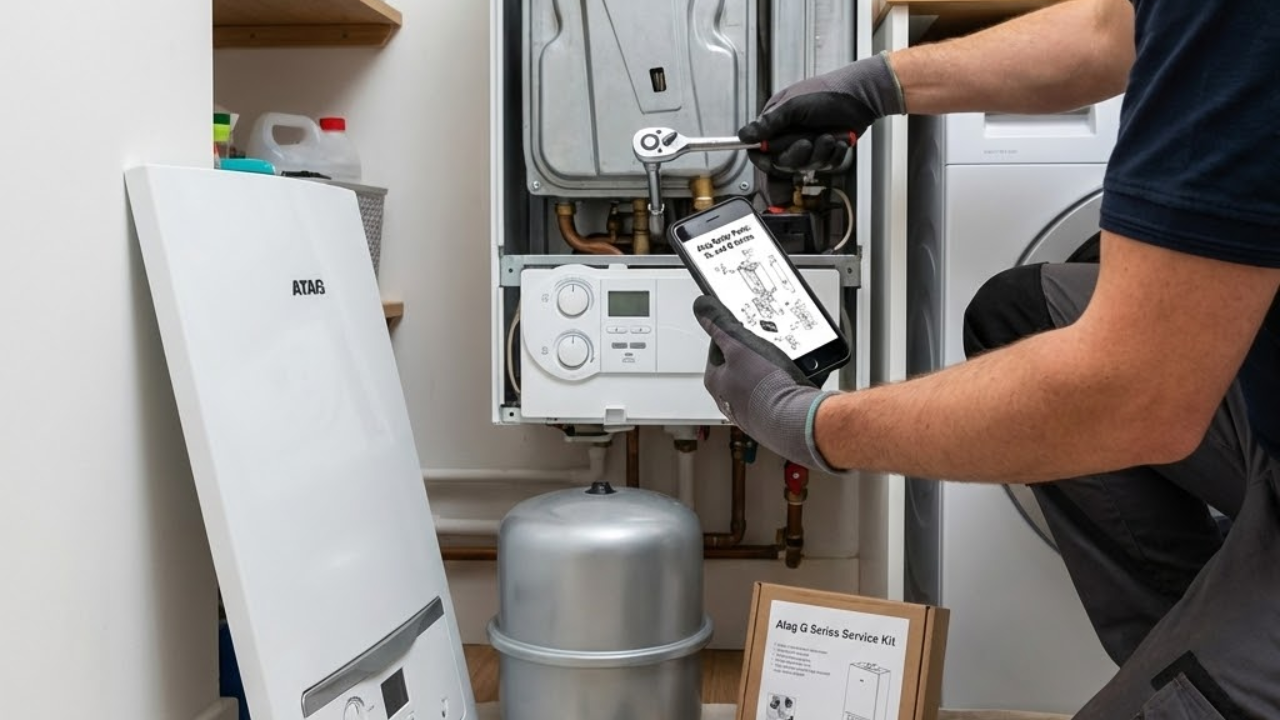
Atag boilers have earned a solid reputation in UK heating installations, particularly among engineers who value Dutch build quality and straightforward diagnostics. The XL and Q series represent the brand's core residential offerings-compact, efficient, and designed for relatively painless servicing when you know what you're doing.
But here's the reality: parts availability and familiarity matter just as much as the boiler's engineering. When a homeowner's heating fails on a January morning, you need the right component in your van or available for next-day delivery. Understanding the common failure points in these series, the part numbers that matter, and where Atag differs from the Vaillant or Worcester units you might service more regularly makes the difference between a quick fix and a frustrated customer.
The following sections walk through the maintenance essentials for Atag XL and Q series boilers, focusing on the Atag boiler parts that actually fail, the service intervals that prevent callbacks, and the practical differences between these two product lines that affect your parts strategy.
Understanding Atag's XL and Q Series Architecture
The XL series (including the iC Economiser models) launched as Atag's mid-range offering, targeting the replacement market with compact dimensions and modulating burner technology. These units typically deliver 24-35kW output, making them suitable for most 3-4 bedroom properties with standard heating demands.
The Q series represents Atag's premium line, featuring enhanced modulation ratios (often down to 1:10), quieter operation, and more sophisticated control interfaces. The modulating burner technology in Q series models offers superior efficiency through wider turndown ratios. You'll find these specified in new builds where SAP calculations demand higher seasonal efficiency figures, or in retrofit projects where homeowners want app-based control and weather compensation.
Both series share several core components-particularly around the hydraulic block assembly and gas valve assemblies-which simplifies your parts inventory if you service multiple Atag installations. However, the control boards, display panels, and certain sensor configurations differ significantly.
Key Architectural Differences That Affect Servicing
The XL series uses a more traditional PCB layout with discrete sensors for flow temperature, return temperature, and DHW thermistors. Diagnostics rely on LED error codes displayed on the front panel, which you cross-reference with the technical manual.
Q series boilers integrate a more sophisticated control platform with a colour display and onboard diagnostics that actually tell you which sensor is reading out of range-not just a cryptic code. This sounds helpful, and it is, but replacement displays cost considerably more than XL series LED boards.
The heat exchanger design also differs subtly. XL models use a stainless steel primary heat exchanger with a separate DHW plate heat exchanger, a configuration that's proven and serviceable. Q series units incorporate an enhanced primary exchanger with optimised flow paths for better heat transfer, but this also means you're looking at a higher replacement cost if scale buildup or corrosion necessitates a swap.
Common Failure Points and Essential Spare Parts
Every boiler has its Achilles' heel-components that fail more frequently due to wear, water quality, or design compromises. With Atag XL and Q series units, certain Atag boiler parts deserve space in your van or on your preferred supplier's watch list.
Expansion Vessels and Pressure Relief Components
Atag boilers ship with integrated expansion vessels, typically 8-10 litres depending on the model. These vessels lose pre-charge pressure over time, leading to the classic symptom: system pressure drops after heating cycles, and the customer constantly tops up the system.
Check the vessel pre-charge annually during service visits. It should read 0.8-1.0 bar with the system drained and isolated. If it's dropped below 0.5 bar, you're looking at a replacement or re-pressurisation if the diaphragm hasn't failed.
Replacement expansion vessels for XL series typically carry part numbers in the S4366600 range, while Q series vessels may differ slightly in mounting bracket configuration. Always cross-reference the serial number plate-Atag made running changes within series that affect parts compatibility.
The pressure relief valve (PRV) is another frequent culprit. These valves are set to lift at 3 bar, protecting the system from overpressure. If you're finding water discharge from the external tundish and the expansion vessel checks out, the PRV seat has likely degraded or collected debris. Replacement valves are straightforward-just ensure you've isolated the boiler and depressurised the system before swapping.
For expansion vessel solutions across multiple brands, Altecnic Ltd offers compatible options that meet the required specifications for sealed system applications.
Pumps and Hydraulic Components
Atag typically specifies Grundfos or Wilo pumps in their XL and Q series assemblies. The XL range often uses Grundfos UPS2 15-50/60 or similar, while Q series units may feature more sophisticated ECM pumps with variable speed control integrated into the boiler's modulation strategy.
Pump failures manifest as no circulation (cold radiators, boiler overheating), noisy operation (bearing wear), or intermittent lockouts on overheat stats. Before condemning the pump, check for air locks-Atag's hydraulic block assembly can trap air if not properly commissioned, and the auto-air vent may not clear it quickly enough.
Replacement pumps must match the original specification, particularly the head and flow characteristics. Installing an oversized pump might seem like cheap insurance, but it'll create noise and potentially affect the boiler's ability to modulate correctly. If you're sourcing pumps separately, Grundfos maintains comprehensive compatibility charts for OEM applications.
The three-way valve (diverter valve) switches between heating and hot water modes. These valves use a motorised actuator that drives a piston or rotating disc to redirect flow. Failure symptoms include no hot water but heating works (or vice versa), or the valve stuck mid-position causing simultaneous heating and DHW demand.
Atag three-way valve assemblies are generally robust, but the actuator motor can fail after 5-7 years of regular use. Part numbers vary between XL and Q series, and some models use a serviceable actuator (you can replace just the motor) while others require the entire valve body assembly.
Ignition and Flame Sensing Components
Ignition electrodes and flame sensing rods are wear items, though they should last several years with clean combustion. If you're getting ignition lockouts, check the electrode gap first-it should be 3-4mm for most Atag burners. Carbon buildup on the electrode or sensing rod will cause intermittent ignition failures or flame loss errors.
Clean the components with fine wire wool and check the ceramic insulator for cracks. If the electrode sparks to the burner rather than across the gap, you've got an insulator failure and need a replacement. These are relatively inexpensive parts, but you'll need the correct part number-XL and Q series use different electrode assemblies due to burner configuration differences.
The gas valve itself is a high-reliability component, but it does fail. Atag uses Honeywell gas valves or SIT gas valves depending on the production year. Symptoms of gas valve failure include no gas flow (burner tries to ignite but no flame), incorrect modulation (boiler stuck at high or low fire), or complete electrical failure of the valve coils.
Gas valve replacement requires Gas Safe competence and careful attention to gas rate adjustment after installation. Always check the working pressure at the test point and verify the burner pressure across the modulation range. For Honeywell gas valves and control components, Honeywell provides technical support documentation that's actually useful for diagnostic work.
Control Boards and Sensors
The PCB (printed circuit board) is the brain of the boiler, and while modern boards are more reliable than older generations, they still fail-often due to moisture ingress, voltage spikes, or component degradation over time.
XL series boards are less expensive to replace than Q series control platforms, but you'll need to transfer certain parameters during replacement, including the boiler's maximum output setting and control mode configuration. Some engineers keep a spare board in stock for emergency swaps, particularly if they maintain multiple Atag installations.
Temperature sensors (NTC thermistors) monitor flow, return, and DHW temperatures. These NTC thermistors have a characteristic resistance curve-typically 10kΩ at 25°C-that the PCB uses to calculate actual temperature. Sensor failures cause erratic behaviour: the boiler may lock out on overheating when the water's barely warm, or fail to reach setpoint because the sensor reads incorrectly.
Testing sensors requires a multimeter and a temperature reference. Pull the sensor connector, measure resistance, and compare against the technical manual's resistance-temperature table. If the NTC thermistors are out of spec by more than 10%, replace them. Sensor part numbers are specific to location (flow vs return vs DHW), so order carefully.
The DHW flow sensor (often a Hall effect turbine sensor) detects hot water demand by measuring flow rate through the DHW heat exchanger. These sensors fail less frequently than temperature sensors, but debris or scale can jam the turbine, preventing DHW demand detection. Symptoms: taps open, but boiler doesn't fire for hot water.
Cleaning the flow sensor sometimes works, but if the turbine bearings are worn, replacement is the only fix. Access usually requires partial disassembly of the hydraulic block assembly-not difficult, but factor in 30-45 minutes and have a bucket ready for residual water.
Preventative Maintenance Schedules That Prevent Failures
Annual servicing keeps Atag boilers running reliably, but the specific tasks matter more than just ticking a checklist. Focus on the components that actually affect performance and longevity.
Annual Service Essentials
Combustion analysis is non-negotiable. Atag boilers should achieve 9-10% CO₂ on natural gas with minimal CO in the flue (under 50ppm). If CO₂ is low or CO is elevated, investigate burner condition, gas rate, and air intake restrictions before adjusting the gas valve. Incorrect gas rate is a common cause of premature heat exchanger failure.
Inspect and clean the burner and heat exchanger. Atag's stainless steel heat exchangers resist corrosion well, but they'll still accumulate soot or scale depending on combustion quality and water hardness. Remove the burner assembly (usually 4-6 screws and a gas connection) and visually inspect the heat exchanger fins. Light brushing and vacuuming removes loose deposits.
If you're finding significant scale buildup, the system water quality needs attention. Atag specifies inhibitor concentration and pH levels in the installation manual-test the system water and dose accordingly. For systems with persistent water quality issues, consider a magnetic filter if one isn't already fitted.
Check expansion vessel pre-charge as mentioned earlier. This five-minute check prevents callbacks and extends vessel life.
Test the PRV by carefully lifting the lever (with a bucket underneath). It should release water freely and reseat without weeping. If it drips after testing, the seat is compromised.
Inspect condensate trap and drain. Atag condensate traps are generally accessible, but they do accumulate sludge over time. Remove, clean, and refill with water before refitting. Check the condensate drain pipe for blockages-frozen condensate pipes are a common winter failure mode.
Verify all safety devices. Test the overheat thermostat by simulating a no-flow condition (carefully-you're creating a fault condition deliberately). The boiler should lock out before the heat exchanger reaches dangerous temperatures. Test the flue fan using the boiler's diagnostic mode if available, or simply verify it spins freely and draws adequate combustion air.
System-Level Maintenance Considerations
The boiler is only as reliable as the system it serves. Atag boilers will lock out or fail prematurely if the system has poor flow, air locks, or contaminated water.
System flushing before installing an Atag (or any new boiler) isn't optional-it's essential. Black iron oxide sludge from old radiators and pipework will migrate to the new boiler's heat exchanger and pump, causing failures within months. Power flush or chemical flush depending on the system condition, then dose with inhibitor to manufacturer's specifications.
Magnetic filters catch ongoing corrosion products, protecting the boiler. Service the filter at the same interval as the boiler-annually at minimum, more frequently if the system is still shedding debris. For system water quality solutions, Danfoss and similar brands offer compatible filtration and water treatment components.
Check system pressure and auto-air vent operation. Atag boilers should maintain 1.0-1.5 bar cold pressure. If the customer reports frequent pressure loss and you've ruled out leaks and expansion vessel issues, check the auto-air vent-it may be passing water instead of just venting air.
Parts Sourcing Strategy for Atag Installations
Atag's UK market share is smaller than Worcester, Vaillant, or Baxi, which affects parts availability. You won't find Atag components at every local merchant, so planning matters.
OEM vs Compatible Parts
Atag-branded parts carry a premium, but critical components-PCBs, Honeywell gas valves, and heat exchangers-should always be OEM. The savings on compatible parts aren't worth the risk of warranty issues or poor reliability.
For generic components like pumps, expansion vessels, and pressure relief valves, high-quality alternatives are acceptable if they meet the original specifications. Just ensure they're compatible with sealed systems and rated for the operating temperature and pressure.
Building Relationships With Specialist Suppliers
Heating and Plumbing World stocks a comprehensive range of boiler components across multiple brands, including parts for less common manufacturers like Atag. Establishing an account with a supplier who understands the trade market-next-day delivery, technical support, and accurate parts identification-saves time when you're diagnosing a fault and need confirmation on part numbers.
For less common Atag parts, having a supplier who can cross-reference serial numbers and provide exploded diagrams makes the difference between a quick fix and days of waiting while you chase the correct component.
Emergency Parts Stock for Multi-Installation Engineers
If you maintain a dozen or more Atag boilers, consider stocking high-failure Atag boiler parts: expansion vessels, pressure relief valves, pump bearings or complete pump assemblies, common sensors, and ignition electrodes. The upfront cost is offset by reduced callbacks and the ability to complete repairs in a single visit.
Diagnostic Approach for XL and Q Series Faults
Atag's error codes are reasonably descriptive, but effective diagnosis still requires systematic thinking. Start with the obvious, verify your assumptions, and avoid the temptation to throw parts at a problem.
Using Error Codes Effectively
XL series error codes display as flashing LED sequences-count the flashes and cross-reference with the technical manual. Common codes include ignition failure, overheat, flow sensor faults, and flame loss.
Q series boilers display alphanumeric codes on the screen with a brief description. These are more helpful, but don't assume the code tells the whole story. An "overheat" error could be a failed sensor, a stuck pump, a blocked heat exchanger, or a genuine overheat condition caused by poor system flow.
Systematic Fault-Finding Process
Verify the basics first: Is there power? Is the gas supply open? Is system pressure adequate? You'd be surprised how often the "fault" is an isolation valve someone closed during decorating.
Check external factors: Frozen condensate pipe? Flue blockage? Low gas pressure from the metre? These aren't boiler faults, but they'll cause lockouts.
Use diagnostic mode: Atag boilers have service modes that allow you to operate the pump independently, test the gas valve, and read sensor values in real-time. This is invaluable for isolating faults without swapping parts speculatively.
Measure, don't assume: Use a multimeter to verify sensor resistances, check voltage at pump terminals, and measure gas pressures at the valve. Guessing wastes time and money.
When to Escalate or Recommend Replacement
Some failures aren't economically repairable. A failed heat exchanger on a 10-year-old boiler, particularly if the system water quality has been poor, often tips the economics toward replacement rather than repair.
Similarly, if you're finding multiple component failures-PCB, sensors, and pump all showing issues-the boiler has likely experienced a catastrophic event (lightning strike, severe voltage spike, or water ingress). Repairing one component may just reveal the next failure a week later.
Be honest with customers about repair economics. A £400 heat exchanger replacement on a boiler that's already past its expected service life may not make sense compared to a new installation with a fresh warranty and better efficiency.
Conclusion
Maintaining Atag XL and Q series boilers requires familiarity with their specific architecture, common failure modes, and the parts ecosystem that supports them. These are well-engineered units that reward proper installation and regular servicing with reliable performance, but they won't tolerate poor system water quality or neglected maintenance.
Focus your service visits on combustion quality, expansion vessel condition, and system cleanliness-these three factors prevent the majority of premature failures. Stock or have rapid access to the components that actually fail: sensors, pumps, expansion vessels, and ignition components. Build relationships with suppliers who understand the trade market and can support you with accurate parts identification and technical backup.
When faults occur, diagnose systematically using the boiler's own diagnostic capabilities and your test equipment. Error codes point you in the right direction, but verification with measurements prevents wasted parts swaps and callbacks.
For comprehensive parts support across heating and plumbing applications, Heating and Plumbing World provides trade-focused service with the technical knowledge to help you identify the right components quickly. If you need specific advice on parts compatibility or technical specifications, contact us for direct support from engineers who understand the reality of keeping heating systems running reliably.