

Balancing Hot Water Supply Across Multiple Bathrooms
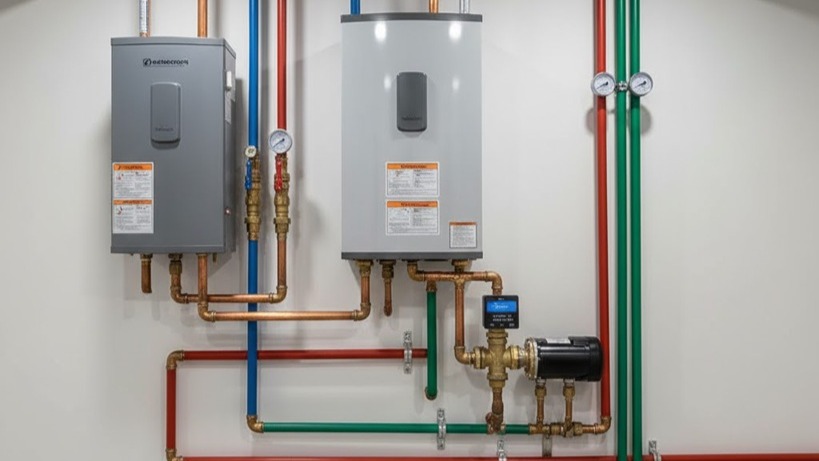
Getting lukewarm water in the en-suite whilst the main bathroom tap runs scalding isn't just annoying, it's a sign your system's hydraulic balance is off. When multiple outlets draw hot water simultaneously, the path of least resistance always wins, starving distant or higher taps whilst oversupplying closer ones.
Achieving balanced hot water flow across multiple bathrooms requires understanding pressure differentials, pipe sizing, and the careful selection of balancing components. Whether you're retrofitting an old property or designing a new installation, the principles remain the same: every outlet must receive its fair share of flow and temperature, regardless of what else is running.
Understanding Hydraulic Imbalance in Domestic Hot Water Systems
Hydraulic imbalance occurs when water takes the easiest route through your pipework. Picture a roundabout with one exit much wider than the others; most traffic flows that way, leaving other exits underserved.
In hot water systems, this manifests as wildly varying flows between taps. The ground-floor bathroom might get full pressure, whilst the first-floor shower barely trickles. Temperature consistency suffers too, as cooler water mixes unevenly along extended pipe runs.
Common causes include:
- Undersized pipework on longer runs
- Lack of balancing valves at individual outlets
- Poorly specified or incorrectly set circulating pumps
- Dead-legs and excessive pipe lengths
- Mixed pipe materials are causing different friction losses
The knock-on effect? Complaints, callbacks, and wasted energy as boilers cycle endlessly trying to satisfy thermostats that never quite reach setpoint.
Calculating Flow Requirements for Multiple Bathrooms
Before specifying any components, you'll need to calculate the total simultaneous demand. Don't just add up every tap; apply diversity factors based on occupancy and usage patterns.
For a typical four-bedroom house with two bathrooms and an en-suite, assume 60-70% simultaneous use during peak morning hours. A power shower demands roughly 12-15 litres per minute, a basin tap 4-6 l/min, and a bath around 20-25 l/min when filling.
Total peak demand might realistically hit 30-35 l/min, not the theoretical maximum of 50+ l/min if everything ran at once. Size your cylinder recovery rate and pipework accordingly, using BS 6700 as your reference for flow rates and pipe sizing charts.
Static head matters too. For every metre of vertical rise, you'll lose approximately 0.1 bar of pressure. A second-floor bathroom sitting 6 metres above the cylinder loses 0.6 bar before a single elbow or tee eats into available pressure. Factor this into your calculations early.
Pipe Sizing and Material Selection
Undersized pipes kill equal hot water distribution faster than anything else. Whilst 15mm copper suffices for a single bathroom, multiple outlets demand careful sizing based on flow velocity and acceptable pressure drops.
General sizing principles:
- Main hot water feeds: 22mm minimum for two or more bathrooms
- Branch runs: 15mm acceptable for individual outlets
- Target flow velocity: 1.0-1.5 m/s to minimise noise and erosion
- Maximum pressure drop: 0.4 bar per 10 metres of straight pipe
Copper remains the professional's choice for reliability and longevity. PEX and multilayer systems work brilliantly too, offering easier installation and reduced heat loss, but check manufacturer flow tables; internal diameters can vary significantly between brands.
One installer I knew insisted on running 22mm all the way to every bathroom tap. Overkill? Perhaps, but his customers never phoned complaining about poor flow, and the marginal extra cost bought goodwill that lasted years.
The Role of Secondary Circulation
For properties where taps sit far from the cylinder, secondary circulation prevents the frustrating wait for hot water whilst cutting waste. A small pump continuously circulates water through a return loop, keeping pipework warm and ready.
Think of it like a motorway ring road, traffic keeps moving, so there's no standing queue when someone needs to join. Without it, you're waiting for cold water to clear the pipes every single time.
Key components include:
- A bronze or stainless pump (often from Grundfos)
- 15mm return pipework
- Automatic or timer-controlled operation
- Balancing valves on each branch return
Size the pump carefully. Oversizing wastes energy and can cause noise; undersizing leaves distant taps cold. Calculate total circuit length and apply friction loss tables, targeting a flow rate of 1-2 l/min per circuit, enough to maintain temperature without excessive heat loss.
Bronze-bodied pumps handle hot water better than standard heating circulators. EPH Controls offers programmable timers that run circulation only during peak hours, slashing running costs without compromising performance.
Installing Balancing Valves and Restrictions
Balancing valves let you fine-tune flow to each outlet, compensating for differences in pipe length and elevation. Fit them on the flow side of each branch, close to where it leaves the main distribution pipe.
Adjusting them requires patience and a flow meter or timer. Start with all valves fully open, then progressively restrict the closest outlets until distant taps receive adequate flow. It's trial and error, but the payoff is even temperature and pressure throughout.
Installation tips:
- Use double-regulating valves for precision adjustment
- Mark final positions clearly for future reference
- Install drain-off points for easy maintenance
- Consider automatic balancing valves on larger installations
Automatic balancing valves maintain constant flow regardless of pressure changes elsewhere in the system. They're pricier but eliminate manual adjustment and respond dynamically to system changes, ideal for commercial installations or high-end residential work.
Thermostatic Mixing Valves for Safety and Consistency
TMVs blend hot and cold water to a safe, consistent temperature, meeting Building Regulations Part G requirements for outlets accessible to vulnerable people. They're mandatory in care homes and schools, but increasingly specified in domestic settings too.
Correctly sized TMVs also improve balanced hot water flow by stabilising outlet temperatures as system pressure fluctuates. When someone flushes a WC or starts the washing machine, cold water pressure dips; a quality TMV compensates instantly, preventing dangerous temperature spikes.
Fit TMVs as close to outlets as possible for the best response times. Point-of-use models suit individual basins or showers; group TMVs serve multiple outlets from a central point. Annual servicing and temperature checks keep them compliant and reliable.
Danfoss and Honeywell both manufacture robust, certifiable TMVs meeting BS EN 1111 and BS EN 1287 standards.
Pressure Equalisation with Boosted Systems
Low mains pressure compounds balancing problems, especially in older properties or those on long supply runs. Pressure commonly drops below 1.5 bar, leaving upper floors struggling for decent flow.
Boosted cold water systems lift mains pressure using break tanks and multi-stage pumps. Stuart Turner specialises in compact booster sets that integrate seamlessly with unvented cylinders, maintaining consistent pressure to both hot and cold outlets.
System requirements:
- Break tank sized for peak demand plus 200-litre reserve
- Inverter-driven pumps for quiet, efficient operation
- Pressure sensors maintain the setpoint automatically
- Backflow prevention meeting Water Regulations
When hot and cold supplies arrive at similar pressures, thermostatic showers perform properly and TMVs blend accurately. The investment pays back in comfort and system reliability.
Alternatively, specify an unvented cylinder with an integral balanced cold feed. These connect directly to mains pressure, delivering hot water at near-identical pressure to cold, inherent balance without additional pumps or tanks.
Addressing Temperature Drop in Long Pipe Runs
Heat loss from long pipe runs causes the temperature to drop significantly before reaching distant taps. Even with secondary circulation, poorly insulated pipes bleed heat continuously, wasting energy and frustrating users.
Insulation makes a massive difference. Fit 25-30mm wall-thickness foam or mineral wool to all hot pipework, paying special attention to sections running through unheated spaces. Pre-insulated pipe systems save labour and guarantee consistent coverage.
Heat loss factors:
- Ambient temperature of the surrounding space
- Pipe diameter and material
- Insulation type and thickness
- Flow rate and standing losses
For particularly long runs, say 20+ metres, consider trace heating cables wrapped around pipes beneath insulation. These maintain temperature during standing periods, delivering instant hot water without running pumps 24/7. The energy cost is minimal compared to the heat lost from uninsulated pipes.
Cylinder Sizing and Recovery Rates
An undersized cylinder can't supply multiple bathrooms simultaneously, regardless of how well you've balanced the distribution. Morning rush hour demands clash when storage capacity falls short.
Calculate storage based on peak hourly demand, not daily usage. A family of four typically needs 180-250 litres of stored capacity for comfort, rising to 300+ litres if multiple power showers run concurrently.
Recovery rate matters equally. A 200-litre cylinder reheating in 90 minutes can handle back-to-back showers; one taking three hours leaves latecomers cold. Size your heat source, whether a gas boiler, oil-fired burner, or immersion element, to deliver at least 1.5-2.0 kW per person.
Gledhill and Kingspan manufacture high-recovery cylinders with multiple coil arrangements and rapid reheat times. Thermal stores offer instant delivery by heating mains water on demand through plate heat exchangers, eliminating storage limitations entirely.
Manifold Distribution Systems
Manifold systems distribute hot water directly from a central point to each outlet via dedicated 10-12mm pipes. Think of a spider's web; each strand serves one destination without junctions or branches.
Flow and return connections terminate at the manifold, where individual valves control each circuit. Balancing becomes straightforward because each run is independent. Shut one off entirely without affecting others.
Advantages include:
- No tee joints hidden in walls
- Easy individual circuit isolation
- Simplified fault-finding
- Reduced standing losses in unused pipes
Installation requires more pipework initially, but PEX systems make this quick and cost-effective. Routes are flexible, avoiding the rigid layout traditional copper demands. Accessibility improves, too; the entire system is controlled from one location.
For new builds or major refurbishments, manifold distribution delivers superior, equal hot water distribution with minimal ongoing adjustment.
Commissioning and Testing Procedures
Proper commissioning transforms a decent installation into an excellent one. Flush all pipework thoroughly before connecting the cylinder, removing swarf and flux residues that clog strainers and damage valve seats.
Pressurise the system and check every joint for leaks. It's tedious, but essential, finding problems now beats emergency callouts later. Once tight, heat the system to operating temperature and recheck; thermal expansion often reveals marginal joints.
Balancing procedure:
- Measure flow rates at each outlet with taps fully open
- Calculatethe variance between the highest and the lowest flows
- Restrict balancing valves progressively on over-performing outlets
- Retest until all outlets achieve target flows within 10-15%
Temperature checks come next. Run each tap for two minutes, recording the stabilised temperature at the outlet. Variations beyond 2-3°C indicate further balancing or TMV adjustment needed.
Document everything. Record valve positions, flow rates, temperatures, and pump settings. Future engineers, including yourself in six months, will thank you when troubleshooting issues.
Common Problems and Troubleshooting
Cold water at distant taps despite secondary circulation: Check pump operation and return valve settings. Oversized returns can short-circuit flow, bypassing distant branches. Restrict returns progressively until the temperature equalises.
Fluctuating temperatures during use: Usually indicates inadequate cylinder recovery or an undersized heat source. Monitor cylinder temperature during peak demand; if it drops more than 5-10°C, you'll need more heating input or larger storage.
Noise from pipework or pumps: Often caused by excessive flow velocity. Reduce pump speed or partially close balancing valves. Water hammer arrestors solve shock problems where quick-closing valves cause pressure spikes.
Scalding from one outlet, tepid from another: TMV failure or incorrect setting. Isolate, dismantle, clean, and recalibrate. If problems persist, replace the cartridge or entire valve.
Maintenance and Long-Term Performance
Annual servicing maintains balanced performance. Clean strainers, check valve operation, and verify TMV temperatures against design specs. Pump impellers accumulate debris over time; strip and clean them every 2-3 years.
Limescale buildup in hard water areas gradually restricts pipework, throws balancing off, and clogs components. Fit scale inhibitors or water softeners during installation; retrofitting costs considerably more. Altecnic Ltd supplies inline scale reducers suitable for both mains and secondary circuits.
Keep written records of all maintenance activities. Note any adjustments made to balancing valves or TMV settings, along with reasons for changes. Patterns emerge over time, highlighting areas needing attention or design modification.
System Design Checklist
Before starting any multi-bathroom installation, work through this checklist:
Calculations complete?
- Peak simultaneous demand established
- Pipe sizes calculated for target velocities
- Pressure losses quantified for the longest run
- Cylinder capacity and recovery rate verified
Components specified?
- Balancing valves for all branches
- TMVs were required by regulations
- Secondary circulation pump if needed
- Adequate insulation for all hot pipework
Installation details planned?
- Manifold location accessible for service
- Drain points at all low spots
- Isolation valves for individual circuits
- Future expansion provision considered
Getting it right first time beats revisits. Measure twice, install once.
Conclusion
Achieving balanced hot water flow across multiple bathrooms isn't complicated; it just requires proper planning, correct component selection, and methodical commissioning. Understand the hydraulic principles, size everything properly, and balance the system thoroughly during commissioning.
The difference between adequate and excellent hot water performance often comes down to those final adjustments, the time spent with a flow meter and balancing valves, dialling in each circuit until everything works harmoniously. It's not glamorous work, but it's what separates professionals from parts-fitters.
For expert advice on selecting the right components for your installation, contact us at Heating and Plumbing World. Whether you're specifying pumps, cylinders, or control systems, we'll help you design a system that delivers consistent, reliable hot water to every outlet.