

Barrier Pipes: Protecting Underfloor Heating Systems
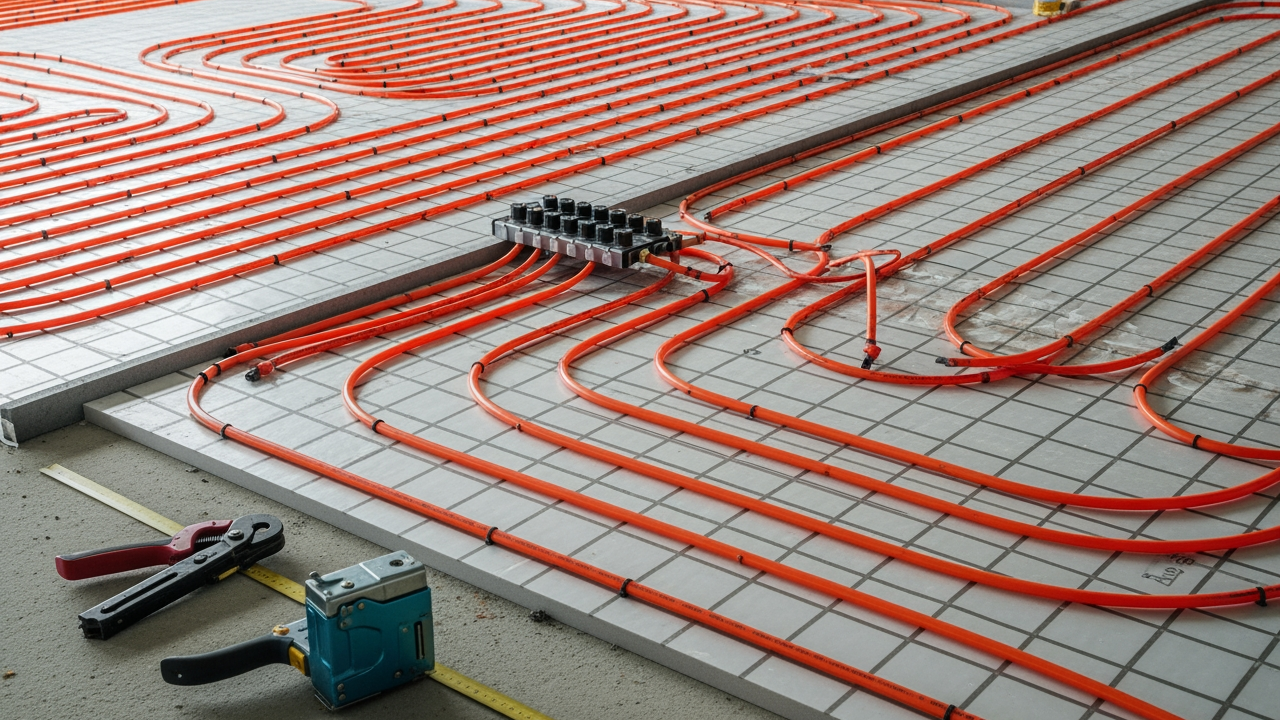
Oxygen molecules passing through standard plastic pipes corrode metal components in underfloor heating systems. This process, called oxygen diffusion, costs property owners thousands in premature boiler failures, pump replacements, and system breakdowns. Barrier pipes solve this problem by blocking oxygen penetration while maintaining the flexibility and durability needed for underfloor heating installations.
Why Standard Pipes Fail in Closed-Loop Heating Systems
Standard polyethene and PEX pipes allow oxygen molecules to pass through their walls. In open systems with regular water replacement, this creates minimal issues. Closed-loop underfloor heating systems recirculate the same water continuously, concentrating oxygen exposure on metal components.
The damage follows a predictable pattern. Oxygen-saturated water attacks cast-iron heat exchangers first, creating rust particles that circulate through the system. These particles clog pump impellers, damage seals, and accumulate in manifolds. A system installed with a non-barrier pipe typically shows corrosion damage within 3-5 years, requiring component replacements that cost £2,000-£5,000.
Systems where boiler heat exchangers developed pinhole leaks after just four years because installers used standard PEX instead of barrier pipe heating systems require extensive repairs. The repair process involves draining the system, replacing the heat exchanger, and flushing accumulated rust particles, work that takes two days and could have been prevented with proper pipe selection.
How Barrier Technology Works
Barrier pipes incorporate an oxygen-blocking layer within their wall structure. Most manufacturers use one of two approaches: EVOH (ethylene vinyl alcohol) layers or aluminium cores.
EVOH barrier pipes sandwich a thin EVOH layer between inner and outer polyethene or PEX layers. This polymer creates a dense molecular structure that oxygen cannot penetrate. The barrier layer sits in the middle of the pipe wall, protected from mechanical damage during installation and operation.
Aluminium barrier pipes use a thin aluminium foil layer, typically 0.2-0.4mm thick, welded or bonded within the pipe wall. The metal creates a complete oxygen block while adding rigidity that helps pipes maintain their shape.
Both technologies reduce oxygen permeation to less than 0.1g/m³ per day, meeting the 0.32g/m³ threshold set by DIN 4726 standards. Standard PEX pipes allow 1.5-4.0g/m³ per day, 15 to 40 times more oxygen penetration.
Barrier Pipe Types and Applications
EVOH Barrier PEX
EVOH barrier PEX offers maximum flexibility while providing complete oxygen protection. The five-layer construction (PEX-adhesive-EVOH-adhesive-PEX) maintains the thermal expansion properties and bend radius that make PEX ideal for underfloor heating.
This pipe type works best in residential underfloor heating, where installers need to navigate around obstacles and create curved loops. The flexibility allows for tighter bending radii without kinking, typically 5-6 times the pipe diameter compared to 8-10 times for aluminium barrier pipes.
Aluminium Barrier PEX
The aluminium layer adds shape memory that helps pipes maintain their installed positions. When you uncoil the aluminium barrier PEX, it stays relatively straight rather than trying to return to its coiled shape. This characteristic speeds installation in grid patterns and reduces the number of clips needed to secure pipes.
Commercial installations often specify aluminium barrier pipes because the rigidity simplifies large-area layouts. The aluminium also provides a tracer layer visible to metal detectors, helping future contractors locate pipes before drilling or cutting.
PE-RT Barrier Pipes
Polyethene of Raised Temperature (PE-RT) barrier pipes use a modified polyethene formula that withstands heating system temperatures without cross-linking. The manufacturing process allows for recycling and repair through heat fusion, unlike PEX, which cannot be melted and reformed.
PE-RT barrier pipes suit installations where environmental considerations or specific joining methods matter. The material accepts electrofusion and heat fusion joints that create homogeneous connections stronger than the pipe itself. Quality plastic piping systems from Polypipe demonstrate the advances in modern barrier pipe technology.
Installation Requirements and Techniques
Barrier pipes require the same installation care as standard underfloor heating pipes, with additional attention to protecting the barrier layer. The EVOH or aluminium layer maintains its oxygen-blocking properties only when continuous and undamaged.
Cutting and Deburring
Sharp pipe cutters create clean cuts without crushing the pipe wall. Crushed or ragged cuts can separate the barrier layer from the inner pipe surface, creating gaps where oxygen enters. Ratcheting cutters that slice through in one motion work better than rotating cutters that can catch and tear the layers.
Deburring removes internal ridges that might trap air bubbles or create turbulence. A simple deburring tool takes five seconds per cut and prevents issues that could compromise system performance.
Fitting Compatibility
Most barrier pipes work with standard compression, push-fit, and press-fit fittings designed for PEX or PE-RT pipes. The barrier layer thickness (typically 0.05-0.15mm for EVOH, 0.2-0.4mm for aluminium) doesn't significantly affect the pipe's outer diameter or wall thickness.
Compression fittings require proper tightening torque to compress the olive without crushing the pipe. Over-tightening can deform the barrier layer, creating weak points. Under-tightening allows movement that wears the barrier layer through friction.
Press-fit systems create reliable connections faster than compression fittings. The pressing tool applies uniform pressure around the entire circumference, avoiding the uneven stress that manual tightening can create. For large installations with hundreds of connections, press-fit systems reduce labour time by 30-40% while improving consistency.
Professional plumbing fittings from Heating and Plumbing World ensure secure connections that protect barrier pipe integrity throughout the system's lifetime.
Loop Layout and Spacing
Barrier pipe properties affect loop design decisions. EVOH barrier pipes handle tighter curves, allowing closer spacing in high-heat-loss areas near external walls. Aluminium barrier pipes' rigidity works better for straight runs in large open areas.
Standard loop spacing ranges from 100mm in bathrooms to 300mm in well-insulated living areas. The pipe's bend radius determines minimum spacing; you cannot install pipes closer than twice their minimum bend radius without creating stress points.
System Protection Beyond Pipe Selection
Barrier pipes block oxygen entry through pipe walls, but they don't address oxygen already in the system or entering through other routes. Complete system protection requires attention to additional factors.
Initial Fill and Commissioning
Fresh water contains dissolved oxygen, typically 8-10mg/L at room temperature. A 100m² underfloor heating system holds approximately 50-70 litres of water, introducing 400-700mg of oxygen at initial fill. This oxygen attacks metal components until depleted through corrosion.
Adding corrosion inhibitor during commissioning neutralises this oxygen and creates a protective film on metal surfaces. Inhibitors formulated specifically for underfloor heating remain stable at 40-50°C operating temperatures and don't degrade plastic components.
Purging air from the system during filling removes oxygen pockets that would otherwise dissolve into the water. Proper purging requires filling from the lowest point, opening all bleed valves, and running the system until water flows without bubbles from every loop.
Pressure Testing
Pressure testing before covering pipes serves two purposes: verifying connection integrity and stressing the system beyond normal operating pressures to reveal weak points. Testing at 1.5 times the maximum operating pressure (typically 6-8 bar for underfloor heating) for at least 24 hours ensures system reliability.
Temperature affects test results. Testing cold pipes, then covering them with screed that cures and heats the pipes can create false pressure readings. The pressure increases as the pipe temperature rises, approximately 0.1 bar per 10°C temperature increase. Testing at the expected operating temperature provides more accurate results.
Expansion Vessels and Air Separators
Expansion vessels accommodate water volume changes as temperature fluctuates, preventing pressure spikes that stress connections. Undersized vessels cause frequent pressure relief valve discharge, introducing fresh oxygenated water into the system.
Air separators remove microbubbles that form as water heats and cools. These bubbles concentrate oxygen against metal surfaces, accelerating corrosion even in systems with barrier pipes. Installing an air separator at the system's highest point, where bubbles naturally accumulate, removes this oxygen before it causes damage.
Quality expansion vessels from manufacturers like Altecnic provide reliable pressure control and contribute to long-term system protection.
Performance Verification and Standards
DIN 4726 sets the European standard for barrier pipe heating performance in heating systems. This specification requires oxygen permeation below 0.32g/m³ per day at 40°C, measured according to DIN 4726 testing protocols.
Manufacturers test sample pipes in controlled conditions, measuring oxygen transmission through the pipe wall over extended periods. The test setup maintains 40°C water temperature inside the pipe with 23°C ambient temperature outside, conditions that accelerate oxygen diffusion compared to actual installations.
Third-party certification from organisations like KIWA, DVGW, or BSI verifies that production pipes meet these standards consistently. Certification requires regular factory inspections and ongoing sample testing, not just initial product qualification.
When specifying barrier pipes, look for clear marking on the pipe itself indicating barrier type and certification. Legitimate barrier pipes print this information every metre along their length: pipe size, pressure rating, barrier technology (EVOH or AL), and certification marks.
Cost Analysis and Long-Term Value
Barrier pipes cost 15-30% more than standard PEX pipes, approximately £0.40-£0.80 per metre for a 16mm pipe in typical quantities. For a 100m² underfloor heating installation using roughly 200 metres of pipe, barrier pipe adds £80-£160 to material costs.
This upfront investment prevents corrosion damage that typically appears 3-7 years after installation. Boiler heat exchanger replacement costs £800-£1,500 in parts plus 6-8 hours labour. Pump replacement runs £200-£400 plus 2-3 hours labour. System flushing to remove rust particles adds another £300-£500.
Reliable circulation pumps from Grundfos paired with proper barrier pipe specification, ensure optimal system performance and longevity.
Systems installed with barrier pipes show 90% fewer component failures over 15 years and maintain efficiency within 2-3% of original performance. Non-barrier systems lose 10-15% efficiency as corrosion products insulate heat transfer surfaces and reduce flow rates.
The warranty implications matter too. Many boiler manufacturers void warranties if installers use non-barrier pipe in closed-loop systems. The warranty exclusion appears in fine print, but it's enforced when corrosion damage occurs. Using a barrier pipe maintains warranty coverage and demonstrates professional installation standards.
Professional heating controls from suppliers like Honeywell integrate seamlessly with barrier pipe systems to provide comprehensive temperature management and system protection.
Essential Protection for Underfloor Heating
Barrier pipes prevent oxygen diffusion that destroys underfloor heating system components through corrosion. The technology, either EVOH layers or aluminium cores, blocks oxygen penetration while maintaining the flexibility and durability needed for underfloor heating installations. Systems installed with barrier pipe avoid the premature failures, efficiency losses, and expensive repairs that plague systems using standard pipes.
The choice between EVOH and aluminium barrier types depends on installation requirements. EVOH barrier pipes offer maximum flexibility for residential installations with complex layouts. Aluminium barrier pipes provide shape memory and metal detectability suited to commercial applications. Both technologies meet DIN 4726 standards and provide equivalent oxygen blocking when properly installed.
Proper installation protects the barrier layer through careful cutting, appropriate fitting selection, and correct tightening procedures. Complete system protection adds corrosion inhibitor, removes air during commissioning, and includes properly sized expansion vessels and air separators. These complementary measures address oxygen already in the system and prevent the introduction of fresh oxygenated water.
The 15-30% material cost premium for barrier pipes prevents corrosion damage that costs 10-20 times more to repair. Systems with barrier pipe maintain efficiency, avoid component failures, and preserve manufacturer warranties throughout their 25-30 year design life. For any closed-loop underfloor heating system, barrier pipe specification represents essential protection rather than an optional upgrade.
For professional guidance on barrier pipe selection and underfloor heating system design, contact heating specialists at Heating and Plumbing World, who can provide expert recommendations tailored to your specific installation requirements.