

Baxi 5112657 PCB: Common E133 and E160 Fault Code Diagnosis
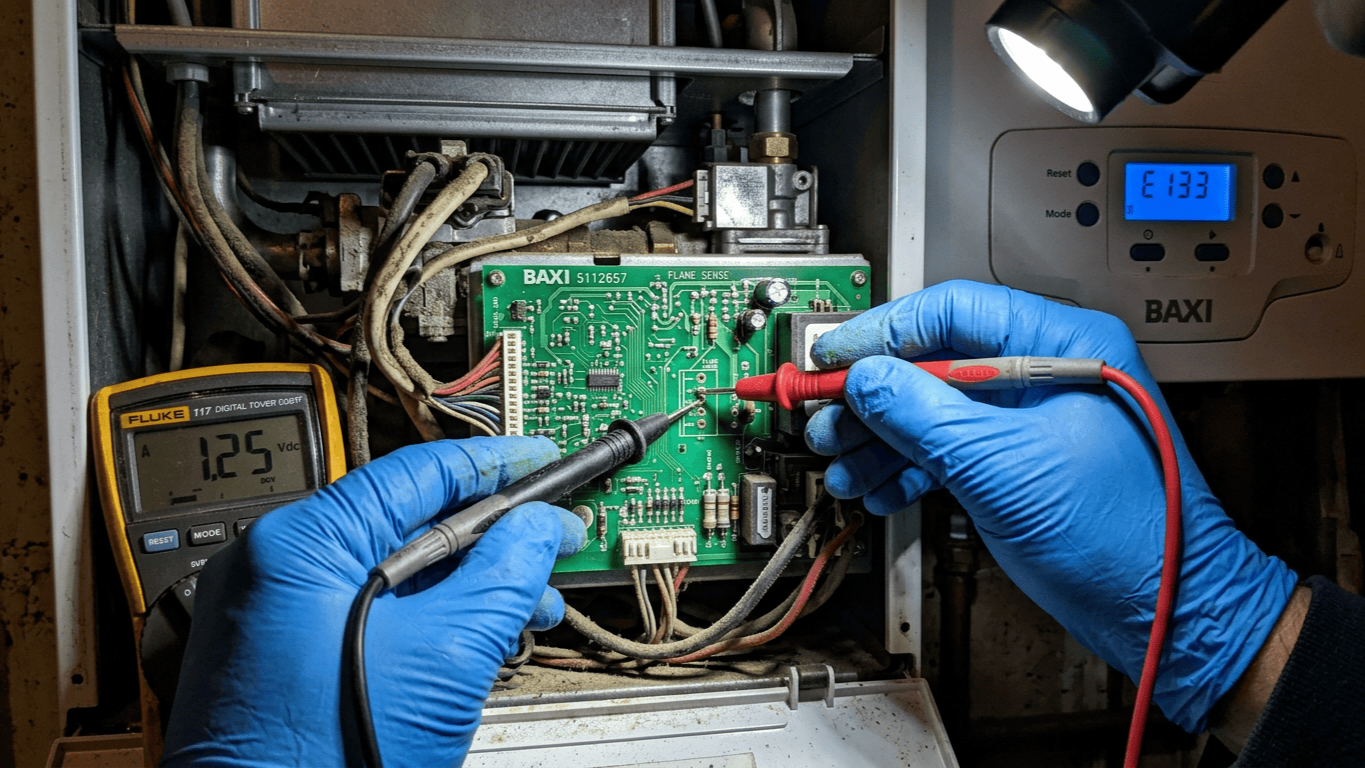
When a boiler throws an error code, it is rarely good news for the homeowner or the engineer. The Baxi 5112657 pcb is fitted to a range of boilers, including the EcoBlue Advance and Platinum models. Specifically, the E133 and E160 fault codes account for a huge portion of callouts involving this board.
I have seen plenty of engineers swap out boards without properly diagnosing the root cause first. Consequently, the same fault code often reappears within days, which is an expensive mistake for everyone involved. While the board can fail, these error codes often point to issues elsewhere in the system.
Think of the Baxi 5112657 pcb like a conductor of an orchestra. If a violinist breaks a string, the conductor stops the music to prevent further issues. However, the conductor is not the one who needs replacing in that scenario.
Understanding The E133 Fault Code
The e133 fault code on boilers fitted with this board signals a flame loss during operation. In plain terms, the boiler successfully ignited but then lost the flame unexpectedly while running. The PCB detected this loss and shut down the system as a vital safety precaution.
This error is not the same as an ignition failure where the boiler never lights. Instead, the e133 fault code specifically means combustion started normally and then stopped. This distinction matters because it narrows down the potential causes for the engineer.
The board monitors the flame through an ionisation probe or flame sensor. When the signal from this sensor drops too low, the board interprets this as a flame loss. Consequently, it triggers the fault code to maintain safety. If you are sourcing parts for these systems, trade heating supplies offers a comprehensive range of genuine components.
Primary Causes Of E133 Errors
Several issues can trigger an e133 fault code, and not all of them involve the board itself. Intermittent gas flow or low gas pressure can cause the flame to extinguish after initial ignition. Therefore, you should always check the meter and supply pipes before assuming the board is at fault.
Furthermore, a dirty or corroded probe will not send a reliable signal to the board. This can lead to a false flame loss diagnosis where the board thinks the flame is out. Partial obstructions in the flue system can also disrupt combustion stability.
In some cases, the Baxi 5112657 pcb itself develops a fault in the flame detection circuit. While this is less common than other causes, it does happen on older units. A thorough flame loss diagnosis is essential to avoid replacing the board unnecessarily.
Diagnosing E133: A Step-By-Step Approach
Start with the simplest checks and work towards the more complex issues. I once saw an engineer replace a £200 board only to discover the gas meter had been switched off. Do not be that engineer!
First, verify the basics by checking the gas supply at the meter. Confirm the boiler's isolation valve is fully open and that other gas appliances are working. Next, inspect the electrode and ionisation probe for dirt or corrosion. You can clean both with fine wire wool to improve the signal quality significantly.
Use a manometer to check gas pressure at the inlet to the gas valve. Low pressure indicates a supply issue rather than a fault with the Baxi 5112657 pcb. If the pressure is correct, check the gas valve for sticking or intermittent operation. Finally, inspect all electrical connections to the board for signs of corrosion.
Understanding The E160 Fault Code
The e160 fault code indicates a specific fan fault within the system. This means the board is not receiving the expected signal from the fan or air pressure switch. It could indicate that the fan is not running or is moving too slowly.
Unlike the E133 code, the e160 fault code involves pre-ignition safety checks. The boiler will not even attempt to light if this fault is present. This is because proper air movement is essential for safe combustion.
You may need to inspect the Baxi temperature sensor during this phase to ensure the system is not overheating. The board expects to receive confirmation that the fan is operating before opening the gas valve. If that confirmation does not arrive, the system will throw the error immediately.
Diagnosing E160: Systematic Fault-Finding
The key with e160 fault code issues is determining where the problem lies. You must decide if the fault is in the fan, the pressure switch, or the wiring. Work through these checks methodically to identify the culprit:
- Listen for fan operation when the boiler calls for heat.
- Remove the fan and spin the impeller by hand to check for seized bearings.
- Measure the voltage at the fan terminals while the system tries to start.
- If voltage is present but the fan is silent, you likely need a new Worcester boiler fan assembly or the Baxi equivalent.
Furthermore, perform thorough air pressure switch testing. Check that the sensing tubes are not blocked, kinked, or disconnected. With a multimeter, test continuity across the switch contacts while manually creating suction. If the switch does not click or show continuity, then your air pressure switch testing has confirmed a failure.
When To Perform A Baxi Boiler PCB Replacement
PCB replacement should always be your last resort. I have attended jobs where several engineers had already condemned the board, only to find a faulty switch. You should only commit to a Baxi boiler pcb replacement when you have eliminated every other possibility.
Confirming a genuine board failure involves several specific indicators:
- There is no voltage output to components despite relays operating correctly.
- The boiler shows erratic behaviour that does not match a single component fault.
- Relays fail to click or show no continuity when activated.
- If you have confirmed that the IMIT capillary limit thermostat is perfect, a replacement is likely required.
The cost for a Baxi boiler pcb replacement can be quite significant. It usually costs between £150 and £250 for the part alone. Compare that to common alternative faults like a pressure switch or a Worcester trap washer set, which are much cheaper.
Preventing Repeat Faults
Once you have resolved a flame loss diagnosis, take steps to prevent it from returning. Annual servicing that includes electrode cleaning makes a substantial difference to long-term reliability. Advise your customers about the importance of maintaining adequate ventilation around the boiler.
For fan faults, check the flue termination position. Flues in exposed positions can suffer from weather-related blockages. In some high-output scenarios, such as when maintaining an AIC Nesta wall-hung boiler, ensuring the flue is clear is vital.
Ensure all electrical connections are tight and properly seated. Use a small amount of contact cleaner on terminals during servicing to prevent future corrosion. Taking these small steps will ensure the boiler remains reliable for years to come. If you are unsure about any diagnostic step, please contact our support team for technical assistance.