

Boiler Display Notes Copied Before A Spare Stock Order
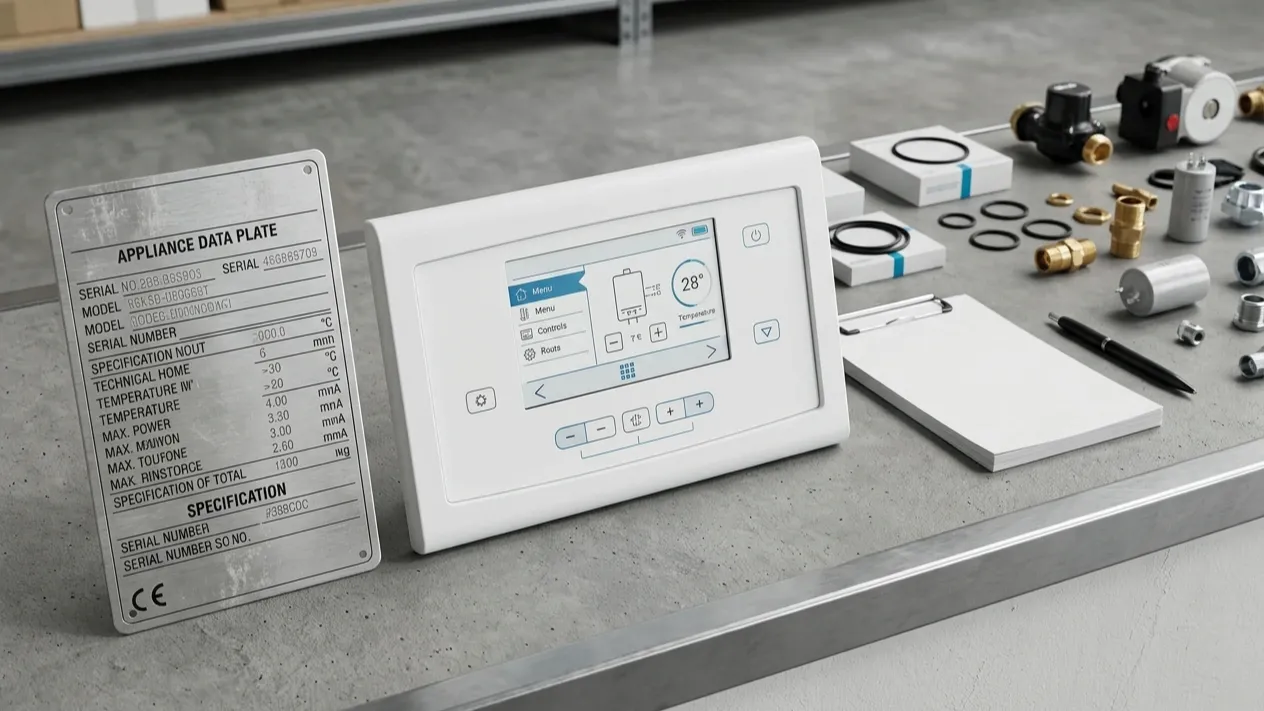
A fascia line is a note, not a stock-keeping unit. Copy the digits after the plate fields are already on the order. Treat the display as a comment that travels with make, model and serial, never as the thing we pick from the shelf.
We will not convert a flashing code into a spare. The code can sit in the notes so the next person at the counter sees what the board showed. The pick still starts from the plate.
Copy The Display After The Plate, Not Instead Of It
The order has a place for appliance identity and a place for a short display note. Mix those two and the note swallows the identity. Make and model from the data plate go on first. Serial goes next, or a photograph of the plate if the serial is worn. Only then do we add what the fascia showed, in the same characters the board used.
A photograph of the display helps when the digits are easy to misread. It does not replace the plate photograph. Two pictures travel together: plate first, fascia second. If the web form has one notes box, write `plate:` and `display:` as separate lines so nobody later treats the code as the model.
We stock boiler spares against appliance identity. A code without that identity is a comment with nowhere to land. Leave the comment off rather than let it become the search term.
What The Note Must Carry
Write the display the way it actually appeared, not the way you would describe the symptom.
- Exact characters on the board, including letters, zeros and any hyphen the fascia used.
- Whether the line was steady, flashing, or alternating with a second line.
- When it showed: at ignition, during run, after a reset, or only with a tap open.
- What you already reset, and whether the same line came back.
That is the whole list. Do not add a diagnosis, a suspected part, or a request to interpret the code. The note is evidence of what the board showed while you were in front of it. Interpretation is not a stock field.
If the board showed nothing, write that. A blank fascia with a lockout is still a note. Inventing a code because a similar job last month had one is how the wrong Worcester spare gets reserved against the wrong appliance.
Codes That Recur Are Still Not The Spare
A line that returns after a reset is still a line. Recurrence tells you the board is repeating itself. It does not name a fan, a sensor, a valve or a board. Recurrence belongs in the same notes box as the characters, not in the spare field.
We see the same digits on more than one range. A code that looks familiar from a Baxi job last week is not clearance to pick from Baxi boiler spares for a different make. Brand folders on the site are still filtered by the plate, not by a remembered code.
If two people on the same job wrote two different lines, pack neither spare until the plate and one fascia photograph agree. Conflicting notes are a stop, not an average.
When Two Displays Disagree
Some boards show one line on the fascia and another on an app or diagnostic plug. We are a merchant counter, not a diagnostic socket. If you have two readouts, put both in the notes as separate lines and keep the plate as the pick key. Do not ask us to choose which readout is true.
A handwritten ticket that says `F22` when the photograph shows `E125` is the photograph that wins. Rewrite the ticket before the pick. We will not argue with a photo of the board using a memory of a similar code.
If the fascia is behind a clipped cover and you cannot get a clean shot, write `fascia not readable` and send the plate only. That is a thinner note. It is safer than a guessed code.
Stock Orders That Wait For A Clear Note
Counter tickets move faster when the notes box is boring. Make, model, serial, then the fascia line in the board's own characters. That is enough for us to look at stock against the appliance and to keep the display comment attached if the first spare is not on the shelf.
Web orders work the same way. If the form has no dedicated display field, the notes box is the display field. Do not paste a paragraph of site history. Do not paste a manufacturer PDF. The useful extra line is the four-point note above, written once.
If the first spare comes back, the display note should still be on the return ticket so the second pick is not a second guess. The note did not fail because the first part was wrong. The plate still owns the pick. The note only tells the next person what the board was doing that morning.
We will not hold a spare against a code while the plate fields are blank. We will hold a spare against a complete plate while the display note is still being typed. Finish the plate. Then finish the note.
Tickets That Keep The Note In Its Own Box
A counter ticket with one scribble field is how a code overwrites the model. Draw a hard line. Appliance identity on the left. Display note on the right, or underneath, labelled so the next person does not search the catalogue for the fascia string.
If you type the order online, do not paste the code into the part-number box. That box is for a number that came off a spare, a box, or a confirmed supersession. The fascia string belongs in notes. When a popular code is also a popular search term, the site will happily offer a bestseller that has nothing to do with the appliance on the job. That is a search problem, not a stock match.
Keep GC number with the plate, not with the display. GC number identifies the appliance family. The fascia line does not. Mixing GC and a code in one string is how both become unusable.
Night tickets that wait for a morning pick need the same split. A code written late without a plate photograph is not a queue we can work first thing. Pin the plate photo to the ticket before the ticket enters the pile.
What We Will Not Pick From A Code
We will not pick a fan because a code is often discussed next to fans. We will not pick a sensor because a forum thread used the same digits. We will not pick a board because the fascia is blank. Those are labour guesses. They do not become merchant lines until the plate, and usually the old part, say so.
If you already have the old part in hand, the display note becomes secondary. The old part number, the plate, and the box in front of you decide the pick. Keep the fascia line anyway. It helps the next visit. It does not jump the queue ahead of the part on the bench.
If you do not have the old part, the plate plus a clean fascia photograph is the most we can hold. We can look at what is on the shelf for that appliance. We cannot promise the shelf item clears the line you copied. Clearing a lockout is not a stock promise.
Repeat Visits Need The Old Note, Not A New Guess
When the same appliance comes back, bring the last ticket. The useful comparison is whether the fascia line changed, not whether someone now prefers a different spare name. If the line is identical and the plate is identical, the second order should not invent a new suspected part in the notes. Write same display as the earlier ticket and keep the characters anyway, because the next person may not have that ticket.
If the line changed, write both. Old line, new line, dates. That is still not a pick key. It stops us treating two different mornings as one job.
Photographs That Stay Legible
A fascia photograph that is all glare is worse than no photograph. Stand off the cover until the digits are sharp. If the board uses a seven-segment layout, take the shot square on so 5 and S do not collapse into each other. Do not crop out the icons around the digits; a flame symbol or tap symbol next to the line is part of the note.
The plate photograph is a different job. We need make, model and serial readable, not a wide shot of the whole casing. If the serial is on a separate sticker, that sticker is the serial photograph. Do not send one blurry image and ask us to extract both.
When the only image on the ticket is a screenshot from a phone app, label it as an app readout. We will not treat it as the fascia. It can sit in notes beside a real fascia shot. It cannot replace the plate.
If you cannot get either photograph, write the plate characters by hand and write no fascia photo. That ticket is slower. It is still a ticket. A guessed image is not. A second visit to take the two photographs is cheaper than a spare that comes back because the note was invented.
Conclusion
A fascia line earns a place on the order only after make, model and serial are already there. Copy the characters, the behaviour, the moment it showed, and whether a reset changed anything. Leave suspected parts out of the notes. If the plate and the display photograph still pull in two directions, get in touch before that spare is packed.