

Boiler Redundancy in Critical Facilities: Hospital Standards
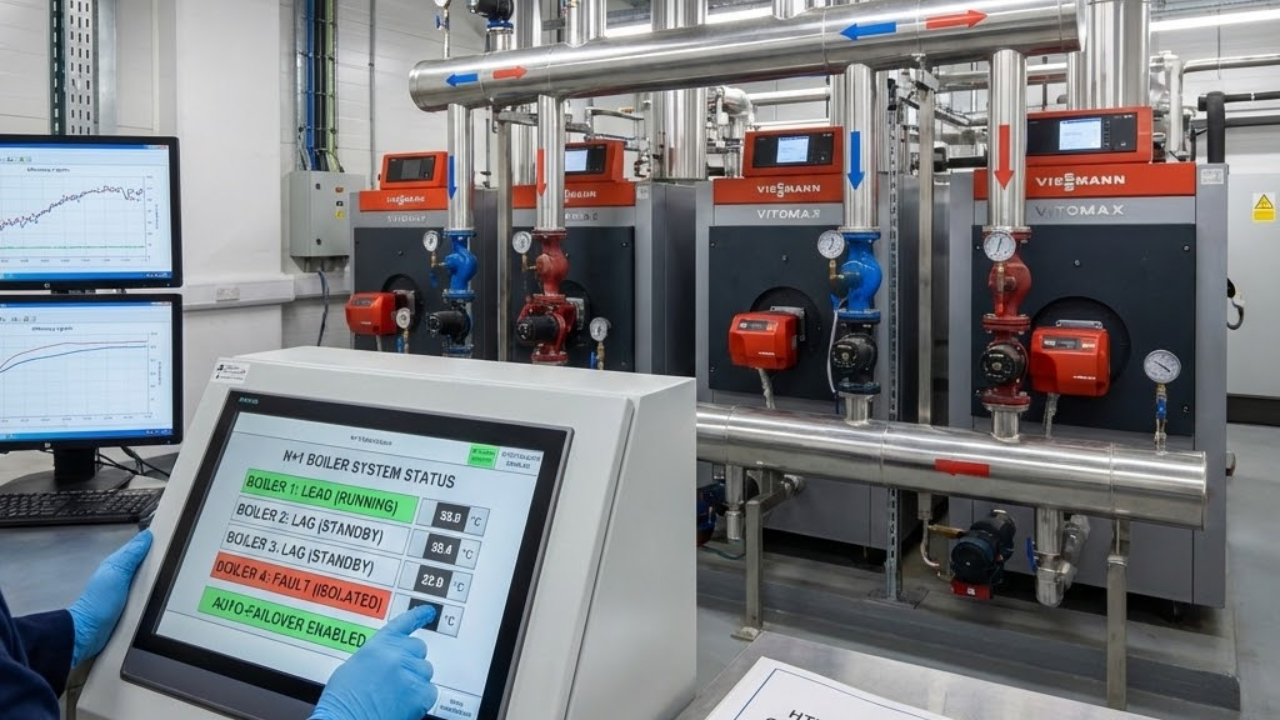
When a boiler fails in a commercial office block, occupants might tolerate a cold afternoon whilst you sort the repair. When a boiler fails in a hospital operating theatre, dialysis unit, or sterile processing department, the consequences aren't just uncomfortable. They're potentially fatal. That's why boiler redundancy isn't optional in healthcare facilities; it's a fundamental design requirement governed by strict regulations and built on decades of hard-learned lessons.
Heating and Plumbing World supplies heating equipment to facilities managers and engineers who understand that hospital boiler systems demand a completely different approach to specification, installation, and maintenance compared to standard commercial projects. The stakes are higher, the regulations tighter, and the margin for error non-existent.
Why Hospitals Cannot Tolerate Single Points of Failure
Hospital heating systems serve functions far beyond occupant comfort. Sterilisation equipment requires steam at precise temperatures and pressures. Surgical theatres maintain strict environmental conditions. Dialysis units need reliable hot water supplies. Premature babies in neonatal intensive care units depend on stable ambient temperatures within narrow tolerances.
A single boiler serving these critical loads creates what engineers call a single point of failure. One component whose breakdown stops everything. That's acceptable in a warehouse. It's negligent in a hospital.
The principle of redundancy means designing capacity into the system so that if one boiler fails, others immediately pick up the load without interrupting service to critical areas. This isn't about having a spare boiler sitting idle. It's about intelligent system design that distributes load and provides automatic failover.
Regulatory Framework: HTM 03-01 and Beyond
In the UK, Health Technical Memorandum 03-01 sets the standard for heating and hot water systems in healthcare premises. This document, published by NHS Estates, provides detailed guidance on system design, installation, commissioning, and maintenance specifically for healthcare environments.
HTM 03-01 mandates that heating systems serving critical areas must incorporate sufficient redundancy to maintain service during planned maintenance and unplanned failures. The document specifies that no single component failure should compromise patient safety or essential clinical services.
Key requirements include:
- Multiple boiler installations with sufficient combined capacity to meet full design load when one unit is offline
- Automatic changeover systems that detect boiler failure and bring standby units online without manual intervention
- Separate distribution circuits for critical and non-critical loads, allowing prioritisation during capacity constraints
- Backup fuel supplies where primary fuel interruption could compromise patient care
Beyond HTM 03-01 healthcare heating requirements, engineers must also consider Building Regulations Part L (energy efficiency), BS 7593 (treatment of water in domestic hot water systems), and various NHS-specific guidance documents covering infection control, fire safety, and operational resilience.
The N+1 Design Philosophy
The standard approach to hospital boiler redundancy follows what's called N+1 configuration. This means you calculate the heating load required (N), then add one additional boiler of equal capacity (+1).
Think of N+1 redundancy like an aircraft's engines. A twin-engine plane can fly safely on one engine if the other fails, just as an N+1 boiler plant maintains full heating capacity when one unit goes offline. The system continues operating normally, preventing the cascade of problems that a single failure would trigger.
For example, if calculations show you need three 500kW boilers to meet peak winter demand, you install four. Under normal operation, three run whilst one remains on standby. If any operating boiler fails, the standby unit automatically starts, maintaining full system capacity.
This N+1 configuration provides several advantages:
- Planned maintenance can occur without reducing system capacity—simply take one boiler offline for servicing whilst the others handle the load
- Load rotation distributes operating hours evenly across all units, preventing the reliability issues that plague boilers left idle for extended periods
- Efficiency optimisation allows the system to match boiler operation to actual demand—on mild days, one or two units might suffice, improving seasonal efficiency
Some facilities go further, adopting N+2 configurations where two standby boilers provide additional security. This approach suits particularly critical sites or those with extended maintenance intervals that might require multiple units offline simultaneously.
Capacity Calculation: Getting the Numbers Right
Specifying boiler capacity for a hospital requires meticulous calculation. Undersize the system and you'll struggle during peak demand or when a unit fails. Oversize it and you'll waste capital budget whilst compromising efficiency. Oversized boilers cycling on and off operate far below their optimal efficiency curve.
Start with a comprehensive heat loss calculation covering the entire facility. Don't rely on rules of thumb or previous installations. Every building has unique characteristics: insulation levels, glazing ratios, air change rates, and occupancy patterns all affect heating demand.
For hospitals, you'll also need to account for:
- Domestic hot water demand (substantial in healthcare settings with infection control protocols requiring frequent handwashing and equipment cleaning)
- Humidification loads in operating theatres and specialist wards
- Steam requirements for sterilisation equipment, kitchen facilities, and laundry services
- Process heating for laboratories, pharmacies, and other technical departments
Gledhill hot water cylinders are commonly specified for healthcare facilities where reliable domestic hot water supply is critical for infection control and patient care.
Once you've established total design load, factor in a diversity allowance. Not all heat-consuming equipment and spaces reach peak demand simultaneously. However, apply diversity carefully in healthcare. The consequences of getting it wrong are severe.
With total load calculated, you can then determine individual boiler sizes. Rather than one massive unit, multiple smaller boilers offer better redundancy and improved part-load efficiency. A bank of four 400kW boilers typically outperforms a single 1600kW unit across the heating season, particularly when designed with proper sequencing controls.
Fuel Supply Redundancy: Beyond the Boiler Plant
Boiler redundancy means nothing if fuel supply fails. That's why many hospitals incorporate dual-fuel capability, with boilers able to switch between natural gas and oil.
Natural gas offers convenience and lower emissions, making it the preferred primary fuel. But gas supply interruptions—whether from network failures, emergency shutdowns, or supply constraints—have occurred. Having oil-fired backup capability provides true resilience.
Implementing dual-fuel systems requires:
- Sufficient oil storage to maintain heating for several days without gas supply (typically calculated based on worst-case winter demand)
- Automatic fuel switching that detects gas supply failure and transitions to oil firing without manual intervention
- Regular fuel switching tests to ensure oil systems remain operational (oil burners left unused for months often fail when finally needed)
Some facilities also install emergency generators with capacity to power critical heating systems. This protects against the scenario where both primary and backup fuel supplies remain available but electrical power fails, leaving boiler controls, pumps, and ancillary equipment inoperative.
System Architecture: Distribution and Control
Redundancy at the boiler plant means little if distribution pipework creates bottlenecks or single points of failure. Hospital heating systems typically incorporate ring main distribution with multiple feed and return paths, allowing isolation of pipe sections for maintenance without interrupting supply to critical areas.
Modern systems use variable flow design with weather compensation and zone controls that match heat delivery to actual demand. This approach improves efficiency whilst reducing wear on components. However, it requires careful hydraulic design. Poorly balanced systems can starve critical areas during peak demand or when operating at reduced capacity.
Building Management Systems (BMS) play a crucial role in redundancy strategies. Advanced BMS platforms monitor boiler performance in real-time, detecting early warning signs of impending failure and automatically adjusting sequencing to compensate. They log operating hours, cycle counts, and efficiency metrics, supporting predictive maintenance strategies that prevent failures before they occur.
Integration with Grundfos circulation pumps and Honeywell heating controls allows sophisticated load management, automatically bringing additional boilers online as demand increases and shutting them down during light-load periods.
Boiler Selection: Reliability Over Cost
When specifying boilers for hospital applications, initial capital cost takes a back seat to reliability and maintainability. A budget boiler that saves £5,000 upfront but fails during a winter cold snap costs far more in emergency repairs, patient risk, and reputational damage.
Look for boilers with proven track records in healthcare applications. Manufacturers like Andrews Water Heaters produce units specifically designed for the demanding duty cycles and reliability requirements of critical facilities.
Key selection criteria include:
- Modular construction allowing component replacement without removing the entire boiler from service
- Stainless steel heat exchangers that resist corrosion and extend service life
- Advanced diagnostics that provide early warning of developing faults
- Spare parts availability (critical when a boiler needs repair at 3am on a Sunday)
- Manufacturer support (access to technical assistance and rapid-response service engineers)
Condensing boilers offer significant efficiency advantages, but they require careful system design to achieve the low return temperatures needed for condensing operation. In hospital applications with mixed loads (some requiring high-temperature steam, others suitable for low-temperature hot water) a hybrid approach often works best, combining condensing units for base load with conventional boilers for peak demand and high-temperature services.
Maintenance Strategies: Keeping Redundancy Functional
A redundant system only provides security if every component remains functional. That seems obvious, but it's remarkable how often standby boilers fail when finally called upon, simply because they've sat unused for months.
Effective maintenance strategies for redundant hospital boiler systems include:
Regular rotation: Operate all boilers in sequence rather than running the same units continuously whilst standbys gather dust. This keeps all equipment exercised and reveals developing faults before they become critical.
Planned preventive maintenance: Schedule servicing during mild weather when heating demand is low, allowing units to be taken offline without compromising capacity. Follow manufacturer recommendations religiously. Cutting corners on maintenance intervals inevitably leads to failures during peak demand.
Comprehensive testing: Don't just run boilers briefly to check they start. Conduct full-load tests, verify automatic changeover systems actually work, and confirm fuel switching operates correctly. Test emergency scenarios annually, simulating primary boiler failure to ensure standby units respond as designed.
Water treatment: Poor water quality destroys boilers faster than any other factor. Implement robust water treatment programmes covering both primary heating circuits and domestic hot water systems. Monitor water quality continuously and address chemistry issues immediately.
Spares inventory: Maintain critical spare parts on-site. Waiting three days for a replacement pump seal or burner component defeats the purpose of redundancy. Stock items that commonly fail or have long lead times, particularly for older boiler models where parts availability may be limited.
Real-World Scenario: When Redundancy Saves Lives
Consider a scenario that's played out in hospitals across the country. It's January, outside temperature is -4°C, and a teaching hospital is running at full capacity. At 2am, a boiler serving the main clinical block develops a fault—a failed gas valve preventing ignition.
In a poorly designed system with inadequate redundancy, this fault triggers a cascade of problems. Heating capacity drops below demand. Operating theatres start losing temperature. Surgical procedures are delayed. Patients in recovery areas need additional blankets. The facilities team scrambles to arrange emergency repairs, but the specialist part won't arrive until tomorrow afternoon.
In a properly designed redundant system, the same fault triggers a very different sequence. The BMS detects the failed boiler within seconds. It immediately adjusts the sequencing, bringing the standby unit online. The remaining boilers increase output to compensate. Total system capacity remains sufficient to meet demand. Clinical staff never notice the fault. The facilities team receives an alert and schedules repair during normal working hours when parts and engineers are readily available.
That's the difference between theoretical redundancy (having spare capacity on paper) and functional redundancy built on proper design, quality equipment, and rigorous maintenance.
Cost Considerations: Investment vs Risk
Hospital administrators often baulk at the capital cost of fully redundant boiler systems. Why install four boilers when three would meet calculated demand? Why pay for dual-fuel capability when gas supply has been reliable for years?
The answer lies in risk assessment. What's the cost of heating system failure in a hospital? Lost surgical capacity runs to thousands of pounds per hour. Patient transfers to other facilities create logistical nightmares and reputational damage. In extreme cases, heating failure could contribute to patient harm, with consequences far beyond financial.
Compare that risk against the incremental cost of proper redundancy (typically 20-30% above a minimum-compliance system) and the investment looks sensible. Factor in the efficiency benefits of multiple smaller boilers versus a single large unit, and the payback period often shortens to just a few years.
Future-Proofing: Flexibility for Changing Demands
Hospital heating requirements evolve. New wings get added. Equipment gets upgraded. Clinical practices change. A redundant system designed today needs flexibility to accommodate tomorrow's demands.
That means oversizing distribution pipework slightly to handle future capacity increases. It means selecting boilers with modulating burners that can adjust output across a wide range. It means installing BMS infrastructure with spare capacity for additional sensors and controls.
Some forward-thinking facilities are now incorporating heat pump technology alongside traditional boilers, creating hybrid systems that maximise efficiency whilst maintaining the reliability and high-temperature capability that boilers provide. This approach aligns with NHS sustainability commitments whilst preserving the redundancy that patient safety demands.
Conclusion
Boiler redundancy in hospitals isn't about gold-plating or over-engineering. It's about recognising that heating systems in healthcare facilities serve a fundamentally different purpose than those in commercial buildings. They're life-safety systems, as critical as emergency power or medical gas supplies.
The principles are straightforward: design for N+1 configuration capacity, eliminate single points of failure, maintain every component rigorously, and test the entire system regularly. The execution requires careful calculation, quality equipment selection, and ongoing commitment from facilities teams who understand that redundancy only works when every element remains functional.
For engineers and facilities managers specifying hospital heating systems, the guidance is clear: follow HTM 03-01, apply proven redundancy principles, select reliable equipment from established manufacturers, and never compromise on maintenance. The patients depending on your system deserve nothing less.
When you're ready to specify boiler systems for critical facilities, contact our technical team for guidance on equipment selection and system design that meets healthcare standards.