

Boiler Sealing Rings and O-Rings: Material Types and Sizes
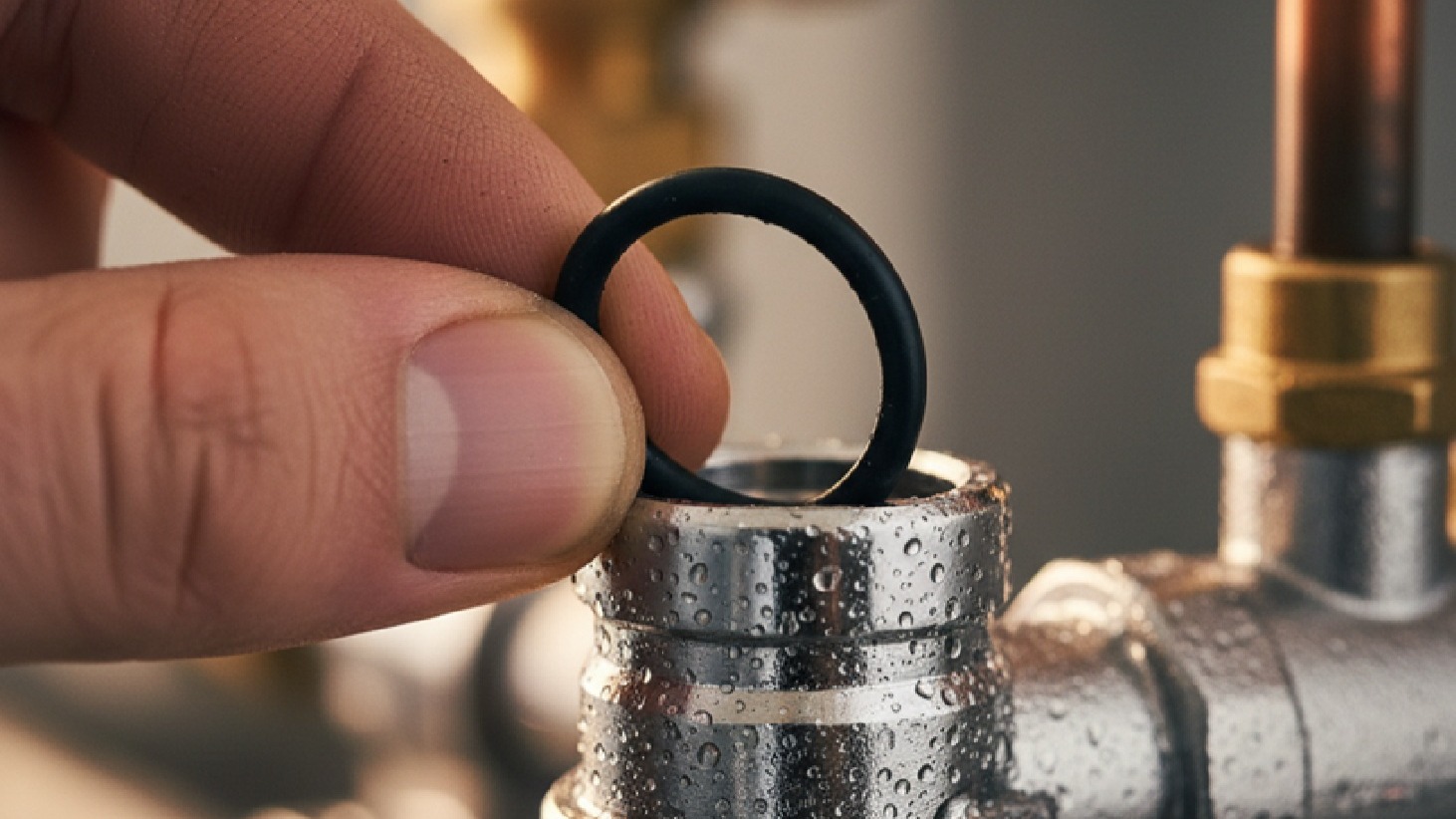
A tiny rubber ring the width of your fingernail can be the difference between a smoothly running boiler and a costly emergency callout. These unassuming components, boiler sealing rings and O-rings, prevent thousands of litres of water from escaping your heating system each year. Yet most homeowners never give them a second thought until something goes wrong.
The reality? Understanding these small but critical parts can save you significant money and hassle. Whether you're a heating engineer stocking up on spares or a homeowner trying to understand what your plumber's talking about, knowing the difference between an EPDM and a nitrile O-ring matters more than you'd think.
Why Material Choice Actually Matters
Walk into any heating parts supplier and you'll find dozens of sealing rings that look identical to the untrained eye. The difference lies in their molecular structure, which determines how they respond to heat, pressure, and the chemicals in your heating system.
Countless cases exist where someone's fitted the wrong material type, only to have it fail within months. A £2 seal becomes a £200 problem when you factor in the water damage, the emergency callout, and the time off work. The material isn't just a technical detail, it's the entire point of the seal's existence.
Different materials expand and contract at different rates when exposed to heat. Some remain flexible at sub-zero temperatures, during others becoming brittle. Some resist the glycol in your antifreeze, during others deteriorating within weeks. The right choice depends entirely on where the seal sits in your system and what it needs to withstand.
Common Materials in Boiler Sealing Applications
EPDM (Ethylene Propylene Diene Monomer)
EPDM dominates the domestic heating market, and for good reason. This synthetic rubber handles hot water brilliantly, maintaining its flexibility across a temperature range from -40°C to 150°C. It resists degradation from the glycol-based inhibitors used in most central heating systems and doesn't mind the occasional dose of cleaner or descaler.
You'll find EPDM seals throughout modern boilers, on pump unions, in heat exchanger connections, and sealing expansion vessel connections. The material's one weakness? It doesn't cope well with mineral oils, so it's unsuitable for oil-fired boiler applications where petroleum products might be present.
Nitrile Rubber (NBR)
Nitrile rubber serves where EPDM can't. Oil-resistant and durable, nitrile seals work in both oil and gas boilers. They handle temperatures up to 120°C comfortably, though they're not quite as heat-tolerant as EPDM. The trade-off makes sense for applications where oil contact is possible.
Both materials are stocked because there's no universal solution. A seal that's perfect for a Grundfos pump connection on a gas boiler might fail catastrophically on an oil-fired system. The chemistry matters.
Silicone Seals
Silicone seals appear less frequently in standard heating applications but have their place in high-temperature zones. They remain stable up to 200°C, making them suitable for flue connections and certain heat exchanger applications. However, their lower tensile strength means they're not ideal for high-pressure water connections where mechanical stress is constant.
Viton (FKM)
Viton represents the premium end of sealing materials. This fluoroelastomer handles extreme temperatures and aggressive chemicals without breaking down. You'll find Viton seals in commercial boiler installations and industrial heating systems where the operating conditions exceed what standard materials can tolerate. The cost reflects this capability; a Viton O-ring might cost ten times what an EPDM equivalent does.
Understanding O-Ring Sizing Standards
The sizing system for O-rings follows British Standard BS1806 and its international equivalent ISO 3601. These standards define O-rings by their inside diameter and cross-section thickness, measured in millimetres. A typical designation might read "20mm x 2mm", meaning a 20mm internal diameter with a 2mm cord thickness.
This standardisation matters because it ensures compatibility across manufacturers. When you order replacement seals for Andrews boiler parts, the sizing follows the same convention as seals for Halstead systems, making cross-referencing possible.
Cross-Section Thickness
The cross-section thickness determines how much compression the O-ring experiences when fitted. Too thin, and it won't create an adequate seal. Too thick, and you'll struggle to fit the components together, potentially damaging the seal in the process. The standard cross-sections, 1.5mm, 2mm, 3mm, and 5mm, cover the vast majority of domestic heating applications.
Internal Diameter Precision
Internal diameter measurements require precision when determining boiler o-ring sizes. A 25mm O-ring won't seal properly in a 26mm groove, and forcing a 26mm ring into a 25mm space will stretch it beyond its design limits, reducing its sealing capability and lifespan. The tolerance is typically ±0.1mm for quality seals.
Measuring Seals When You Don't Have the Specifications
Sometimes you need to replace a seal but can't identify the original part number. The boiler might be older, or the previous installer didn't leave documentation. Measuring accurately becomes essential.
O-Ring Measurement
For O-rings, measure the internal diameter by laying the seal flat on a ruler. Don't stretch it, measure it in its relaxed state. Then measure the cord thickness with digital callipers if you have them, or estimate using a ruler if you're careful. A 2mm cord looks noticeably thinner than a 3mm one once you know what you're looking at.
Flat Sealing Rings
Flat sealing rings and washers need both their internal and external diameters measured, plus their thickness. These three dimensions define the seal completely. Write them down immediately; it's surprisingly easy to forget measurements when you're juggling parts in a tight airing cupboard.
Material Identification
The material identification presents more challenges. If the seal's still in reasonable condition, you can make an educated guess based on where it came from. Water pump seals in gas boilers? Almost certainly EPDM. Oil boiler components? Probably nitrile. When in doubt, EPDM covers most domestic hot water applications safely.
Temperature Ratings and System Compatibility
Modern condensing boilers operate at lower flow temperatures than older systems, typically around 60-70°C for optimal efficiency. Non-condensing boilers might run hotter, sometimes reaching 80-85°C. These temperatures sit comfortably within EPDM's capability, which explains its prevalence.
Localised Hot Spots
However, localised hot spots exist within boiler systems. The primary heat exchanger can experience temperatures approaching 100°C, particularly during the heating cycle's initial phase. The boiler sealing rings in these areas need materials rated well above the average system temperature to account for these peaks.
Cold Conditions
Cold conditions matter too. An external expansion vessel or a boiler in an unheated garage might see temperatures below freezing in winter. EPDM maintains flexibility down to -40°C, while some lower-quality rubber compounds become brittle at 0°C. A seal that works perfectly in summer can fail during the first hard frost if it's not properly specified.
Pressure Interaction
Pressure ratings interact with temperature. A seal that handles 3 bar at 60°C might only be rated for 2 bar at 80°C. The combination of heat and pressure stresses the material, accelerating degradation. When selecting seals for Danfoss valves or similar components, both factors need consideration.
Seal Compression and Groove Design
An O-ring works by being compressed between two surfaces, typically into a machined groove. The compression creates the sealing force; too little and water escapes, too much and the seal extrudes or tears.
Standard compression for static seals (where surfaces don't move relative to each other) is 15-25% of the cord diameter. A 2mm O-ring should compress by 0.3-0.5mm when properly fitted. This compression creates sufficient sealing force without overstressing the material.
Dynamic seals, where surfaces move, such as pump shaft seals, require different compression percentages and groove designs. These applications need specialist consideration beyond standard boiler sealing rings applications.
Groove depth and width must match the seal dimensions. A 2mm cord O-ring typically needs a groove approximately 1.6mm deep and 2.5-3mm wide. These dimensions ensure proper compression during allowing the O-ring to deform slightly into the groove for optimal sealing.
Common Boiler Seal Locations and Sizes
Understanding where different boiler o-ring sizes appear in your heating system helps with identification and replacement.
Pump Connections
15mm and 22mm unions: Typically use 2mm cord O-rings with internal diameters matching the pipe size
Pump body seals: Vary by manufacturer, but commonly 3mm cord with 30-40mm internal diameters
Heat Exchanger Connections
Primary heat exchanger seals: Often 3mm or 5mm cord for high-pressure applications
Plate heat exchanger seals: Proprietary sizes requiring manufacturer parts
Expansion Vessel Connections
Standard vessels: Usually 22mm or 28mm O-rings with 2mm cord
Large vessels: May use 3mm cord for additional sealing force
Valve Applications
Zone valves: Small O-rings, typically 1.5mm or 2mm cord
Motorised valves: Multiple seals of varying sizes within the valve body
Quality pipe fittings and connections ensure proper sealing surfaces for O-rings throughout your heating system.
Sourcing Quality Seals and Avoiding Counterfeits
The market contains both genuine manufacturer parts and generic alternatives. Genuine seals from Honeywell or similar manufacturers undergo rigorous quality control and material testing. They're manufactured to tight tolerances using certified materials.
Generic Seal Quality
Generic seals vary widely in quality. The best match original specifications closely and uses equivalent materials at lower prices. The worst use inferior rubber compounds that look identical but fail rapidly under operating conditions. Price alone doesn't indicate quality; some expensive generic seals perform poorly while some budget options prove reliable.
Quality Indicators
Visual inspection reveals some quality indicators. Quality seals have consistent colour throughout, smooth surfaces without moulding flash or irregularities, and uniform cross-sections. Poor seals might show colour variations, rough surfaces, or dimensional inconsistencies.
Application-Specific Choices
When replacing seals in critical applications, primary heat exchangers, pump assemblies, or expansion vessel connections from Altecnic, using manufacturer-specified parts reduces risk, for less critical applications like radiator valve tails or basic pipe unions, quality generic seals perform adequately at lower cost.
Special Applications and Non-Standard Seals
Some boiler applications require seals beyond standard O-rings. Bonded seals combine a metal washer with a vulcanised rubber element, providing both mechanical strength and sealing capability. These appear frequently on hydraulic connections where vibration might dislodge a simple O-ring.
Quad-Rings
Quad-rings feature an X-shaped cross-section rather than a circular one. This design provides four sealing surfaces instead of two, reducing the compression needed and improving performance in dynamic applications. You'll find quad-rings on some pump assemblies and motorised valve stems.
Flat Fibre Washers
Flat fibre washers still appear in older systems, particularly on compression fittings and union connections. These single-use seals crush to conform to surface irregularities. They lack the resilience of rubber seals and shouldn't be reused, but they're simple and effective for low-pressure applications.
Custom Seals
Custom seals for specific boiler models sometimes require direct manufacturer sourcing. Morco water heaters and similar specialist equipment might use proprietary seal designs that don't match standard sizes. Identifying the exact model number becomes essential for sourcing correct replacements.
Installation Best Practices
Clean, dry surfaces are essential for reliable sealing. Debris, old sealant residue, or corrosion in the sealing groove prevent proper O-ring compression and create leak paths. Wire brushing and degreasing prepare surfaces properly, it takes two minutes and prevents hours of troubleshooting later.
Lubrication
Lubrication eases installation and prevents seal damage during assembly. Silicone grease works well for most applications, providing slip without attacking rubber materials. Apply a thin film to the O-ring before fitting, enough to make it slippery but not so much that excess grease contaminates the system.
Avoiding Damage
Avoid twisting or rolling seals during installation. An O-ring that twists in its groove creates an uneven seal and concentrates stress, leading to premature failure. Take your time threading components together, ensuring the seal stays properly positioned throughout assembly.
Torque Specifications
Torque specifications matter for sealed connections. Over-tightening crushes seals excessively, causing extrusion and damage. Under-tightening leaves insufficient compression for reliable sealing. When working with EPH Controls or similar precision components, following specified torque values ensures optimal seal performance.
Troubleshooting Seal Failures
Surface Damage
Persistent leaks despite new seals indicate problems beyond the seal itself. Scratched or corroded sealing surfaces damage even perfect seals. Scrutinise grooves and mating surfaces; a single deep scratch can create a leak path that no seal can overcome.
Chemical Incompatibility
Swollen or distorted seals removed from a system suggest chemical incompatibility. The seal material has absorbed fluid and expanded beyond its design dimensions. This swelling prevents proper sealing and indicates either wrong material selection or contaminated system fluid requiring treatment.
Heat Degradation
Hardened, brittle seals point to excessive heat exposure or age. The rubber has lost its elasticity and can no longer compress adequately. This degradation is normal over time, but accelerates dramatically if the seal experiences temperatures beyond its rating.
Extrusion
Extruded seals, where rubber has been forced out of the groove, result from excessive pressure, inadequate groove depth, or seal material too soft for the application. This failure mode often indicates a design mismatch between the seal and its application, requiring specification review rather than simple replacement.
Building a Sensible Seal Stock
For heating engineers, maintaining a seal kit with common sizes prevents return visits for minor parts. A basic stock might include 15mm, 22mm, and 28mm O-rings in both 2mm and 3mm cord thicknesses, covering most radiator and pipe connections. Adding pump union seals and common boiler-specific seals rounds out a practical kit.
Homeowner Stock
Homeowners benefit from keeping a few basic sizes on hand, too. A pack of assorted O-rings costs less than a single emergency callout for a leaking radiator valve. Knowing you can handle a minor seal replacement yourself provides peace of mind and saves money.
Storage Conditions
Storage matters for seal longevity. Keep seals away from direct sunlight, heat sources, and ozone-producing equipment like electric motors. UV light and ozone degrade rubber compounds even before installation. A sealed plastic box in a cool, dark cupboard preserves seals for years.
Stock Rotation
Dating your seal stock helps ensure you use fresher materials first. During proper storage, seals last many years, but rubber does age. Using older stock first and rotating your supplies maintains reliability.
Making Informed Choices
The next time you're faced with a weeping pump union or a dripping radiator valve, you'll understand that the solution isn't just "a seal", it's the right seal, properly sized and correctly specified for its application. That knowledge transforms a frustrating leak into a straightforward fix.
Whether you're sourcing parts for professional installations or maintaining your own heating system, understanding sealing materials and sizing removes the guesswork. EPDM for standard hot water applications, nitrile where oil contact is possible, and always measuring twice before ordering.
These small components deserve respect for the work they do. A few grams of engineered rubber, compressed into a carefully machined groove, containing hundreds of litres under pressure and temperature. When specified correctly and installed properly, they perform this task reliably for years. When chosen carelessly or fitted poorly, they fail quickly and expensively.
The heating industry continues to develop improved seal materials and designs, but the fundamentals remain constant. Understanding material properties, respecting dimensional accuracy, and following proper installation procedures ensures these humble components perform their essential function without drama. That's ultimately what every heating system needs: reliable components working quietly in the background, letting you get on with more important things than worrying about leaks.
For comprehensive boiler sealing rings and O-rings suitable for all heating applications, Heating and Plumbing World stocks EPDM, nitrile, and specialist seal materials in standard boiler o-ring sizes. Professional-grade seals ensure reliable connections throughout your heating system. Quality components from manufacturers, including Grundfos, Danfoss, and Honeywell come with correctly specified seals for their applications. For technical guidance on seal material selection, sizing for specific applications, or troubleshooting persistent leaks, experienced heating specialists can provide support on proper seal specification and installation techniques.