

Boss White Joint Compound: Uses and Application
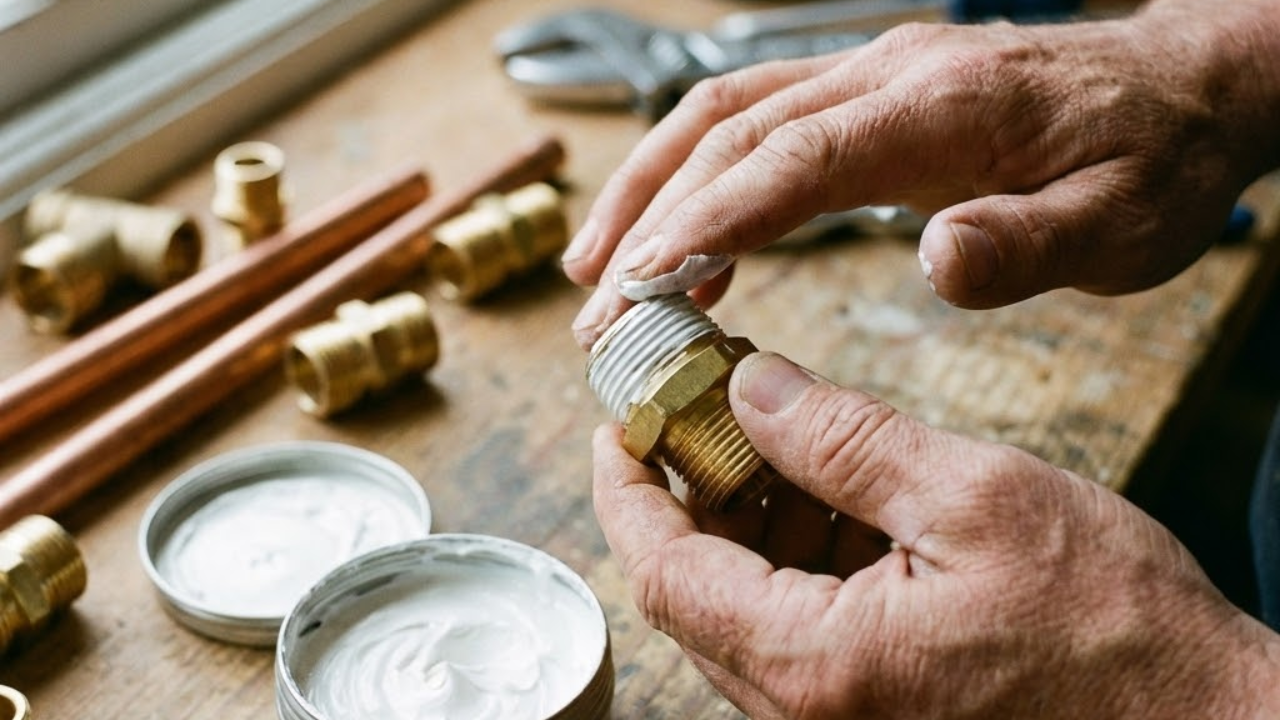
Thread sealants separate the professionals from the chancers. You can spot a bodged job the moment you see PTFE tape wound backwards on a gas fitting or paste slathered over threads like butter on toast. Boss White joint compound sits in nearly every heating engineer's van for good reason – it's been the go-to thread sealant for decades, particularly on steam, water, and low-pressure gas installations where a reliable seal matters more than speed.
This isn't about brand loyalty. It's about understanding what makes a proper jointing compound work, when to use it instead of tape, and how to apply it correctly so you don't get callbacks. Heating and Plumbing World stocks Boss White alongside other professional-grade thread sealant applications because trade professionals need products that perform under real-world conditions – not just in lab tests.
What Boss White Joint Compound Actually Is
Boss White is a solvent-based jointing paste formulated specifically for threaded pipe connections. The white colour makes it easy to see coverage during application, which matters when you're working in tight spaces or poor light. Unlike PTFE tape that relies purely on mechanical compression, Boss White fills the spiral gaps between male and female threads, creating a seal that handles both pressure and thermal expansion.
The compound contains suspended particles that fill microscopic imperfections in the thread profile. When you tighten the joint, these particles compress and lock into place, forming a barrier against fluid or gas migration. The solvent carrier evaporates over time, leaving behind a semi-solid seal that remains flexible enough to accommodate slight movement without cracking.
Key properties include:
- Temperature range: Typically -50°C to +150°C, covering most domestic and light commercial applications
- Pressure rating: Suitable for low to medium pressure systems (specific ratings depend on pipe material and thread quality)
- Compatibility: Works with steel, brass, copper, and most metal threaded fittings
- Drying time: Forms a skin within minutes but reaches full cure over 24-48 hours
Think of this solvent-based jointing paste as the grout between tiles. PTFE tape is like laying tiles directly against each other – it works if everything's perfect, but any gap becomes a leak path. The compound fills those gaps, compensating for slight thread damage or manufacturing tolerances that would otherwise cause problems.
Where You Should Use Boss White
Thread sealants aren't universal. Boss White excels in specific applications where its chemical composition and sealing mechanism provide advantages over alternatives. Understanding these scenarios prevents both over-specification (wasting time and money) and under-specification (getting callbacks).
Water System Jointing
Boss White handles potable water systems without issue, making it suitable for cold water distribution pipework, hot water secondary returns, and heating system fill loops. The compound doesn't degrade in continuous water contact, and once cured, it won't leach chemicals into the water supply in concentrations that affect water quality.
I've seen installations where engineers used Boss White on every threaded connection in a commercial heating system – radiator tails, pump unions, valve glands. Twenty years later, those joints remain leak-free despite countless heating cycles and the inevitable water chemistry changes that occur in closed systems. That's the kind of water system jointing reliability that builds a reputation.
Low-Pressure Gas Sealant
LPG installations below 75 millibar often use Boss White, particularly on older systems where threaded connections dominate. Natural gas at meter pressure (21 mbar) also falls within the compound's safe operating range as a low-pressure gas sealant, though regulations and manufacturer recommendations must always take precedence over general practice.
The critical point: Boss White is not approved for high-pressure gas or situations where specific jointing compounds are mandated by gas safety regulations. Always check current Gas Safe guidance and the specific installation requirements before selecting any sealant for gas work.
Steam Condensate Lines and Systems
Low-pressure steam systems (up to 1 bar) benefit from Boss White's temperature tolerance and ability to maintain seal integrity through repeated heating and cooling cycles. Steam condensate lines, where you get both temperature variation and corrosive conditions, also suit the compound's properties.
A hotel heating system I worked on years back had constant issues with leaking steam trap connections. The previous contractor had used PTFE tape, which degraded rapidly under the thermal cycling. Switching to Boss White on the replacement traps eliminated the problem – the compound's flexibility handled the expansion and contraction without losing the seal.
When Not to Use Boss White
Knowing what Boss White can't do matters as much as knowing its strengths. Using the wrong sealant doesn't just risk leaks – it can cause system damage, contamination, or dangerous gas escapes.
Avoid Boss White on:
- Oxygen lines: The petroleum-based carrier creates a fire risk in oxygen-rich environments
- Compression fittings: These create seals through metal-to-metal contact; adding compound interferes with the compression mechanism. Quality compression fittings from manufacturers like Altecnic are designed for metal-to-metal sealing and don't require thread sealant.
- Plastic threads: Many plastic materials react with the solvents in Boss White, causing brittleness or chemical degradation
- High-pressure systems: Above the manufacturer's specified pressure rating, the compound can extrude from the threads under load
- Hydraulic systems: Petroleum-based compounds aren't compatible with most hydraulic fluids and can contaminate the system
I once encountered a heating system where someone had used Boss White on the union connections of a Grundfos circulator pump. The compound had squeezed into the pump body during installation, contaminating the rotor chamber and causing premature bearing failure. Pump unions need either no sealant (if they have integral O-rings) or a specific type recommended by the manufacturer – never general-purpose jointing paste.
Application Technique That Actually Works
Poor application causes more joint failures than product defects. Boss White requires proper technique to form a reliable seal, and rushing the job or applying it incorrectly wastes both time and material.
Surface Preparation
Start with clean, dry threads. Oil, grease, old PTFE tape, or corrosion products prevent the compound from adhering properly and filling thread imperfections. Use a wire brush to clean both male and female threads, removing any debris or scale.
Check the thread condition while you're cleaning. Damaged threads – stripped, cross-threaded, or corroded – won't seal reliably no matter what compound you use. If the thread damage is significant, replace the fitting. No sealant compensates for mechanically compromised threads. Proper BSP thread sealing starts with sound threads.
Boss White Application Method
Apply Boss White to the male thread only, starting from the second thread. Leave the first thread clean. This prevents excess compound from being squeezed into the pipe bore when you tighten the joint, which can cause blockages or contamination.
Use a thin, even coating that covers the thread peaks without filling the valleys completely. You should still see the thread profile through the compound. A common mistake is applying too much, which creates a hydraulic lock when tightening and can actually prevent proper thread engagement.
Step-by-step Boss White application process:
- Clean both male and female threads thoroughly
- Apply compound to male thread only, starting from the second thread
- Cover approximately two-thirds of the thread length (don't coat threads that won't engage)
- Use a thin, even layer – the thread profile should remain visible
- Assemble the joint immediately before the compound skins over
- Tighten to the correct torque for the pipe size and material
Tightening the Joint
Hand-tighten first until the threads engage fully and the joint feels snug. Then use a wrench to tighten further, following the recommended turns past hand-tight for the specific pipe size. For BSP thread sealing, this typically ranges from 1.5 to 3 turns depending on diameter.
Don't overtighten. Excessive torque can damage threads, crack fittings (especially brass), or extrude so much compound that it blocks the pipe bore. The joint should feel firm and secure, but forcing it past the natural stop point causes more problems than it solves.
Wipe away any excess compound that squeezes out at the joint face. This keeps the installation neat and prevents contamination of adjacent components or surfaces.
Boss White vs PTFE Tape
The tape-versus-paste debate runs through every plumbing merchant's trade counter. Both have their place, and choosing the right one depends on the application, not personal preference or what's closest to hand in the van.
PTFE tape advantages:
- Quick application on simple joints
- No mess or cleanup required
- Works well on parallel threads with O-rings
- Easier to disassemble joints for maintenance
- No curing time needed
Boss White advantages:
- Fills damaged or imperfect threads more effectively
- Provides better seal on tapered threads for BSP thread sealing
- Handles thermal cycling without degrading
- More resistant to vibration loosening
- Better for permanent installations
I use PTFE tape on radiator tails and temporary test connections – anywhere I might need to adjust or remove the fitting during commissioning. Boss White goes on boiler connections, system manifolds, and permanent pipework joints where I don't expect to disturb the connection again. For control valves and zone valves from manufacturers like Honeywell, I check the installation instructions – some specify no sealant on certain connections, while others require it.
The reality? Most experienced engineers carry both and select based on the specific joint. A heating system manifold might use this solvent-based jointing paste on the main pipework connections but PTFE tape on the Honeywell valve unions that need annual servicing. It's about matching the sealant to the job, not picking a favourite and using it everywhere.
Common Application Mistakes
Even experienced engineers make mistakes with thread sealants, often through rushing or working in difficult conditions. Recognising these errors helps you avoid callbacks and the reputation damage that comes with leaking joints.
Over-Application
Slathering compound onto threads like you're icing a cake is the most common mistake. Excess compound gets squeezed into the pipe bore during tightening, potentially blocking strainers, fouling valve seats, or contaminating system water. In extreme cases, I've seen compound completely block the bore of 15mm fittings, causing mysterious flow problems that took hours to diagnose.
Applying to Female Threads
Putting compound on female threads makes it harder to see coverage and increases the risk of excess material entering the system. It also makes it difficult to judge how much you're using, often leading to over-application. Always work on the male thread where you can see what you're doing.
Using on Unsuitable Materials
Danfoss thermostatic radiator valves often use plastic thread inserts in the valve body. Applying solvent-based compound to these threads can cause the plastic to swell or crack, ruining an expensive component. Always check manufacturer guidance for composite or plastic-bodied fittings.
Ignoring Curing Time
Boss White needs time to cure fully before the system comes under pressure. Filling and pressurising a heating system immediately after making joints doesn't give the compound time to set, increasing the risk of leaks. Where possible, allow 24 hours before pressure testing – or at least several hours if you're working to tight deadlines.
Storage and Shelf Life
Boss White degrades if stored incorrectly, becoming either too thick to apply smoothly or separating into constituent parts that won't seal properly. Proper storage extends shelf life and ensures the compound performs as intended when you need it.
Keep tins tightly sealed when not in use. The solvent carrier evaporates if exposed to air, thickening the compound until it becomes unusable. Store in a cool, dry place away from direct heat sources – the back of a van in summer isn't ideal, but it's reality for most of us. Just be aware that extreme temperatures can affect consistency.
Check the compound before use if it's been sitting in the van for months. It should be smooth and spreadable, not lumpy or separated. If it's dried out, don't add white spirit or other solvents to thin it – this changes the formulation and can compromise the seal. Just replace it.
Most manufacturers recommend using Boss White within two years of purchase for optimal performance. In practice, properly stored compound often remains usable longer, but for critical applications or gas work, using fresh material eliminates any doubt about seal integrity.
Alternatives and When to Use Them
Boss White isn't the only thread sealant in the professional toolkit. Understanding alternatives and their specific applications makes you more versatile and ensures you're always using the best product for each situation.
PTFE Tape
Already covered in comparison, but worth emphasising: PTFE tape suits temporary connections, radiator tails, and parallel threads with O-ring seals. It's also the better choice when you need to make frequent adjustments during commissioning or where future disassembly is likely.
Anaerobic Sealants
Products like Loctite 577 cure in the absence of air, forming a hard, permanent seal on metal threads. These work brilliantly on hydraulic systems, high-pressure steam, and situations where vibration might loosen conventional sealants. The downside? Joints become very difficult to disassemble without heat, making them unsuitable for serviceable connections.
Hemp and Paste
Traditional hemp and jointing paste still has applications, particularly on large-diameter iron pipework where thread tolerances are loose. The hemp provides bulk to fill gaps, while the paste seals and lubricates. It's old-school, but for Victorian cast iron heating systems, it often outperforms modern alternatives.
Gas-Specific Compounds
High-pressure gas work requires approved gas-safe jointing compounds that meet specific standards for chemical compatibility and pressure resistance. Never substitute general-purpose products like Boss White on installations above low-pressure thresholds or where regulations mandate specific sealant types.
Regulatory Considerations
Thread sealants on gas installations fall under Gas Safety (Installation and Use) Regulations, which mandate competent person schemes and compliance with British Standards. While Boss White is suitable for low-pressure gas work, you must verify that your specific application falls within both the product's specifications and regulatory requirements.
Water systems, particularly potable water, require sealants that comply with WRAS approval or equivalent standards ensuring they won't contaminate drinking water. Boss White meets these requirements when used correctly, but always check current approvals if you're working on systems where water quality is critical.
For commercial installations, building specifications often dictate specific products or performance standards for jointing compounds. Don't assume Boss White is acceptable just because it's suitable for the application – check the specification and get approval if you're proposing alternatives.
Getting the Best from Boss White
Boss White joint compound delivers reliable seals when you match it to appropriate thread sealant applications and apply it correctly. It's not a universal solution, but for threaded connections on water system jointing, low-pressure gas sealant requirements, and steam condensate lines, it remains one of the most dependable products available.
The key points: clean threads, thin application to male threads only, correct tightening torque, and adequate curing time. Miss any of these, and you're risking callbacks regardless of how good the product is.
Keep Boss White in your toolkit alongside PTFE tape, anaerobic sealants, and other specialised products. The best engineers don't have a favourite sealant – they have the right sealant for each specific job. Understanding what this solvent-based jointing paste does well, where it falls short, and how to apply it properly for BSP thread sealing makes you more capable and more reliable.
When you need professional-grade jointing compounds and other essential supplies, contact our technical team for expert guidance on selecting the right products for your installations. Quality materials from trusted brands like Altecnic's valve solutions form the foundation of work that lasts.
When pairing Boss White with quality components like Honeywell controls for zone valves and system regulation, knowing how to use them properly separates professionals from amateurs.