

Bronze vs Stainless Steel Pumps: Material Selection for Potable Water
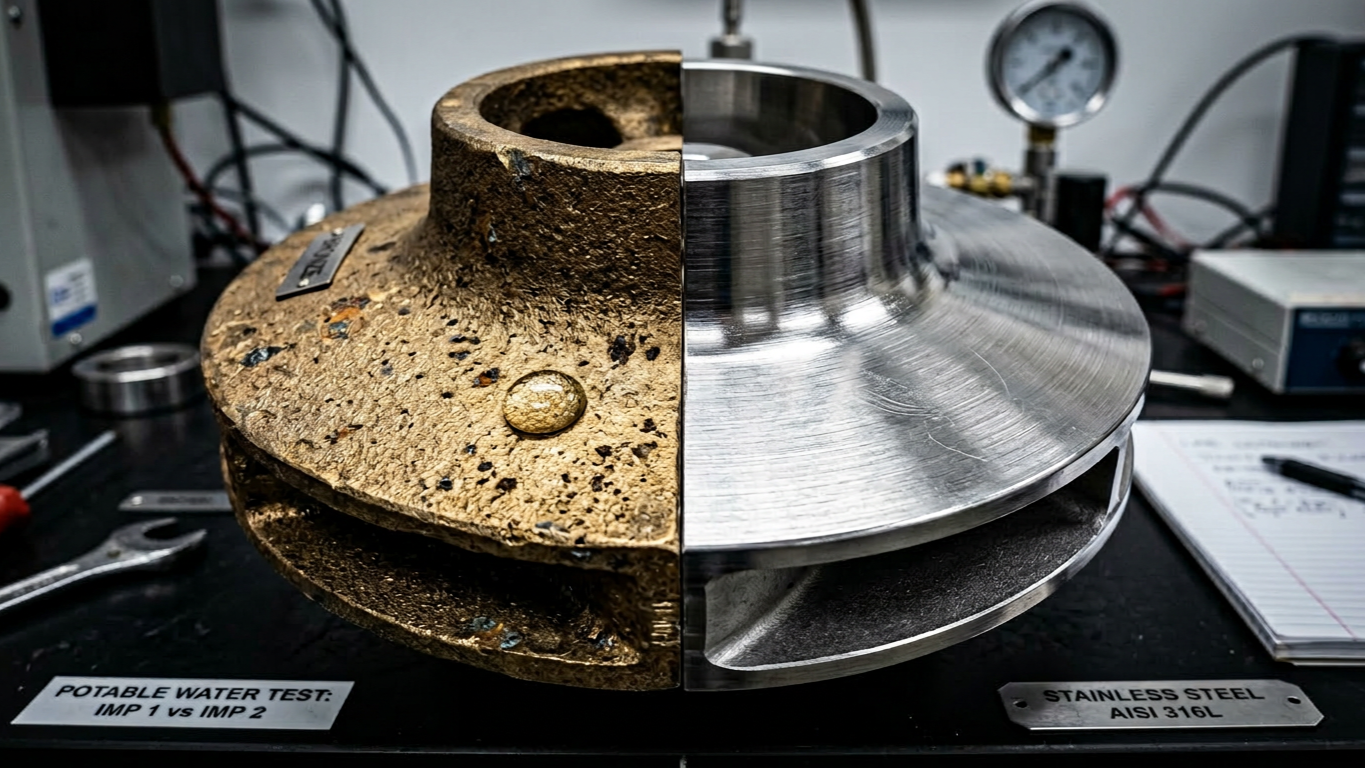
When you are specifying a pump for potable water, the material choice is more than just a technical detail. It is a decision that affects the longevity of your entire system. Get it wrong, and you face premature failures or contamination risks that could have been easily avoided.
We have installed hundreds of pumping systems across commercial buildings and municipal sites. The bronze vs stainless steel pumps debate comes up on nearly every single project we handle. There is no universal answer because the right choice depends on your specific water chemistry and budget.
Choosing between these materials is like selecting a pair of work boots. A classic leather boot is reliable and holds up well in traditional environments, but it needs specific care. In contrast, a modern synthetic boot might handle harsh chemicals and wet conditions better, even if it costs a bit more upfront.
Understanding Material Properties In Potable Water
Bronze and stainless steel behave very differently when they are exposed to potable water daily. Bronze is typically a copper-tin alloy that has been the industry standard for decades. It is a traditional choice that plumbers have trusted since the era of the Romans.
Stainless steel represents the modern alternative for most heating and plumbing supplies. It is a chromium-nickel alloy that forms a passive oxide layer to protect the metal from the water. Consequently, the critical difference lies in how each material responds to pH levels and chlorine content inside your pipes.
You must also consider the other components in your system during the selection process. For instance, ensuring your Worcester Bosch condensate pump or secondary drainage is compatible with the water chemistry is just as important. The material you choose will dictate how often your team needs to perform maintenance.
Corrosion Resistance: Where Each Material Excels
Bronze performs exceptionally well in most standard municipal water supplies across the UK. The copper content naturally resists bacterial growth on the internal pump surfaces. In systems with moderate chlorine, bronze develops a protective coating that improves its resistance over time.
However, bronze has specific vulnerabilities that you should not ignore. High-velocity water can cause a significant increase in the erosion-corrosion rate, wearing away the protective layer. Furthermore, water with a very low pH can accelerate dezincification, leaving the metal porous and weak.
Stainless steel handles aggressive water chemistry much better than standard bronze. It maintains its structural integrity across a wider pH range and tolerates higher chlorine levels. Additionally, it offers a much lower erosion-corrosion rate even when the water is moving at very high speeds.
Water Quality Compliance And Leaching Concerns
Material selection is now more important than ever due to strict regulatory requirements. Bronze often contains trace amounts of lead to help with the manufacturing process. However, modern laws have tightened the limits on wetted component lead content for all drinking water systems.
To meet these rules, manufacturers now offer a specific C89833 low-lead alloy for their pump bodies. The C89833 low-lead alloy replaces lead with bismuth or selenium to ensure the water remains safe. Using components with a verified wetted component lead content is essential for maintaining compliance in residential blocks.
Stainless steel eliminates these leaching concerns entirely because it contains zero lead. For schools and healthcare facilities, using stainless steel is the easiest way to ensure metal dissolution compliance. Achieving metal dissolution compliance protects the most vulnerable users from any metallic taste or contamination in the supply.
Initial Cost vs Lifecycle Economics
Let's talk about the numbers because material selection is ultimately a business decision. Bronze pumps typically cost about 20% less upfront than equivalent stainless steel models. This initial saving is often very attractive for projects with a tight construction budget.
However, the purchase price only tells a small part of the story. We track maintenance costs carefully, and the data reveals big differences in the total cost of ownership. Stainless steel pumps often extend the time between expensive service intervals in harsh water conditions.
If you are maintaining a high-output Ecoflam gas burner system, you want the pumps to last. In neutral water, bronze might last 20 years with basic maintenance. In contrast, in slightly acidic water, a stainless steel pump will likely pay for itself within a decade through reduced repair costs.
Operational Factors Influencing Selection
Beyond corrosion and cost, several practical factors affect which material makes sense for your site. Bronze handles very high temperatures better than standard stainless steel pumps. If you are pumping water above 90°C, bronze is often the more reliable choice for your system.
Stainless steel is harder and more resistant to cavitation damage than bronze. In systems with variable demand that creates pressure spikes, stainless steel impellers will hold their shape longer. This is particularly useful when the pump is paired with a heavy-duty Bentone burner motor in an industrial setting.
Bronze has slightly better noise-damping properties than stainless steel. It can reduce the audible hum of the pump by a few decibels. In quiet residential applications, this small difference might be a relevant factor for your design.
Water Chemistry Analysis: The Foundation
You cannot make an informed material decision without understanding your specific water chemistry. We always recommend testing the water at the site before you specify any pump materials. The pH level is the single most important factor for the long-term performance of bronze.
Furthermore, you should check the chloride levels to ensure high chloride pitting resistance. If your site is near the coast, salt intrusion can cause pitting in standard stainless steel. Having a high chloride pitting resistance is vital for pumps that will operate in these salty environments.
I once worked with a local school that insisted on bronze pumps to save a few hundred pounds. However, they failed to test the water, which turned out to be quite acidic. Within five years, the impellers had literally dissolved, and the resulting repairs cost twice as much as the original stainless steel upgrade!
Making The Final Specification Decision
When we specify pumps, we follow a simple framework based on the technical requirements. If your water chemistry is neutral and the budget is tight, bronze is usually the best choice. It has proven performance and is very easy for most technicians to service.
Conversely, if the water is aggressive or variable, you should lean toward stainless steel. It provides a better margin of safety for regulatory metal dissolution compliance in sensitive buildings. It also reduces the risk of expensive downtime in facilities where maintenance access is limited.
You should also check other thermal components like the Oxy-Pilot NG9040 during your system overhaul. This step is vital for ensuring the pilot assembly remains clean and efficient. It also helps in maintaining a steady flame ionisation current throughout the winter months.
Furthermore, if you are also installing a close-coupled WC suite, ensure the incoming pressure is managed properly for all fixtures. Proper planning at this stage prevents a lot of headaches later on. It keeps the entire plumbing network balanced and reliable.
Conclusion
The bronze vs stainless steel pumps decision is about matching the metal to your specific conditions. Bronze offers lower initial costs and great reliability in standard water. Stainless steel provides broader protection against corrosion and ensures you meet modern safety laws.
The best decision always starts with a thorough water analysis. Factor in your operating environment, maintenance team skills, and the long-term goals for the facility. Mismatched materials will always lead to a shortened pump life and higher bills.
Take the time to understand the trade-offs before you sign off on the order. Your future maintenance team will certainly thank you for the extra effort. Please speak to our team today if you need help selecting the perfect material for your next pumping project.