

Chimney Flues for Balanced Flue Boilers in Old Buildings
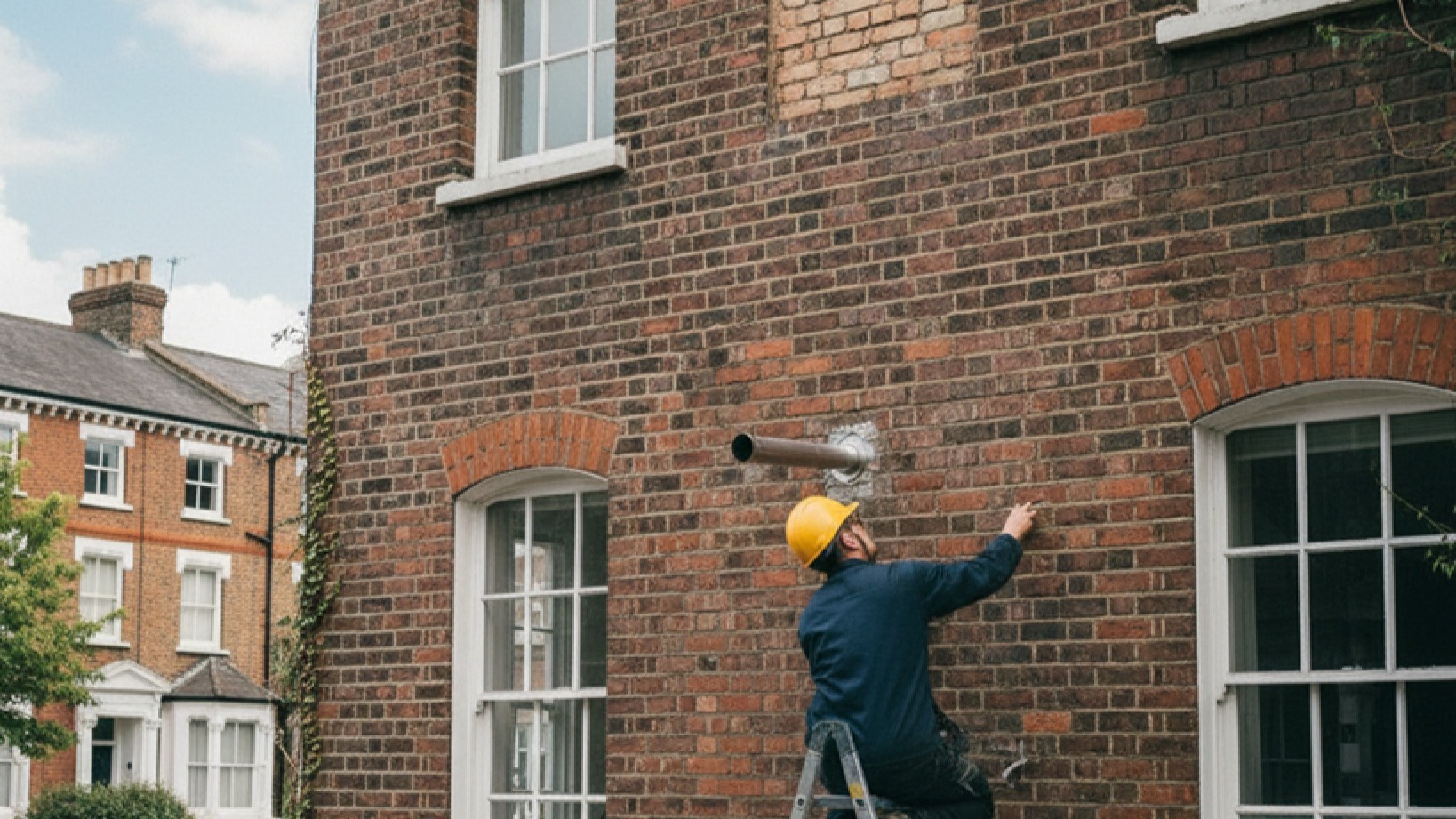
Balanced flue boilers weren't built for Victorian terraces or Georgian townhouses. These modern heating systems exhaust combustion gases horizontally through an external wall, bypassing traditional chimneys entirely. Yet thousands of old buildings across the UK now house balanced flue boilers, leaving property owners wondering what to do with redundant chimney flues and whether their installation meets current regulations.
The relationship between balanced flue technology and existing chimney flues for old buildings creates specific challenges that demand practical solutions rooted in building physics and regulatory compliance.
Why Balanced Flue Boilers Don't Use Existing Chimneys
Balanced flue boilers operate on a closed combustion system. They draw air from outside through one chamber of a concentric flue pipe and expel waste gases through another, maintaining balanced pressure throughout the process. This design eliminates the need for room ventilation and makes them independent of traditional chimney systems.
A conventional boiler relies on natural draught through a vertical flue to remove combustion products. The taller the chimney, the stronger the draught. Balanced flue systems generate their own mechanical draught using a fan, making chimney height irrelevant to their operation. It's like comparing a natural spring to a pressurised pump; both deliver water, but through completely different mechanisms.
This fundamental difference means installing a balanced flue boiler in an old building with existing chimneys leaves you with redundant flue infrastructure that still requires attention.
The Legal Position on Redundant Chimney Flues
Building Regulations Part J covers combustion appliances and fuel storage systems in England. When you install a balanced flue boiler that makes an existing chimney flue redundant, you must cap or seal that flue to prevent:
- Rain ingress that causes internal damp
- Birds nesting in the void
- Cold downdrafts are affecting room temperatures
- Debris falling into living spaces
Gas Safe regulations require any Gas Safe registered engineer who disconnects an appliance from a chimney to cap the flue opening. This applies whether the old appliance was gas, oil, or solid fuel. The cap must be permanent and clearly visible to future inspectors.
Conservation areas and listed buildings face additional restrictions. You cannot remove chimney stacks or alter external chimney features without Listed Building Consent or planning permission. In practice, this means most redundant flues in protected buildings remain physically intact but sealed at the base.
Proper Chimney Flue Installation: Sealing Methods
Three methods dominate professional practice, each suited to different building types and budgets.
Chimney Balloons
Chimney balloons offer a temporary solution. These inflatable devices sit inside the chimney throat and block drafts while remaining removable. They work for short-term installations or rental properties where permanent modifications aren't permitted. However, they deteriorate over 2-3 years and don't prevent moisture ingress from above.
Ventilated Caps
Ventilated caps provide the standard solution for most residential properties. A cap fitted at the base of the chimney breast includes small ventilation holes that allow airflow through the flue while blocking debris and rain. This prevents condensation buildup inside the sealed flue space, which causes damp patches on chimney breasts. The cap must be clearly marked as permanently sealing a redundant flue.
Professional installations using ventilated caps prevent 90% of the damp issues that occur when property owners simply brick up chimney openings without ventilation. The small air circulation stops condensation forming on cold internal surfaces of the sealed flue.
Full Chimney Removal
Full chimney removal suits properties where the chimney breast occupies valuable space and building regulations permit structural changes. This involves removing the chimney breast from ground to roof level, installing structural supports where the breast carried loads, and making good all affected rooms. Listed buildings rarely qualify for this approach.
Positioning Balanced Flue Terminals on Period Buildings
The balanced flue terminal, the visible external component that handles air intake and exhaust, must meet specific clearance requirements under BS 5440-1. These standards ensure combustion gases disperse safely and don't re-enter the building through windows or vents.
Minimum clearances include:
- 300mm below openable windows or ventilation openings
- 300mm horizontally from openable windows or ventilation openings
- 2000mm below a balcony
- 300mm from internal or external corners
- 2000mm from ground level or balcony level
Period buildings with tall sash windows, decorative brickwork, and irregular wall features make these clearances challenging. A Georgian townhouse with floor-to-ceiling windows on every level might offer no compliant location on the primary facade.
Three Solutions for Terminal Positioning
Rear or side wall installation moves the terminal away from prominent elevations. Most planning authorities and conservation officers accept this compromise, as it preserves the building's street-facing character while meeting safety standards. The boiler location inside the building determines whether this option works practically.
Extended horizontal flues allow the terminal to sit up to 3 metres from the boiler using additional flue pipe sections. This lets you position the boiler in a central location while terminating the flue on a compliant wall section. Each metre of horizontal flue reduces efficiency by approximately 2-3%, so minimise the extension length. Heating and Plumbing World stocks various flue extension components for these exact scenarios.
Plume management kits disperse exhaust gases more effectively, reducing the visible plume that concerns conservation officers. These kits don't change clearance requirements but make the installation less visually intrusive on period facades.
Planning permission typically applies when the balanced flue terminal sits on a wall facing a highway in a conservation area. Check with your local planning authority before installation.
Common Installation Mistakes in Old Buildings
Solid wall construction in pre-1920 buildings creates specific installation challenges that modern cavity wall techniques don't address.
Inadequate Wall Thickness Assessment
Inadequate wall thickness assessment causes failures when installers don't verify wall thickness before ordering flue components. Balanced flue terminals come in different lengths to accommodate various wall depths. A standard 300mm terminal won't seal properly in a 450mm solid stone wall, allowing rain penetration around the terminal edge.
Ignoring Internal Lath and Plaster
Ignoring internal lath and plaster leads to cracked finishes when installers core-drill through walls without proper support. Lath and plaster walls need careful cutting and support during penetration to prevent collapse of surrounding plaster sections.
A contractor once drilled through a Victorian townhouse wall without supporting the lath structure. Two square metres of ornate ceiling plaster came down in the room below, original 1880s moulding that couldn't be replicated without specialist heritage plasterers. The repair cost exceeded the entire boiler installation fee.
Thermal Bridging Through Solid Walls
Thermal bridging through solid walls occurs when the metal flue pipe conducts cold from outside to inside without proper insulation. This creates condensation on the external surface of the flue pipe inside the building, leading to damp patches on walls and ceilings. Proper chimney flue installation includes insulated pipe sections where the flue passes through solid walls.
Inadequate Terminal Security
Inadequate terminal security on soft lime mortar allows terminals to work loose over time. Period buildings often use lime mortar that doesn't grip mechanical fixings as firmly as modern cement mortar. Terminals need larger fixing plates or chemical anchors in lime mortar applications.
Maintaining Ventilation in Old Buildings After Installation
Pre-1990 buildings were designed to "breathe" through natural ventilation, chimneys, gaps around windows and doors, and porous wall materials. Sealing a chimney removes a significant ventilation path that the building's moisture management relied upon.
Condensation problems increase in old buildings after chimney sealing unless you compensate with alternative ventilation. The sealed chimney no longer draws moisture-laden air from rooms, so that moisture condenses on cold surfaces like single-glazed windows and external walls.
Trickle Vents
Trickle vents in window frames provide continuous background ventilation that replaces some of the airflow previously drawn up chimneys. Building Regulations Part F requires 8000mm² of background ventilation in habitable rooms and 4000mm² in kitchens and bathrooms. Installing trickle vents during window refurbishment maintains compliance while preserving the building's moisture balance.
Passive Wall Vents
Passive wall vents offer an alternative where window modifications aren't possible. These discrete vents sit high on external walls and allow air circulation without the security concerns of open windows. They work particularly well in rooms where the sealed chimney previously provided the primary ventilation path.
Mechanical Ventilation
Mechanical ventilation becomes necessary in bathrooms and kitchens where moisture production exceeds natural ventilation capacity. Extractor fans must vent directly outside, not into sealed chimney flues. Damp investigations frequently uncover kitchen extractors vented into sealed chimneys, concentrating moisture inside the chimney void and causing extensive damp damage to surrounding walls.
Quality heating controls from manufacturers like Honeywell can help manage system efficiency after balanced flue installation.
Cost Implications and Budget Planning
Balanced flue boiler installations in old buildings typically cost £800-1,200 more than equivalent installations in modern properties. This premium covers:
- Extended survey time to assess wall construction and plan flue routes
- Specialist drilling equipment for solid walls up to 600mm thick
- Additional flue components for non-standard wall depths
- Chimney sealing work using ventilated caps
- Making good decorative plasterwork and period features
- Listed building consent applications where required
The chimney sealing component alone costs £150-300 per flue when done properly with ventilated caps and clear marking. Properties with multiple redundant flues from previous heating systems need each flue sealed independently.
Planning permission applications for conservation area installations add £206 in application fees plus £300-600 for drawings and supporting documents prepared by a qualified professional.
Budget an additional £400-800 for installations requiring Listed Building Consent, as these applications need more detailed heritage impact assessments and often involve pre-application discussions with conservation officers.
Alternative Heating Solutions for Problematic Buildings
Some old buildings present insurmountable challenges for balanced flue installations. Properties with no external walls meeting clearance requirements, buildings where planning permission is repeatedly refused, or structures where wall penetration risks architectural damage need alternative approaches.
Vertical Flue Boilers
Vertical flue boilers use existing chimney stacks, making them suitable for buildings where external wall terminals aren't viable. These boilers draw combustion air from the room and exhaust through a vertical flue pipe that connects to the existing chimney. They require adequate room ventilation and chimney liner installation, but preserve external building appearance. Brands like Andrews offer reliable vertical flue options for heritage properties.
Room-Sealed Flue Boilers with Vertical Terminals
Room-sealed flue boilers with vertical terminals offer a compromise. These systems operate like balanced flue boilers but exhaust vertically through the roof rather than horizontally through walls. The terminal emerges through the roof surface, making it less visible than wall-mounted terminals on prominent elevations. Installation costs increase by £600-1,000 due to additional flue length and roof penetration work.
System Boilers with Separate Cylinders
System boilers with separate hot water cylinders provide flexibility in boiler positioning. The boiler can sit in a location with compliant flue terminal placement while the cylinder occupies a different area of the building. This separation often solves space planning problems in properties with complex layouts. Gledhill manufactures high-quality cylinders that pair well with system boilers in heritage installations.
For technical advice on heating system selection for period properties, contact us for specialist guidance.
Protecting Heritage While Modernising Heating
Balanced flue boilers deliver efficient, compact heating that suits many old buildings, but their installation creates obligations around redundant chimney management and careful terminal positioning. The sealed combustion system that makes these boilers efficient also makes them independent of traditional chimney infrastructure, leaving property owners to properly seal and maintain flues that served heating systems for decades or centuries.
Success depends on three factors: understanding the legal requirements for sealing redundant flues with proper ventilation, positioning balanced flue terminals to meet clearance standards while respecting building character, and maintaining adequate ventilation in buildings designed to breathe through now-sealed chimneys. Each factor requires specific technical knowledge and careful execution.
Period buildings demand more planning time, specialist installation skills, and often higher costs than modern properties. The £800-1,200 premium for installations in old buildings reflects genuine additional complexity, not inflated pricing. Properties in conservation areas or with listed status need early engagement with planning authorities to avoid expensive rework after refused applications.
When balanced flue installation proves impractical due to clearance issues or planning restrictions, vertical flue systems using existing chimneys provide proven alternatives that preserve building character while delivering modern heating efficiency. The key is matching the heating system to the building's constraints rather than forcing inappropriate solutions that create long-term problems.