

Chlorine and Chloramine in UK Water Supplies
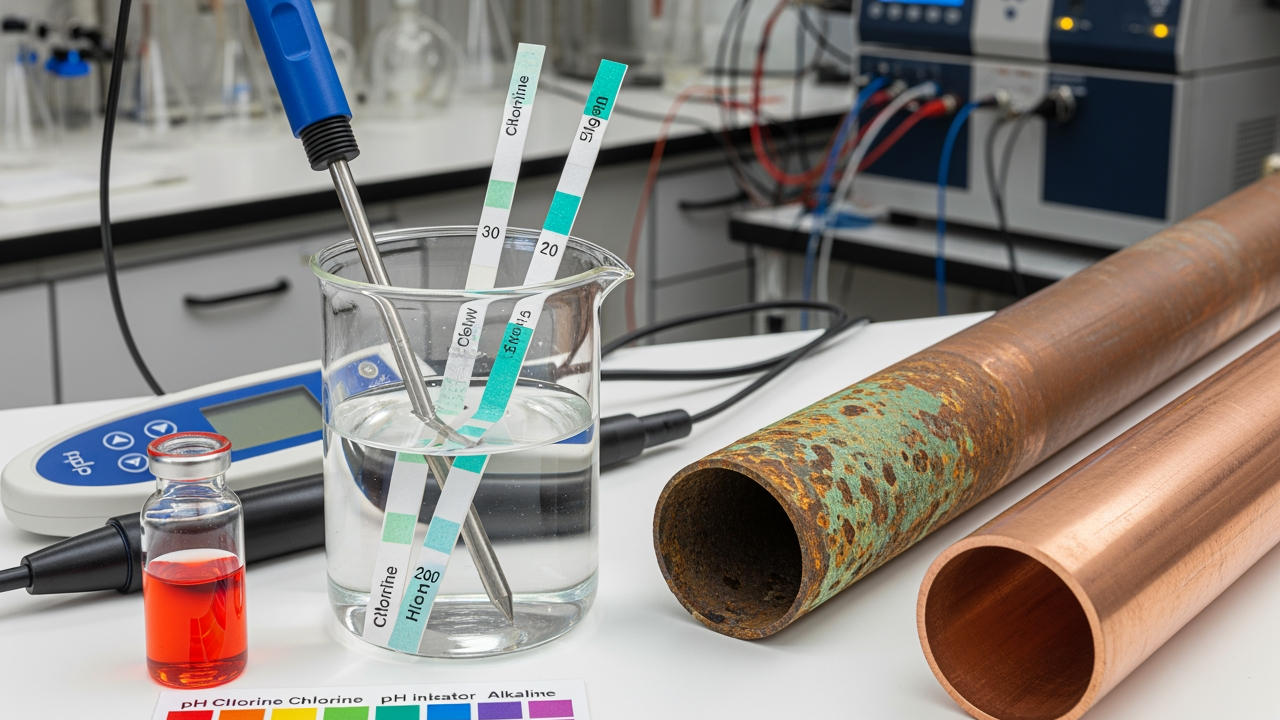
UK water suppliers add chlorine to drinking water at concentrations between 0.2 and 1.0 mg/litre, a practice that's prevented waterborne diseases for over a century. Whilst this disinfection protects public health, chlorine in UK water creates specific challenges for heating systems, plumbing components, and water-using appliances that many installers overlook until problems emerge.
Why UK Water Companies Use Chlorine
Water companies dose treated water with chlorine or chloramine to eliminate bacteria like E. coli, Legionella, and Cryptosporidium. The chemical remains active throughout the distribution network, providing residual disinfection from treatment works to your customer's tap.
The Drinking Water Inspectorate sets maximum residual chlorine levels at 5 mg/litre, though actual concentrations rarely exceed 1 mg/litre. Thames Water maintains 0.5-1.0 mg/litre, whilst United Utilities targets 0.4-0.6 mg/litre depending on network distance from treatment plants.
Around 10% of UK water supplies now use chloramine instead of chlorine. This compound, formed by mixing chlorine with ammonia, lasts longer in distribution systems and produces fewer disinfection by-products. Yorkshire Water and Severn Trent have adopted chloramine in specific supply zones, particularly for areas distant from treatment works.
How Chlorine Affects Heating System Components
Chlorine accelerates corrosion in heating systems, particularly in components that weren't designed for mains water exposure. Failure patterns across thousands of installations show chlorine in UK water creates predictable damage.
Aluminium heat exchangers degrade fastest. Combination boilers with aluminium primary heat exchangers develop pinhole leaks within 3-5 years when repeatedly filled with chlorinated mains water. The oxidation process intensifies at heating temperatures, with failures clustering in systems that experience frequent pressure drops requiring regular top-ups.
Copper pipework forms a protective oxide layer that typically resists chlorine, but this protection breaks down in specific conditions. Systems with pH below 7.0 or dissolved oxygen above 2 mg/litre experience accelerated copper corrosion. The combination of chlorine, low pH, and oxygen creates pitting corrosion that penetrates 15mm pipe walls within 18-24 months. Polypipe and quality fittings designed for chlorinated water exposure offer better resistance.
Rubber seals and gaskets deteriorate when exposed to chlorinated water. EPDM seals generally resist chlorine better than nitrile, but both compounds degrade over time. Pump seals, valve washers, and expansion vessel diaphragms in systems topped up with mains water typically fail 40% faster than those in properly inhibited closed systems.
The Chloramine Difference
Chloramine presents distinct challenges from free chlorine. This more stable compound persists longer in water systems, maintaining disinfection but extending exposure time for system components.
Chloramine attacks rubber compounds more aggressively than free chlorine. Measured seal degradation rates show 60% higher deterioration in chloraminated zones compared to chlorinated areas. The compound penetrates rubber matrices differently, causing swelling and loss of elasticity that free chlorine doesn't produce at equivalent concentrations.
Reverse osmosis membranes used in water treatment appliances require different handling. Standard carbon filters remove free chlorine effectively, but chloramine passes through activated carbon unless the filter uses catalytic carbon or extended contact time. Installers working in chloraminated zones need to specify appropriate pre-filtration for any RO systems.
Yorkshire Water's chloraminated zones include parts of Leeds, Bradford, and Harrogate. Severn Trent uses chloramine in sections of Nottingham and Derby. Your local water quality report identifies whether your area receives chlorinated or chloraminated water. Check the annual report available on your supplier's website.
Protecting Closed Heating Systems
Proper system protection eliminates chlorine exposure to vulnerable components. A correctly installed and maintained closed system should never require mains water after initial filling.
System inhibitors neutralise residual chlorine whilst preventing corrosion and scale formation. Inhibitors containing filming amines and azoles coat metal surfaces, blocking chlorine contact. Sentinel X100 and Fernox F1 both provide chlorine resistance when dosed correctly, typically 1 litre per 100 litres of system volume for domestic installations.
Filling procedures matter more than many installers realise. Flush systems thoroughly before filling, then add inhibitor immediately after filling and venting. Systems filled with untreated mains water and left for days before inhibitor dosing experience accelerated corrosion in that window. The chlorine begins attacking aluminium and copper surfaces within hours.
Pressure loss investigation should be standard practice. Systems requiring frequent top-ups have leaks that need fixing, not masking with repeated mains water additions. Each top-up introduces fresh chlorine and oxygen, restarting corrosion processes. Inhibitor concentrations drop by 30% after just three 5-litre top-ups in a typical 80-litre system.
Expansion vessels and pressure relief valves warrant particular attention. Undersized expansion vessels cause pressure drops that installers often address by topping up rather than fixing the sizing issue. Calculate expansion vessel requirements properly using system volume and temperature differential, a 100-litre system with a 60°C temperature rise requires an 8-litre expansion vessel at minimum. Altecnic Ltd manufactures expansion vessels designed for demanding duty cycles in chlorinated water systems.
Testing Water Quality Parameters
Chlorine concentration alone doesn't determine corrosion risk. The interaction between chlorine, pH, dissolved oxygen, and water hardness creates the actual corrosion environment.
pH levels between 7.5 and 8.5 provide optimal corrosion protection for copper and aluminium. Water below pH 7.0 becomes increasingly aggressive, with chlorine accelerating the attack. Simple pH test strips cost £8 for 100 tests and identify problematic water immediately.
Total dissolved solids (TDS) above 200 mg/litre indicate hard water that forms protective scale layers on metal surfaces. Soft water areas, Scotland, Wales, Cornwall, and parts of Northern England, experience faster corrosion because minerals don't buffer the chlorine's oxidising action. These areas require more robust system protection and higher inhibitor concentrations.
Dissolved oxygen enters systems during filling and through automatic air vents. Oxygen concentrations above 2 mg/litre combined with chlorine create aggressive corrosion conditions. Proper system design includes automatic air vents on high points but isolates them after initial commissioning to prevent continuous oxygen ingress.
Testing kits from Sentinel or Fernox measure pH, inhibitor concentration, and metal ion contamination. Test every system at commissioning and annually during service visits. Systems showing copper levels above 0.5 mg/litre or iron above 2.0 mg/litre need flushing and fresh inhibitor regardless of time since last service.
Appliance-specific Considerations
Different water-using appliances face varying chlorine exposure levels and require targeted protection strategies.
Combination boilers suffer most because they heat mains water directly for domestic hot water production. The primary heat exchanger sees chlorinated water at elevated temperatures continuously. Manufacturers specify maximum chlorine limits, typically 0.5 mg/litre for aluminium exchangers, but installers can't control water company dosing levels.
Scale inhibitors with anti-chlorine properties protect combi heat exchangers. Inline magnetic filters with scale reduction media like Sentinel Eliminator or Fernox TF1 Omega reduce both scale formation and chlorine contact with exchanger surfaces. Install these on the cold water feed before the boiler, not on the heating return, where most installers position standard filters.
Unvented cylinders store chlorinated mains water at 60°C for Legionella control. Stainless steel cylinders resist chlorine indefinitely, but copper cylinders in soft water areas experience accelerated corrosion. Sacrificial anodes extend copper cylinder life by 5-8 years in aggressive water conditions. Check and replace anodes every 3 years rather than waiting for cylinder failure. Gledhill and Kingspan manufacture cylinders with enhanced corrosion resistance.
Water softeners remove hardness minerals that would otherwise protect pipework from chlorine attack. Softened water with chlorine residual creates more aggressive conditions than hard chlorinated water. Systems with water softeners need enhanced corrosion protection, consider installing a hardness blending valve to maintain 100-150 mg/litre calcium carbonate in the supply.
Material Selection for New Installations
Specifying chlorine-resistant materials prevents problems rather than managing them after installation.
Stainless steel heat exchangers tolerate chlorine indefinitely at domestic water concentrations. Grade 316 stainless resists pitting corrosion even in soft, chlorinated water with low pH. Boilers with stainless exchangers cost 15-20% more initially but eliminate the primary chlorine-related failure point.
Press-fit connections with HNBR (hydrogenated nitrile) O-rings resist chlorine degradation better than standard nitrile. Geberit Mapress and Pegler Yorkshire Tectite both use HNBR seals rated for continuous chlorine exposure up to 2 mg/litre. Traditional compression fittings with fibre washers actually perform well in chlorinated water; the old technology sometimes outperforms newer alternatives.
Plastic pipework varies significantly in chlorine resistance. Polybutylene (PB) pipes degrade rapidly in chlorinated water above 60 °C. Several class-action lawsuits in North America documented widespread PB pipe failures linked to chlorine. Cross-linked polyethene (PEX) and multilayer composite pipes (MLCP) resist chlorine effectively when kept below 70°C. PEX-A manufactured by the Engel method shows better chlorine resistance than PEX-B or PEX-C variants.
Regional Variation in Water Treatment
Water quality varies dramatically across UK regions, creating different chlorine exposure risks depending on installation location.
Scottish water tends to be soft with low mineral content. Scottish Water maintains chlorine residuals between 0.3-0.5 mg/litre, but the soft water chemistry means this chlorine acts more aggressively on metal components. Systems in Scotland need higher inhibitor concentrations and more frequent water quality testing.
London and the Thames Valley receive hard water with 250-350 mg/litre calcium carbonate. This hardness provides natural corrosion protection, reducing chlorine's impact on copper and aluminium. However, the same hardness creates scale formation in heat exchangers and requires different protection strategies.
Yorkshire and Lancashire present mixed conditions. Some areas receive soft Pennine water while others get harder groundwater supplies. The use of chloramine in parts of Yorkshire adds another variable. Check your specific postcode's water quality report rather than assuming regional characteristics.
Water companies publish detailed quality reports by postcode on their websites. These reports show average and maximum chlorine levels, pH, hardness, and whether the area receives chloramine treatment. Downloading and filing these reports for every installation postcode takes 2 minutes and prevents specification errors that cause premature failures.
Chlorine Removal Water Systems
For applications requiring chlorine removal water treatment, several proven methods effectively eliminate chlorine before it enters sensitive equipment or storage systems.
Activated carbon filtration removes free chlorine through adsorption. Standard granular activated carbon (GAC) filters eliminate chlorine at flow rates up to 15 litres per minute for domestic applications. These filters require replacement every 6-12 months, depending on chlorine concentration and water usage. Carbon filtration works excellently for free chlorine but requires catalytic carbon for chloramine removal.
Vitamin C (ascorbic acid) dechlorination provides point-of-use chlorine removal for specific applications like filling cylinders or system commissioning. Dissolving 1 gram of vitamin C neutralises approximately 1 mg/litre of chlorine in 1,000 litres of water. This method works for both chlorine and chloramine, making it valuable in areas with either disinfectant.
Reverse osmosis systems remove chlorine along with other dissolved solids, but require carbon pre-filtration to protect the RO membrane from chlorine damage. These systems suit applications requiring comprehensive water treatment beyond just chlorine removal.
Maintenance Protocols for Chlorinated Water Areas
Regular maintenance prevents chlorine damage from accumulating to the failure point. Testing and treatment schedules based on water quality parameters rather than arbitrary time intervals prove most effective.
Annual water testing identifies problems before they cause damage. Test pH, inhibitor concentration, and dissolved metal ions. Systems in soft water areas or those showing a pH below 7.5 need immediate attention, drain 10% of system volume, add fresh inhibitor, and retest after one week of operation.
Seal inspection during annual service reveals early chlorine damage. Pump seals showing surface cracking or loss of flexibility indicate chlorine degradation. Replace seals before they fail completely; a £15 seal replacement during service costs far less than an emergency callout for a leaking pump. Grundfos pumps use chlorine-resistant seals that extend service intervals.
Pressure monitoring helps identify slow leaks that lead to repeated mains water top-ups. Fit a pressure gauge permanently to the system and photograph it at each service visit. Pressure drops exceeding 0.2 bar between annual services indicate leaks requiring investigation, even if the system hasn't dropped below minimum operating pressure.
Conclusion
Chlorine in UK water supplies protects public health but challenges heating systems and plumbing components through accelerated corrosion and seal degradation. Understanding your local water chemistry, chlorine or chloramine, pH, and hardness, allows you to specify appropriate protection measures and materials.
Closed heating systems need proper inhibitor dosing at commissioning and protection from repeated mains water top-ups that introduce fresh chlorine and oxygen. Combination boilers and unvented cylinders require material selection that accounts for continuous chlorinated water exposure at elevated temperatures. Regional water quality variations mean that protection strategies effective in hard water areas may prove inadequate in soft water regions.
Regular water quality testing identifies corrosion before it causes component failure. Systems in soft water areas, those receiving chloraminated water, or installations with water softeners need enhanced protection and more frequent monitoring. The small investment in proper system protection and annual testing prevents premature failures that cost significantly more to repair than to prevent.
Heating and Plumbing World stocks system protection products and chlorine-resistant components from leading manufacturers. For technical advice on protecting heating systems from chlorine in UK water supplies, contact us to discuss solutions for your specific water quality conditions.