

Choosing the Right Commercial Boiler Size for Your Business
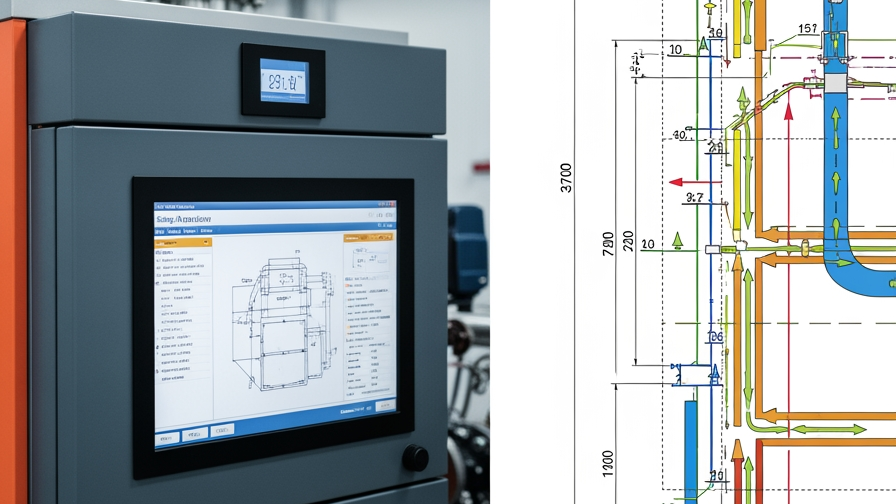
Undersized commercial boilers fail during peak demand. Oversized ones waste thousands in fuel costs annually while cycling on and off, wearing components faster than necessary.
The difference between these scenarios comes down to accurate sizing calculations performed before purchase. We've worked with businesses that replaced incorrectly sized boilers within three years because someone guessed instead of calculating. The replacement cost them £15,000-£40,000, depending on capacity, money that could have funded other operations.
Why Standard Residential Calculations Don't Apply
Commercial buildings operate differently from homes. A 2,000 square foot office doesn't heat like a 2,000 square foot house.
Higher ceilings (10-14 feet versus 8-9 feet residential), Greater air exchange rates from HVAC systems, More external walls and windows per square foot, Variable occupancy creating unpredictable heat loads, Multiple zones requiring simultaneous heating
We've seen facilities managers apply residential "rule of thumb" calculations (like 50 BTU per square foot) to commercial buildings. This approach fails because it ignores these fundamental differences. A warehouse with 20-foot ceilings and minimal insulation needs 3-4 times more heating capacity per square foot than a well-insulated office with standard ceiling heights.
The Heat Loss Calculation Method
Accurate commercial boiler sizing starts with calculating total heat loss. This determines exactly how much heating capacity your building requires on the coldest expected day.
Material R-values (insulation effectiveness) Surface area Temperature difference between inside and outside
A single-pane window loses heat 5-10 times faster than an insulated wall. Loading dock doors in warehouses create massive heat loss zones that drastically increase boiler requirements.
Ventilation losses come from air exchange - either through HVAC systems or infiltration through gaps. Commercial buildings typically require 15-20 cubic feet per minute of fresh air per occupant. Heating this incoming cold air represents 20-40% of the total heating load in most commercial applications.
Calculate ventilation heat loss using: CFM × 1.08 × temperature difference
For a 100-person office requiring 2,000 CFM of fresh air with a 40°F temperature difference: 2,000 × 1.08 × 40 = 86,400 BTU/hour just for ventilation
Process heating loads include hot water for bathrooms, kitchens, manufacturing processes, or pool heating. These loads run independently of space heating and must be added to total capacity requirements.
Sizing Factors That Change Requirements
Several factors modify your base heat loss calculation.
Pickup Load and Temperature Recovery
Pickup load accounts for the morning warm-up when the building temperature drops overnight. If you set back the thermostats to 55°F overnight and need to reach 70°F by 8 AM, the boiler must provide extra capacity beyond maintaining temperature.
We typically add 20-30% capacity for pickup load in buildings with a night setback. Without this buffer, occupants arrive at cold buildings, and the system takes 2-3 hours to reach comfortable temperatures.
Safety Margins and Future-Proofing
Safety margin protects against calculation errors and extreme weather. Most commercial installations include a 10-15% safety factor. This margin also accommodates future building expansions or changes in use.
Going beyond a 20% safety margin enters oversizing territory. A boiler operating at 40% capacity most of the time cycles frequently, reducing efficiency and component lifespan.
Altitude Considerations
Altitude adjustments become critical above 2,000 feet in elevation. Boiler output decreases approximately 4% per 1,000 feet of elevation because of reduced oxygen availability for combustion.
A boiler rated for 500,000 BTU/hour at sea level produces only 480,000 BTU/hour at 2,500 feet. Manufacturers provide altitude deration tables, but many installers forget to apply them, resulting in undersized systems.
Multiple Boiler Configurations
Single large boilers create operational inefficiencies in most commercial applications.
Modular boiler systems use 2-4 smaller boilers instead of one large unit. A facility needing 800,000 BTU/hour might install four 200,000 BTU/hour boilers rather than a single 800,000 BTU/hour unit.
Better part-load efficiency (one boiler handles 25% load instead of cycling a large unit), Built-in redundancy (system operates at 75% capacity if one boiler fails,) Easier maintenance (service one unit while others operate), Flexibility for future expansion
We've measured fuel savings of 15-25% in facilities that switched from single large boilers to modular systems, primarily from eliminating short-cycling during shoulder seasons when full capacity isn't needed.
Lead-Lag Control Systems
Lead-lag control sequences boilers to maximise efficiency. The control system starts with one boiler, adding additional units only when the first reaches 80-90% firing rate. As the load decreases, boilers shut down in reverse order.
Proper sequencing requires sophisticated controls that rotate which boiler serves as the lead unit, distributing runtime evenly across all units. This prevents one boiler from accumulating excessive hours while others sit idle. Modern Honeywell control systems excel at managing these complex sequencing strategies.
Condensing Versus Non-Condensing Impact on Sizing
Boiler type affects commercial boiler sizing calculations because efficiency changes with operating conditions.
When Condensing Boilers Work Best
Condensing boilers achieve 90-98% efficiency by extracting heat from exhaust gases, causing water vapour to condense. This process only occurs when the return water temperature stays below 130-140°F.
Radiant floor heating (95-120°F) Low-temperature radiators (120-140°F) Snow melt systems (100-120°F)
Condensing boilers can be sized closer to calculated heat loss (10% safety margin) because they maintain high efficiency across their operating range.
Non-Condensing Applications
Non-condensing boilers operate at 80-85% efficiency with minimum return water temperatures of 140-160°F to prevent flue gas condensation, which corrodes heat exchangers.
Standard radiators (160-180°F), Older distribution systems, Process heating requiring high temperatures
Non-condensing boilers show significant efficiency drops at part-load, making oversizing more problematic. We recommend a maximum 12-15% safety margin.
Common Sizing Mistakes That Cost Money
Copying Existing Boiler Capacity
Copying existing boiler capacity assumes the current system was sized correctly. We've audited dozens of commercial buildings where original boilers were oversized by 40-60%, and replacement quotes simply matched existing capacity.
One client's 30-year-old office building had a 1.2 million BTU/hour boiler. Heat loss calculations showed the building needed 650,000 BTU/hour, including a safety margin. They installed two 350,000 BTU/hour condensing boilers, cutting fuel costs by 32% annually - a £4,800 savings that paid for the additional engineering cost within three months.
Ignoring Building Improvements
Ignoring building improvements leads to oversizing. If the building added insulation, replaced windows, or upgraded the building envelope since the original boiler installation, heat loss decreased significantly.
Calculate current heat loss rather than assuming original requirements still apply. A building that needed 800,000 BTU/hour in 1985 might only need 500,000 BTU/hour today after envelope upgrades.
Adding Excessive Safety Factors
Adding "extra capacity just in case" creates the problems that oversizing causes. We've seen contractors double calculate capacity "to be safe," installing boilers that operate at 30-40% capacity most of the year.
Reduces efficiency by 10-20% from constant cycling. Increases maintenance costs from wear on ignition and control components. Raises initial equipment costs unnecessarily. Wastes fuel every day of operation
Forgetting Domestic Hot Water
Forgetting domestic hot water requirements in mixed-use buildings causes undersizing. A commercial building with significant hot water needs (restaurants, gyms, medical facilities) requires either a separate water heater or additional boiler capacity.
Domestic hot water loads don't coincide with peak space heating loads. A restaurant might need maximum hot water at 2 PM when the space heating load is minimal. Calculate these loads separately and use the larger of: (space heating + 50% of water heating) or (water heating + 50% of space heating).
When Professional Load Calculations Pay Off
Complex buildings justify engineering investment in detailed commercial boiler sizing calculations.
Buildings over 10,000 square feet, Mixed-use spaces (retail + office + warehouse), High-ceiling applications (warehouses, manufacturing, churches), Buildings with significant process heating, Retrofit projects where building changes occurred, and Locations with extreme climate conditions
Solar heat gain through windows by orientation, Internal heat gains from people, lighting, and equipment, Thermal mass effects from concrete and masonry, Wind exposure and infiltration rates, and Detailed weather data for specific locations
These calculations cost £800-£2,500 depending on building complexity, but prevent £5,000-£15,000 in fuel waste over a 15-year boiler lifespan.
Verifying Sizing After Installation
Post-installation monitoring confirms sizing accuracy and identifies problems early.
Runtime percentage: Boilers should operate 60-80% of peak design day. Below 50% suggests oversizing.
Cycles per hour: More than six cycles per hour at moderate outdoor temperatures indicates oversizing.
Return water temperature: Should match design specifications for boiler type (below 130°F for condensing, above 140°F for non-condensing).
Fuel consumption: Compare actual usage to calculated consumption based on degree days.
We install temporary data loggers on new systems to capture this information. One manufacturing facility discovered its new boiler was cycling 12 times per hour because the contractor had oversized it by 45%. They added buffer tank capacity to reduce cycling, improving efficiency by 18% and eliminating the short-cycling that was prematurely wearing ignition components.
The Cost of Getting It Wrong
Incorrect boiler sizing costs money every month of operation.
An oversized boiler operating at 40% capacity typically runs 12-15% less efficiently than a properly sized unit at 70% capacity. For a building using £12,000 in annual heating fuel, this inefficiency wastes £1,440-£1,800 yearly.
Over a 15-year boiler lifespan, that's £21,600-£27,000 in unnecessary fuel costs - enough to replace the entire boiler system.
Undersized boilers create different problems. A boiler running at 100% capacity during cold weather provides no reserve for equipment issues or extreme conditions. When components fail under continuous operation, the building loses heat completely rather than operating at reduced capacity.
We've responded to emergency calls from businesses with undersized boilers during cold snaps. Emergency boiler rentals cost £500-£1,200 per week, and the rushed permanent replacement typically costs 15-20% more than planned installations because contractors charge premium rates for emergency work.
Making the Sizing Decision
Start with accurate heat loss calculations rather than rules of thumb or copying existing capacity. This foundation prevents the costly mistakes that plague commercial heating systems.
For buildings under 10,000 square feet with straightforward layouts, qualified contractors can perform adequate calculations using industry-standard methods. Larger or more complex facilities justify professional engineering to optimise the significant investment commercial boilers represent.
Consider modular configurations for buildings over 400,000 BTU/hour capacity. The efficiency gains and operational flexibility typically justify the 10-15% additional equipment cost within 3-5 years through fuel savings alone. Quality Grundfos circulation pumps ensure optimal flow rates in these multi-boiler installations.
Match boiler type to your distribution system - condensing boilers for low-temperature applications, non-condensing for high-temperature systems. Don't install condensing boilers in systems that can't maintain return water temperatures low enough for condensing operation.
The time invested in accurate commercial boiler sizing guide principles pays dividends every heating season through lower fuel costs, reduced maintenance, longer equipment life, and reliable comfort. Commercial boilers represent 15-20 year investments. Getting the size right from the start protects that investment and the operational budget that funds it.
For specialised heating components and system controls from trusted manufacturers like Danfoss and EPH Controls, Heating and Plumbing World stocks comprehensive ranges to support properly sized commercial installations. Should you need technical guidance on system design, don't hesitate to get in touch with our team.