

Chrome Plated Copper Pipes for Visible Installations
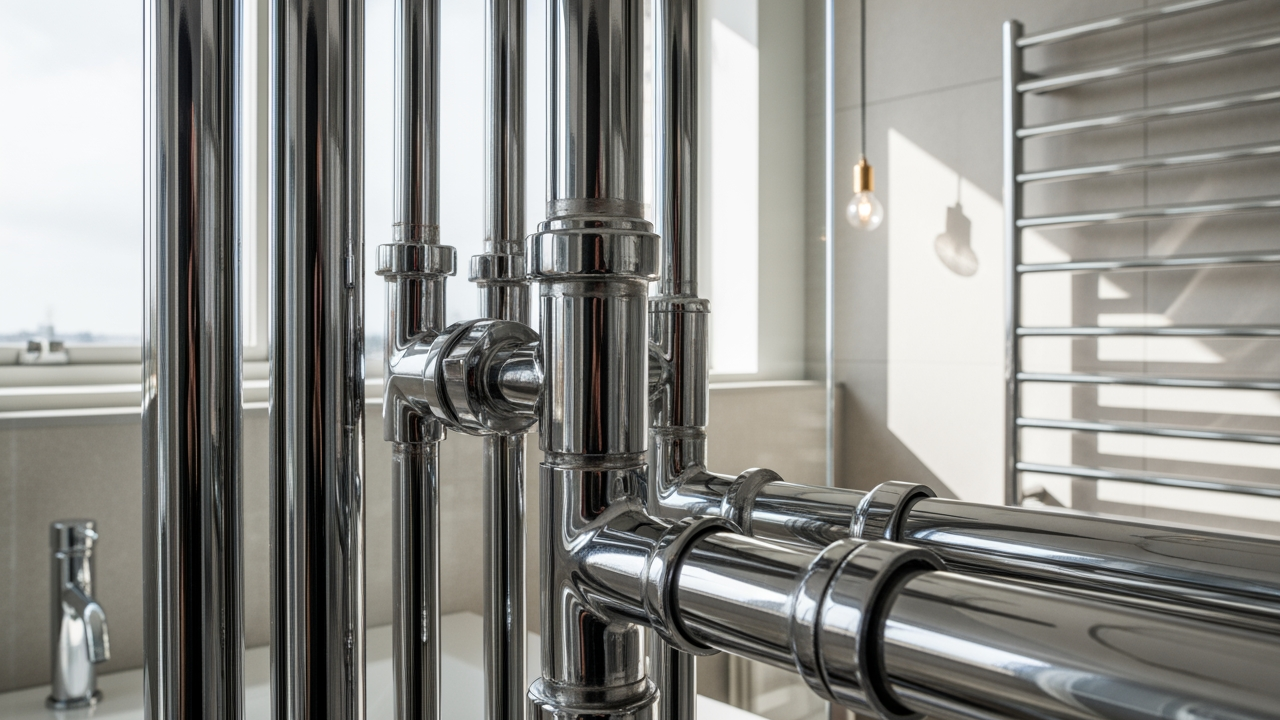
Chrome copper pipes solve a specific problem: they deliver the performance of copper with the polished appearance required for exposed plumbing and heating installations. When pipework can't be hidden behind walls or under floors, standard copper's tendency to tarnish becomes a maintenance issue. Chrome plating provides a mirror-finish surface that stays bright without constant polishing.
These pipes work well in commercial spaces, high-end residential projects, and period property renovations where the aesthetic matters as much as the function. The chrome finish transforms functional pipework into an architectural feature.
Why Chrome Copper Instead of Standard Copper
Standard copper pipe oxidises when exposed to air and moisture. Within weeks, that bright copper colour dulls to brown. Within months, green patina forms. For hidden installations, this doesn't matter. For visible work, it looks neglected.
Chrome plating adds a protective layer that prevents oxidation. The mirror finish reflects light rather than absorbing it, making spaces feel larger and brighter. In period properties with exposed pipework, chrome pipes match the original aesthetic whilst meeting modern building standards.
The copper core provides the same thermal conductivity and pressure ratings as standard copper pipe. You're not compromising performance for appearance. The chrome layer typically measures 0.0002 to 0.0005 inches thick, enough to protect and shine, but thin enough that it doesn't affect pipe dimensions or fitting compatibility.
Where Chrome Copper Pipes Work Best
Commercial Bathrooms and Kitchens: Restaurant kitchens, hotel bathrooms, and office facilities with exposed services use chrome pipe visible installations to maintain a clean, professional appearance. Health inspectors appreciate surfaces that show dirt immediately, chrome reveals contamination that might hide on matte finishes.
Period Property Renovations: Victorian and Edwardian buildings often featured exposed copper pipework as a design element. When renovating these properties, chrome copper maintains the original aesthetic whilst providing modern corrosion resistance. Listed buildings with strict conservation requirements particularly benefit from this approach.
Industrial-Style Interiors: Loft conversions, converted warehouses, and modern spaces with exposed services need pipework that looks intentional rather than unfinished. Chrome pipes create the industrial aesthetic without the maintenance burden of raw metal.
Underfloor Heating Manifolds: When manifolds are visible in utility rooms or converted spaces, chrome components look purposeful rather than makeshift. The reflective finish helps identify individual circuits during maintenance. Quality heating system components from manufacturers like Danfoss pair well with chrome pipework for cohesive, visible installations.
Towel Rails and Radiator Connections: Chrome pipework connecting to chrome towel rails or radiators creates a cohesive look. Mixing finishes, chrome fittings with tarnished copper pipe, looks unfinished. Brands like Myson offer radiator systems where chrome connections maintain visual continuity throughout the installation.
Installation Differences from Standard Copper
Chrome plating changes how you handle and install pipes. The chrome layer scratches easily during cutting and fitting. Specific precautions preserve the finish.
Cutting: Use a pipe cutter with sharp wheels. Dull wheels crush the pipe and chip the chrome. Cut slowly with gradual pressure increases. Hacksaw cuts leave rough edges that damage the chrome when you deburr them.
Deburring: Standard deburring tools scratch chrome. Use fine-grit abrasive cloth (400 grit minimum) and work gently around cut edges. The goal is to remove sharp copper, not polish the chrome.
Bending: Chrome pipes bend like standard copper, but the chrome layer can crack on tight bends. Maintain minimum bend radii of 4 times the pipe diameter. Use a proper pipe bender with clean formers; dirt on the former leaves scratches.
Fitting: Chrome compression fittings match chrome pipe. Standard brass fittings look mismatched against the chrome pipe. When connecting to standard copper in hidden sections, make the transition in a concealed location. Overtightening compression fittings crushes the chrome layer against the olive, creating a leak path. Tighten to resistance, then one additional turn.
Support: Pipe clips need rubber or plastic inserts. Metal-on-chrome contact creates wear points where the finish breaks down. Space clips according to standard copper spacing tables; the chrome layer doesn't add structural strength.
For comprehensive pipe connection solutions, Heating and Plumbing World stocks quality pipe fittings suitable for both chrome and standard copper installations.
Maintaining Chrome Finish Quality
Chrome stays bright with minimal maintenance, but improper cleaning damages the finish permanently.
Regular Cleaning: Wipe with a damp microfibre cloth weekly. This removes dust and light deposits before they bond to the surface. For bathrooms, this prevents soap scum buildup that requires aggressive cleaning.
Removing Deposits: Use pH-neutral cleaners only. Acidic cleaners (including vinegar and lemon juice) etch chrome. Alkaline cleaners (including many bathroom cleaners) cause pitting. For hard water deposits, use distilled water and a soft cloth. Stubborn deposits respond to automotive chrome cleaner, the same chemistry that protects car trim works on pipes.
Preventing Damage: Keep abrasive materials away from chrome surfaces. Scouring pads, abrasive powders, and rough cloths scratch the finish. Once scratched, chrome can't be polished out, the plating is too thin. Scratches expose copper underneath, which then oxidises and creates brown stains that spread under the chrome layer.
Handling Corrosion: If you see rust spots or pitting, address them immediately. Chrome itself doesn't rust, but if the plating has a defect, the copper underneath corrodes. Clean the area with chrome cleaner and monitor it. If corrosion spreads, that section needs replacement.
Cost Considerations and Project Planning
Chrome copper pipes cost 3-4 times more than standard copper. A 3-metre length of 15mm chrome copper costs £45-60 compared to £12-15 for standard copper. Chrome fittings add another 200-300% to standard fitting costs.
This price difference makes selective use economical. Chrome-plate visible sections and use standard copper for hidden runs. A typical bathroom renovation might use 6 metres of chrome pipe for exposed vertical runs and towel rail connections, with 20 metres of standard copper hidden in walls and floors.
Calculate visible pipework length during design. Adding a chrome pipe as an afterthought means paying premium prices for sections that could have been hidden. Repositioning a radiator by 300mm can eliminate 4 metres of visible pipework, saving £180 in materials alone.
Labour costs increase slightly, maybe 10-15%, because chrome requires more careful handling. The time difference comes from protective measures during cutting and fitting, not from different techniques. An experienced plumber handles this without a significant schedule impact.
Combining Chrome with Other Materials
Chrome copper rarely works alone. Most installations combine it with other materials, and those transitions need planning.
Chrome to Copper: Make transitions in hidden locations, inside walls, under floors, or in cupboards. Use standard compression fittings in these locations. The transition itself costs nothing extra, but planning where it happens affects how much chrome pipe you need.
Chrome to Plastic: Modern heating systems often use plastic pipe for main runs. Chrome copper connects to plastic manifolds using standard compression-to-plastic adaptors. These transitions typically happen at manifold locations, which are often visible. Use chrome manifolds with chrome tails to maintain the aesthetic. Plastic piping systems from Polypipe integrate well with chrome copper at transition points.
Chrome to Steel: Radiator connections and towel rail connections use chrome tails that match the radiator finish. These tails connect to chrome copper pipe with compression fittings. The visual continuity makes the installation look intentional rather than improvised.
Chrome to Brass: Period-style fittings often come in polished brass. Chrome and brass work together visually in traditional installations. Use brass compression fittings with chrome pipe when matching period fixtures. The colour contrast looks deliberate in Victorian and Edwardian contexts.
Technical Performance Standards
Chrome plating doesn't change copper's pressure or temperature ratings. A 15mm chrome copper pipe handles the same 25 bar pressure and 110°C temperature as standard copper. The chrome layer is thin enough that it doesn't affect the pipe's structural properties.
British Standard BS EN 1057 covers copper tube for water and gas. Chrome-plated copper must meet these same standards for the copper substrate. The chrome plating process itself follows BS 1224, which specifies minimum plating thickness and adhesion requirements.
Chrome quality testing involves examining the finish under magnification. Quality plating shows no pits, cracks, or thin spots. Cheap chrome often has visible defects, tiny pinholes that expose copper underneath. These defects become corrosion sites within months.
The plating adhesion matters as much as the thickness. Poor adhesion means chrome flakes off during installation or when pipes expand and contract with temperature changes. Quality manufacturers anneal pipes after plating to relieve stresses and improve adhesion.
Common Problems and Solutions
Scratched Finish During Installation: Prevention is the only cure. Once scratched, chrome can't be field-repaired. Wrap pipes in protective film during installation and remove it only after completing work. If scratches happen, assess their severity. Light surface scratches might be acceptable in low-visibility areas. Deep scratches that expose copper require the replacement of that section.
Tarnishing at Joints: This usually means the chrome layer doesn't extend far enough into the fitting. When you tighten a compression fitting, the olive grips bare copper just inside the chrome-plated section. If that copper is exposed at the fitting face, it oxidises. Solution: Ensure chrome extends at least 25mm beyond where the fitting body ends. Cut pipes to length with this extra coverage in mind.
Fingerprints and Smudges: Chrome shows fingerprints clearly. Wear clean cotton gloves during installation. For final cleanup, use glass cleaner and microfibre cloths. The same products that clean mirrors clean chrome without leaving residue.
Uneven Finish: Quality varies between manufacturers. Cheap chrome plating looks uneven, thick in some areas, thin in others. This creates a mottled appearance rather than a uniform mirror finish. Specify manufacturers with consistent quality control. The price difference is minimal compared to the cost of replacing a poor-quality pipe.
Leaking Compression Fittings: The chrome layer can interfere with compression fitting seals if you overtighten. The chrome is harder than copper, so the olive doesn't bite into the pipe properly. Solution: tighten compression fittings to resistance plus one turn. If it leaks, replace the olive rather than overtightening.
Alternatives to Chrome Copper
Stainless Steel Pipe: Offers a similar appearance with better scratch resistance. Costs more than chrome and copper and requires different installation techniques. Works well where pipes might contact other objects, behind radiators, in tight spaces.
Chrome-Plated Brass: Used for short decorative sections like radiator tails. More expensive than chrome, copper and available only in short lengths. The brass substrate is softer than copper, making it less suitable for long runs.
Painted Copper: Specialist metal paints create a chrome-like finish on standard copper. Costs less, but the finish quality is lower. Paint scratches more easily than plating and requires repainting every few years.
Polished Copper: Left unsealed, polished copper develops patina quickly. Sealed with lacquer, it maintains its copper colour, but the lacquer yellows over time and scratches easily. Works in specific design contexts but requires more maintenance than Chrome.
Project Examples and Results
A Grade II listed townhouse conversion in Bath required exposed heating pipes to meet conservation requirements. The original 1890s installation used exposed copper, which the conservation officer wanted maintained. Installation of 18 metres of chrome copper for vertical risers and radiator connections proved successful. Three years later, the pipes still look new. The owner reports cleaning them monthly with a damp cloth, with a total maintenance time of about 5 minutes.
A restaurant kitchen in Bristol needed a visible cold water supply to comply with health regulations. The environmental health officer required all plumbing to be inspectable without tools. Installation of 12 metres of chrome copper along exposed walls provided the solution. The chrome finish made weekly cleaning simple; staff wipe pipes during routine cleaning. No special maintenance required. The installation passed three annual inspections with no comments about pipe condition.
A warehouse conversion in Manchester featured exposed services as a design element. The architect specified chrome pipes, conduit, and ductwork for visual consistency. The installation of 35 metres of chrome copper for heating and domestic water completed the aesthetic. The building won a regional design award. The developer reported that the chrome pipework featured in marketing materials added perceived value to the apartments.
For heating system components that complement chrome pipe visible installations, manufacturers like Grundfos offer pumps with chrome or stainless finishes suitable for exposed applications. Their circulator pumps maintain the polished aesthetic whilst delivering reliable system performance.
Professional Chrome Pipe Solutions
Chrome-plated copper pipes deliver copper's performance with the appearance required for exposed installations. The mirror finish prevents the tarnishing that makes standard copper look neglected in visible locations, whilst the copper core maintains the thermal conductivity and pressure ratings that make copper the standard for heating and plumbing systems.
Installation requires more care than standard copper; the chrome layer scratches easily and can't be field-repaired, but the techniques are the same. Use sharp cutting tools, avoid abrasive cleaning, and handle pipes with clean gloves. The additional cost, typically 3-4 times standard copper prices, makes selective use economical. Chrome the visible sections, use standard copper for hidden runs.
The finish lasts indefinitely with minimal maintenance. Weekly wiping with a damp cloth prevents buildup. pH-neutral cleaners handle deposits without damaging the chrome. Avoid abrasive materials and acidic or alkaline cleaners that etch or pit the surface.
For commercial spaces, period properties, and modern interiors with exposed services, chrome copper transforms functional pipework into an architectural feature. The pipes stay bright without constant polishing, meet building standards without compromise, and create the clean, professional appearance that visible installations demand.
When planning installations featuring chrome copper, sourcing quality components ensures long-term performance. For specialist advice on chrome pipework or to source professional-grade plumbing materials, get in touch with experienced suppliers who understand the technical and aesthetic requirements of exposed installations.