

Cleaning Magnetic System Filters: A DIY Guide
A magnetic system filter is the silent guardian of your heating system. It works day and night to strip out the black iron oxide particles that naturally form inside radiators and pipework. However, like the lint trap in a tumble dryer or the oil filter in a car, it cannot work forever without attention. Cleaning magnetic system filters is a vital maintenance task that ensures your boiler remains efficient and your radiators stay hot.
Neglecting this simple job allows magnetite sludge to build up until the filter becomes a restriction rather than a benefit. A heavily fouled filter forces the pump to work harder and can eventually lead to a system lockout. The good news is that most homeowners can perform a filter service themselves in under thirty minutes with basic tools and a methodical approach.
Think of your heating system like a high-end aquarium. You have the heater (the boiler) and the pump to circulate the water, but without a functional filter to remove waste, the water becomes murky and the components begin to fail. Regularly cleaning magnetic system filters keeps the "water" of your home clear and your "environment" warm.
Why Filter Maintenance Is Essential
Modern boilers, especially high-efficiency condensing models, have very narrow waterways in their heat exchangers. Even a small amount of magnetite sludge can cause a blockage that leads to kettling or premature component failure. A magnetic filter captures this debris before it reaches the boiler, but it has a finite capacity.
When you perform the service, you are essentially "resetting" the protection for your system. A clean filter allows for laminar flow and ensures that the boiler can extract the maximum amount of energy from the fuel. It is also worth checking your heating controls during this time to ensure the system is not firing unnecessarily while the water is being cleaned.
Preparation: What You Need Before You Start
Before you begin cleaning magnetic system filters, you must gather the right equipment. You will typically need the specific plastic wrench that came with your filter, an adjustable spanner, a bucket to catch waste water, and some old towels. It is also a good idea to have a high-quality silicone lubricant for the rubber seals.
Safety is paramount. Always turn off the electrical supply to your boiler and allow the system water to cool for at least an hour. System water can be scaldingly hot and is often under pressure. If your system requires minor pipework modifications to make the filter more accessible, using professional push fit plumbing fittings can simplify the task for future servicing.
Locating And Operating The Isolation Valve
Every properly installed magnetic filter is flanked by two valves. These allow you to isolate the filter from the rest of the heating circuit so you can open it without draining the entire house. You must identify each isolation valve and turn it 90 degrees until the handle is perpendicular to the pipe.
If an isolation valve feels seized, do not force it with a large wrench; this can snap the spindle and cause a major leak. Instead, apply a small amount of penetrating oil and wait. Once the filter is isolated, you can use the air vent on top or the drain valve at the bottom to release the internal pressure. If you find that your valves are beyond repair, sourcing quality boiler spares is the only safe way to restore the system's serviceability.
The Step-By-Step Cleaning Process
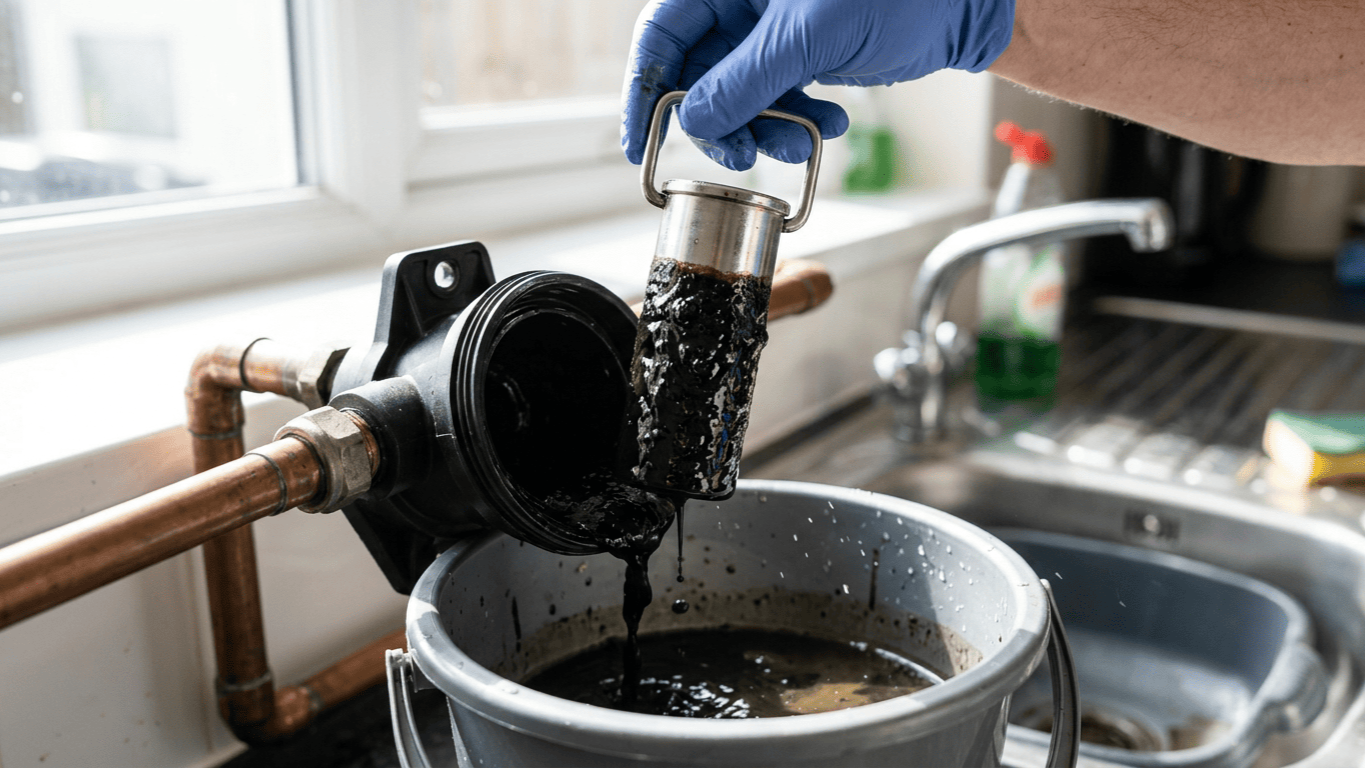
Once the pressure is released, use the filter wrench to unscrew the lid. As you pull the lid away, you will see the magnetic core covered in a thick, black, metallic paste. This is the magnetite that would otherwise be circulating through your pump.
- Remove the core: Slide the magnetic core out of its protective sleeve. You will notice that once the magnet is removed, the black sludge loses its grip on the sleeve.
- Wash the sleeve: Use your bucket of water or a garden hose to wash the magnetite sludge off the sleeve. Avoid washing this down the kitchen sink as it can block domestic drains; it is better to dispose of it in a foul water drain or outside.
- Inspect the mesh: Many filters also include a non-magnetic mesh filter. Check this for any non-ferrous debris like solder swarf or copper filings.
- Clean the housing: Use a damp cloth to wipe out the inside of the filter body to ensure no grit remains to interfere with the seal.
Heating and Plumbing World provides a range of specialized brushes and cleaning kits that make this process even more thorough for trade professionals and DIY enthusiasts alike.
Reassembling And Repressurising The System
Before refitting the lid, inspect the rubber O-ring. If it looks flat, cracked, or perished, you must replace it to avoid a slow weep. Apply a thin smear of silicone grease to the seal to help it seat correctly. Reinsert the magnetic core into the sleeve, place it back into the housing, and tighten the lid by hand before giving it a final quarter-turn with the wrench.
Open each isolation valve slowly. You will hear water rushing back into the unit. Use the air vent on top of the filter to bleed out any trapped air until a steady stream of water appears. Finally, check your boiler's pressure gauge. You will likely need to use the filling loop to top the system back up to 1.5 bar. If you find the pressure is erratic after this process, it might be time to look at an expansion vessel installation to ensure the system can handle the thermal expansion.
Chemical Maintenance And Water Quality
Mechanical filtration is only half of the battle. To truly protect your system, you must maintain correct system water treatment levels. Every time you clean the filter and release some water, you are diluting the concentration of corrosion inhibitor.
After cleaning magnetic system filters, it is the perfect time to add a fresh dose of inhibitor. You can often pour the chemical directly into the filter housing before you seal the lid. This ensures that the system water treatment remains at the manufacturer-recommended levels to prevent new magnetite from forming. For more advanced systems, installing a smart trv setup can help you monitor temperature drops that might indicate a return of sludge in specific radiators.
Conclusion
The process of cleaning magnetic system filters is one of the most cost-effective ways to protect your home. By spending thirty minutes once a year on this task, you prevent the buildup of debris that causes expensive boiler breakdowns and high energy bills.
A clean system is a reliable system. When your water is clear and your filter is free of obstructions, every component in your heating circuit lasts longer. If you are unsure about which spares or chemicals are right for your specific filter model, please contact our technical team for expert guidance.