

Commercial Boiler Emissions Testing: Compliance Requirements
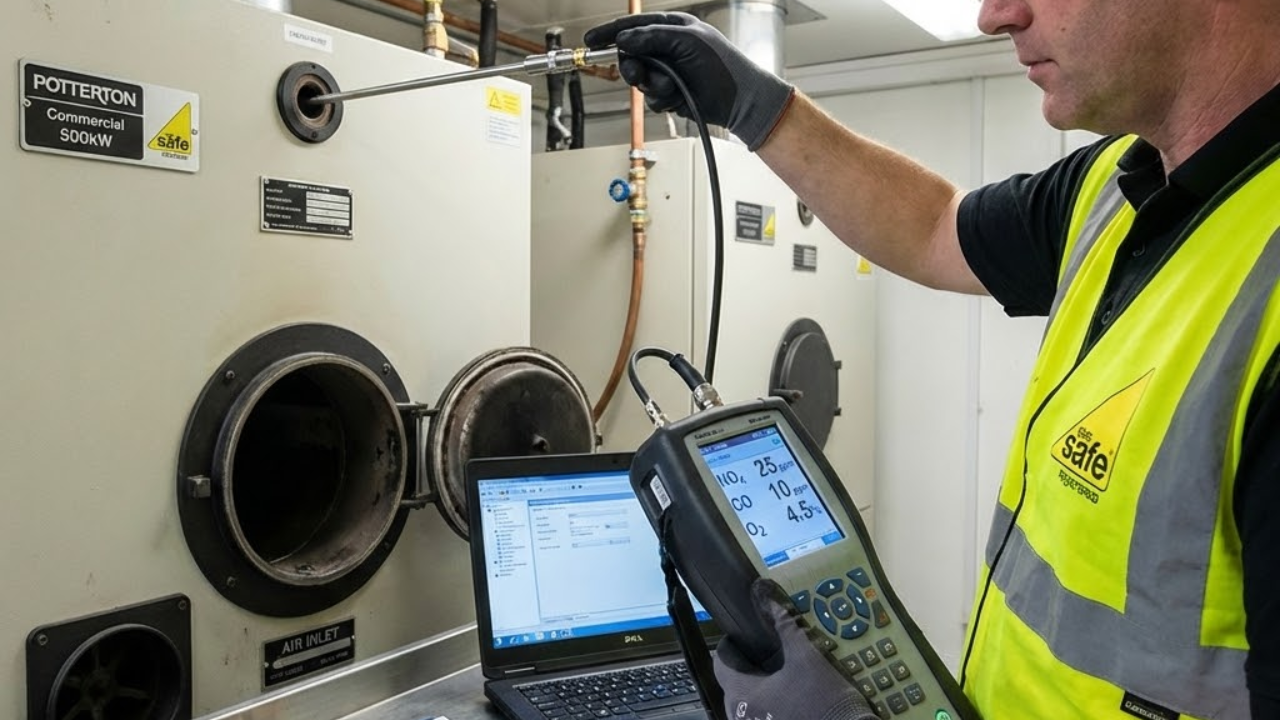
Commercial boilers in the UK operate under some of the strictest emissions regulations in Europe, and for good reason. A poorly maintained 500kW boiler can pump out nitrogen oxide levels that exceed legal limits by 300%, creating liability for building owners and contributing to urban air quality problems. If you're responsible for a commercial heating system—whether it's a hospital, office block, or industrial facility—you can't afford to treat emissions testing as a tick-box exercise.
The legal framework is clear. Every commercial boiler must undergo regular emissions testing to prove compliance with the Clean Air Act 1993, Environmental Protection Act 1990, and increasingly stringent local authority requirements. Get it wrong, and you're looking at enforcement notices, fines up to £50,000, or in serious cases, prosecution. But beyond the legal stick, there's a practical carrot: a well-tuned boiler that passes emissions tests typically runs 8-12% more efficiently, cutting fuel costs and extending equipment life. Heating and Plumbing World supplies specialist testing equipment and compliance components for commercial heating systems.
Understanding the Legal Framework
The regulatory landscape for commercial boiler emissions isn't simple, but it breaks down into three main layers. First, you've got national legislation. The Clean Air Act and Environmental Protection Act set the baseline requirements. Second, there are EU-derived standards that still apply post-Brexit, particularly the BS EN 15502 methodology, which defines testing procedures. Third, local authorities have their own enforcement powers, and they're using them more aggressively than ever.
Medium Combustion Plant Directive rules hit the UK in 2018, covering boilers between 1MW and 50MW thermal input. If your plant falls into this bracket, you need an MCPD permit from the Environment Agency or equivalent body, and that permit comes with mandatory emissions limits. For natural gas boilers over 5MW, you're typically looking at NOx limits of 100 mg/Nm³, dropping to 80 mg/Nm³ for newer installations.
Smaller commercial boilers—those under 1MW—fall under different rules, but don't assume they're exempt. Local authority environmental health teams can still require testing if your boiler is in a smoke control area or if complaints arise about visible emissions. We've seen cases where a 400kW boiler in a London borough triggered an investigation simply because of black smoke during a cold startup, leading to a full compliance audit.
What Gets Measured During Emissions Testing
An emissions test isn't just about sticking a probe in the flue and writing down numbers. It's a detailed analysis of combustion efficiency and pollutant output, and the results tell you whether your boiler is burning cleanly or wasting fuel and breaking the law.
Think of emissions testing like a health check-up for your boiler. Just as blood tests reveal what's happening inside your body, flue gas readings show exactly how well combustion is performing and where problems lurk.
The core measurements include:
Oxygen (O₂) levels: Excess oxygen indicates too much air in the combustion mix, which lowers efficiency. You want O₂ levels between 3-5% for gas boilers, 4-6% for oil.
Carbon monoxide (CO): High CO readings mean incomplete combustion. Dangerous, inefficient, and a sign the burner needs adjustment. Legal limits are typically 100 ppm for gas, 200 ppm for oil.
Carbon dioxide (CO₂): This should be high, around 9-10% for gas boilers. Low CO₂ means you're burning excess air and throwing heat up the flue.
Nitrogen oxides (NOx): The big one for compliance. NOx forms at high combustion temperatures and is heavily regulated. Most modern gas boilers target NOx limits under 80 mg/Nm³; older plant might struggle to hit 150 mg/Nm³.
Flue gas temperature: High flue temperatures mean you're losing heat. A well-tuned boiler should have flue temps 50-100°C above return water temperature.
Smoke density (oil boilers): Measured on the Bacharach scale, with zero being perfect. Anything above 1 suggests poor atomisation or dirty burners.
Testing equipment must be calibrated annually. A properly calibrated flue gas analyser with UKAS accreditation is the gold standard. Drift in sensor accuracy can give false readings, and if you're relying on those to claim compliance, you're building on sand.
Testing Frequency and Who Can Do It
How often you need testing depends on boiler size, fuel type, and local authority requirements, but here's the practical baseline. For boilers over 1MW covered by MCPD permits, annual testing is mandatory, with results submitted to the Environment Agency. Some permits require six-monthly testing if previous results were marginal.
Smaller commercial boilers—say, a 200kW unit heating a care home—don't have a statutory annual requirement, but good practice (and many insurance policies) demand testing every 12-24 months. If you're running Grundfos pumps and modern controls, you're likely getting regular service visits anyway, and that's the logical time to test emissions.
Only qualified engineers should conduct emissions testing. Look for Gas Safe registration (for gas boilers) or OFTEC certification (for oil), plus specific training in emissions analysis. Some larger facilities use in-house teams, but most outsource to specialist firms who carry calibrated analysers and understand the reporting requirements.
Common Causes of Emissions Failures
A boiler that fails emissions testing usually has one of five underlying problems. First, incorrect air-to-fuel ratio. The most common issue by far. Burners drift out of adjustment over time, especially if they've been serviced by someone who didn't properly commission them afterwards. You'll see high O₂ and low CO₂, with NOx potentially creeping up as well.
Second, dirty burners or heat exchangers. Soot buildup on oil burner nozzles or gas burner ports disrupts the flame pattern, causing incomplete combustion. On the heat exchanger side, scale or carbon deposits act as insulation, raising flue temperatures and reducing efficiency. A boiler that's gone three years without a proper strip-down is almost guaranteed to fail.
On a commercial project last year, an engineer discovered a 2MW boiler consistently failing NOx limits despite recent burner servicing. The root cause? A faulty modulating gas valve that had been sticking intermittently for months, creating inconsistent fuel delivery. Once replaced, emissions dropped by 40% and the boiler started hitting target combustion efficiency again.
Third, worn or failed components. Faulty gas valves, blocked oil filters, or failing ignition electrodes all compromise combustion. We've traced high CO readings to a simple split in a burner gasket, which was drawing in secondary air and throwing the whole combustion process off.
Fourth, poor system design or installation. If the flue is undersized, you get back pressure that affects combustion air supply. If the boiler is oversized for the load and constantly cycling, it never reaches stable combustion temperatures. These aren't quick fixes. They require system redesign.
Fifth, wrong fuel specification. Running a boiler on 35-second oil when it's set up for 28-second, or using biogas with different combustion characteristics than natural gas, will throw emissions out. Always match fuel spec to burner design.
The Testing Process: What to Expect
When an engineer arrives to test emissions, they'll follow a structured process defined by BS EN 15502. First, they'll check the boiler has been running at normal operating temperature for at least 15 minutes. Cold testing gives meaningless results. They'll verify the system load is representative, ideally at 80-100% of rated output.
The analyser probe gets inserted into the flue, usually through a test point that should already be installed. If there's no test point, one needs drilling in. Typically 2.5 times the flue diameter downstream of the boiler outlet to ensure proper gas mixing. The probe must be positioned correctly to sample from the centre of the flue stream, not just the edges.
Readings are taken over several minutes to ensure stability. A good engineer will watch the numbers settle, looking for steady values rather than jumping around. If readings fluctuate wildly, that itself indicates a problem. Possibly cycling on the burner controller or unstable combustion.
Results get recorded on a test certificate that includes ambient conditions, fuel type, boiler details, and all measured parameters. This certificate is your proof of compliance, and you need to keep it for at least three years. If you're under an MCPD permit, it goes to the regulator within the specified timeframe.
What Happens If You Fail
Failing an emissions test isn't the end of the world, but it does trigger a compliance clock. If the failure is marginal—say, NOx at 110 mg/Nm³ when your limit is 100—the engineer will usually attempt burner adjustment on the spot. Often, tweaking the air damper or gas pressure brings readings back into spec within an hour.
More serious failures require remedial work. High CO readings mean you can't legally run the boiler until it's fixed. It's a safety issue as much as an environmental one. The engineer should isolate the boiler and issue a warning notice. You'll need to bring in a specialist to diagnose and repair, then re-test before bringing it back online.
For plant regulated under MCPD permits, you must notify the Environment Agency of any test failure within 24 hours. They'll want a remedial action plan with timescales. If you can't fix the problem quickly, you may need to run backup plant or temporary boilers to maintain heating. Expensive, but better than the alternative.
Persistent failures or operating a boiler that's failed testing can trigger enforcement action. Local authorities can issue Abatement Notices under the Environmental Protection Act, requiring you to fix the problem within a specified period. Ignore that, and you're into prosecution territory, with fines that make the cost of a new burner or boiler upgrade look trivial.
Optimising Combustion for Compliance
The best approach to emissions compliance isn't passing the annual test. It's running the boiler efficiently year-round so the test becomes a formality. That starts with proper commissioning. When a new boiler or burner is installed, combustion settings must be dialled in precisely, not just "close enough." This means setting air dampers, gas or oil pressure, and control parameters whilst watching real-time emissions data.
Modern burners with modulating control make compliance easier because they maintain optimal air-to-fuel ratios across the firing range. Older on-off burners tend to run rich at startup and lean at shutdown, creating peaks in CO and NOx. If you're still running a 20-year-old atmospheric burner, upgrading to a fully modulating low-NOx burner can cut emissions by 60% and pay for itself in fuel savings within three years.
Regular maintenance is non-negotiable. Annual servicing should include burner strip-down, heat exchanger inspection, flue analysis, and control system checks. Brands like Honeywell and Danfoss offer advanced control packages that monitor combustion parameters continuously, flagging drift before it becomes a compliance issue.
Water treatment matters more than most people realise. Scale buildup on heat exchanger surfaces raises flue temperatures and reduces combustion efficiency, which shows up in emissions tests as elevated O₂ and lower CO₂. A properly dosed inhibitor and regular water quality checks keep the system clean. If you're running a sealed system, check that your expansion vessel and pressurisation unit are maintaining correct pressure. Altecnic products are widely specified for commercial pressurisation applications. Low pressure can cause boiler cycling and unstable combustion.
Record-Keeping and Compliance Documentation
Proving compliance isn't just about passing tests. It's about demonstrating a consistent management approach. You need a boiler logbook that records every test, service, repair, and operational issue. If the Environment Agency or local authority comes knocking, they'll want to see a paper trail showing you've taken emissions seriously.
At minimum, your records should include:
- Annual emissions test certificates with full data and engineer details
- Service records showing maintenance dates, work done, and parts replaced
- Fuel delivery notes proving you're using the correct specification
- Burner adjustment records if combustion settings have been changed
- Breakdown logs noting any trips, lockouts, or performance issues
- MCPD permit conditions and any correspondence with regulators
Digital record systems make this easier, but a simple ring-binder works fine as long as it's kept up to date. Some facilities managers use cloud-based maintenance platforms that automatically flag when testing is due and store certificates centrally. Useful if you're managing multiple sites.
If you're subject to MCPD permits, you'll also need to submit annual compliance reports. These summarise operating hours, fuel consumption, and emissions test results, proving you've stayed within permit limits. Miss a submission deadline, and you risk permit suspension, which legally prevents you from operating the boiler.
Future-Proofing Against Tightening Standards
Emissions regulations aren't static. They're tightening. The UK's net-zero commitment means NOx limits will continue falling, and carbon emissions are increasingly in the spotlight. If your boiler is scraping through compliance now, it probably won't in five years.
For boilers approaching end-of-life, replacement planning should factor in future emissions standards, not just current ones. Specifying a boiler that meets today's limits but has no headroom for tightening rules is short-sighted. Look for low-NOx burners rated at 30-50 mg/Nm³. They cost more upfront but give you regulatory headroom and lower running costs.
Hydrogen-ready boilers are emerging as a longer-term option, designed to run on natural gas now but convertible to hydrogen blends or 100% hydrogen as the gas grid transitions. Emissions testing protocols for hydrogen are still evolving, but early indications suggest NOx can be lower than natural gas if combustion is properly managed.
Heat pumps and district heating are alternatives that sidestep combustion emissions entirely, though they come with their own infrastructure and cost challenges. For many commercial buildings, especially those with existing gas supplies and high heat loads, a modern condensing boiler with a low-NOx burner remains the most practical solution for the next 10-15 years.
Conclusion
Commercial boiler emissions testing isn't optional. It's a legal requirement backed by serious penalties for non-compliance. But more than that, it's a window into how efficiently your heating system is running. A boiler that passes emissions tests with clean numbers is burning fuel properly, wasting less energy, and costing less to operate.
The key is treating emissions testing as part of a broader maintenance and compliance strategy, not a once-a-year box to tick. Regular servicing, proper burner adjustment, clean heat exchangers, and accurate record-keeping all contribute to passing tests consistently and avoiding the stress of enforcement action.
If you're unsure about your current compliance status or need specialist components to optimise combustion, we stock everything from low-NOx burners to advanced controls and water treatment systems. For specific technical advice on meeting emissions standards for your installation, contact our technical team and speak to someone who understands the practical realities of commercial heating compliance.