

Commercial Heat Pumps vs Gas Boilers: Cost Analysis
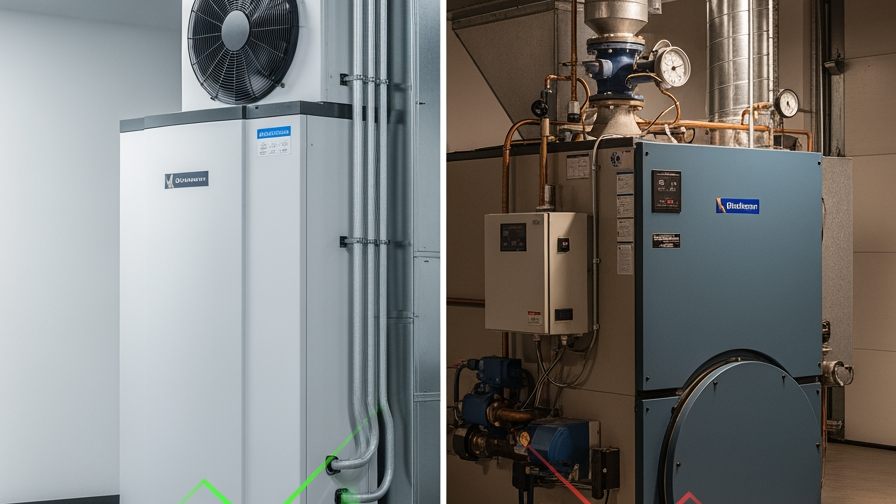
Commercial heating decisions now carry weight beyond simple comfort calculations. A manufacturing facility in Manchester recently replaced its 20-year-old gas boiler system with commercial heat pumps and documented every cost over 18 months. Their total expenditure dropped 34%, despite higher upfront investment.
Such outcomes aren't universal, but they reveal how dramatically the economics of commercial heating have shifted. Gas prices tripled between 2021 and 2023 in the UK, while heat pump technology improved efficiency by roughly 40% over the past decade. The calculation that made sense five years ago no longer applies.
Upfront Investment Comparison
Commercial gas boilers cost between £3,000 and £15,000 for systems serving buildings up to 500m². Installation adds another £2,000-£5,000, depending on existing infrastructure and flue requirements.
Commercial heat pumps start at £8,000 for air-source systems serving similar spaces, reaching £30,000 for ground-source installations. Installation costs run higher - typically £5,000-£12,000 - because the work involves refrigerant handling, electrical upgrades, and often modifications to heating distribution systems.
Example: 300m² warehouse installation
- Gas boiler system: £8,500 total (£6,000 equipment, £2,500 installation)
- Air-source heat pump: £16,800 total (£11,000 equipment, £5,800 installation)
- Ground-source heat pump: £28,400 total (£18,000 equipment, £10,400 installation)
The heat pump options cost 2-3.3x more upfront. This gap narrows considerably when you factor in available grants. The UK's Boiler Upgrade Scheme currently provides £7,500 for commercial air-source heat pumps, reducing the warehouse's effective cost to £9,300 - just £800 more than gas.
Heat Pump Running Costs: Where Savings Accumulate
A commercial gas boiler operating at 90% efficiency consumes approximately 1.11 kWh of gas energy to deliver 1 kWh of heat. At current commercial gas rates (averaging 10.5p/kWh), that costs 11.6p per kWh of heat delivered.
A commercial heat pump with a Coefficient of Performance (COP) of 3.5 uses 0.29 kWh of electricity to deliver 1 kWh of heat. At commercial electricity rates (averaging 28p/kWh), that costs 8p per kWh of heat delivered.
Annual operating costs for 300m² warehouse (75,000 kWh heat demand):
- Gas boiler: £8,700 per year
- Heat pump: £6,000 per year
- Annual saving: £2,700
These figures assume stable energy prices. Gas prices have proven more volatile. Between January 2021 and January 2023, commercial gas prices increased 287% at their peak, while electricity prices rose 185%. This volatility matters for budgeting certainty.
Maintenance and Lifespan Economics
Gas boilers require annual servicing by Gas Safe-registered engineers, costing £150-£300 for commercial units. Components like pumps, valves, and heat exchangers typically need replacement every 5-8 years, adding £500-£1,500 to maintenance budgets. Expected lifespan: 15-20 years.
Commercial heat pumps need biennial servicing (£200-£400 per visit), refrigerant checks, and occasional compressor maintenance. However, they have fewer moving parts and no combustion process, which reduces failure points. Expected lifespan: 20-25 years.
20-year total maintenance comparison:
- Gas boiler total maintenance: £6,000-£12,000 plus one replacement (£8,500)
- Heat pump total maintenance: £4,000-£8,000, no replacement needed
The longer lifespan and lower maintenance frequency of heat pumps add £10,500-£16,500 in avoided costs over two decades.
Performance Variables That Change the Calculation
Heat pump efficiency drops as outdoor temperature falls. A unit achieving COP 4.0 at 7°C might deliver COP 2.5 at -5°C. For facilities in Scotland or northern England experiencing prolonged cold snaps, this matters. Heat pump running costs during those periods approach gas boiler efficiency.
Building insulation dramatically affects both systems, but heat pumps show greater sensitivity. One poorly insulated retail unit saw the heat pump's effective seasonal COP drop to 2.3, raising running costs to 12.2p per kWh - higher than gas. After insulation upgrades costing £4,200, the seasonal COP improved to 3.4, dropping costs to 8.2p per kWh.
Gas boilers maintain consistent efficiency regardless of insulation quality. They simply run longer in poorly insulated spaces, increasing fuel consumption proportionally.
Existing heating distribution systems matter significantly. Heat pumps work best with underfloor heating or oversized radiators that operate at 35-45°C flow temperatures. Standard radiators sized for 70°C gas boiler systems often need replacement or supplementation, adding £3,000-£8,000 to installation costs.
Carbon Cost and Regulatory Pressure
UK electricity generation now produces 0.193 kg CO₂ per kWh (2023 figures). Natural gas combustion produces 0.185 kg CO₂ per kWh at the point of use.
Annual CO₂ emissions (300m² warehouse):
- Gas boiler: 15.4 tonnes CO₂ annually
- Heat pump: 4.1 tonnes CO₂ annually
- Reduction: 73%
This gap widens as grid electricity becomes cleaner. By 2030, projected grid carbon intensity drops to 0.095 kg CO₂ per kWh, while gas combustion remains constant. The same heat pump would then produce just 2.1 tonnes CO₂ annually - an 86% reduction versus gas.
Regulatory momentum favours heat pumps. The UK government plans to phase out new gas boiler installations in commercial buildings by 2035. Early adoption avoids forced conversion during the transition period when installer availability tightens and costs spike.
Several local authorities now apply carbon levies on high-emission commercial buildings. Manchester charges £90 per tonne CO₂ above threshold levels. For buildings exceeding limits, this adds £1,386 annually to gas heating costs in our warehouse example, while heat pumps stay well below thresholds.
Break-Even Timeline Analysis
Using the 300m² warehouse with grant-adjusted costs:
With government grants:
- Initial cost difference: £800 (heat pump premium after grant)
- Annual operating saving: £2,700
- Annual maintenance saving: £525
- Combined annual benefit: £3,225
- Break-even point: 3 months
Without grants, the calculation shifts:
Without government grants:
- Initial cost difference: £8,300
- Combined annual benefit: £3,225
- Break-even point: 2.6 years
Ground-source heat pumps show longer payback periods. Their £19,900 premium (after grants) against £3,800 annual savings yields a 5.2-year break-even. However, ground-source systems typically achieve higher COPs (4.0-4.5) and last 25-30 years, making them cost-effective for properties with long occupancy plans.
When Gas Still Makes Sense
Peak heating demand facilities face different economics. A warehouse operating 24/7 during winter but with minimal heating in summer benefits fully from heat pump efficiency. A facility needing intense heat for just 3 months annually may not accumulate sufficient savings to justify the investment premium.
Buildings requiring high-temperature processes (above 60°C) still favour gas. While high-temperature heat pumps exist, they're expensive and less efficient. A commercial kitchen needing 80°C water for sanitisation typically achieves better economics with gas.
Short-term tenancies complicate heat pump investments. A business on a 3-year lease can't recoup a £15,000 heat pump investment, but might justify a £6,000 gas boiler replacement. Unless landlords make the investment and recover costs through slightly higher rent, gas remains the practical choice.
Properties without three-phase electrical supply face costly upgrades. Running three-phase power to a building adds £5,000-£15,000, depending on distance from the nearest connection. This cost can eliminate heat pump advantages entirely for remote or older properties.
Documented Performance Data
A 1,200m² distribution centre in Birmingham installed a 45kW air-source heat pump in October 2021, replacing a 15-year-old gas boiler. They tracked costs monthly:
Year 1 (2021-2022):
- Heating cost: £18,400
- Gas equivalent (estimated): £24,100
- Saving: £5,700
Year 2 (2022-2023):
- Heating cost: £22,800 (electricity prices rose)
- Gas equivalent (estimated): £38,900 (gas prices tripled)
- Saving: £16,100
Year 3 (2023-2024):
- Heating cost: £21,100
- Gas equivalent (estimated): £29,800
- Saving: £8,700
Total three-year saving: £30,500 against £52,000 total installation cost (after £7,500 grant). Projected break-even: Year 5.
The facility manager noted two unexpected benefits: more consistent temperature control (±1°C versus ±3°C with the old boiler) and elimination of annual Gas Safe certification requirements, which simplified compliance documentation.
Making the Decision
Start with an energy audit measuring actual heating demand, not theoretical calculations. Degree-day data for your specific location matters more than national averages. A building in Plymouth faces different economics than one in Aberdeen.
Get seasonal COP estimates, not just rated performance. Manufacturers quote COP at 7°C outdoor temperature, but your system operates across a range. Seasonal Performance Factor (SPF) gives a more realistic annual average - aim for SPF above 3.0 to maintain cost advantages over gas.
Calculate your specific break-even using current energy tariffs, available grants, and realistic installation costs from multiple quotes. The 2-3 year payback periods quoted in marketing materials assume optimal conditions. Factor in your building's actual insulation levels and existing heating distribution.
Consider your occupancy timeline. Owning the building for 10+ years makes heat pumps financially compelling. Shorter timelines need careful calculation, especially without grants.
Check electrical capacity before committing. A 30kW heat pump needs roughly 12kW electrical supply. Buildings with limited electrical service need costly upgrades that change the economics significantly.
Commercial heat pumps cost more upfront but deliver lower heat pump running costs in most applications. The typical 2-4 year break-even period makes them financially sound for owner-occupied buildings, especially with current grants reducing initial investment.
Heat pumps make financial sense for:
- Buildings with good insulation (U-values below 0.3 W/m²K)
- Properties with underfloor heating or modern radiator systems
- Facilities with consistent year-round heating needs
- Locations with a three-phase electrical supply already installed
- Businesses planning 10+ year occupancy
Gas boilers remain practical for:
- High-temperature process heating above 60°C
- Buildings with poor insulation where upgrade costs are prohibitive
- Short-term tenancies under 5 years
- Peak-demand facilities with minimal annual heating hours
- Properties requiring expensive electrical infrastructure upgrades
The decision isn't purely financial. Regulatory direction, carbon reporting requirements, and grid decarbonisation all strengthen the heat pump case year by year. A gas boiler installed today faces an increasingly expensive and restricted operating environment over its 15-20 year lifespan.
Heating and Plumbing World stocks a comprehensive range of heating solutions from leading manufacturers, including Grundfos pumps and Honeywell controls. For technical guidance on selecting the right heating system for your commercial property, get in touch with the team.