

Commercial Kitchen Hot Water Circulation: Instant Tap Temperature
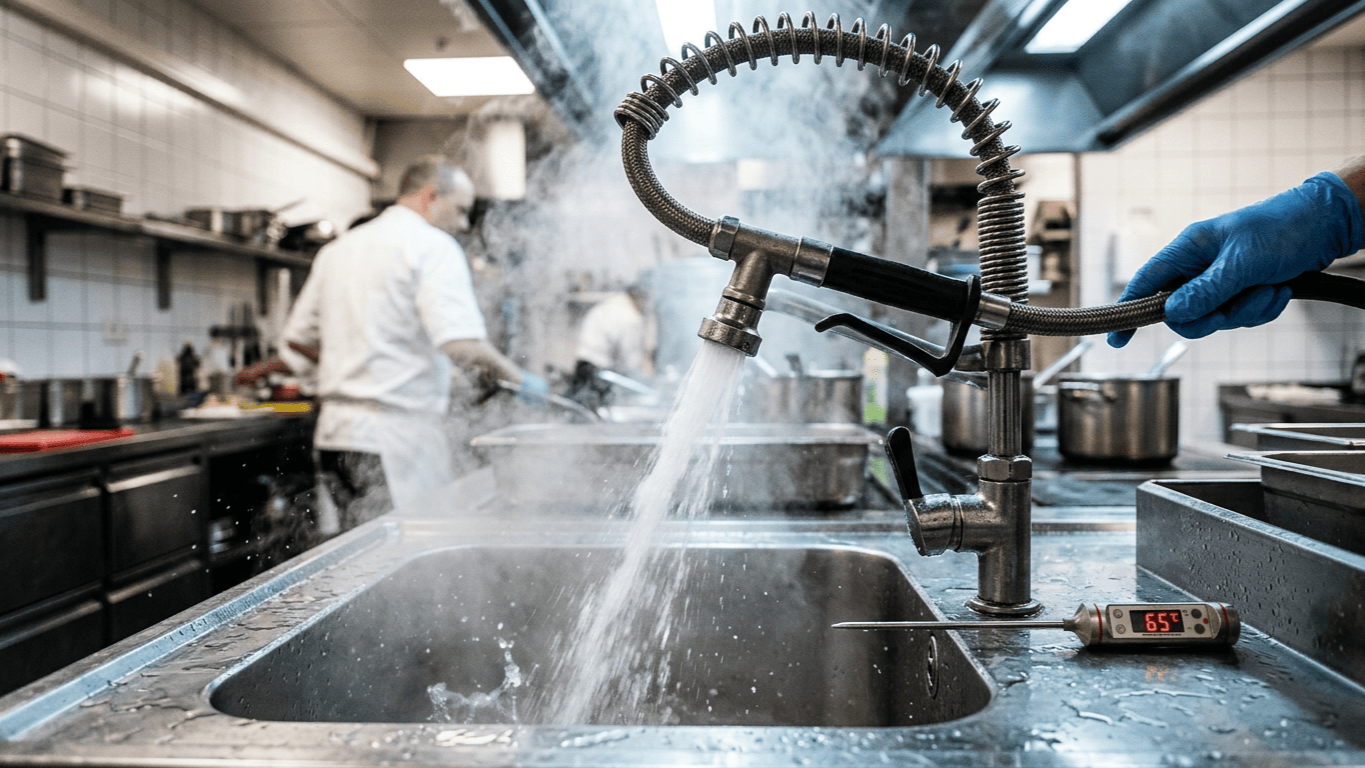
Turn on a tap in a busy kitchen during peak service, and you'll quickly learn whether the system was designed by someone who understands the reality of food prep. The difference between instant hot water and a 30-second wait is absolutely huge during a Saturday night rush.
Commercial kitchens operate on incredibly tight margins and even tighter schedules. Every single second counts when you are washing down prep stations or sanitising heavy equipment. A properly designed setup ensures water is ready the exact moment someone opens the tap. There's no waiting, no wasted water, and no frustrated staff running taps while tickets pile up.
Intelligent commercial kitchen hot water circulation is about far more than just convenience. It's a non-negotiable baseline requirement for effective cleaning and sanitisation. Most operators need water between 60°C and 65°C to meet strict hygiene standards. Achieving this consistently across multiple outlets requires a system that prioritises highly intelligent circulation design.
Why Circulation Systems Matter In Commercial Settings
A standard domestic hot water system can often afford to be slightly inefficient. If someone waits twenty seconds for hot water at home, it is only mildly annoying. In a kitchen serving two hundred covers, those twenty seconds multiply aggressively across dozens of daily staff interactions. Consequently, the cumulative waste becomes heavily measurable in both high water volume and lost labour time.
Recirculating hot water systems actively maintain temperature throughout the entire pipe network. They continuously move water from the heater through the distribution pipes and back again. Think of this system exactly like a bypass lane on a busy motorway. Instead of the water sitting in a dead end lane and getting freezing cold, it stays in a constant loop of high-speed movement, so it is always ready to exit the tap at full temperature.
Temperature drop is the ultimate enemy in these massive environments. Water sitting in stagnant pipes loses heat to the surrounding air very quickly. In a commercial kitchen with pipes spread across forty metres, the thermal loss can easily exceed 15°C without proper movement. This is exactly why wrapping your primary runs in high-quality pipework insulation is strictly necessary to prevent rapid energy drain. This ensures you consistently maintain an effective hot water sanitisation temperature rather than just getting the dirty dishes mildly wet.
System Components That Deliver Performance
A functional circulation system needs four core elements working together perfectly. If you miss just one, you'll either waste massive amounts of energy or fail completely to deliver consistent heat.
The pump sits at the absolute heart of the system. You should always choose bronze or stainless steel construction to handle constant exposure to high heat without corroding internally. Furthermore, installing a premium variable speed circulation pump offers the absolute best operational efficiency available on the market today.
These smart heating pumps actively adjust the flow rate based on actual system demand rather than blindly running at full capacity 24 hours a day. A modern variable speed circulation pump responds dynamically to system pressure changes, drastically cutting electrical consumption for the business owner.
Return lines are equally essential for completing the thermal loop. These pipes run directly from the furthest fixture back to the water heater. Proper sizing is vital here because pipes that are too small create excessive friction and restrict flow. For most commercial applications, a 20mm return line handles the flow adequately while ensuring the primary hot water storage cylinder remains perfectly topped up with warm, ready-to-use water.
Installation Considerations For Kitchen Layouts
Commercial kitchens present entirely unique challenges that residential plumbing never encounters. Multiple zones operate simultaneously, and heavy cooking equipment generates significant ambient heat. Therefore, you must carefully plan your pipe routing to strictly maintain both hygiene and peak performance.
Implementing circulation loop zoning improves efficiency and heat delivery. A large kitchen benefits massively from two separate loops. One loop can serve the primary cooking line, while another independently handles the dishwashing section. This allows you to effortlessly maintain different temperatures for vastly different purposes across the entire site.
If you're tasked with upgrading a large-scale commercial facility, sourcing premium components through Heating and Plumbing World guarantees you have access to the exact commercial-grade hardware required for high-stress environments.
Proper dead leg prevention is another absolutely critical factor for commercial hygiene. Water stagnating in redundant pipework cools rapidly and can harbour incredibly dangerous bacterial growth. You should always design the system to keep these stagnant sections strictly under three metres for fixtures used regularly. Effective dead leg prevention ensures your water supply remains totally safe and legally compliant.
Balancing Energy Efficiency With Performance
Running a continuous loop 24/7 wastes highly expensive fuel, but shutting it down during service completely ruins kitchen efficiency. The solution relies heavily on intelligent management.
Using advanced heating controls allows you to implement specific time-of-day programming. This reliably shuts the loop down during the hours the kitchen is completely closed, severely reducing overnight running costs while ensuring the system fires up exactly an hour before the prep chefs arrive.
Demand-based controls and flow sensor integration take this energy efficiency even further. When a remote sensor detects flow, it triggers the variable speed circulation pump to ramp up instantly.
You must also consider heat recovery opportunities from other kitchen equipment. Extracting waste heat to pre-warm the incoming cold mains drastically reduces the energy required to lift the water up to its final hot water sanitisation temperature.
Maintenance Requirements For Reliable Operation
Kitchen equipment takes a massive amount of daily abuse, and commercial kitchen hot water circulation systems are absolutely no exception. Proper maintenance actively prevents the gradual performance degradation that often goes unnoticed by busy kitchen staff until the system fails completely.
Pump inspections should happen every single quarter. You should meticulously check for leaks around the primary seals and listen for unusual noise that indicates heavy bearing wear. Monitoring the condition of the system's expansion vessel is also critical, as a failed diaphragm will cause aggressive pressure spikes that rapidly destroy expensive pump seals.
Scale buildup affects performance far more than most kitchen operators realise. In hard water areas, mineral deposits accumulate thickly inside the pipes and heat exchangers. A small 3mm scale layer can easily reduce heat transfer efficiency by nearly forty percent. Annual descaling prevents this catastrophic efficiency loss and keeps your hot water sanitisation temperature completely stable during peak service.
Compliance And Safety Considerations
Commercial kitchens strictly operate under much tighter regulations than residential properties. Your system must reliably satisfy both peak performance requirements and non-negotiable safety standards.
Finding the exact correct thermostatic mixing valve setting is absolutely essential for staff handwash basins. These specific valves deliver 40°C water to actively prevent severe scalding, while the main circulation system safely stays at bactericidal levels.
A precise thermostatic mixing valve setting allows you to meet occupational safety laws without compromising the overall system heat required for the dishwashing zones. Establishing the correct thermostatic mixing valve setting during initial commissioning strongly protects the business from serious liability and failed inspections.
A head chef at a busy city bistro once reported a frustrating 40-second wait for hot water at his main wash station. By the time we arrived, his team was furious, and their mandatory hygiene logs were falling behind. We found a failed check valve that had turned his entire circulation loop into a massive dead leg. Once repaired, we implemented strict dead leg prevention protocols, and his station reached the target heat instantly, saving his team hours of wasted time every week.
Conclusion
Reliable commercial kitchen hot water circulation delivers instant temperature by maintaining continuous flow through the building. Proper design perfectly matches the system capacity to your actual service demand. It uses smart controls to heavily optimise energy use and incorporates thick insulation to fiercely minimise heat loss.
The difference between a well-designed system and an inadequate one becomes painfully clear during a busy Saturday service. One delivers heat instantly, while the other creates severe delays and wastes expensive water. For kitchens where every second counts, this is fundamental infrastructure.
Investment in proper circulation easily pays back through heavily reduced water waste and vastly improved labour efficiency. If you need any technical advice on designing these complex networks, please contact our support team today.