

Commercial Pressurisation Unit Servicing Intervals
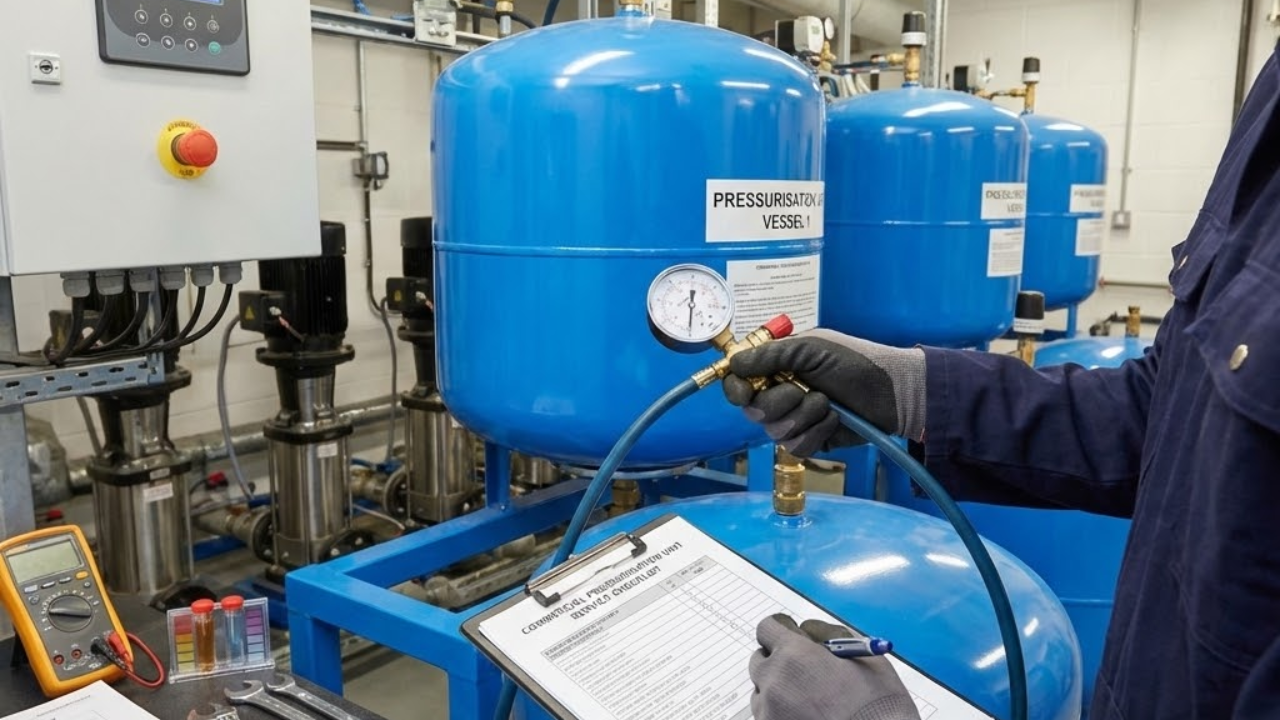
Most commercial heating systems fail not because the equipment's inadequate, but because no one's serviced the pressurisation unit properly. You'll find pressurisation units quietly maintaining system pressure in everything from multi-storey office blocks to district heating schemes, yet they're often the most neglected component in the plant room.
A commercial pressurisation unit keeps your heating or chilled water system at the correct operating pressure throughout all load conditions. When it fails, you're looking at air ingress, pump cavitation, and potentially catastrophic system shutdown. The question isn't whether to service these units. It's how often, and what exactly needs checking.
Heating and Plumbing World stocks pressurisation equipment from leading manufacturers, and we've seen firsthand what happens when service intervals slip. The difference between a system that runs for 15 years trouble-free and one that needs emergency intervention every winter often comes down to a disciplined maintenance schedule.
Why Commercial Pressurisation Units Need Regular Servicing
Commercial pressurisation units work harder than most people realise. They're constantly compensating for thermal expansion, topping up minor system losses, and maintaining the minimum pressure needed to prevent boiling at the highest point in your system.
Unlike domestic systems where a simple expansion vessel might suffice, commercial installations demand active pressure management. A typical unit comprises expansion vessels, pressure sensors, control panels, and pumps. Each component with its own failure modes and service requirements.
Here's what happens when servicing gets deferred. The expansion vessels lose their pre-charge pressure through expansion vessel pre-charge failures, forcing the pumps to cycle more frequently. Pump seals wear prematurely. Water quality degrades, leading to corrosion and magnetite accumulation. Control sensors drift out of calibration, triggering nuisance alarms or worse. Failing to alarm when they should.
A facilities manager once told me about a 200kW system that lost pressure overnight during a cold snap. The building management system didn't register the fault because the pressure sensor had corroded and was reading a phantom 2.5 bar. By morning, every radiator on the top three floors was stone cold, and the boilers had locked out on low pressure. That's a £15,000 callout that proper servicing would've prevented.
Standard Service Intervals for Commercial Pressurisation Units
Quarterly visual inspections form the foundation of any maintenance programme. You're looking for obvious issues: pump leaks, vessel corrosion, control panel error codes, and pressure gauge readings that don't match the system design parameters.
Every three months, check the expansion vessel pre-charge pressure. This takes ten minutes with a nitrogen bottle and a Schrader valve tool, but it'll tell you immediately whether the diaphragm's intact. If the pre-charge has dropped more than 0.2 bar since the last check, you've got a slow nitrogen leak or early diaphragm failure.
Six-monthly comprehensive servicing should include everything in the quarterly check, plus:
- Water sample analysis for pH, conductivity, and dissolved oxygen
- Pump seal inspection and bearing condition assessment
- Control panel calibration verification
- All electrical connections checked for tightness and signs of overheating
- System pressure test across full operating range
- Review of logged alarms and pump run hours
For systems incorporating Grundfos or similar intelligent pumps, download the operating data. Modern pumps log everything: flow rates, power consumption, fault codes. This data reveals trends that visual inspections miss entirely.
Annual deep servicing is where you strip things down properly. Replace pump seals regardless of apparent condition if they've done more than 4,000 hours using pump seal replacement protocols. Test the pressure relief valve by manually lifting it. If it's seized, replace it. Verify the high and low pressure cut-outs actually trip at their set points through diaphragm integrity testing by simulating fault conditions.
Think of the annual service like an MOT for your pressurisation unit. You're not just checking current condition; you're replacing consumables before they fail and validating that safety systems work when needed.
Factors That Affect Servicing Frequency
System size matters enormously. A 50-litre pressurisation unit serving a small commercial premises might run happily on six-monthly servicing. A 1,000-litre multi-pump system maintaining pressure across a hospital complex needs quarterly attention minimum.
Water quality is the silent killer. Systems filled with mains water and no ongoing treatment will corrode faster than properly inhibited closed-loop systems. If your water sample shows conductivity above 200 μS/cm or pH outside the 8.0-9.5 range, you need shorter servicing intervals and immediate water treatment intervention.
Operating hours directly correlate with wear rates. A pressurisation unit in a building with 24/7 heating demand accumulates wear three times faster than one serving a standard office with night setback. Log the pump run hours. When you hit 3,000 hours, bring the next service forward.
Environmental conditions in the plant room accelerate deterioration. Units installed in damp basements or poorly ventilated spaces corrode faster. High ambient temperatures stress electrical components. One site we worked with had positioned their pressurisation unit directly under a leaking cold water tank. The control panel failed twice before anyone noticed the water ingress.
System modifications reset your service clock. If you've added radiators, extended pipework, or increased the system volume, your pressurisation unit is now working harder. Recalculate whether it's still adequately sized, and increase service frequency for the first 12 months to monitor performance under the new load.
Critical Components and Their Individual Service Needs
Expansion vessels need their pre-charge checking every three months without exception. The pre-charge pressure should sit 0.2-0.5 bar below the system's cold fill pressure. Think of it like the air pressure in a car tyre - too high and it can't absorb the bumps, too low and it bottoms out constantly. Get this wrong and the vessel either does nothing (pre-charge too high) or the pump cycles constantly (pre-charge too low).
External corrosion on vessels indicates a damp environment that'll eventually compromise the steel shell. Surface rust you can wire brush and paint. Deep pitting means replacement. Never ignore bulging or distorted vessels. That's internal diaphragm failure, and the vessel could rupture.
The pressure sensors and transducers drift over time. Annual pressure sensor calibration against a known-accurate test gauge prevents measurement errors. A sensor reading 0.1 bar high doesn't sound significant until you realise it's masking a genuine system leak, or one reading low is causing unnecessary pump starts.
Pumps are the workhorses. Listen for bearing noise. Any grinding or squealing means bearings are on their way out. Check shaft seals for weeping. A few drops is normal; a steady drip isn't. Measure motor current draw and compare it to the nameplate rating. If it's running 10% over, the pump's working against higher resistance than it should, usually from system debris or a partially closed valve.
The control panel deserves more attention than it typically gets. Tighten all terminal connections annually. Thermal cycling loosens them. Check for signs of overheating around contactors and relays. Test that alarms actually trigger and communicate to the BMS. Replace any mechanical pressure switches older than five years. They're cheap insurance against nuisance trips.
Don't overlook the pressure relief valve. These rarely operate, which is precisely why they seize. Manually lift the valve once per year during servicing. If it doesn't reseat cleanly afterwards, replace it immediately. A stuck-open relief valve will drain your system; a stuck-closed one could cause a catastrophic overpressure event.
Common Failures Prevented by Proper Servicing
Pump seal failure tops the list of preventable breakdowns. Seals deteriorate from thermal cycling and dry running. Regular inspection catches weeping seals before they fail completely. Follow pump seal replacement schedules based on hours, not condition. It's far cheaper than an emergency callout when the pump floods the plant room at 3am.
Diaphragm rupture in expansion vessels happens gradually. First, you'll notice more frequent pump cycling. Then the pre-charge pressure won't hold. Finally, the vessel becomes waterlogged and useless. Quarterly pre-charge checks catch this progression early, when you can plan replacement rather than scrambling for emergency stock.
Pressure sensor drift causes all sorts of chaos. Systems that won't maintain pressure despite the pump running continuously. False low-pressure alarms that desensitise operators to real problems. Or worse. No alarm when pressure genuinely drops. Regular pressure sensor calibration keeps sensors accurate.
We've seen control panel failures from loose connections that created arcing and destroyed contactors. Thermal imaging during servicing reveals hot spots before they cause failures. Tightening terminals takes minutes but prevents hours of diagnostic work and component replacement.
Corrosion and water quality issues compound over time. Poor inhibitor levels lead to magnetite formation, which blocks strainers, damages pump seals, and reduces heat transfer efficiency. Regular water sample analysis with corrective treatment keeps your system clean internally, extending component life across the entire installation.
Servicing Documentation and Compliance
Keep detailed records of every service intervention. Log the expansion vessel pre-charge pressure, water sample results, pump run hours, and any adjustments made. Quarterly nitrogen pressure verification procedures provide early warning of diaphragm deterioration. This data reveals trends that predict failures before they happen.
Photographic evidence helps enormously. Take pictures of gauge readings, any corrosion, and the general condition of components. When you're reviewing service history two years later trying to decide whether to replace a pump, those photos provide context that written notes can't match.
Compliance documentation matters for insurance and warranty claims. If a pressurisation unit fails and causes system damage, insurers will ask for service records. Manufacturers won't honour warranties without proof of maintenance. The £200 you spent on servicing becomes very valuable when it protects you from a £20,000 claim rejection.
For systems in healthcare, education, or public buildings, regulatory compliance may mandate specific servicing intervals. The Health and Safety Executive expects documented maintenance programmes for pressure systems. Local authorities conducting building inspections will ask for service records. Keep everything organised and accessible.
Choosing Between In-House and Specialist Servicing
In-house maintenance teams can handle routine quarterly checks if they're properly trained. Visual inspections, nitrogen pressure verification, and water sampling don't require specialist equipment. This approach works well for larger facilities with dedicated engineering staff.
However, specialist contractors bring calibrated test equipment, manufacturer-specific knowledge, and experience across hundreds of installations. They'll spot early warning signs that in-house teams miss. For annual deep servicing, specialist input provides better value than trying to develop expertise for tasks you perform once per year.
A hybrid approach often works best. Train your facilities team for quarterly visual checks and basic pre-charge verification. Bring in specialists six-monthly for comprehensive servicing and annually for deep inspection and component replacement. This balances cost control with technical competence.
Consider manufacturer-approved service contracts for critical installations. Brands like Danfoss offer service packages that include parts, labour, and priority response. For systems where downtime costs thousands per hour, these contracts provide budget certainty and guaranteed response times.
Emergency Indicators Between Service Intervals
Some symptoms demand immediate attention regardless of service schedule. Continuous pump running without pressure increase indicates either a major system leak or failed expansion vessels. Don't wait for the next service. Investigate immediately.
Frequent low-pressure alarms mean your system's losing water faster than the makeup pump can replace it. This could be a leak, but it might also be excessive venting or a failed automatic air vent flooding water out. Either way, it needs urgent diagnosis.
Visible leaks from the pressurisation unit itself require immediate isolation and repair. Even small leaks accelerate corrosion and indicate seal or gasket failure. What starts as a drip becomes a flood, usually at the most inconvenient time possible.
Unusual noises (grinding, squealing, or knocking) from pumps or vessels indicate mechanical failure in progress. Bearings don't improve with time; they fail catastrophically. Catch them early and you're replacing bearings. Ignore them and you're replacing the entire pump assembly plus whatever it damaged when the shaft seized.
If your BMS logs multiple pressure fluctuations outside normal parameters, don't dismiss them as sensor glitches. They're usually real and indicate the pressurisation unit struggling to maintain stable pressure. This often precedes complete failure by weeks or months. Exactly the window you need for planned intervention.
Cost-Benefit Analysis of Preventive Servicing
A comprehensive six-monthly service costs £300-500 depending on system complexity. An emergency callout for a failed pressurisation unit costs £1,500-3,000 plus parts, and that's before you factor in system downtime and consequential damage.
Component replacement on condition rather than failure saves money. A pump seal costs £80 and takes an hour to fit during planned servicing. Emergency replacement of a failed seal costs £400 in labour alone, plus the cost of water damage to the plant room and lost heating while you wait for an engineer.
Extended equipment life is the hidden benefit. Pressurisation units properly maintained last 15-20 years. Neglected units need major component replacement every 5-7 years. Over a 20-year building lifecycle, that's the difference between one complete system replacement and three.
Insurance premiums reflect maintenance quality. Insurers increasingly require documented service schedules for plant room equipment. Poor maintenance history means higher premiums or coverage exclusions. The £600 annual servicing cost is offset by reduced insurance costs and eliminated excess payments on preventable claims.
For critical facilities (hospitals, data centres, manufacturing), downtime costs dwarf servicing costs. An hour of lost heating in a hospital operating theatre costs tens of thousands in cancelled procedures. A data centre losing cooling for 30 minutes risks hardware damage worth millions. Against that backdrop, quarterly servicing is absurdly cheap insurance.
Conclusion
Commercial pressurisation unit servicing isn't optional maintenance. It's the foundation of reliable heating system operation. Quarterly visual checks, six-monthly comprehensive servicing, and annual deep inspection prevent the vast majority of failures that cause system downtime and expensive emergency repairs.
The specific servicing intervals depend on system size, water quality, operating hours, and environmental conditions, but the principle remains constant: regular, documented maintenance extends equipment life, prevents failures, and costs far less than reactive repairs. A £500 service visit prevents £5,000 emergency callouts.
Keep detailed records of every intervention. Monitor trends in water quality, pump run hours, and pressure stability. Replace consumables on schedule, not when they fail. Train your facilities team to recognise warning signs between formal service visits.
Whether you maintain pressurisation units in-house or contract specialists, the commitment to regular servicing separates systems that run for decades from those that limp from crisis to crisis. Your commercial pressurisation unit keeps 100kW, 500kW, or several megawatts of heating capacity functioning correctly. It deserves maintenance attention proportional to its importance.
For guidance on selecting and maintaining commercial heating system components, or to discuss service requirements for your specific installation, contact us for technical support backed by decades of industry experience.