

Compression Fittings vs Soldered Joints: Application Guide
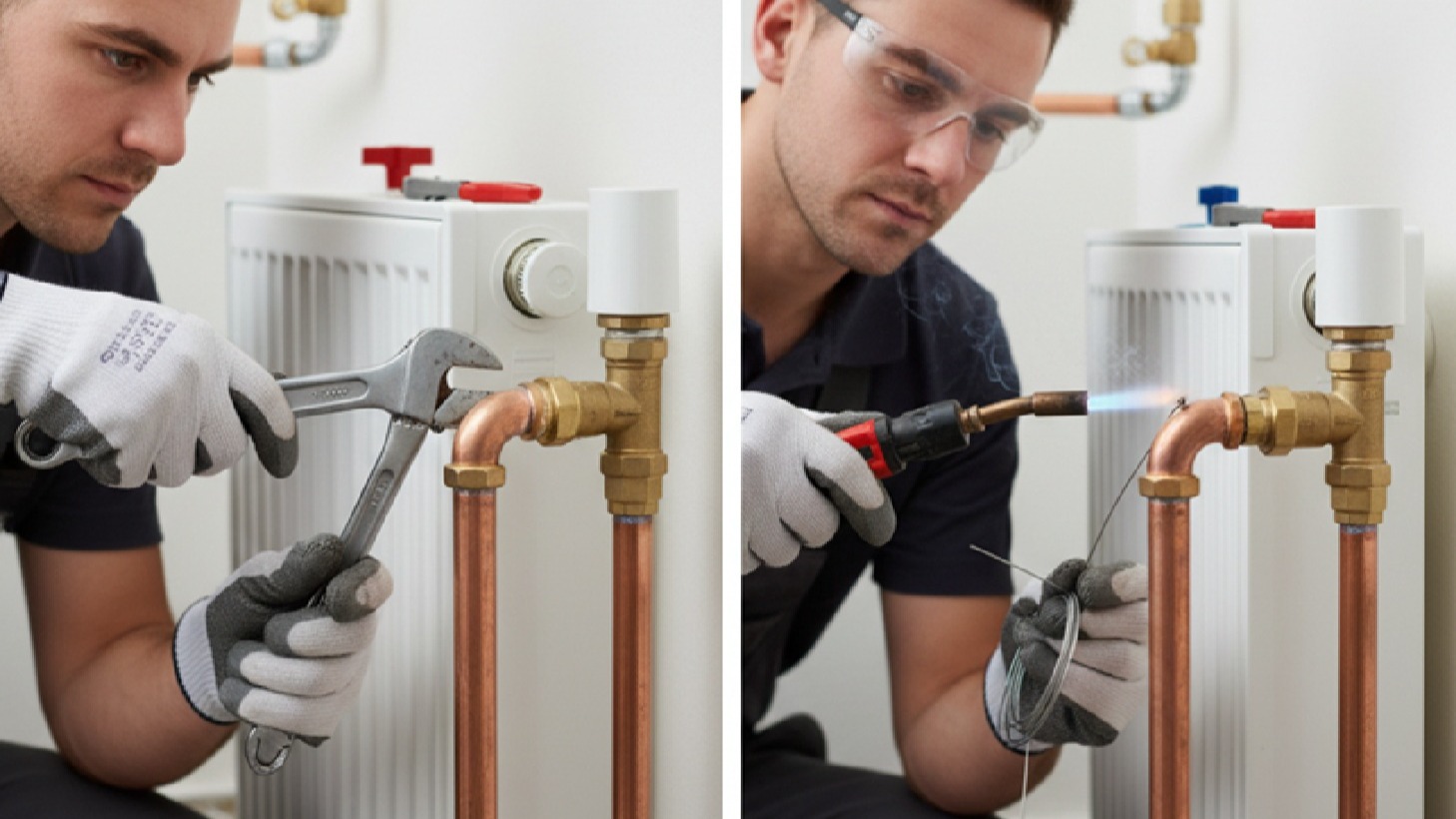
Choosing between compression fittings and soldered joints determines how long your plumbing work lasts, how quickly you complete jobs, and whether you'll face callbacks for leaks. Each method serves distinct purposes in heating and plumbing systems, and using the wrong one costs time and money.
When Compression Fittings Win
Compression fittings excel in three specific scenarios: tight spaces where you can't use a torch, situations requiring future disconnection, and installations where fire risk prohibits open flames.
Accessibility matters most. Countless compression fittings get installed in ceiling voids packed with electrical cables, under kitchen sinks surrounded by plastic waste pipes, and in commercial buildings where hot work permits would delay projects by days. The fitting works by compressing an olive (a brass or copper ring) between the pipe and fitting body as you tighten the nut, creating a watertight seal without heat.
Temporary or serviceable connections justify the higher material cost. Radiator valves, water metre connections, and appliance feeds all benefit from compression joints. When a boiler needs replacing in five years, you'll unscrew the compression fittings rather than cutting out soldered joints. This saves 30-40 minutes per connection during future maintenance.
Fire safety regulations in certain buildings prohibit hot work entirely. Hospitals, care homes, and occupied commercial spaces often require method statements and fire watch personnel for any torch work. A compression fitting eliminates these requirements, cutting project costs by £200-500 per day in supervision fees alone.
The failure rate tells the genuine story. Properly installed compression fittings leak in approximately 2-3% of cases, usually from under-tightening or damaged olives. Soldered joints fail in less than 0.5% of installations when done correctly.
Where Solder Creates Better Joints
Soldered joints outperform compression fittings in permanent installations, high-pressure systems, and anywhere long-term reliability matters more than initial convenience.
Permanent pipework in walls, under floors, and in plant rooms should use solder. The joint becomes part of the pipe structure itself, copper atoms from the pipe and fitting actually bond with the solder through capillary action. This creates a connection as strong as the pipe material.
Pressure testing of thousands of soldered joints at 10 bar (145 psi) for commercial heating systems shows the failure rate sits below 0.5%. Failures almost always trace back to contamination or insufficient heat during installation. Compression fittings at the same pressure show stress marks on the olive after 5-7 years, particularly in systems with temperature cycling.
Cost Efficiency on Larger Projects
Cost efficiency becomes obvious on larger projects. A 15mm compression elbow costs £2.80 versus £0.45 for a soldered fitting. On a typical house renovation with 80-100 fittings, solder saves £180-200 in materials alone. The time difference narrows with experience. A competent plumber sells a joint in 90 seconds versus 2-3 minutes for a compression fitting when you factor in cutting, deburring, and proper tightening.
Space constraints favour solder in different ways than compression. While compression needs clearance for spanners, soldered joints work in narrow gaps between joists or behind radiators where you can slide the pipe in but can't swing a wrench. The fitting profile also sits 8-12mm smaller in diameter, which matters when boxing in pipework or working within partition walls.
Material Compatibility Changes Everything
Copper-to-copper connections give you both options freely, but mixed materials narrow your choices fast.
Copper to chrome-plated brass (radiator valves, manifolds, appliance connectors) demands compression fittings. Soldering chrome-plated surfaces requires removing the chrome first, which destroys the corrosion protection and aesthetic finish. The chrome also prevents proper solder adhesion, leading to weak joints that fail within months.
Stainless steel requires specialist silver solder and flux, pushing costs up significantly. Most heating engineers use compression for stainless connections instead; the fittings cost more but require no special materials or techniques. This approach cuts installation time by 60% compared to silver soldering while maintaining reliability in systems up to 6 bar.
Plastic barrier pipe (used extensively in underfloor heating) only works with compression-style fittings designed for the specific pipe type. These use different olive materials, usually brass or stainless steel, with wider bearing surfaces to prevent crushing the softer pipe walls. Polypipe offers comprehensive barrier pipe systems with matching compression fittings.
The galvanic corrosion risk between dissimilar metals means you can't simply solder brass fittings to copper in certain water conditions. Hard water areas with high mineral content accelerate corrosion at soldered brass-copper joints, creating pinhole leaks within 3-5 years. Compression fittings with proper PTFE tape or jointing compound last 15-20 years in the same conditions because the olive creates a barrier between metals. Quality plumbing fittings reduce compatibility issues.
Pressure and Temperature Limits
Both methods handle standard domestic heating pressures (1-3 bar) and temperatures (up to 90°C) without issues, but commercial applications separate them quickly.
High-pressure systems above 6 bar need soldered joints. Pipework for commercial boiler houses running at 8-10 bar shows that compression fittings would require constant monitoring and retightening. The thermal expansion and contraction in these systems gradually work compression nuts loose, even with thread-locking compounds.
Temperature cycling affects compression fittings more severely. A heating system that runs at 75°C then cools to 15°C overnight expands and contracts by approximately 1.8mm per metre of 15mm copper pipe. This movement gradually compresses the olive further, but also works the threads. After 500-1000 cycles (roughly 2-3 heating seasons), compression fittings may need retightening. Soldered joints ignore this movement entirely.
Freeze risk actually favours compression slightly. When pipes freeze and expand, soldered joints can split at the joint or adjacent pipe. Compression fittings occasionally push apart at the olive, but the nut and fitting body usually survive intact. Frozen pipe repairs show compression joints only need new olives while soldered sections require complete replacement.
Installation Speed and Skill Requirements
The skill gap between competent compression and competent soldering spans about 40 hours of practice.
The compression technique requires three skills: cutting pipe square, removing burrs completely, and tightening to the correct torque. New installers achieve reliable compression joints after 15-20 practice attempts. The main failure mode is under-tightening from fear of over-tightening. Compression nuts need 1.5 turns past hand-tight for 15mm fittings, which feels excessive to beginners.
Soldering demands heat control, flux application, and recognising when the joint reaches the correct temperature. New installers need 50-80 practice joints before achieving consistent results. The failure modes multiply: insufficient heat leaves unmelted solder, excess heat burns the flux, poor flux coverage creates gaps, and contamination prevents adhesion entirely.
Time differences matter most on large projects. An experienced installer completes 25-30 soldered joints per hour on continuous pipe runs versus 15-18 compression fittings. The compression work requires more physical effort; your hands and wrists tire from repeated wrenching work. Soldering tyres requires less physical effort but demands sustained concentration.
Compression vs Soldered Joints: Application Decision Tree
Use compression fittings when:
- Working within 300mm of electrical cables or plastic components
- Installing appliance connections that disconnect for maintenance
- Local regulations prohibit hot work in the building
- Connecting to chrome-plated or pre-finished fittings
- The system requires future modifications or extensions
- Working in occupied spaces where torch work creates disruption
Use soldered joints when:
- Installing permanent pipework in walls, floors, or ceilings
- System pressure exceeds 6 bar
- Material costs matter on projects with 50+ fittings
- Working in confined spaces where wrench access is impossible
- Long-term reliability outweighs installation convenience
- Building regulations require fire-resistant construction (soldered joints perform better in fire tests)
Consider hybrid approaches where main distribution pipework uses solder for reliability and cost, while final connections to appliances and radiators use compression for serviceability. This balances the benefits of both methods. Grundfos pump connections and cylinder installations from Gledhill often benefit from this mixed approach.
Maintenance and Longevity Patterns
Soldered joints either work or fail within the first pressure test. If a soldered joint holds pressure for 24 hours, it'll typically last the life of the system, 25-30 years for domestic installations, 15-20 years for commercial work with higher pressures and temperatures.
This compression fitting guide recommends inspection after 12-18 months in new installations, then every 5 years in heating systems. The check takes 30 seconds per fitting, look for water stains, feel for dampness, and check the nut hasn't backed off. Retightening, when needed, takes another 30 seconds.
Vibration accelerates compression fitting wear significantly. Pipework near pumps, pressure vessels, or in mechanical rooms needs extra attention. Compression fittings in these locations need retightening every 2-3 years, versus never for soldered joints. Some installers use thread-locking compounds, but this defeats the removability advantage of compression fittings.
Chemical compatibility rarely affects either method in standard water systems, but certain additives in heating systems can degrade compression fitting seals over time. Inhibitors and antifreeze solutions sometimes soften the olive material, leading to weeping after 7-10 years. Soldered joints ignore these chemicals entirely.
Cost Analysis Beyond Material Price
A 15mm compression elbow costs £2.80. The equivalent solder fitting costs £0.45. But the true cost comparison includes labour, tools, and risk.
Tool investment for compression work totals £80-120: adjustable wrenches, pipe cutters, and deburring tools. Soldering needs £200-300: torch, gas bottles, flux, solder, heat-resistant mat, and safety equipment. For DIY work or occasional repairs, compression wins on initial investment.
Labour rates shift the calculation on larger projects. A heating engineer charging £45 per hour saves approximately £90-140 in labour costs on a typical house installation by soldering rather than using compression throughout. The material savings add another £180-200, totalling £270-340 per project.
Callback costs matter most. A leaking compression fitting costs £100-150 to return and fix, including travel time, diagnosis, and repair. A failed solder joint costs the same, but happens 75-80% less frequently based on installation data over 15 years.
Regulatory and Insurance Considerations
Building regulations in the UK don't mandate specific joining methods, but they require installations to meet British Standards BS EN 1254 (fittings) and BS EN 1057 (copper tube). Both compression and soldering comply when done correctly.
Insurance requirements occasionally specify joining methods for certain applications. Some insurers require soldered joints for concealed pipework in commercial buildings, reasoning that the lower failure rate reduces water damage claims. This requirement appears in hotels, apartment buildings, and office complexes.
Gas work regulations under Gas Safe prohibit compression fittings on gas pipework in most circumstances, requiring brazed or threaded joints instead. This doesn't affect heating and plumbing water systems, but it's worth noting that compression reliability standards don't meet gas safety requirements.
Warranty implications vary by manufacturer. Some boiler warranties specify soldered joints for primary connections, while others accept compression fittings. Check warranty terms before choosing, a voided warranty costs far more than any installation time savings. Manufacturers like Halstead provide clear guidance on approved connection methods.
Making the Right Choice for Your Installation
Compression fittings solve specific problems: they work where torches can't, they allow future disconnection, and they require less skill to install reliably. They cost more in materials and need occasional maintenance, but these trade-offs make sense for appliance connections, tight spaces, and situations where regulations prohibit hot work.
Soldered joints deliver superior long-term reliability at lower material cost, making them the better choice for permanent installations, high-pressure systems, and projects where callbacks would damage your reputation. The skill investment pays off quickly for anyone doing regular plumbing work.
The best installations use both methods strategically, solder for permanent distribution pipework, compression for serviceable connections. This approach balances reliability, cost, and maintainability while giving you the right tool for each specific situation. Your choice should depend on the application requirements, not on which method you prefer or learned first.
For quality compression fittings and soldering supplies suitable for professional installations, Heating and Plumbing World stocks comprehensive ranges from trusted manufacturers. Need technical advice on joining methods for specific applications? Get in touch with specialists who understand both installation techniques and long-term system performance.