

Concealing Modern Heating in Period Properties
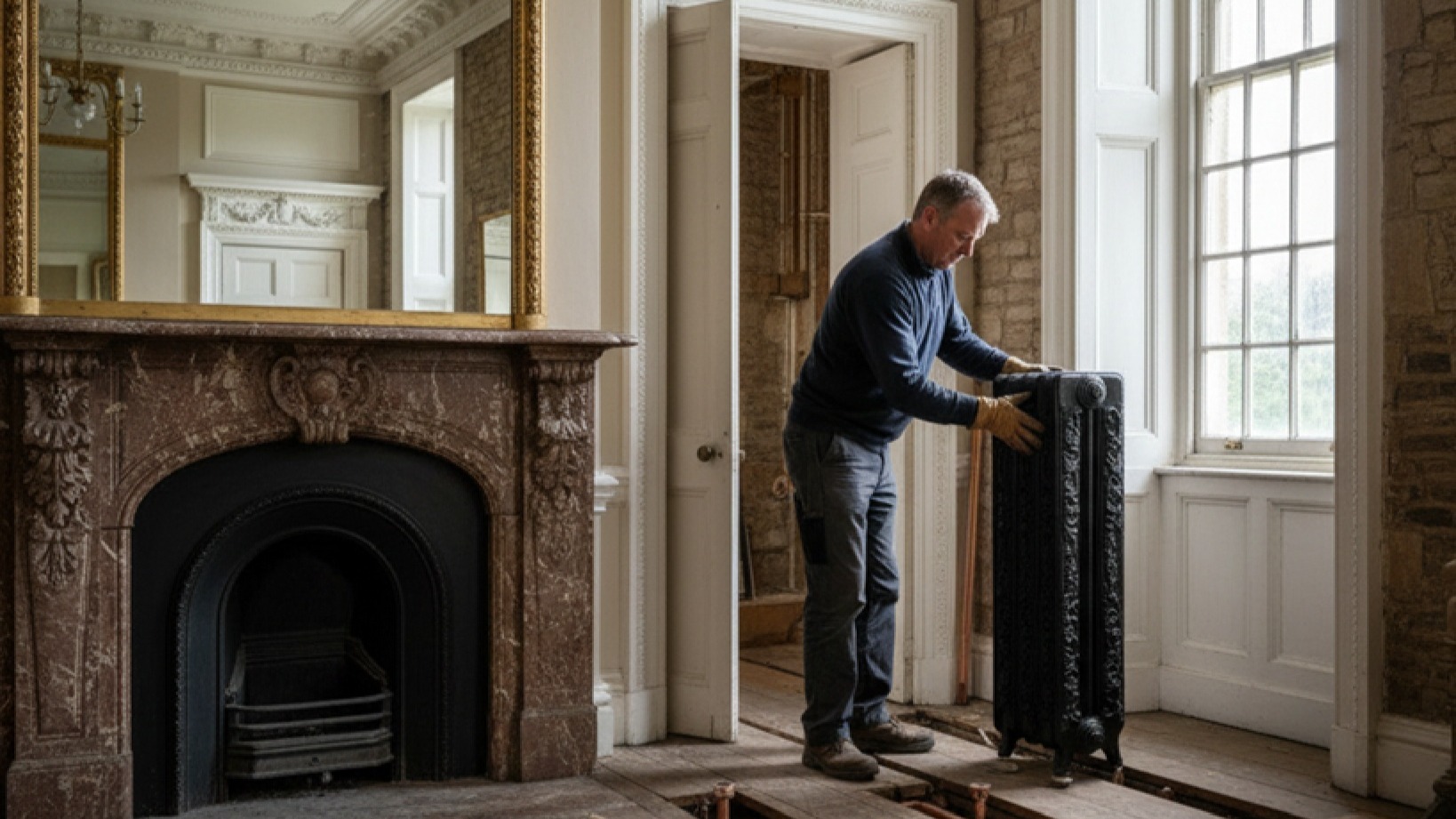
Period properties command premium prices across the UK housing market, yet their original heating systems, open fireplaces and single-glazed windows waste energy and money. Homeowners face a dilemma: install efficient modern heating or preserve architectural character. The answer isn't choosing one over the other. We've worked with conservation officers and heritage specialists on dozens of listed buildings, and the most successful projects make contemporary systems virtually invisible.
Why Standard Installation Methods Fail in Period Buildings
Most heating engineers treat Georgian townhouses like 1990s semis. They surface-mount pipework along skirting boards, box in radiators with MDF, and drill through original plasterwork without considering historical fabric. This approach fails on two fronts: it damages irreplaceable features and looks terrible.
Listed building consent gets refused when modern interventions dominate period rooms. Conservation officers reject applications showing exposed copper pipes crossing ornate cornicing or bulky panel radiators blocking fireplace alcoves. Even in unlisted period properties, visible modern systems reduce market appeal. Estate agents report that poorly integrated heating costs sellers 5-10% in final sale prices.
The structural challenge runs deeper than aesthetics. Period buildings weren't designed for central heating. Solid walls, lime plaster, and timber floors require different installation techniques than cavity walls and concrete screeds. Force modern systems into old buildings without adapting your approach, and you'll crack plasterwork, trap moisture, and create thermal bridges.
Radiators That Respect Original Architecture
Column radiators solve multiple problems simultaneously. Their vertical tubes echo Victorian and Edwardian design language, sitting naturally in period rooms where flat panel radiators look wrong. We specify four or six-column models in heritage projects because their depth provides high heat output without excessive width, crucial when wall space is limited by windows, doors, and fireplaces.
Positioning matters more than radiator style. Place them in original alcoves beside chimney breasts where Victorian radiators would have sat. This location serves practical purposes: the alcove depth accommodates larger radiators, and positioning near former flues uses existing ventilation paths. Avoid placing radiators under sash windows where rising heat damages historic glazing bars and paint finishes.
Cast iron radiators offer authentic period appearance but require structural assessment. Original Victorian radiators weigh 30-40kg per section when filled with water. Floor joists in properties built before 1920 may need reinforcement, particularly in upper floors where timber has degraded. Modern steel column radiators from manufacturers like Myson deliver similar aesthetics at one-third the weight.
Colour choice affects how visible radiators become. White radiators contrast sharply against period wall colours, deep reds, greens, and heritage greys common in Georgian and Victorian schemes. Paint radiators to match wall colours, and they recede visually. Farrow & Ball and Little Greene publish radiator-safe versions of their heritage paint ranges specifically for this purpose.
Concealing Pipework Without Damaging Historic Fabric
Pipework presents the biggest challenge in period property heating. Modern installations need flow and return pipes connecting each radiator to the boiler, plus manifolds, valves, and controls. Run these visibly, and you destroy the room's character. The solution lies in using original service routes and minimal-impact installation techniques.
Victorian and Edwardian houses have service voids that modern buildings lack. Gaps between floorboards and ceiling laths below, spaces behind deep skirting boards, and vertical chases inside chimney breasts all carried original services. Locate these routes before starting work, they're your hidden highways for modern pipework.
Lifting floorboards requires care in period properties. Original boards are often tongue-and-groove pine or oak, irregular in width, and fixed with cut nails. We lift every fifth or sixth board to run pipes perpendicular to joists, then relay original boards rather than replacing with plywood. Where boards are damaged beyond repair, architectural salvage yards supply period-appropriate replacements that match grain and patina.
Micro-bore and multilayer pipe systems work better than standard 15mm copper in period buildings. Their smaller diameter (8-10mm) fits through tighter spaces and requires smaller holes through joists. Multilayer pipe (aluminium core with plastic coating) bends by hand, eliminating joints in hidden spaces where leaks are hardest to access. This matters in listed buildings where you can't simply rip out ceilings to fix problems.
Skirting boards in period properties are typically 150-225mm deep, twice the height of modern skirtings. This depth creates a natural service void. Rather than removing entire skirting runs, we lift them carefully, run pipes in the void behind, and refix using the original fixing points. This preserves decorated surfaces and carved details whilst hiding pipework completely.
Quality pipe fittings and connectors designed for discreet installations make the difference between systems that integrate seamlessly and those that announce their presence. Professional-grade compression fittings create secure joints in confined spaces without the heat damage that soldered connections can cause to historic woodwork.
Strategic Placement of Modern Boilers
Condensing boilers are 30% more efficient than old floor-standing models, but they're twice the size and need different flue arrangements. Placing a white metal box on a period kitchen wall destroys the room's character. The installation location determines whether concealing modern heating succeeds or fails.
Original sculleries, boot rooms, and larders make ideal boiler locations. These secondary spaces were always functional rather than decorative, so modern equipment doesn't conflict with period character. Many Victorian houses have rear additions, lean-to structures with lower ceilings and simpler finishes, that work perfectly for boiler installations. Listed building consent comes more easily for work in later additions than in the original fabric.
Modern condensing boilers from manufacturers like Andrews or Morco offer compact designs that fit into tight spaces without dominating them. Their efficiency gains justify the installation challenges, typically cutting fuel bills by 25-35% compared to older systems.
Where no service room exists, boiler cupboards need careful design. We build them using materials and details that match the period: panelled doors echoing other joinery in the house, matching architraves and cornicing, and proportions that relate to original features. A well-designed boiler cupboard looks like original storage, not an afterthought.
Flue routes cause problems in terraced properties and conservation areas. External flues on primary elevations usually get refused planning permission. Internal flues through existing chimneys work where the chimney isn't in use and has an adequate diameter (at least 150mm). We line chimneys with flexible flue systems that leave the external stack untouched, essential in conservation areas where altering rooflines requires consent.
Underfloor Heating in Historic Buildings
Underfloor heating eliminates visible radiators and pipework entirely, but it's not suitable for all period properties. Success depends on floor construction, ceiling heights, and building use.
Suspended timber floors, the standard in British houses built before 1945, can accommodate low-profile underfloor systems without raising floor levels. We install aluminium heat diffusion plates between joists, then run pipework through these plates. The system heats from below, warming floorboards without damaging them. This approach works in ground and upper floors, though upper floors need careful joist assessment to ensure they can support the water-filled system.
Solid floors offer easier installation but are less common in period properties. Where they exist (typically in basements, cellars, and some ground floors), we install insulation boards and pipe systems before laying a screed. The challenge is maintaining floor levels that match existing thresholds, stairs, and built-in furniture. Raising floors by even 50mm creates trip hazards and exposes gaps around fitted elements.
Ceiling height limits underfloor heating in many period properties. Georgian and Victorian rooms have 3-3.5m ceilings that accommodate raised floors without issue. But cottages, attic rooms, and later Victorian terraces often have 2.3-2.5m ceilings, where losing 50-100mm to floor build-up creates cramped proportions and planning problems.
Heat output from underfloor systems suits period buildings well. These systems run at lower temperatures (35-45°C) than radiators (60-75°C), reducing stress on lime plaster and limiting differential movement between old and new materials. The gentle, even heat distribution prevents the hot spots that damage historic paintwork and wooden features.
Controls and Thermostats That Don't Clash
Smart thermostats deliver 20-30% energy savings through learning patterns and remote control, but their glossy plastic screens look wrong on period walls. Integration requires thinking beyond the device itself to its position and context.
Locate thermostats in circulation spaces, hallways, landings, stairwells, rather than principal rooms. These areas typically have simpler decoration where modern devices are less intrusive. Wall positions beside door frames work better than central wall locations, where thermostats become focal points.
Heating controls from manufacturers like Honeywell, Danfoss, and EPH Controls now offer models designed for period properties. These use traditional materials (brass, painted metal) and simpler displays that don't announce their modernity. They cost 30-40% more than standard smart thermostats but make the difference between systems that integrate and those that jar.
Radiator valves need similar consideration. Thermostatic radiator valves (TRVs) improve efficiency by controlling individual room temperatures, but standard TRVs have chunky plastic heads that look wrong on column radiators. Traditional-style TRVs with metal bodies and discrete adjustment dials cost £15-20 more per valve but maintain period appearance.
Circulation Systems for Period Properties
Effective heat distribution in multi-storey period buildings requires properly specified circulation equipment. Grundfos circulator pumps offer variable-speed models that adapt flow rates to system demand, running quietly in properties where original timber floors transmit noise between levels.
System pressurisation matters more in period properties than modern builds. Temperature fluctuations in older buildings with solid walls create greater expansion and contraction cycles. Quality expansion vessels and pressure control components from suppliers like Altecnic maintain stable operating conditions without frequent intervention.
Where radiators sit at varying heights across multiple floors, balancing becomes critical. We use lockshield valves to regulate flow to each radiator, ensuring ground-floor rooms don't steal all the heat whilst upper floors remain cold. This balancing work takes 2-3 hours in a typical Victorian house, but makes the difference between a system that works and one that disappoints.
Working Within Listed Building Constraints
Listed building consent adds 8-12 weeks to heating projects, but it's not the barrier many assume. Conservation officers want period buildings to remain habitable and efficient. They refuse applications that damage historic fabric or dominate original features, not those that integrate carefully.
Pre-application advice costs £100-200 and saves months of back-and-forth. Conservation officers explain what they'll accept before you commit to detailed plans. We've found they're particularly helpful about pipework routes, boiler locations, and radiator positions, the practical details that make or break installations.
Reversibility matters in listed building applications. Conservation officers favour interventions that can be removed without permanent damage. This means mechanical fixings rather than adhesives, pipes run through existing holes rather than new chases, and equipment positioned where removal won't leave obvious scars.
Some works don't need listed building consent even in Grade I and II* properties. Like-for-like replacement of heating systems using existing routes and positions often falls under permitted development. Internal works that don't affect the building's special interest may also be exempt. Check with your local authority before assuming you need consent; many straightforward upgrades proceed without formal applications.
Balancing Efficiency with Character
Modern heating standards, condensing boilers, weather compensation, zone controls, deliver running costs 40-50% lower than systems from the 1980s and 1990s. But period properties can't achieve the same efficiency levels as new builds without compromising their character.
Solid walls account for most heat loss in period buildings. External wall insulation transforms efficiency but destroys architectural detail, moulded brickwork, stone dressings, and building proportions, all of which disappear under render systems. Internal wall insulation reduces room sizes and covers original plasterwork. In listed buildings, both approaches are usually refused.
Secondary glazing offers better results than replacement windows. Slim-profile systems sit 100mm inside original windows, creating an insulating air gap without altering external appearance. We specify systems with magnetic seals that occupants can remove in summer, maintaining the building's ability to breathe whilst cutting heat loss by 60% in winter.
Draught-proofing delivers the best return on investment in period properties. Gaps around doors, windows, and floorboards cause 30-40% of heat loss, more than walls or roofs. Professional draught-proofing costs £800-1,200 for a typical Victorian terrace and pays back within three years through reduced heating bills.
Creating Seamless Integration
Concealing modern heating in period property heating installations requires planning that starts before any equipment arrives on site. Survey the property thoroughly, identifying original service routes, structural constraints, and architectural features that must remain untouched. This groundwork determines which concealment strategies will work and which will fail.
Document existing conditions with photographs and measurements. When you're lifting floorboards or opening walls, you're revealing information about the building's construction that's been hidden for decades. Record what you find, it'll guide the installation and provide valuable context if problems arise later.
Work with specialists who understand period buildings. A heating engineer experienced in new builds won't have the techniques or mindset needed for heritage properties. Look for professionals who've worked on listed buildings, understand conservation principles, and can show examples of discreet installations.
Maintaining Hidden Systems
Systems concealed behind original fabric need accessible service points. We install inspection hatches in discreet locations, inside cupboards, beneath stairs, or in service areas, that allow access to valves, pumps, and connections without dismantling historic features. These access points sit flush with surfaces and use period-appropriate materials, remaining invisible until needed.
Annual servicing becomes more critical when pipework and equipment are hidden. Book maintenance visits that check for leaks, corrosion, and wear before they become visible problems. A small leak behind Victorian skirting boards can damage irreplaceable joinery for months before anyone notices.
Keep installation records showing pipe routes, valve locations, and equipment specifications. Future owners or engineers will thank you when they need to repair or extend the system. We provide detailed drawings and photographs as part of every installation, stored digitally and printed in a building file.
Achieving Comfort Without Compromise
Modern heating belongs in period properties when installed with understanding and care. The goal isn't to make contemporary systems invisible, that's impossible and unnecessary, but to ensure they don't dominate spaces designed around different technologies and aesthetics.
Success comes from using original service routes, choosing equipment that respects period proportions, and understanding how conservation principles apply to practical installations. Column radiators in alcoves, pipework behind original skirting boards, and boilers in service spaces all deliver efficient heating without compromising architectural character.
Listed building consent protects our most important historic buildings, but it shouldn't prevent sensible upgrades that make them comfortable and sustainable. Conservation officers support installations that show respect for historic fabric and understanding of period design principles. The projects they refuse are those that treat old buildings as obstacles rather than opportunities.
Period properties will stand for another century or more. The heating systems we install today should serve them well without limiting future options or damaging irreplaceable features. That requires more thought and care than standard installations, but the results, comfortable, efficient homes that retain their character, justify the extra effort.
For specialist advice on heating solutions for period properties, Heating and Plumbing World supplies the quality components and technical expertise needed for installations that respect architectural heritage. If you need guidance on specific products or installation approaches, get in touch for recommendations tailored to your property's requirements.