

Copper Pipes: Types, Grades and Applications
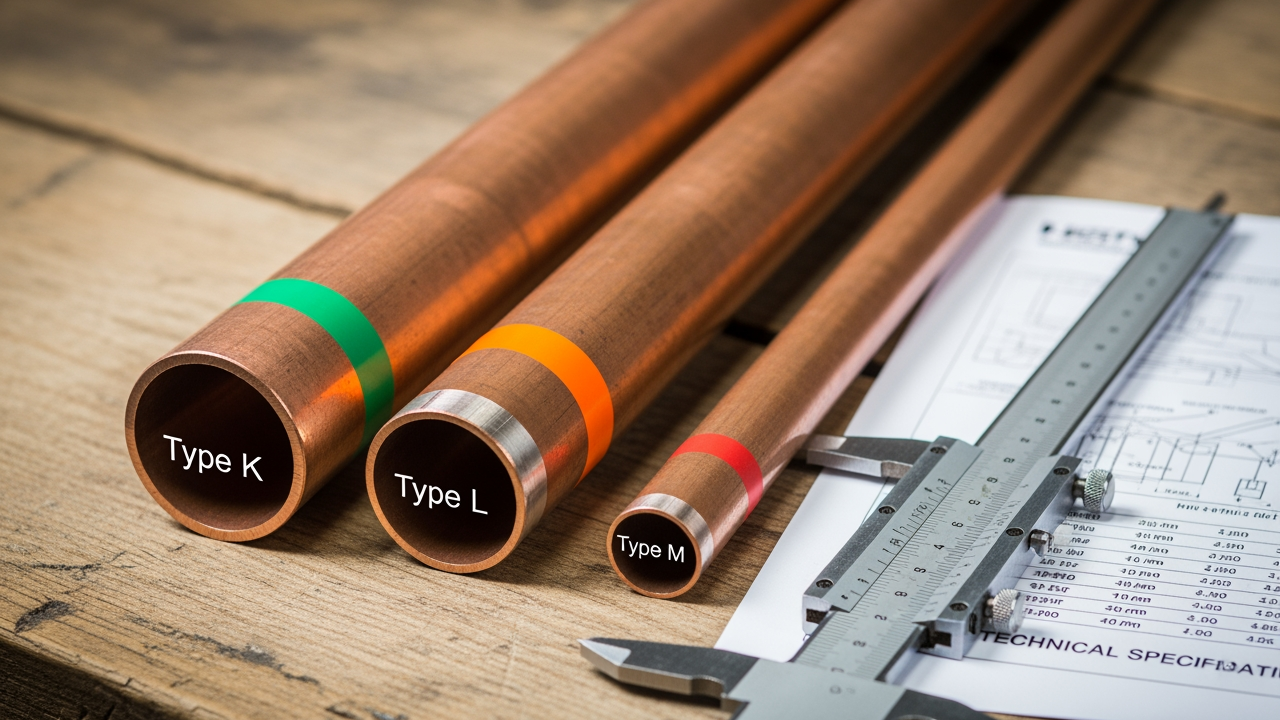
Copper pipes have carried water and heat through buildings for over 5,000 years. The metal's natural resistance to bacteria, fire, and corrosion makes it the default choice for potable water systems across Europe, Australia, and North America. Yet walk into any plumbing supplier, and you'll face dozens of options: Type L, Type M, K-grade, hard-drawn, annealed, chromated, and plain. Each serves specific applications where the wrong choice costs time and money.
The Three Standard Copper Pipe Types
The copper pipe industry standardises around three main types, distinguished by wall thickness. Thicker walls handle higher pressures but cost more and require more effort to work with.
Type K features the thickest walls of the three standards. You'll recognise it by the green marking on the pipe surface. Underground water service lines use Type K because the extra wall thickness withstands soil pressure and provides a buffer against corrosion over decades. The nominal ½-inch Type K pipe has a wall thickness of 0.049 inches, nearly 50% thicker than Type M.
Type L strikes the middle ground with medium wall thickness and orange markings. Most residential and commercial plumbing installations default to Type L. The walls are thick enough for reliable service under normal building pressures (up to 150 PSI for ½-inch diameter) whilst remaining economical. Type L works for both above-ground and underground applications, though local codes often mandate Type K for buried lines.
Type M provides the thinnest walls, marked in red. The reduced material makes Type M the cheapest option per foot. Residential water distribution systems commonly use Type M where codes permit, particularly for above-ground runs in heated spaces. The thinner walls mean lower pressure ratings; ½-inch Type M handles roughly 120 PSI compared to Type L's 150 PSI.
The pressure ratings matter more than installers often realise. A home's water pressure typically runs 40-80 PSI, well within any type's capacity. But pressure spikes from water hammer or thermal expansion can momentarily double those figures. Type M installed in a system with inadequate expansion control may develop pinhole leaks years earlier than Type L would.
Hard-Drawn vs Annealed Temper
Copper pipes come in two tempers that dramatically affect installation methods and applications.
Hard-drawn copper arrives in straight lengths, typically 10 or 20 feet. The manufacturing process work-hardens the metal, creating a rigid pipe that holds its shape. This rigidity suits vertical runs, long horizontal spans, and anywhere the pipe needs structural stability. Hard-drawn pipe requires mechanical fittings or soldered joints, you cannot bend it without specialised equipment and risk of kinking.
Annealed copper undergoes heat treatment that softens the metal. Suppliers coil it like a hose, shipping it in 25, 50, or 100-foot rolls. The soft temper allows hand-bending around obstacles using a tube bender, eliminating fittings in many situations. Underground service lines, refrigeration lines, and retrofit work through existing structures all benefit from annealed copper's flexibility. The trade-off: annealed copper costs 15-30% more per foot and lacks the rigidity for unsupported spans over 4-6 feet.
Both tempers in Type L suit different applications. A basement refit with exposed ceiling joists needs hard-drawn pipe that runs straight and clips securely to the structure. That same building's underground water service uses annealed Type L that bends around rocks and follows the trench contour without joints.
Copper Grades: C12200 and DHP
The copper itself comes in different grades based on composition and oxygen content.
C12200 copper (also called DLP or deoxidised low phosphorus) contains 99.9% pure copper with trace phosphorus added during production. The phosphorus prevents oxidation during welding and brazing, making C12200 the standard for potable water systems. This grade meets drinking water standards worldwide and resists the formation of copper oxide scale that can narrow pipes over time.
DHP copper (deoxidised high phosphorus) contains higher phosphorus levels, typically 0.015-0.040% compared to C12200's 0.004-0.012%. The extra phosphorus improves resistance to hydrogen embrittlement in certain environments. Medical gas systems, specialised industrial applications, and some HVAC systems specify DHP copper. You won't find it in typical plumbing supplier stock because C12200 handles 95% of applications.
The grade distinction matters primarily for joining methods. Higher phosphorus content can create brittle joints when welded with certain filler metals. Follow the filler metal manufacturer's specifications, some work with both grades, others specify C12200 only.
Surface Finishes and Coatings
Bare copper develops a natural patina over time, but several coatings modify the pipe's surface for specific purposes.
Chromate-coated copper features a yellow or greenish surface treatment that slows patina formation. The coating provides no structural benefit; it's purely aesthetic for exposed installations where the bright copper appearance matters. The chromate wears off during installation, particularly at joints and where the pipe contacts supports. Most installers skip chromated pipe unless the specification explicitly requires it.
Plastic-coated copper wraps the exterior in a thin polyethene or PVC jacket. This coating serves two purposes: it prevents galvanic corrosion when copper contacts dissimilar metals, and it reduces noise transmission. Water rushing through bare copper pipe radiates sound through the building structure. The plastic jacket dampens this noise significantly. Expect to pay 40-60% more for plastic-coated pipe, so use it selectively in noise-sensitive areas rather than throughout the system.
Pre-insulated copper combines the pipe with foam insulation in a single product. Hot water recirculation lines and heating systems lose substantial heat through bare copper. Pre-insulated pipe costs less than buying pipe and insulation separately, installs faster, and provides consistent insulation quality. The foam typically offers R-4 to R-6 per inch, adequate for most building interiors but insufficient for outdoor or extreme-temperature applications.
Application-Specific Selection
Different systems demand different copper specifications based on pressure, temperature, and environmental factors.
Potable Water Systems
Potable water systems default to Type L C12200 copper in most jurisdictions. The medium wall thickness provides durability without excessive cost. Use hard-drawn pipe for distribution risers and horizontal runs with adequate support spacing (6-8 feet for ½-inch and ¾-inch pipes). Switch to annealed Type L for underground service lines and retrofit work through finished spaces. Some codes permit Type M for cold water distribution in heated spaces; check local requirements before substituting.
Hydronic Heating Systems
Hydronic heating systems handle higher temperatures that create thermal expansion and contraction cycles. Type L remains the standard, but pay attention to expansion control. Copper expands roughly 1 inch per 100 feet when heated from 60°F to 180°F. Without proper expansion loops or joints, this movement generates stress that cracks soldered joints or damages equipment connections.
Pre-insulated copper reduces heat loss in heating loops, a 100-foot run of bare ¾-inch copper carrying 160°F water loses roughly 15,000 BTU/hour in a 70°F space. Modern heating systems from Grundfos or Danfoss require properly sized copper distribution to maintain efficiency.
Refrigeration Systems
Refrigeration systems universally use annealed copper for its bendability. The soft temper allows routing around obstacles and creating smooth bends that maintain refrigerant flow. ACR (Air Conditioning and Refrigeration) copper comes cleaned, capped, and dehydrated to prevent contamination. Standard plumbing copper contains oils and debris that damage refrigeration compressors; never substitute one for the other. ACR copper uses different size designations (actual outside diameter rather than nominal) and requires specialised fittings.
Gas Distribution
Gas distribution can use copper for natural gas and propane in many jurisdictions, though black steel remains more common for gas. When codes permit copper gas lines, use Type L or K with brazed joints; soldered joints lack the strength for gas service. The yellow plastic coating on some copper pipe identifies it for gas use (CSST or corrugated stainless steel tubing has largely replaced copper for new gas installations due to easier routing).
Underground Applications
Underground applications face soil chemistry that accelerates corrosion. Type K provides the best longevity, but Type L works in most soils. Avoid direct burial in highly acidic soils (pH below 5.5) or soils with high sulphate content without additional protection. Wrapping buried copper in polyethene tape or using pre-coated pipe extends service life in aggressive soils. The tape costs pennies per foot and doubles the expected lifespan in problem soils.
Sizing Considerations Beyond Diameter
Copper pipe types involve more than matching the diameter to fixture requirements.
Pressure drop increases as water velocity rises. The industry standard limits velocity to 8 feet per second for cold water and five feet per second for hot water to prevent erosion and noise. A ½-inch Type L pipe flowing 4 gallons per minute experiences roughly six fps velocity, acceptable for cold water but excessive for hot. Undersized hot water lines erode at bends and fittings, developing leaks years before properly sized pipes would fail.
Thermal expansion generates significant forces. A 50-foot run of ¾-inch copper carrying 180°F water exerts roughly 1,500 pounds of force if rigidly anchored at both ends. This force breaks soldered joints, damages equipment connections, and bows the pipe. Install expansion loops every 40-60 feet on long runs, or use expansion couplings that absorb movement within the fitting.
Support spacing prevents sag and stress on joints. Hard-drawn copper requires support every 6-8 feet for horizontal runs of ½-inch to 1-inch diameter. Increase support frequency for larger diameters and vertical runs. Annealed copper needs support every 3-4 feet because the soft temper lacks structural rigidity. Plastic-coated copper requires closer support spacing than bare pipe, the coating adds weight without adding strength.
Joining Methods and Material Compatibility
Copper's versatility extends to multiple joining methods, each suited to different applications and skill levels.
Soldered Joints
Soldered joints remain the standard for potable water systems. Lead-free solder (95/5 tin-antimony or similar alloys) creates permanent, leak-free connections when properly executed. The joint strength exceeds the pipe strength, failures occur in the pipe, not the solder. Soldering requires clean, dry pipes and controlled heat. Water in the line prevents the joint from reaching soldering temperature, creating weak joints that leak within weeks.
Brazed Joints
Brazed joints use brass or bronze filler metals that melt above 840°F. Brazing creates stronger joints than soldering, necessary for gas lines, high-pressure systems, and large-diameter pipes. The higher temperatures require more skill and care to avoid overheating the pipe. Overheated copper loses temper and strength, creating a weak point that may fail under pressure.
Compression Fittings
Compression fittings require no heat or special tools. The fitting compresses a brass ferrule onto the pipe as you tighten the nut, creating a mechanical seal. Compression fittings cost 3-5 times more than soldered fittings but allow disassembly for maintenance. Use them at equipment connections, shutoff valves, and anywhere future access matters. Quality fittings ensure reliable connections. Avoid compression fittings in concealed locations, they can loosen over time from thermal cycling.
Press Fittings
Press fittings use a specialised tool to crimp a stainless steel fitting onto the pipe. The crimping action cold-works the fitting and pipe together, creating a permanent joint in seconds. Press fittings eliminate open flames (important in occupied buildings), work with wet pipes, and require minimal skill. The fittings cost significantly more than solder fittings, but installation speed often offsets the material cost on commercial projects.
System Integration Considerations
Understanding copper pipe types becomes particularly important when planning complete heating and plumbing installations. Modern boiler systems from Andrews or Morco require properly specified copper distribution pipework to maintain warranty compliance and system efficiency.
Heating controls from Honeywell or EPH Controls depend on correctly sized copper pipes to regulate flow and temperature accurately. Undersized pipework creates flow restrictions that prevent controls from functioning properly, whilst oversized pipes increase system volume and reduce responsiveness.
Expansion vessels from Altecnic Ltd protect copper pipework from pressure surges, but only when the entire system is correctly specified. Type M copper in a high-pressure heating system without adequate expansion control will fail prematurely, regardless of expansion vessel quality.
Water cylinders from Gledhill and Kingspan connect to copper distribution pipework that must handle both pressure and thermal cycling. The connections between cylinders and pipework represent critical failure points if copper type and joining methods aren't matched to the application.
Getting the Specification Right
Copper pipe selection balances wall thickness, temper, grade, and coating against application requirements and budget. Type L C12200 copper handles the majority of plumbing and heating work, use hard-drawn for structural runs and annealed for underground service and retrofit work. Upgrade to Type K for underground lines in aggressive soils or where maximum longevity justifies the cost. Reserve Type M for above-ground cold water distribution where codes permit and pressure conditions remain stable.
The temper choice affects installation methods more than performance. Hard-drawn copper suits new construction with clear access, whilst annealed copper solves routing problems in existing buildings. Match the joining method to the application: solder for concealed water lines, compression for accessible equipment connections, and brazing for gas or high-pressure systems.
Surface treatments serve specific purposes rather than improving base performance. Skip chromate coating unless appearance matters. Use plastic coating where noise control or dissimilar metal contact occurs. Specify pre-insulated pipe for heating systems where heat loss matters.
The upfront cost difference between types often seems significant, Type K costs 40% more than Type M., but copper pipe represents a small fraction of total installation cost once you factor in labour, fittings, and system components. The few pounds saved using thinner-wall pipe disappear in a single service call to repair a premature failure. Choose copper specifications based on service conditions and expected lifespan, not just initial material cost.
For technical advice on copper pipework and complete heating systems, Heating and Plumbing World stocks a comprehensive range of copper pipes and compatible components. If you need specification support or have questions about your copper pipe selection, get in touch with the technical team.