

Copper vs Brass Compression Fittings: When to Use Each Type
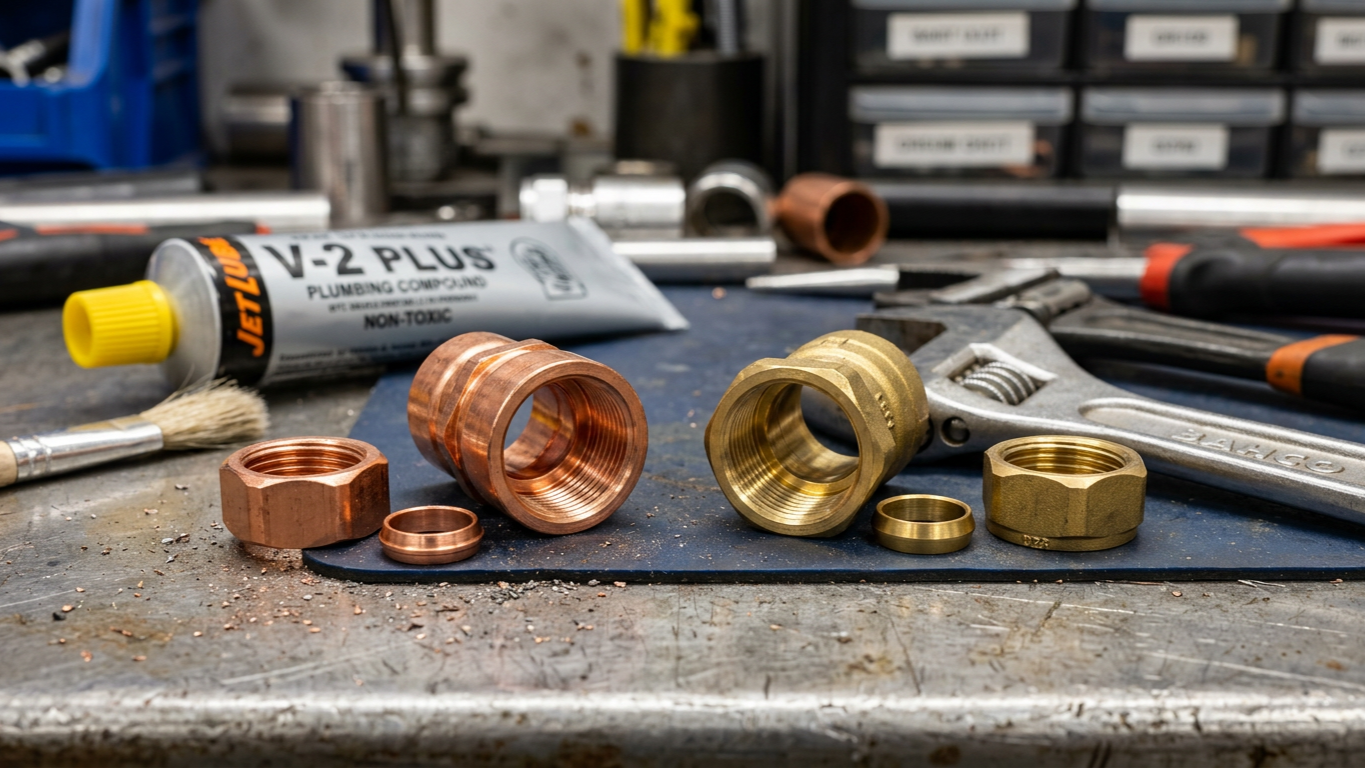
Walk into any plumber's merchant, and you'll find compression fittings in both copper and brass. They're sat right next to each other on the shelf, often at different price points, and if you're new to the trade, the choice isn't always obvious. Get it wrong, and you'll be back on site in six months chasing a weeping joint or dealing with dezincification that has turned a perfectly good fitting into something that crumbles in your hand.
The short answer is that pure copper fittings excel in pure copper systems where you need maximum corrosion resistance and you're working with soft or semi-rigid tube. Brass fittings are the workhorses for mixed-metal installations, harder tempers, and situations where you need mechanical strength and versatility across different pipe materials. But that is just scratching the surface.
Understanding when to specify one over the other isn't about memorising a chart; it is about knowing what happens inside the fitting when you tighten that nut, what your water chemistry looks like, and whether you're installing in a domestic bathroom or a commercial plantroom with multiple metals in the same circuit.
Material Properties That Actually Matter on Site
Copper and brass aren't interchangeable just because they both look vaguely the same colour when they're new. The metallurgical differences dictate how they perform under pressure, how they react to different water conditions, and how long they'll last before you're back with a bucket and a repair kit.
Pure copper fittings are typically manufactured from C106 or C101 copper, which is essentially 99.9% pure copper with trace elements. This gives them excellent malleability, which means the olive beds into the pipe surface beautifully when you tighten the nut. That intimate contact is what creates the seal. Copper's natural oxide layer forms quickly and protects against further corrosion in most potable water systems.
Brass fittings are usually made from CZ132, which is dezincification-resistant brass, or CW617N alloys in the UK. These contain roughly 60% to 63% copper and 37% to 40% zinc, plus small amounts of lead or other elements depending on the grade. The zinc content makes brass significantly harder than pure copper and more resistant to mechanical wear.
The hardness difference is entirely measurable. Copper sits around 40 to 80 on the Vickers scale depending on temper. Brass can easily hit 100 to 120 on the same Vickers scale. That extra hardness means brass threads are less likely to strip under overtightening, and the fitting body can handle higher mechanical loads without deforming. When you are working with soft pure copper tube, a brass fitting can actually bite too hard into the pipe wall if you're not careful with torque.
How Water Chemistry Decides Which Fitting Survives
Here is where theory meets the real world. I've pulled apart joints in soft water areas where brass fittings looked perfect after twenty years, and I've seen the same fittings in hard water districts where the structural degradation had progressed so far the fitting body had turned pink and porous.
Think of dezincification like rust on a car chassis. The paint might look absolutely pristine on the outside, but underneath, the structural integrity is completely hollowed out and waiting to fail. In aggressive water conditions with low pH or high chloride content, the zinc leaches out of the brass alloy, leaving behind a weak sponge. You'll often spot it as a reddish or pink discolouration on the brass surface.
This is why DZR brass, officially known as dezincification-resistant brass, became the standard for UK water fittings. If you're buying components from a reputable supplier like Heating and Plumbing World, you should be getting DZR-compliant brass as standard. Copper fittings don't suffer from dezincification because there's no zinc to leach out. In soft water areas, pure copper compression fittings are the safer long-term bet.
But flip that around. In hard water areas with high calcium and magnesium content, brass actually performs brilliantly. The scale deposits that form on the inside of the fitting provide an additional protective layer.
Galvanic Corrosion and Mixed-Metal Systems
This is where plenty of installations fall victim to galvanic corrosion. If you are joining dissimilar metals in a wet system, you create a galvanic cell. The more anodic metal typically corrodes preferentially to protect the more cathodic metal. Copper and brass are relatively close together in the galvanic series, which is why they generally play nicely together. But introduce steel or aluminium into the same circuit, and you've got problems.
Brass acts as a useful buffer in mixed-metal systems. Because brass contains both copper and zinc, it sits between pure copper and steel in terms of galvanic potential. If you are connecting pure copper tube to a steel radiator heating system, using brass fittings at the transition points can severely slow down galvanic attack.
On a recent commercial plant room upgrade, an apprentice piped an entire heating circuit using pure copper fittings directly onto galvanised steel threads. Within two years, galvanic corrosion had eaten through the transition points, causing a massive weekend leak. Replacing those transitions with brass fittings immediately stopped the reaction, saving the client from thousands in ongoing repair costs.
Mechanical Strength and Installation Conditions
Brass wins on mechanical strength, and that matters in certain applications. When selecting copper pipe joiners or brass alternatives for a tight commercial plantroom subject to thermal expansion, vibration, or occasional knocks, brass fittings hold up far better. The harder alloy resists deformation and thread damage.
Copper fittings are more forgiving during installation, but less forgiving in service. If you're working in a tight space and you need to make minor adjustments after tightening, copper allows a bit of movement without immediately compromising the seal. But once they're set, they're softer. If someone leans on the pipe or you get water hammer, a copper fitting is more likely to weep.
Temperature and Pressure Ratings
Both copper and brass compression fittings are rated for similar working pressures and temperatures in domestic and light commercial applications. But the way they achieve those ratings differs significantly.
Brass fittings maintain their mechanical properties at higher temperatures slightly better than copper. Copper softens more noticeably as temperature increases, which can lead to creep and gradual deformation under sustained load. In a heating system that's cycling between 20°C and 80°C daily, alongside other central heating components, brass fittings are far less prone to loosening over time.
Cost, Availability, and Practical Considerations
Brass fittings are generally cheaper and more widely stocked. Walk into any trade counter for heating plumbing supplies, and you'll find a full range of brass fittings from leading brands. Copper fittings are more specialised; you'll find them, but the range is narrower, and you might pay 30% more for equivalent sizes.
That price difference matters on larger jobs. If you're fitting out a multi-unit development, brass makes economic sense provided the water chemistry supports it. Copper makes sense when you're prioritising longevity over initial cost in critical systems.
When Copper Fittings Are the Right Call
Use copper when you're working in soft water areas with low pH where dezincification is a known issue. It is also the ideal choice when the entire system is copper and you want to eliminate any galvanic potential differences.
When matching existing plumbing pipe solutions in renovations, you want to maintain material consistency throughout the system. You are installing on soft pure copper tube in domestic properties where the sympathetic compression of copper-on-copper reduces the risk of pipe damage.
When Brass Fittings Are the Right Call
Specify brass or dezincification-resistant brass components when you're working in hard water areas where scale formation provides additional protection. It is crucial when the system includes mixed metals, such as connecting copper to steel radiators or galvanised cisterns.
If you are comparing these to push fit plumbing fittings, brass provides a more robust mechanical connection for commercial plantrooms and exposed pipework. They are highly recommended for harder tube tempers where the brass hardness helps the olive bite into the pipe surface.
Installation Technique Makes or Breaks the Joint
Material choice matters, but installation quality matters more. I've seen perfectly good brass fittings leak because someone didn't deburr the pipe properly, and I've seen copper fittings last thirty years because the installer took the time to do it right.
Deburr the pipe end thoroughly because any sharp edge will cut into the olive as you tighten the nut, creating a leak path. Don't overtighten the nut. This is where brass causes trouble on soft tube; you can crush the pipe wall before you realise you've gone too far. For instance, when tightening an expansion vessel connection, always hold the fitting body with a second wrench. If you let the fitting rotate, you'll twist the pipe and create stress points that will eventually weep.
Regulatory Compliance and Standards
Both copper and brass compression fittings sold in the UK must comply with BS EN 1254 for copper and copper alloy fittings. For potable water applications, they must also meet WRAS approval to ensure they're safe for drinking water contact.
DZR brass fittings are strictly required under the Water Supply Regulations for most UK installations. Standard brass is no longer acceptable for potable water systems because of the inherent dezincification risk.
The Verdict: Match the Fitting to the System
There's no universal winner in the copper versus brass debate. The right choice depends on your water chemistry, system design, pipe material, pressure requirements, and budget. For domestic installations in soft water areas with all-copper systems, copper fittings offer the best long-term corrosion resistance.
For commercial systems, mixed-metal installations, or hard water areas, DZR brass provides better mechanical strength and proven performance. The key is understanding why you're choosing one over the other. Get the specification right, and either material will give you decades of reliable service. If you're speccing fittings for a new installation or a major refurb, get expert advice from our technical team to ensure you select the perfect components for your water conditions.