

Cylinder Insulation Ratings: Heat Loss And G3 Compliance
When a hot water cylinder loses heat, you are not just burning energy. You are burning money every single hour of every day. For installers working under strict compliance guidelines, navigating cylinder insulation ratings isn't a luxury; it is a rigid compliance requirement that directly affects system efficiency, running costs, and whether your installation passes a formal inspection.
Think of your cylinder like a thermal travel mug left in a cold van. If the mug has a cheap, thin wall, your coffee is lukewarm in an hour. If it has premium double-wall vacuum insulation, it stays piping hot all day. The exact same principle applies to hot water storage.
The difference between a poorly insulated cylinder and a properly specified one can cost a household £80-120 annually in wasted energy. Multiply that across a commercial installation with multiple cylinders, and the numbers become heavily significant. More critically, if your unit fails to meet the minimum standards, you face a failed inspection and potential rework. Understanding cylinder insulation ratings guarantees you select units that deliver exceptional real-world thermal performance.
What Building Regulations Part G3 Actually Requires
The approved documents for Building Regulations Part G3 set minimum performance standards for hot water storage systems in England and Wales. Scotland has its own regulations under Section 4.6, but the core engineering principles remain remarkably similar across the borders.
If you want to ensure your installations effortlessly clear these hurdles, Heating and Plumbing World provides access to premium hardware designed specifically to exceed the strictest national standards.
The key requirement dictates that the standing heat loss must not exceed 1.28 kWh per 24 hours per litre of stored water multiplied by 0.005. In highly practical terms, for a 150-litre cylinder, the maximum permissible heat loss is roughly 0.96 kWh per day.
Most modern factory-insulated cylinders easily exceed this baseline requirement mandated by Building Regulations Part G3. The real question isn't whether they meet the legal minimum. The question is how much better they perform than the baseline, and what that ultimately means for your client's long-term energy bills.
How Heat Loss Works In Hot Water Cylinders
Heat moves from hot to cold. The greater the temperature difference between the stored water and the surrounding air, the faster heat escapes straight through the cylinder walls. A cylinder sitting at 60°C in a 15°C plant room experiences a massive 45°C temperature differential, creating a powerful driving force for heat transfer.
The insulation's job is to slow this process by creating a robust thermal barrier, essentially trapping air within the foam structure. The thermal conductivity of the material determines how effective the barrier actually is. Polyurethane foam typically achieves highly efficient values between 0.022 and 0.028 W/m·K, meaning less heat bleeds into the surrounding room.
This is exactly why you must also consider the connecting infrastructure. Ensuring the minimum pipe insulation thickness is applied to all distribution lines guarantees that the heat you just saved inside the cylinder isn't immediately lost through bare copper pipes.
Factory Foam Insulation Versus Retrofit Jackets
You will still encounter older cylinders with removable insulating jackets. These certainly have their place on older copper cylinders that were originally installed with minimal or no lagging. However, they simply are not in the same league as modern factory foam insulation.
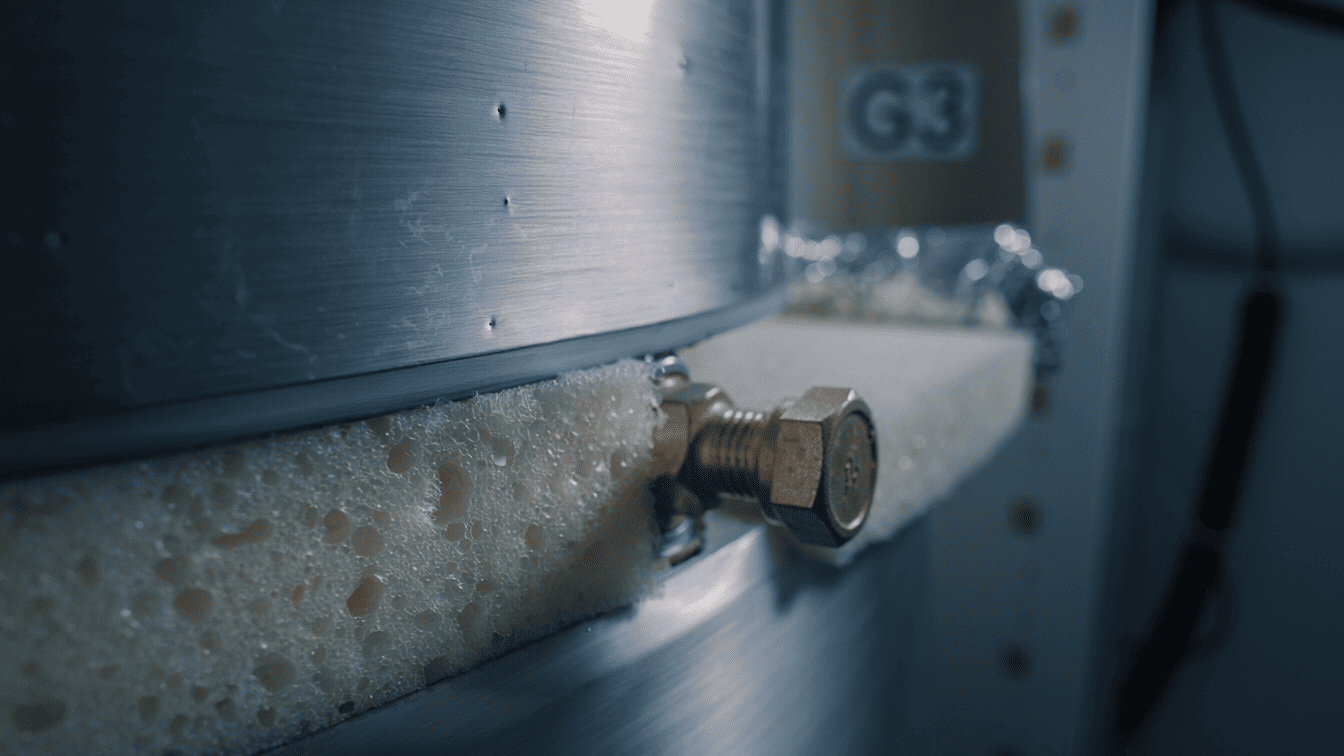
Factory foam insulation is sprayed directly onto the cylinder body, creating a continuous, seamless thermal barrier. There are absolutely no gaps, no compression points, and no areas where rapid cold bridges can form.
A premium cylinder insulation system bonds chemically to the metal, completely eliminating the tiny air gaps that would otherwise allow convection currents to form and drain the tank's thermal energy. Removable jackets, even decent ones rated at 80mm thickness, inevitably compress over time. They have seams and overlaps where coverage is always compromised.
Reading Manufacturer Data Sheets Accurately
Every cylinder comes with a data sheet listing its thermal performance. Your primary metric is the standing heat loss measured in kWh/24hrs. A 200-litre cylinder with 0.9 kWh/24hrs standing heat loss is performing significantly better than a 150-litre cylinder with 0.8 kWh/24hrs when you accurately account for the volume difference.
You must also verify the insulation thickness, typically 35-100mm for factory foam. More thickness generally means better performance, but check the actual heat loss figure closely because foam density and quality matter just as much as physical thickness. Look at the thermal conductivity ratings provided by the manufacturer to verify the foam's true density.
Why Insulation Quality Affects Complete System Design
A poorly insulated cylinder doesn't just waste energy; it severely affects how the entire system operates. An installer might specify a system based on the household's hot water demand, calculating daily usage and recovery time perfectly, but then completely forget to account for standing heat loss.
If the cylinder loses an extra 0.5 kWh per day due to inadequate insulation, that is additional heating load the primary source must cover. This forces expensive heating pumps to work significantly harder, accelerating mechanical wear and driving up running costs unnecessarily over the lifespan of the equipment.
Temperature Maintenance And Legionella Control
Compliance isn't just about insulation thickness. It is also about maintaining safe temperatures for Legionella control. Stored water must reach 60°C minimum and ideally be held there to actively prevent dangerous bacterial growth.
Better insulation helps maintain this critical temperature with far less energy input. A well-insulated cylinder that heats to 60°C in the morning might still be at 57°C by evening without requiring a reheat.
To manage these cycles intelligently, fitting a highly accurate temperature control system ensures the boiler only fires exactly when the cylinder temperature drops below safe parameters.
The thermal store concept takes this further. High-performance insulation allows a large volume of water to be heated once daily and maintain a usable temperature for 24 hours. This only works reliably with a premium hot water storage system featuring genuinely effective insulation of 75mm minimum.
Calculating Real-World Energy Costs From Heat Loss
Let's work through the actual numbers. A 250-litre unvented cylinder with 50mm foam insulation has a standing heat loss of 1.2 kWh per 24 hours. Heated by an oil boiler at 85% efficiency, you burn approximately 515 kWh annually just to compensate for the heat bleeding into the room.
On a recent commercial job, a facility manager complained about skyrocketing heating oil bills. An inspection revealed they had installed three massive uninsulated buffer tanks in a draughty outbuilding, treating them like simple pipework. After retrofitting proper 100mm insulation jackets to the vessels, their daily standing losses dropped by 80 percent, saving them hundreds of pounds within the first quarter.
Compare that to a premium cylinder with 100mm insulation and 0.7 kWh/24hrs standing loss. The difference saves the client roughly £225 over a 15-year lifespan. If the premium cylinder costs £100 more upfront, it pays for itself incredibly quickly.
Installation Factors That Compromise Insulation Performance
Even the best-insulated cylinder can underperform if the installation isn't executed properly. Cold bridging through pipework connections is a heavily common issue. Every single pipe penetrating the insulation creates a fast thermal pathway for heat to escape.
Properly executing an expansion vessel installation requires ensuring the connecting pipework is heavily lagged to prevent rapid thermal bleed through the exposed brass and copper fittings. Cylinder location matters enormously too. A cylinder in a heated airing cupboard loses less heat than one placed in an unheated garage or loft space.
Comparing Vented, Unvented, And Thermal Stores
Vented cylinders and unvented cylinders have similar insulation requirements, but thermal stores operate very differently. A thermal store holds water at a high temperature, often 80-90°C, and uses plate heat exchangers to deliver hot water on demand.
The higher storage temperature means a significantly greater heat loss potential because the temperature differential between the stored water and the ambient air is substantially larger. This makes insulation quality absolutely critical for thermal stores, where you should demand 75-100mm minimum thickness to prevent aggressive heat bleed.
Retrofit Insulation: When And How It Makes Sense
If you are working with an existing cylinder that is structurally sound but poorly insulated, retrofit insulation can make economic sense. A British Standard insulating jacket can be fitted in 15 minutes and pays for itself in under three months by drastically reducing thermal bleed.
If you are upgrading an older system, don't stop at the cylinder itself. Replacing outdated manual valves with intelligent radiator valves across the property ensures the rest of your system is equally efficient, preventing the boiler from overworking just to maintain the poorly insulated tank.
When fitting a secondary jacket, ensure complete coverage with absolutely no gaps. Overlap the seams by at least 50mm and secure them tightly with straps. Pay special attention to the top of the cylinder, as heat rises and the cylinder dome is where the most heat inevitably escapes.
Future-Proofing For Heat Pumps And Solar Thermal
As heating systems shift heavily toward heat pumps and solar thermal, evaluating your cylinder insulation ratings becomes even more critical. Heat pumps operate most efficiently with highly reduced flow temperatures, meaning they take significantly longer to heat a cylinder from cold. Any heat lost during this extended heating period reduces overall system efficiency.
Solar thermal systems face very similar operational challenges. Solar panels deliver heat intermittently when the sun actually shines. A well-insulated cylinder can store this heat for 24-48 hours, maximising the solar contribution flawlessly. Poor factory foam insulation means the solar heat dissipates rapidly, forcing the backup heating system to run far more often.
Conclusion
Understanding cylinder insulation ratings isn't complicated, but it is frequently overlooked in favour of flashier system components. The harsh reality is that a poorly insulated cylinder wastes more energy over its lifetime than most installers realise, costing your clients real money every single day.
Building Regulations Part G3 compliance sets the legal baseline, but meeting the strict minimum isn't the same as delivering optimal performance. Always select units with the thickest factory foam insulation your budget and physical space allow.
The thermal performance of your cylinder dictates system efficiency, running costs, and how often heating sources need to cycle. Get the insulation right, and absolutely everything downstream benefits. If you want to specify high-performance cylinders that effortlessly exceed the legal requirements, speak to our team today for expert sizing and compliance advice.