

Deburring Tools: Cleaning Cut Pipe Ends
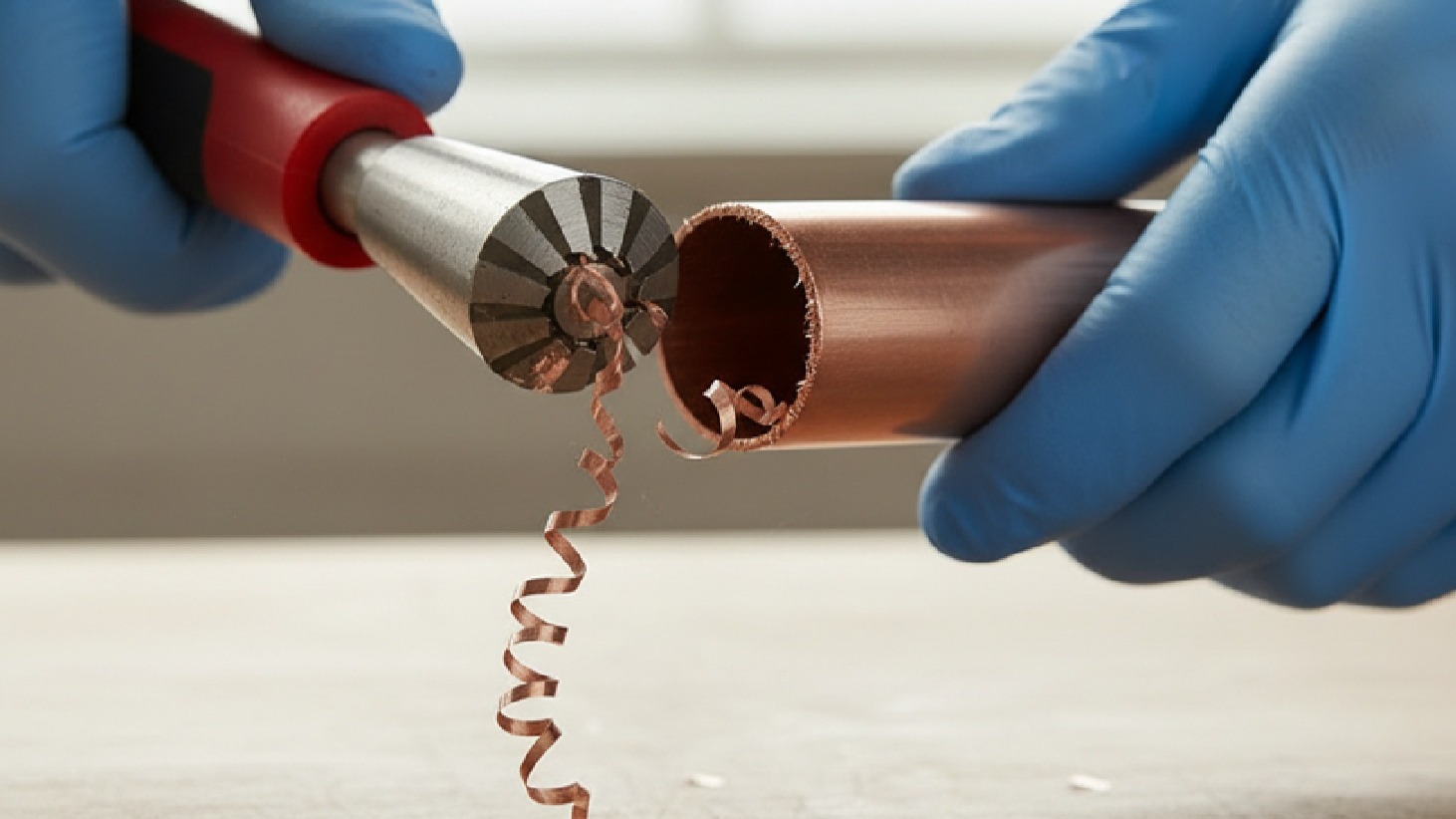
Cutting copper, plastic, or steel pipe creates a rough edge that most people never think twice about. Yet that small ridge of metal or plastic causes more problems in plumbing systems than almost any other installation mistake. Burrs restrict water flow, create turbulence that accelerates corrosion, trap debris that breeds bacteria, and weaken joints that should last decades. A £5 deburring tool prevents thousands of pounds in callbacks, leaks, and system failures.
Professional installers know this. They reach for a deburring tool as automatically as they reach for pipe cutters. The two tools work together because cutting creates the problem and deburring solves it. Yet walk into any DIY plumbing job and you'll find pipes installed with burrs intact, setting up failures that won't appear for months or years.
What Actually Happens When You Cut Pipe
Pipe cutters force a hardened wheel through metal or plastic, creating a clean external cut but pushing material inward. This forms a raised lip inside the pipe, sometimes visible, sometimes barely noticeable to the touch. The burr thickness varies based on pipe material, cutter sharpness, and cutting technique.
Copper pipe typically produces a thin, sharp burr that curls inward. Plastic pipe creates a thicker, more ragged edge with strings of material. Steel pipe forms the most substantial burr, often with metal fragments that break loose during installation.
Flow Restriction Impact
That internal ridge immediately reduces the effective diameter of the pipe. A 15mm copper pipe with even a modest burr drops to perhaps 13.5mm at the cut point. Water flowing through that restriction accelerates, creating turbulence downstream. This turbulence erodes fittings, generates noise, and increases pressure drop across the system.
Debris Collection
The burr also creates a perfect trap for flux, solder particles, pipe dope, and installation debris. These materials collect at the ridge, then break loose during system operation. A heating system circulator pump pulling in solder fragments from poorly deburred joints fails years earlier than it should. Quality circulators from Grundfos should last 15-20 years, but they won't if the system feeds them metallic debris from day one.
The Real Cost of Skipping This Step
A plumber fitting a bathroom takes perhaps eight seconds per cut to properly deburr the pipe. For a typical bathroom with 40 cuts, that's just over five minutes of labour. Skipping those five minutes creates measurable problems.
Energy Waste
Water flow restriction from burrs forces pumps to work harder. A heating system with 30 poorly deburred joints might see a 12-15% increase in pump energy consumption. Over ten years, that's £200-300 in unnecessary electricity costs for an average home. The pump also runs hotter and wears faster.
Joint Failures
Burrs in compression fittings prevent the olive from seating properly against the pipe. The joint might hold pressure initially, but it develops a slow weep after thermal cycling. These leaks appear six months after installation, when the installer has moved on and the homeowner faces repair costs.
Internal Corrosion
Solder joints with burrs trap flux that continues to corrode copper from inside. The joint looks perfect externally, but develops pinhole leaks after three to five years. Entire heating systems have required repiping because the original installer saved five minutes by skipping deburring.
Push-Fit Failures
Push-fit joints suffer the worst of all. These rely on an O-ring sealing against a smooth pipe. A burr cuts the O-ring during installation or allows water to bypass it. The joint fails immediately or develops a leak that appears months later after the O-ring degrades.
Types of Deburring Tools and What They Actually Do
External Deburring Blades
The simplest pipe deburring tools feature a hooked blade that scrapes the outside edge of cut pipe. These cost under £3 and remove the external burr that forms when pipe cutters compress the material. They work quickly on copper and plastic, but don't address the internal burr that causes most problems.
External tools make sense for situations where only the outside matters, like when a pipe slides into a fitting that doesn't seal on the cut edge. They're also useful for removing the sharp external edge that cuts hands during installation.
Internal Deburring Reamers
Cone-shaped reamers insert into the pipe end and scrape away the internal burr. Quality reamers have multiple cutting edges at precise angles that remove material without gouging the pipe wall. These typically cost £8-15 and handle copper, brass, and thin-wall steel.
The technique matters. Insert the reamer and rotate it 3-4 full turns during application of light pressure. Too much force gouges the pipe. Too few leaves burr material behind. You should feel the reamer cutting for the first rotation, then running smoothly as it clears the burr.
After reaming, wipe the pipe end with a cloth. You should see metal or plastic particles on the cloth. If you don't, you haven't actually removed the burr.
Combination Tools
Most professional pipe deburring tools combine internal and external cutting in one unit. These typically feature a reamer cone for internal work and a scraping edge for external cleanup. They cost £12-25, depending on size range and build quality.
Better combination tools include multiple reamer sizes to handle different pipe diameters. A single tool might cover 15mm, 22mm, and 28mm copper pipe, or equivalent plastic sizes. This reduces the number of tools needed on site.
Ratcheting Deburring Tools
These use a ratchet mechanism to drive the reamer, making the work faster and more consistent. They're particularly useful for plastic pipe, which requires more material removal than copper. Prices start around £25 for basic models and reach £60-80 for professional units.
The ratchet action ensures consistent pressure and rotation, which produces more uniform results. This matters when training apprentices or when working in awkward positions where manual rotation is difficult.
Power Tool Attachments
Drill-mounted deburring tools spin at high speed to remove burrs quickly. These make sense for production work or large projects with hundreds of cuts. They cost £30-80, depending on quality and size range.
The risk with power tools is removing too much material or creating an uneven edge. They work well in experienced hands but can damage the pipe if used carelessly. For most heating and plumbing work, hand tools provide better control and adequate speed.
How to Actually Use These Tools Properly
The process seems simple, but the technique determines results when using a deburring tool for copper pipe applications. Start with a clean, square cut from sharp pipe cutters. A crushed or angled cut makes deburring harder and produces inferior results.
Copper Pipe Technique
For copper pipe, insert the reamer and rotate clockwise with moderate pressure. You want to remove the burr, not reshape the pipe. Three to four rotations typically suffice. Pull the reamer out during rotation to avoid catching the edge.
Check your work by running a finger inside the pipe end. You should feel a smooth transition from the pipe wall to the cut edge. Any sharp ridge means you've missed material. Repeat the deburring process until the edge feels smooth.
Plastic Pipe Requirements
Plastic pipe requires more aggressive reaming because the burr is thicker and more irregular. You might need six to eight rotations to fully clean the edge. The plastic also tends to melt slightly from friction, so work at a moderate speed rather than rushing.
Post-Deburring Cleanup
After deburring, wipe the pipe end inside and out. This removes particles that would otherwise enter the system. For heating systems, this step is critical. Even small particles damage pump seals and block automatic air vents.
When working with heating controls from EPH Controls or similar precision components, debris-free pipework prevents valve failures and sensor problems. These components cost £50-200 each and fail quickly if the system circulates installation debris.
Material-Specific Considerations
Copper Pipe
Copper's soft nature means it deburrs easily with sharp tools. The main challenge is avoiding over-reaming, which can bell-mouth the pipe end or reduce wall thickness. Modern thin-wall copper used in heating systems has walls only 0.7-0.9mm thick. Excessive reaming weakens joints.
After deburring copper, inspect for smoothness. The cut edge should feel like the rest of the pipe interior, completely smooth with no detectable lip. Any roughness indicates incomplete deburring.
Plastic Pipe
Plastic pipe (polybutylene, PEX, or barrier pipe) creates more substantial burrs than copper. The material also tends to deform during cutting, creating irregular edges. Aggressive reaming is necessary, but avoid melting the plastic through excessive friction.
Check the plastic pipe by visual inspection as well as feel. You should see a clean, uniform edge with no strings of material. The pipe interior should be completely smooth.
Steel Pipe
Steel creates the most aggressive burrs and wears tools fastest. Use tools specifically designed for steel, with hardened cutting edges. Expect to replace these tools more frequently than copper-specific models.
Steel burrs are sharp enough to cut skin. Always wipe thoroughly and inspect carefully before handling deburred steel pipe ends.
Joint Type Considerations
Compression Fittings
Compression fittings rely on the olive biting into the smooth pipe. A burr prevents proper olive seating, creating a weak joint that leaks under thermal cycling. The olive might ride over the burr rather than cutting into the pipe wall. Quality pipe fittings deserve a properly prepared pipe to function correctly.
Soldered Joints
Capillary joints need smooth internal surfaces for proper solder draw. A burr creates voids where solder can't flow, producing weak spots. These weak points develop pinhole leaks years after installation.
Push-Fit Joints
Modern push-fit systems from manufacturers like Polypipe make installation faster, but they're unforgiving of burrs. The O-ring must seal against a perfectly smooth pipe. Even a small burr can cut the O-ring or prevent proper seating.
Push-fit manufacturers specify maximum burr height in their installation instructions. This isn't a suggestion; it's a requirement for warranty coverage. A joint that fails due to inadequate deburring isn't covered under warranty.
Common Mistakes and How to Avoid Them
Using Dull Tools
A dull reamer doesn't cut; it burnishes. You'll spend twice as long and get half the result. Replace cutting edges when they stop producing visible particles during normal use. For copper pipe, a quality reamer should handle 200-300 cuts before needing replacement. Steel pipe wears tools much faster.
Inconsistent Technique
Rushing through some cuts and taking time on others creates variable results. The joints you rush are the ones that leak. Develop a consistent rhythm: cut, deburr internal, deburr external, wipe, inspect. Every single time.
Skipping the Wipe
Deburring creates particles that must be removed. Simply blowing on the pipe isn't enough; you need to physically wipe the interior. Use a cloth, not your hand, because copper and steel particles are sharp enough to cut skin.
Over-Reaming
Removing too much material can bell-mouth the pipe end or reduce wall thickness. This is particularly problematic with thin-wall copper pipe used in modern heating systems. The pipe wall might be only 0.7mm thick. Aggressive reaming can reduce this to 0.5mm or less, weakening the joint.
Wrong Tool for the Material
A reamer designed for copper won't work well on plastic. Plastic requires more aggressive cutting and different edge geometry. Using the wrong tool wastes time and produces poor results. Match the tool to the material you're cutting.
Building This Into Your Workflow
Professional installers make deburring automatic. The pipe cutter and deburring tool live together in the same pocket or tool bag. Cut, deburr, fit, it's one continuous motion that takes no conscious thought.
This matters because jobs run faster when good practices are automatic. An installer who has to remind themselves to deburr will eventually skip it under time pressure. An installer who does it automatically never skips it because the motion is already complete before they think about it.
Training apprentices to deburr from day one builds this habit. They never learn the bad habit of skipping it. The five minutes spent deburring a bathroom become as natural as the thirty minutes spent cutting and fitting pipe.
The Economics of Doing It Right
A quality deburring tool costs £12-25 and lasts for thousands of cuts. That's perhaps £0.01 per joint in tool cost. The eight seconds of labour costs another £0.15-0.20 at typical trade rates. Total cost per joint: roughly £0.20.
Compare that to a callback for a leaking joint. The travel time alone costs £30-50 in labour, plus the reputation damage and customer dissatisfaction. One prevented callback pays for deburring tools for an entire year.
Long-Term Savings
The energy savings from proper flow also add up. A typical house with poorly deburred heating pipework might waste £25-30 per year in excess pump energy. Over the 15-year life of the system, that's £375-450. Proper deburring pays for itself many times over.
Insurance companies increasingly scrutinise installation quality when assessing claims. A leak from a poorly deburred joint might not be covered if the insurer can demonstrate substandard workmanship. The £0.20 investment in proper deburring protects against thousands in potential liability.
Selecting the Right Tool for Your Work
For installers doing primarily copper work, a quality combination tool covering 15mm, 22mm, and 28mm pipe makes sense. Brands like Ridgid and Rothenberger offer tools that last for years of professional use. Expect to pay £20-30 for a tool that handles daily work.
Plastic pipe specialists need tools designed for that material. The cutting action is different, and the reamer geometry must match. A good plastic pipe deburring tool costs £15-25 and should handle both barrier pipe and standard plastic.
Mixed work requires multiple tools or a universal design that handles both metal and plastic. Some installers carry separate tools for each material to ensure optimal results. Others prefer a high-quality universal tool that compromises slightly on each material but reduces the number of tools to carry.
For occasional use or DIY work, a basic combination tool at £12-15 provides adequate results. The difference between basic and professional tools is durability rather than cutting performance. A basic tool might last 500 cuts whereas a professional tool lasts 5,000 cuts.
Ensuring System Reliability
The difference between adequate plumbing and excellent plumbing often comes down to details like deburring. The system that's properly deburred runs quieter, lasts longer, uses less energy, and causes fewer problems. These benefits compound over decades of operation.
When you're installing heating components from brands like Honeywell, you're working with equipment designed to last 15-20 years. That equipment deserves installation practices that match its quality. Skipping deburring undermines the reliability that quality components provide.
The same applies to water storage systems from Kingspan or pumping systems from Stuart Turner. These manufacturers engineer their products for long life and reliable performance. Poor installation practices, including inadequate deburring, prevent these products from delivering their designed performance.
Professional installers understand that their reputation rests on details. The customer never sees whether you deburred the pipe. They only notice when something leaks, makes noise, or fails early. Proper deburring is one of the invisible details that separates installers who get repeat business from those who don't.
Professional Standards
Deburring pipe ends takes seconds per joint and prevents problems that last for years. The rough edge left by cutting creates flow restriction, traps debris, damages components, and weakens joints. A simple tool costing less than £20 eliminates these problems across thousands of joints.
Professional practice means deburring every single cut, regardless of time pressure or job conditions. This habit becomes automatic with practice and prevents the callbacks, failures, and reputation damage that come from skipped steps. The economics are clear: spending £0.20 and eight seconds per joint prevents problems costing hundreds of pounds to repair.
Quality plumbing and heating systems deserve quality installation practices. When you're working with reliable components from established manufacturers, proper deburring ensures those components perform as designed. The system runs quieter, lasts longer, and causes fewer problems throughout its life.
Make deburring automatic. Keep your tools sharp. Wipe every joint. Check your work. These simple practices separate adequate installations from excellent ones. Your customers might never know you did it, but they'll definitely notice if you didn't.
For professional pipe deburring tools suitable for copper, plastic, and steel pipe applications, Heating and Plumbing World stocks hand tools and power attachments from leading manufacturers. Quality deburring tool copper pipe options ensure clean cuts for reliable joints throughout heating and plumbing systems. Whether installing precision heating controls from Danfoss or standard pipework with professional fittings, proper deburring protects system components and prevents premature failures. For guidance on selecting appropriate pipe deburring tools for your specific applications, experienced heating engineers can provide recommendations on tools and techniques that ensure professional-quality installations.