

Designing Small Accessible Cloakrooms: Layout and Pipework Routing
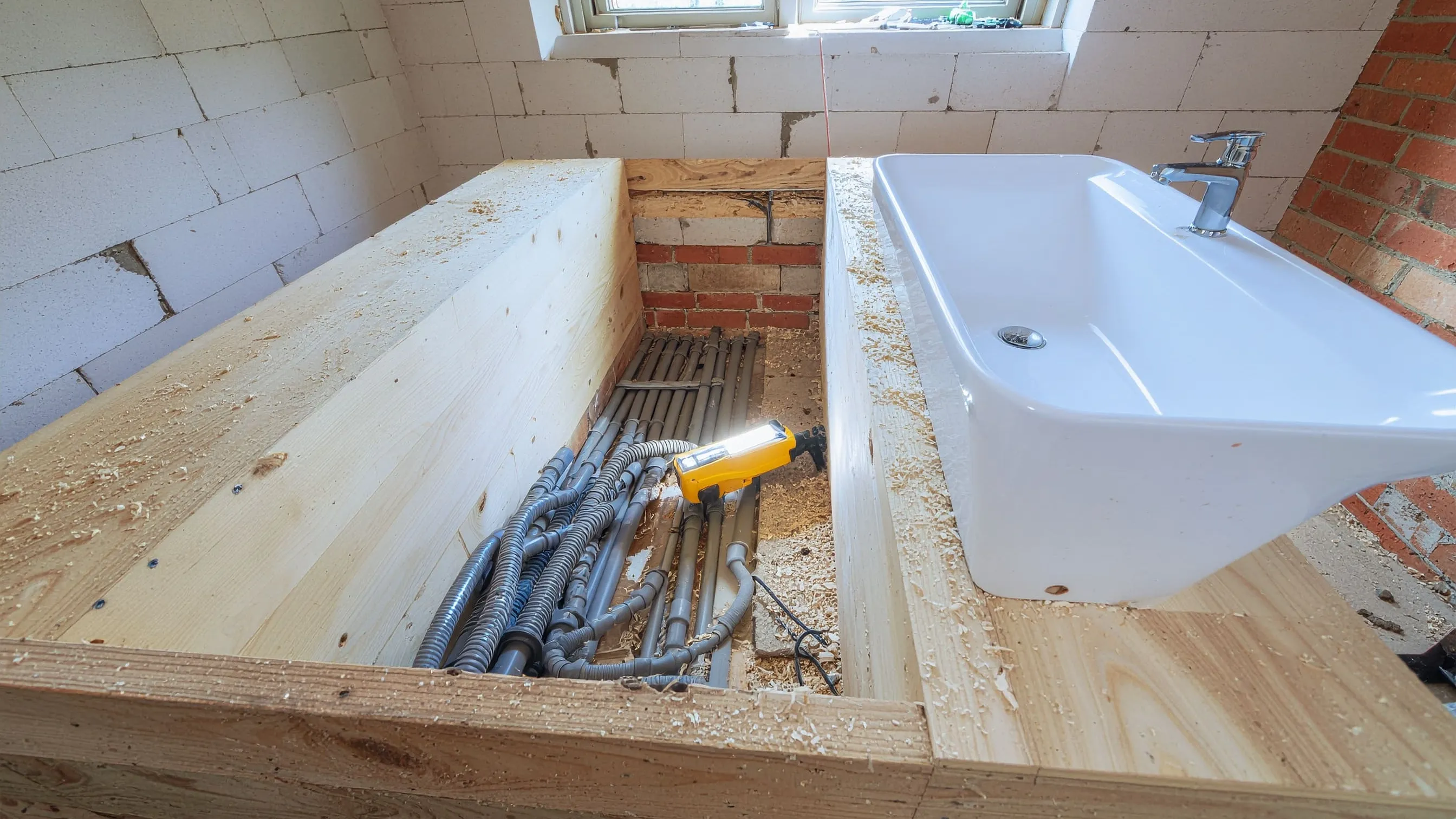
Creating a fully functional washroom in a heavily restricted footprint is a massive engineering challenge. When executing an accessible cloakroom design, you must carefully balance strict Building Regulations with extremely tight spatial limitations. You simply can't afford to waste a single millimetre of floor space.
Getting the pipework routing wrong will instantly ruin the transfer space and guarantee a failed compliance inspection. Facility managers and commercial plumbers must approach these small layouts with absolute precision and careful architectural planning. You must ensure the environment is both highly functional and completely safe for highly vulnerable users.
Navigating Part M Spatial Requirements
Before knocking down any walls or lifting floorboards, you must fully understand the mandatory dimensions required for safe wheelchair transfers. A standard compliant layout under Building Regulations Part M dictates a minimum internal space of 2200mm by 1500mm. Achieving this specific footprint in a tight retrofit scenario is incredibly difficult without expert structural planning.
The team at Heating and Plumbing World supplies a comprehensive range of compact fixtures specifically engineered for these demanding commercial environments. If you're adapting an older property, achieving an optimal accessible cloakroom design often requires stripping the room right back to the bare structural brickwork.
You must ensure the main access door opens outwards into the hallway to prevent trapping a fallen user inside the small cubicle. Furthermore, you must integrate emergency pull cords precisely, ensuring the lower red bangle sits exactly 100mm from the finished floor level. You must also carefully calculate the Light Reflectance Value (LRV) of the room to assist visually impaired visitors. The grab rails must provide a visual contrast of at least thirty points against the wall tiles.
Sanitaryware Placement and Clearances
The precise positioning of the sanitaryware entirely dictates the success or failure of the commercial installation. The toilet pan must project exactly 750mm from the rear wall to facilitate a completely safe lateral transfer from a standard wheelchair. Furthermore, you must guarantee that any room heating, such as slimline panel radiators, does not project dangerously into this critical turning circle.
To maximise the remaining usable floor space, installing a space-saving corner basin keeps the essential turning zones completely clear. A well-placed space-saving corner basin provides the required hand-washing functionality without protruding awkwardly into the main transfer path. You must position this compact unit so the user can easily reach the tap hardware while still seated on the toilet pan.
This strategic placement entirely prevents them from having to awkwardly reposition their wheelchair just to wash their hands. Always ensure the basin waste is routed cleanly back directly to the wall. This strict routing prevents the trap from creating a painful knee obstruction for seated users.
Managing Waste and Soil Connections
Connecting the sanitaryware to the main drainage network in extremely tight commercial spaces is notoriously difficult. Using a highly reliable flexible pan connector allows you to navigate awkward wall angles behind the toilet without compromising the structural integrity of the partition wall. A premium flexible pan connector easily absorbs slight structural misalignments when retrofitting sanitaryware into older, highly unlevel properties.
You must ensure this flexible pan connector is completely secure using heavy-duty clips to prevent dangerous sewage leaks inside the inaccessible wall cavity. When designing the hidden waste runs, utilising durable plastic pipe systems allows you to navigate structural voids easily without compromising the mandatory 1 in 40 drainage fall.
Proper soil stack ventilation is another critical hydraulic factor that is routinely overlooked in compact washroom extensions. If you fail to vent the pipework correctly, the sudden hydraulic pressure will literally destroy the delicate water seals.
On a recent ground-floor retrofit, a contractor completely ignored the soil stack ventilation requirements to save space inside the partition wall. The first time the client flushed the toilet, the massive negative pressure siphoned the basin trap completely dry, leaving the room smelling heavily like raw sewage. We had to retrofit a mechanical air admittance valve onto the soil stack ventilation pipework, instantly balancing the system pressure and permanently solving the foul odour issue safely.
Safe Pipework Routing and Concealment
Exposed hot copper pipes present a severe contact burn hazard for elderly or highly vulnerable users with much slower reaction times. You must enclose all incoming hot and cold feeds inside a robust concealed pipework boxing unit before the facility opens. Building a sturdy concealed pipework boxing structure keeps the environment entirely safe while hiding unsightly brass connections from public view.
You can easily route your durable copper or plastic feeds through this tight concealed pipework boxing to dramatically speed up the initial first fix installation process. When making these blind connections behind the structural panels, using secure push fit plumbing fittings guarantees a watertight joint without ever needing a dangerous blowtorch in a confined public space.
To guarantee a safe installation, you must follow these strict structural guidelines:
- Securely clip all hidden pipework to solid masonry to prevent vibration.
- Use 18mm structural marine plywood to build out the framework.
- Seal all internal joints with sanitary silicone to prevent hidden water ingress.
Think of pipework routing in a tight washroom exactly like packing a suitcase for a long international flight. Just as you must carefully utilise every tiny pocket of the suitcase to fit your essentials perfectly, you must utilise every hidden structural void to route your water feeds cleanly. Leaving accessible isolation valves behind a discrete magnetic access panel ensures future maintenance won't require destroying the beautifully finished tiling.
Heating Solutions for Compact Spaces
Heating a highly compact washroom requires careful consideration to avoid creating physical contact burn hazards while keeping the vulnerable user perfectly comfortable. Integrating highly reliable thermostatic radiator valves allows facility managers to lock the maximum ambient temperature safely.
This mechanical lock physically prevents unauthorised users or curious children from turning the heat up to highly dangerous levels. It completely ensures the baseline environment remains secure for everyone who enters the restricted space.
Furthermore, you must ensure any heating elements installed in a Doc M washroom comply strictly with Low Surface Temperature (LST) regulations. The outer casing of the radiator must never exceed 43 degrees Celsius. This strict limitation ensures that if a wheelchair user accidentally brushes against the metal casing during a complex transfer, they will not suffer a severe thermal injury.
Integrating Digital Climate Controls
Rigid mechanical temperature control is an essential first step in commercial compliance. However, for ultimate accessibility and daily convenience, modern healthcare facilities often take their climate management a massive step further by integrating advanced, network-connected technology.
By choosing to utilise premium smart radiator valves across their heating network, facilities gain massive operational advantages. These advanced digital controls allow facility managers or designated caregivers to adjust the room heating remotely from a smartphone application.
This ensures the washroom is perfectly comfortable before a highly vulnerable user even enters the room. Managing these exact temperatures digitally also ensures strict compliance with care home operating standards without ever requiring expensive, time-consuming manual intervention by the maintenance staff.
Conclusion
Executing a highly successful accessible cloakroom design requires absolute precision and rigorous adherence to strict Part M building guidelines. You simply can't compromise on structural turning clearances or safe pipework concealment when dealing with highly vulnerable users. By carefully plotting your waste runs and selecting highly compact hardware, you ensure the finished room is both fully functional and completely safe.
Never cut corners on your internal ventilation or your critical anti-scald protection systems. If you need dedicated assistance matching the correct commercial fixtures and safety valves to your specific room dimensions, please contact our support team today for expert technical advice. We possess the exact practical experience required to help you build a fully compliant, highly secure washroom environment.