

Direct Electric Cylinders: When They Make Sense
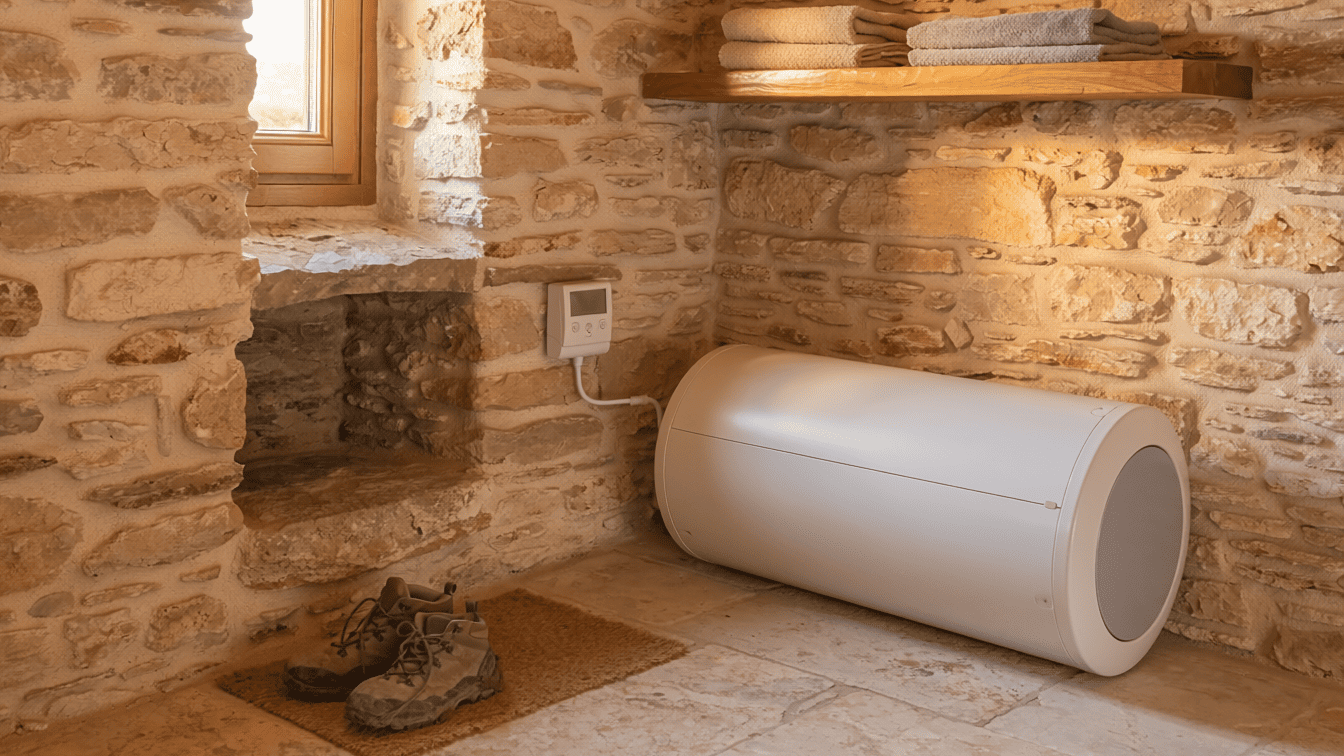
Most heating engineers default to indirect cylinders. It is what we have always done, what wholesalers stock in bulk, and what fits neatly into the mental model of a traditional heating system. But there is a category of installations where that reflex costs clients money and creates unnecessary complexity: direct electric cylinders.
These units heat water using immersion elements only, with absolutely no heat exchanger coil for a boiler or solar thermal system. There are no pipework connections beyond the cold feed and hot distribution. Think of an indirect cylinder like a complicated relay race, where the boiler must successfully pass the thermal baton to the internal coil. A direct unit is a solo sprinter, generating heat entirely on its own without relying on external hardware.
There are no zone valves, no cylinder stats wired back to a boiler, and no complex S-plan headaches. The question isn't whether they are simpler. They obviously are. The question is when that simplicity translates into a better outcome than a conventional indirect setup.
Where Direct Electric Cylinders Fit
Direct electric cylinders make the most sense in properties with no gas supply and no realistic route to installing one. That is the fundamental starting point. If mains gas is available, a combi or system boiler almost always delivers lower running costs than resistive electric heating, even when off-peak tariffs are factored in heavily.
However, in rural locations, listed buildings where flue routes are restricted, or urban properties where gas infrastructure was never laid, the comparison shifts entirely. You are weighing direct electric against alternatives like oil, LPG, or air source heat pumps.
Rural properties without a gas main often lean toward oil boilers. That works fine if you have space for a tank, a budget for annual servicing, and a high tolerance for fluctuating fuel costs. But in a small cottage conversion where the client wants a minimal plant room footprint, removing the boiler creates a beautifully simple domestic hot water system.
Holiday lets and second homes represent another incredibly strong use case. Running a conventional heating system means either draining down every time the property is vacant or leaving the boiler on frost protection mode. Heating water only when guests arrive avoids the risk of an expensive boiler lockout while the property sits unoccupied.
The Economics Of Resistive Electric Heating
Let's be highly direct about this. Relying on resistive electric heating is noticeably expensive if you are on a standard single-rate tariff. At standard domestic rates, you are paying about three times more per unit of heat than you would with mains gas. That gap doesn't magically close just because the cylinder is well-insulated.
If you need to source highly efficient hardware for these situations, Heating and Plumbing World supplies premium unvented models designed to lock in heat for maximum retention.
However, Economy 7 tariffs or Economy 10 plans completely change the financial equation. Off-peak electricity can drop significantly lower depending on the region and supplier. If your client can shift most of their hot water heating to overnight periods using Economy 7 tariffs, the running cost penalty shrinks dramatically.
A household using 150 litres of hot water per day needs about 8.7 kWh of energy daily. When balancing standard rates with off-peak times, the annual running costs become far more palatable when you explicitly account for the absent boiler maintenance fees and zero risk of carbon monoxide issues.
Sizing And Specification Considerations
The sizing logic is perfectly identical to indirect models. You estimate daily hot water demand, apply a diversity factor if multiple occupants aren't drawing simultaneously, and select a capacity that covers the peak demand safely.
Immersion element power matters much more here. In an indirect unit, the boiler does the heavy lifting. In a direct setup, recovery time depends entirely on element wattage. If the client needs faster recovery, dual immersion setups are highly common. A lower element runs off-peak, while the upper one covers daytime demand without reheating the entire cylinder.
Integrating reliable heating controls into your dual immersion setups ensures you capture cheap overnight energy while strictly preventing excessive daytime firing.
Thermostat accuracy is also absolutely critical. A direct electric immersion driven by a cheap rod stat can creep up to 70°C if the stat drifts, wasting energy and accelerating scale formation. Specify cylinders with a highly reliable rod stat, not the unbranded components that constantly turn up on budget units.
Additionally, installing dedicated heating pumps on a secondary circulation loop ensures instantaneous hot water delivery to remote taps in larger rural properties, overcoming the distance between the plant room and the furthest bathroom.
Installation Simplicity And Hidden Costs
The appeal of this technology is obvious when you get on site. There is no gas pipework, no flue, no condensate drain, and no boiler clearances to measure. You simply mount the cylinder, securely connect your plastic pipe systems, wire the immersions to a dedicated circuit, and you are done.
But that simplicity heavily assumes the electrical infrastructure is already in place. If it isn't, you are pulling new cables and potentially upgrading the consumer unit, which kills any cost advantage the direct cylinder initially had.
Wiring regulations also tighten up when you are dealing with immersion heaters in bathrooms or wet rooms. It isn't complicated, but it is another strict layer of compliance that doesn't exist with a boiler-fed indirect setup controlled from a hallway programmer.
When An Indirect Cylinder Still Wins
Even in properties completely without gas, there are clear scenarios where an indirect cylinder makes more sense than direct electric cylinders, usually because there is another robust heat source in play.
If the client is installing an air source heat pump, you will almost certainly spec an indirect cylinder. Running the immersion as the sole heat source would negate the efficiency gains of the heat pump entirely.
Solar thermal is another obvious case. If the property has south-facing roof space and the client is willing to invest in solar panels, an indirect cylinder with a dedicated solar coil is the only sensible choice. You can add an immersion for top-up, but the solar array is doing the bulk of the work in summer.
Real-World Example: A Coastal Cottage Retrofit
On a recent project in a rural coastal village, an installer specified a massive oil boiler for a tiny holiday cottage that was only occupied a few weeks a year. The boiler seized during the winter downtime, freezing the pipes. The team replaced the entire setup with a 180-litre direct unit on an off-peak tariff. It saved the owner thousands in boiler servicing and eliminated the lockout risk entirely.
During that retrofit, ensuring a properly sized expansion vessel was fitted to the incoming mains prevented any dangerous pressure spikes during the heavy overnight heating cycles. The client now arrives at a warm property without dealing with messy oil deliveries or frozen boiler condensates.
Maintenance And Longevity
These units have far fewer mechanical failure points than indirect setups. There is no heat exchanger coil to corrode and no boiler interlocks to troubleshoot. However, they are definitely not maintenance-free.
Immersion element lifespan depends heavily on water hardness. In hard water regions, you are looking at severe scale buildup within three to five years. The hard scale tightly insulates the element, forcing it to work harder and eventually burn out completely.
Thermostat drift is the other highly common failure mode. A failing rod stat that cycles daily can quickly lose its factory calibration. Integrating an external heating timer control ensures the power is physically cut outside of the designated heating windows, providing an essential electrical backup to the mechanical thermostat.
Conclusion
Direct electric cylinders aren't a universal solution, but they are not a compromise either. They are the absolute right tool for a specific set of conditions. When you are working on a property with no gas supply, limited space for fuel storage, and strong electrical infrastructure, they deliver incredibly reliable performance.
The key is matching the technology to the exact usage pattern. Trying to force this system into a high-demand domestic property just to avoid installing a boiler is a false economy. The high running costs will always catch up with the homeowner.
If you are weighing up options for a project and need to talk through the operational trade-offs, please reach out to our experts today. We have specified enough of these exact systems to know where they work and where they don't.