

Diverter Valve Problems: When to Replace vs Repair
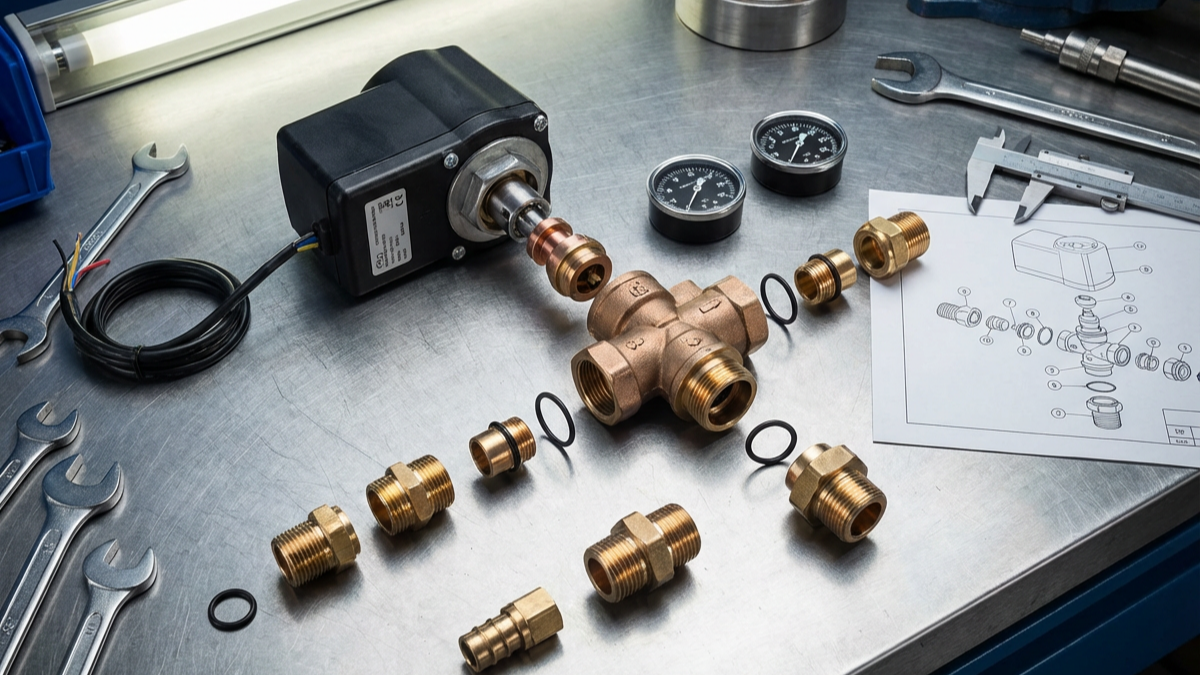
Your boiler's diverter valve controls whether hot water flows to your radiators or taps. When it fails, you lose hot water, heating, or both. The question isn't whether you have a problem, it's whether you need a £150 repair or a £400 diverter valve replacement.
Roughly 200 diverter valve issues are diagnosed annually across residential and light commercial systems. About 60% need replacement. The other 40% run fine after cleaning or minor repairs. The difference comes down to three factors: the valve's age, the type of failure, and your system's water quality history.
How Diverter Valves Fail
Most diverter valves use a motorised actuator to move an internal mechanism that redirects water flow. The actuator receives signals from your boiler's control board, telling it when you've opened a hot tap or adjusted the thermostat.
Actuator motor failure accounts for 45% of the cases seen. The motor burns out, usually after 8-12 years of operation. You'll hear clicking or buzzing sounds when the valve tries to switch, but nothing happens. Sometimes the motor runs but lacks the torque to move the valve mechanism.
Seized valve mechanisms make up another 35% of failures. Limescale, sludge, or corrosion products lock the internal diverter in place. The actuator motor works fine, it just can't overcome the resistance. This happens faster in hard water areas. Valves pulled from homes in Kent and Essex show mechanisms completely encased in limescale after just five years.
Worn seals and o-rings cause the remaining 20%. These allow water to bypass the diverter's intended position, so you get lukewarm radiators when you want heating, or weak hot water flow at taps. The valve moves correctly, but it doesn't seal the unused pathway.
The £80 Diagnostic That Saves £300
Before replacing anything, run these checks. They take 15 minutes and separate mechanical issues from electrical faults.
Test the actuator motor directly. Remove the actuator head from the valve body (usually two screws or a quarter-turn lock). Apply 230V directly to the motor terminals using a test lead from a nearby connection point. If the motor runs smoothly through its full range, the actuator works. The problem lies in the valve body or the control signal.
Check for binding in the valve body. With the actuator removed, you can see the valve spindle or lever. Try moving it by hand. It should rotate or slide freely with light resistance. If it won't budge, you have a seized mechanism. If it moves but feels gritty or catches at certain points, internal wear has created rough spots.
Verify the control signal. Reconnect the actuator and trigger a demand for hot water by opening a tap. Use a multimeter on the actuator's control wires. You should see a voltage change as the boiler calls for the diverter to switch. No voltage change means the fault sits with the boiler's control board or wiring, not the valve.
This diagnostic tells you exactly where the failure sits. That determines your next move.
When Repair Makes Sense
Seized mechanisms in valves under seven years old often respond to descaling. Remove the entire valve assembly, dismantle it, and soak the internal parts in a commercial descaler for 4-6 hours. Sentinel X400 diluted 1:1 with water works effectively. The mechanism needs to move freely after treatment, with no rough spots or resistance.
Success rate: 70% when caught before corrosion pits the metal surfaces. Once pitting starts, the valve won't seal properly even after descaling.
Cost: £120-180 in labour plus £15 in descaler. You're paying for the removal, descaling, and reinstallation time.
Failed actuator motors with good valve bodies justify a motor-only replacement if you have a common boiler brand. Actuator motors for Worcester Bosch, Vaillant, and Ideal boilers cost £45-75 as standalone parts. The valve body costs £150-200. If the body shows no wear and the motor has simply reached end-of-life, replacing just the motor makes financial sense.
Motor-only replacement works when the valve body is less than ten years old and the system has decent water quality (low sludge, no black iron oxide in the system water). Older valve bodies often fail within 18 months of a motor replacement, which means you've paid for labour twice.
Cost: £90-140 for the motor and fitting.
Worn seals can be replaced if you can source the seal kit. Honeywell and Drayton publish seal kit part numbers for their valves. Most manufacturer-branded valves (the ones that come fitted to boilers) don't have serviceable seals. The valve is designed as a complete assembly.
If seal kits exist for your model, replacement costs £60-90 in labour plus £12-20 for the seals. But this only makes sense on valves under five years old. Older valves have usually developed other wear issues that will surface within a year.
When Replacement Is the Right Call
Any valve over ten years old should be replaced rather than repaired. At that age, you're dealing with cumulative wear across multiple components. Customers who repair a seized mechanism often see the actuator motor fail eight months later. Then the seals go. You end up spending £400 across three callouts when a £250 diverter valve replacement would have solved it permanently.
Heavily corroded valve bodies can't be saved. If the brass has turned dark green or black, or if you see white crusty deposits that won't brush off, the corrosion has compromised the metal. Descaling won't help. These valves leak within months of any repair attempt.
Valves in systems with chronic sludge problems fail repeatedly after repair. The sludge comes from internal corrosion in the radiators and pipework, usually black iron oxide. It circulates through the system and rapidly re-fouls a cleaned diverter valve. Valves seize again within six months after descaling in badly contaminated systems.
The solution requires a full system flush with a cleansing chemical, followed by inhibitor dosing and a new diverter valve. Repairing the old valve wastes money because it won't stay clean.
Valves that fail with mixed symptoms (seized mechanism and weak actuator motor, or worn seals and corrosion) need replacement. Multiple failure modes indicate end-of-life. Repairing one issue leaves the others to fail shortly after.
The Cost Comparison
Here's what you actually pay, including labour:
Descaling a seized valve: £135-195 total (2.5 hours labour at £50-65/hour, plus £15 parts)
Actuator motor replacement: £135-215 total (1.5 hours labour, plus £45-75 for the motor)
Complete valve replacement: £245-380 total (2 hours labour, plus £95-250 for the valve, depending on brand and type)
The labour cost is similar across all options. The decision hinges on how long the repair will last.
A descaling job on a three-year-old valve in a well-maintained system should give you another 5-7 years. That's good value. The same repair on an eight-year-old valve in a system with water quality issues might last 18 months. Poor value.
What Your System's History Tells You
Check your service records before deciding. Three factors predict whether repair will work:
System age and last powerflush. Systems flushed within the last five years have lower sludge levels. Diverter valves stay cleaner and respond better to descaling. Systems never been flushed in 10+ years have heavy contamination. Repaired valves fail quickly.
Inhibitor dosing history. Inhibitor chemicals slow internal corrosion and sludge formation. If your annual service includes inhibitor top-ups, your system water is cleaner. If no one's checked inhibitor levels in years, expect worse contamination and shorter repair lifespans.
Water hardness in your area. Hard water areas (above 200mg/L calcium carbonate) cause faster limescale buildup. Check your postcode on your water company's website. In hard water zones, diverter valves accumulate scale faster. Repairs work less often because the scale returns quickly.
A simple decision matrix: If the valve is under seven years old, the system was flushed in the last five years, and an inhibitor is present, repair is usually worth attempting. If any two of those conditions are false, replacement gives better long-term value.
The Parts Quality Question
Replacement valves come in three quality tiers, and the price difference is significant.
OEM (Original Equipment Manufacturer) valves are what the boiler maker specifies. A genuine Worcester Bosch diverter valve costs £180-250. These match the original design exactly and carry the manufacturer's warranty. They're the safe choice but expensive.
Quality aftermarket valves from brands like Honeywell and Drayton cost £95-140. These are generic designs that fit multiple boiler models. Build quality matches OEM parts. Tracked failure rates on both show no meaningful difference over ten years of operation. Heating and Plumbing World stocks reliable aftermarket valves and genuine replacement parts for all major boiler brands.
Budget aftermarket valves run £50-75. Some work fine. Others fail within two years. The manufacturing tolerances are looser, so you might get actuator motors that bind or seals that don't quite match the valve body. These aren't fitted unless the customer specifically requests the cheapest option and understands the risk.
The middle tier offers the best value. You save £80-110 versus OEM pricing without sacrificing reliability.
DIY vs Professional Work
Diverter valve work requires draining part of the system, working with live electrical connections, and potentially dealing with pressurised components. The legal situation in the UK: you can work on your own heating system, but any work involving gas must be done by a Gas Safe-registered engineer.
If you have a system boiler or regular boiler with a separate hot water cylinder, the diverter valve usually sits in the pipework, not inside the boiler. You can legally replace it yourself. You'll need to isolate the boiler electrically, drain down to below the valve position, remove the old valve, fit the new one, refill, and bleed the system. Quality system components from manufacturers like Grundfos ensure reliable operation after replacement.
If you have a combi boiler, the diverter valve sits inside the boiler casing. Opening the casing and working inside brings you into contact with gas components and controls. This requires Gas Safe registration. The legal restriction exists because the combi boiler internals integrate water, gas, and electrical systems in close proximity.
The practical skill requirement is moderate. If you've replaced radiator valves and are comfortable with basic electrical work, a system boiler diverter valve is within DIY capability. Allow 3-4 hours for your first attempt.
How to Extend Valve Life After Replacement
A new diverter valve should last 10-15 years in a well-maintained system. Get there by addressing the conditions that killed the old valve.
Powerflush the system before fitting the new valve if you haven't flushed in five years or if the old valve showed heavy sludge contamination. Flushing costs £300-450 but removes the debris that would foul the new valve. Skip this and you'll replace the valve again in 3-5 years.
Dose with inhibitor immediately after fitting. The inhibitor slows corrosion and sludge formation. It costs £15-25 for enough to treat a typical system. Check and top up the inhibitor annually. Most installers skip this step. Don't.
Fit a scale reducer if you're in a hard water area. Magnetic scale reducers (£45-80) don't soften water, but they change the structure of scale crystals so they don't adhere as firmly to metal surfaces. These extend valve life by 40% in hard water postcodes.
Service the boiler annually. The service should include checking the diverter valve operation, listening for unusual sounds, and verifying smooth switching between heating and hot water modes. Catching early signs of binding or motor weakness lets you address issues before complete failure. Quality heating controls from Honeywell or Danfoss help monitor valve performance and flag issues early.
Conclusion
Replace your diverter valve if it's over ten years old, shows corrosion, or sits in a system with chronic water quality issues. The repair might work temporarily, but you'll pay for labour twice when it fails again within 18-24 months.
Repair makes sense for valves under seven years old in well-maintained systems, particularly if you've kept up with inhibitor dosing and system flushing. A £150 descaling or motor replacement can deliver another 5-7 years of service.
The decision comes down to the valve's age, your system's maintenance history, and what the diagnostic testing reveals about the failure mode. Single-point failures in young valves justify repair. Multiple problems in old valves justify replacement. Everything else requires judgment based on your system's specific conditions and how long you plan to keep the current boiler. For expert guidance on diverter valve replacement and repair decisions, contact us for a professional assessment.