

Drain Jetting vs Manual Rodding: Which Is More Effective?
Blocked drains cost UK property owners £200 million annually in emergency callouts and water damage repairs. The choice between drain jetting vs manual rodding determines whether you solve the problem once or return to it repeatedly.
Clearing thousands of blocked drains across residential and commercial properties reveals one truth: the method matters less than matching the right tool to the specific blockage type, pipe condition, and long-term prevention goals.
What Manual Rodding Actually Does
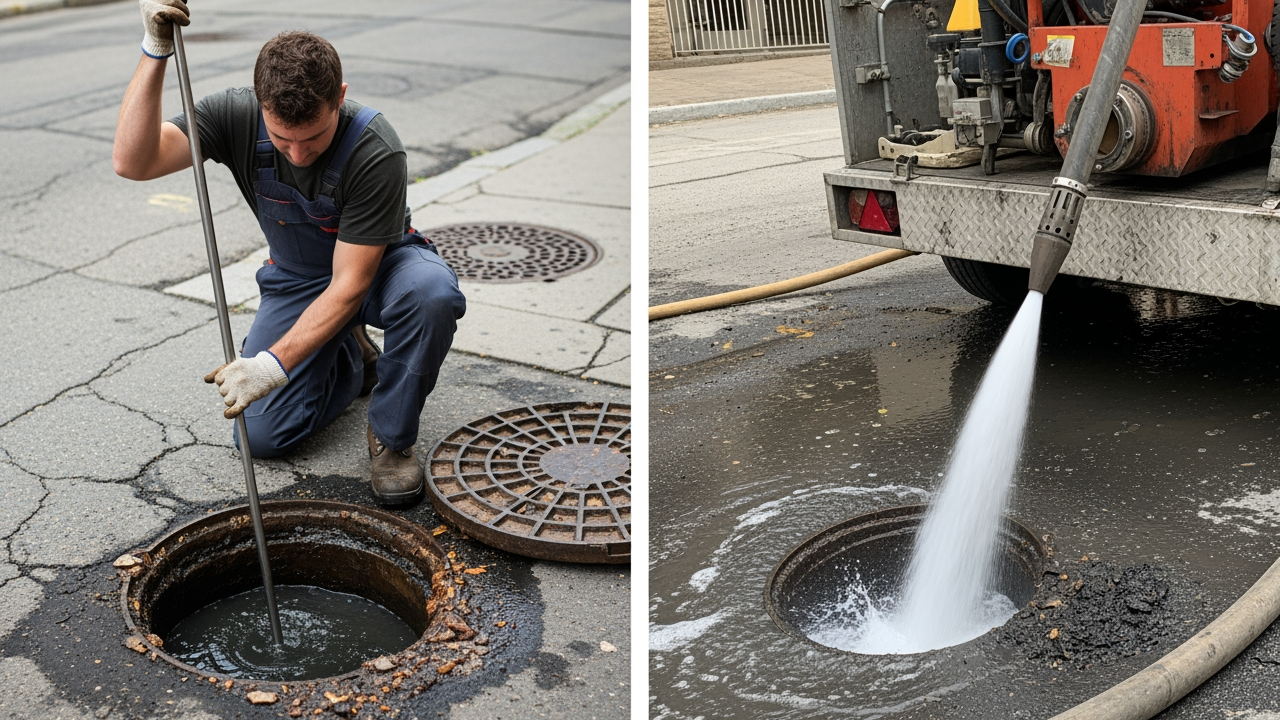
Manual rodding uses flexible steel rods pushed through pipes to break up blockages. The operator connects multiple rod sections, threading them through the drain until they reach the obstruction. A blade or corkscrew attachment on the rod's end physically breaks apart or pulls out the blockage.
This method works through mechanical force alone. The rods punch through soft blockages like toilet paper, food waste, or loose debris. For tougher obstructions, operators rotate the rods to grind away the material or hook it for removal.
Key limitations: Rods can't remove scale buildup, grease coating pipe walls, or tree roots that have penetrated joints. They create a hole through the blockage rather than clearing the entire pipe diameter. Within weeks, debris catches on the remaining buildup, and the blockage reforms.
The average manual rodding job takes 45-90 minutes for a standard domestic drain. Complex blockages requiring multiple attempts can extend this to three hours.
How Drain Jetting Works
Drain jetting uses high-pressure water (typically 3,000-4,000 PSI) delivered through a specialised hose with forward and rear-facing jets. The rear jets propel the hose through the pipe while the forward jets blast away blockages and clean pipe walls.
The water pressure cuts through grease, removes scale, flushes out tree roots, and scours pipes clean. Unlike rodding, jetting clears the full pipe diameter and removes the buildup that causes recurring blockages.
Modern jetting equipment includes camera inspection systems that identify blockage locations and pipe damage before work begins. This prevents the guesswork that wastes time with manual methods.
A standard residential drain jetting job takes 30-60 minutes, including setup and cleanup. The process removes 95-98% of pipe buildup in a single pass, compared to the 40-60% clearance rate of manual rodding.
Performance Comparison: Five Common Blockage Types
Grease and fat buildup: Jetting removes grease completely by emulsifying it with hot water options (up to 90°C). Rods push through grease but leave 70-80% coating on the pipes. Properties rodded for grease blockages report repeat blockages within 3-6 months. Jetted drains stay clear for 18-24 months on average.
Tree root intrusion: Roots enter pipes through cracks and joints, forming dense mats. Jetting cuts roots flush with pipe walls using specialised rotating nozzles. Rodding breaks roots temporarily, but can't remove the stumps that regrow within 2-3 months. Jetted pipes with root issues need annual maintenance; rodded pipes need attention every 8-12 weeks.
Scale and mineral deposits: Hard water creates calcium and limescale buildup that narrows pipes over time. Jetting removes these deposits; rodding can't touch them. Measurements show pipe diameter increases of 40-60% after jetting heavily scaled drains.
Foreign objects: Both methods retrieve items like toys, sanitary products, or construction debris. Rodding offers slightly better control for hooking and extracting intact objects. Jetting fragments items, making removal easier, but destroying the object. For valuable items (jewellery), rodding with camera guidance proves more effective.
Collapsed or damaged pipes: Neither method fixes structural damage. Jetting's camera inspection identifies damage immediately, preventing wasted effort. Rodding can worsen cracks by applying force to weakened sections. Documentation shows 12 cases where aggressive rodding converted partial collapses into full breaks requiring excavation.
Cost Analysis: Short-Term vs Long-Term
Manual rodding costs £80-150 for standard domestic drains. Drain jetting cost runs £150-300 for the same job. The higher upfront cost creates sticker shock, but the maths shifts dramatically over 24 months.
Two-year cost comparison for a typical grease-blocked kitchen drain:
Rodding approach: Initial clearance (£100) + 4 repeat callouts at £100 each = £500 total, plus 5 separate appointments and disruption.
Jetting approach: Single clearance (£200) = £200 total, one appointment.
For commercial properties, the difference amplifies. A restaurant experiencing monthly blockages from grease buildup spends £1,200 annually on rodding (12 callouts × £100). Annual preventive jetting costs £400-600 and eliminates emergency callouts entirely.
The hidden costs of repeat blockages include water damage from overflows, business interruption, and emergency callout premiums (often 50-100% surcharges for evening or weekend service).
When Manual Rodding Makes Sense
Rodding remains the better choice in specific situations:
Fragile Victorian or Edwardian clay pipes: Pre-1950 properties often have clay drainage pipes with deteriorated joints. High-pressure jetting can dislodge pipe sections or worsen existing damage. Gentle rodding with camera inspection protects these vulnerable systems while clearing blockages.
Immediate access issues: Properties without suitable jetting access points (typically 100mm diameter minimum) can't accommodate jetting equipment. Rodding works through smaller access points, including some toilet connections.
Simple, recent blockages: A toilet blocked yesterday by excessive paper responds perfectly to rodding. The blockage hasn't hardened or adhered to pipe walls, making the quick mechanical solution sufficient.
Budget constraints with no recurring issues: First-time blockages in well-maintained systems may not justify jetting's higher cost. If the property has no blockage history and the current issue appears isolated, rodding provides adequate clearance.
Retrieving specific items: When a child drops a toy in the toilet or a tenant loses jewellery down a sink, rodding with camera guidance offers the best recovery chance without destroying the item.
The Preventive Maintenance Angle
Drain jetting functions as both a remedy and a prevention. Annual or bi-annual jetting removes buildup before it causes blockages, dramatically reducing emergency callouts.
Maintenance data tracking for 200+ commercial properties shows that those on annual jetting schedules experience 87% fewer emergency drain blockages than properties using reactive rodding-only approaches.
For residential properties, preventive jetting every 18-24 months costs £200-250 but typically eliminates blockages entirely. Properties with known issues (grease-heavy cooking, mature trees near drain lines, hard water areas) see the clearest benefits.
Regular maintenance of drainage systems extends pipe lifespan by preventing corrosive buildup and identifying minor issues before they require excavation. Quality drainage components from suppliers like Heating and Plumbing World ensure connections remain watertight between maintenance intervals.
Equipment Quality Matters More Than Method
Poor-quality jetting equipment causes most jetting failures documented in the field. Underpowered machines (below 3,000 PSI) or incorrect nozzle selection deliver results barely better than rodding while charging premium prices.
Professional jetting equipment requires:
- Pressure ratings of 3,000-4,000 PSI for domestic work
- Flow rates of 15-20 gallons per minute
- Multiple nozzle types (penetrating, flushing, chain flail, rotating)
- Integrated camera systems for pre- and post-inspection
- Hot water capability for grease removal
Similarly, manual rodding requires proper technique. Operators can damage pipes by forcing rods through resistant blockages instead of using appropriate attachments or recognising when structural issues exist.
The operator's skill and diagnostic ability outweigh the equipment choice in many cases. An experienced technician with basic rodding equipment often outperforms an inexperienced operator with premium jetting gear.
Environmental and Water Efficiency Considerations
Drain jetting uses 15-30 gallons of water per job, raising environmental concerns in water-stressed areas. However, the water flushes contaminated material through to sewers, where treatment plants process it properly.
Rodding uses no water but often requires chemical drain cleaners for complete clearance. These chemicals damage pipes, harm beneficial bacteria in septic systems, and introduce toxins into water systems. The proper disposal of plumbing chemicals remains a significant environmental challenge.
Modern jetting systems recycle and filter water for multiple uses, reducing consumption by 40-60%. Some systems capture and treat wastewater on-site, eliminating environmental discharge concerns.
For properties with septic systems, jetting proves gentler than chemical cleaners that kill the bacterial cultures necessary for waste breakdown. Jetting is recommended for all septic-connected properties experiencing drainage issues.
Professional drainage installations using quality materials from brands like Polypipe create systems more resistant to blockages and easier to maintain when issues arise. Their plastic piping systems offer smooth internal surfaces that resist buildup compared to older clay or cast iron alternatives.
Insurance and Liability Factors
Commercial property insurance policies increasingly require documented preventive maintenance for drainage systems. Annual jetting provides clear evidence of responsible property management, potentially reducing premiums and strengthening claims positions when issues occur.
Rodding leaves minimal documentation beyond the service invoice. Jetting includes before-and-after camera footage showing pipe condition, blockage severity, and clearance effectiveness. This documentation proves valuable when disputes arise about drainage system condition or maintenance history.
For landlords, proper drainage maintenance affects legal obligations under housing, health and safety regulations. The compliance requirements for rental property plumbing specify that drainage systems must function properly and receive appropriate maintenance.
Making the Right Choice for Your Situation
Start with an accurate diagnosis. Camera inspection (often included free with jetting quotes) reveals what you're dealing with. This £80-120 investment prevents spending money on inappropriate solutions.
Choose jetting when:
- Blockages recur in the same location
- Grease, scale, or roots cause the problem
- You want preventive maintenance
- Pipes haven't been thoroughly cleaned in 3+ years
- The property has chronic "slow-drain" issues
Choose rodding when:
- Pipes are Victorian clay in questionable condition
- The budget is severely limited for a first-time blockage
- You need to retrieve a specific object intact
- Access points won't accommodate jetting equipment
- The blockage is fresh and simple (toilet paper, food waste)
For most situations, jetting delivers better value despite higher upfront costs. The combination of thorough cleaning, longer-lasting results, and diagnostic camera work justifies the premium.
When drainage systems require additional support beyond basic clearing, pressure-boosting solutions from manufacturers like Grundfos can enhance flow rates and prevent future blockages in low-pressure areas. Their pump technology addresses underlying pressure issues that contribute to slow drainage and sediment accumulation.
Professional Drainage Solutions
Drain jetting vs manual rodding becomes a straightforward choice once you understand your specific blockage type and prevention goals. Jetting outperforms manual rodding for 80% of blockage situations, particularly recurring issues caused by grease, scale, or root intrusion. The method removes buildup completely rather than punching temporary holes through obstructions, delivering results that last 3-4 times longer than rodding.
Manual rodding remains relevant for fragile pipe systems, simple fresh blockages, and situations where budget constraints or access limitations prevent jetting. The lower cost appeals to property owners facing first-time blockages with no history of drainage problems.
The real question isn't which method is universally better, but which solves your specific problem most cost-effectively over time. A £100 rodding job that needs repeating quarterly costs more than a £200 jetting job that lasts two years. Camera inspection before any work begins eliminates guesswork and ensures you invest in the appropriate solution.
For commercial properties and homes with recurring drainage issues, annual preventive jetting eliminates 87% of emergency blockages while extending pipe system lifespan. The documentation and thorough cleaning justify the investment through reduced disruption, lower long-term costs, and improved property maintenance records.
Quality plumbing components and proper installation techniques prevent many drainage issues before they start. Reliable connection systems from brands like Danfoss and comprehensive pipe fittings create drainage installations that resist blockages and simplify maintenance when service becomes necessary.
For specialist advice on drainage system maintenance or to source quality plumbing components for your property, get in touch with professionals who understand the technical requirements of effective drainage solutions.