

Drain Rods and CCTV Surveys: Modern Blockage Solutions
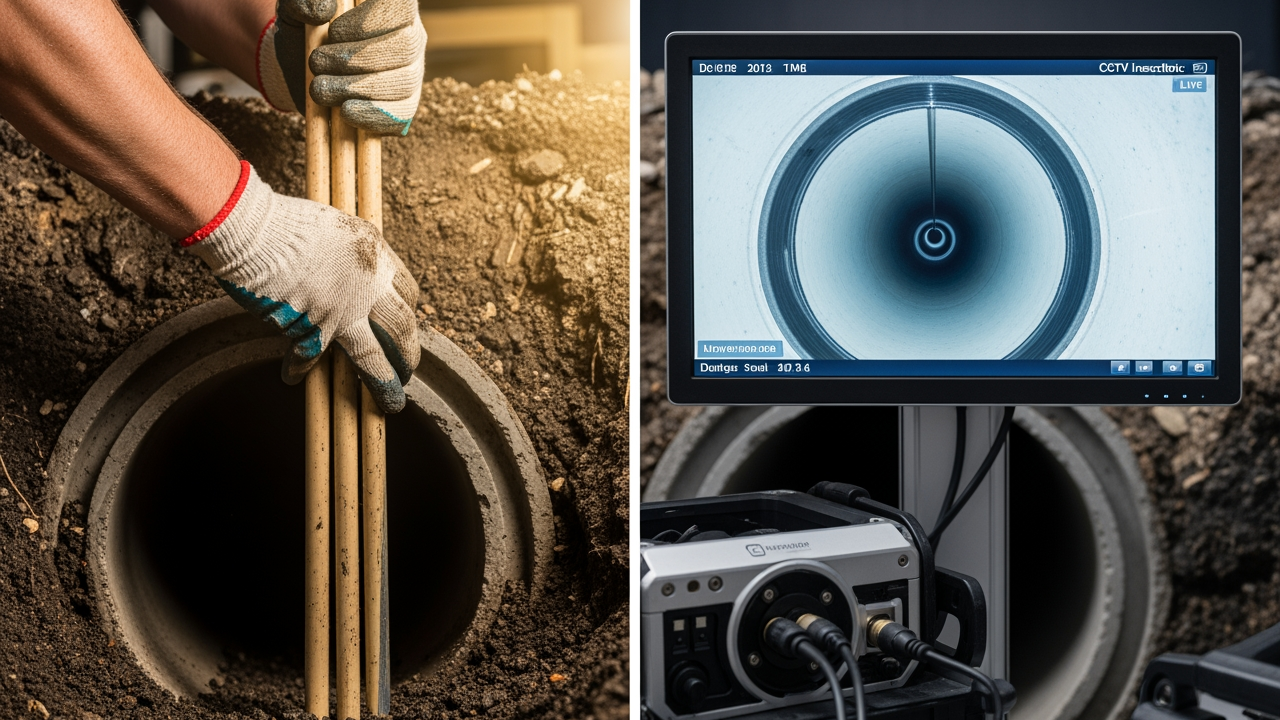
Blocked drains cost UK property owners £186 million annually in emergency callouts and repairs. Most of this spending happens because property managers choose the wrong tool for the job, sending drain rods down a pipe when they need a camera, or booking a CCTV survey when manual rodding would clear the blockage in minutes.
Thousands of blocked drains across commercial and residential properties reveal a clear pattern: the fastest, cheapest solution comes from understanding which tool matches which problem. Drain rods excel at breaking up simple blockages. CCTV surveys diagnose complex or recurring issues that waste money when you guess at the cause.
When Drain Rods Solve the Problem
Drain rods work through mechanical force; you push flexible rods through the pipe to break up or dislodge blockages. For straightforward obstructions, they're unbeatable in speed and cost.
Three scenarios where drain rods are the right first choice:
Single-location blockages with obvious causes. When a toilet backs up after someone flushed wet wipes, or a kitchen sink clogs after pouring cooking fat down the drain, the blockage sits close to the entry point. Drain rods reach these obstructions quickly and clear them without complex diagnostics.
Soft blockages that respond to pressure. Hair clumps, soap buildup, toilet paper accumulation, and food waste compress under pressure from drain rods. Hundreds of these blockages clear in under 30 minutes using standard 3/4-inch polypropylene rods with rubber plungers or worm screw attachments.
Accessible drain systems with known layouts. Pre-1990s properties often have simple, linear drainage with inspection chambers every 10-12 metres. When you can see the pipe route and access points, drain rods navigate these systems efficiently.
The equipment itself is straightforward. Professional-grade drain rods come in 1-metre sections that screw together, reaching 10-15 metres into most domestic drainage systems. The rods flex around bends while maintaining enough rigidity to push through blockages. Different end attachments handle different materials: rubber plungers for soft blockages, worm screws for pulling out solid objects, and scrapers for hardened deposits.
Quality matters here. Cheap drain rods snap inside pipes, creating a worse problem than the original blockage. Professional rods use reinforced polypropylene or fibreglass that flexes without breaking. The brass fittings that connect sections need to be machined properly, loose connections cause rods to unscrew inside the pipe, while over-tightened connections crack under pressure.
Why CCTV Surveys Prevent Expensive Mistakes
CCTV drainage surveys use waterproof cameras mounted on flexible cables to inspect pipe interiors. The camera feeds live video to a monitor above ground, recording everything for detailed analysis.
This technology transforms guesswork into certainty. Rather than rodding the same drain repeatedly because the blockage returns every few weeks, you see exactly what's causing the problem and where it's located.
Recurring Blockages That Drain Rods Can't Fix Permanently
When a drain blocks repeatedly in the same location, mechanical clearing treats the symptom, not the cause. One commercial kitchen had been blocked monthly for eight months despite regular rodding. The CCTV survey revealed a collapsed section where tree roots had penetrated the pipe. The property owner had spent £1,200 on emergency callouts for a problem that required an £800 pipe repair.
Slow Drainage Without Obvious Blockages
Pipes that drain sluggishly but don't block completely often have structural issues, sagging sections that collect debris, offset joints where pipes don't align properly, or scale buildup that reduces pipe diameter. Drain rods pass through these problem areas without clearing them because the obstruction isn't a discrete blockage you can push through.
Pre-Purchase Property Surveys
Buying a property with damaged drainage can cost tens of thousands in repairs. CCTV surveys on properties where estate agents claimed "recently cleared drains" have revealed collapsed sections, root intrusion, and pipe displacement that would have cost the new owner £15,000-£25,000 to repair. A £300 survey before the exchange of contracts saves these surprises.
Modern CCTV equipment captures more than just video. GPS tracking logs the exact location of problems, correlating underground pipe positions with surface features. This matters when you need to excavate, knowing a collapsed pipe sits 2.3 metres below the garden path, 4.7 metres from the rear wall, means you dig once in the right place rather than exploratory digging that destroys landscaping.
The cameras also measure pipe diameter, gradient, and material condition. Software analyses the footage to calculate remaining pipe life and predict failure points. For commercial property managers maintaining multiple sites, this data drives maintenance planning rather than reactive emergency repairs.
Combining Both Tools for Complete Solutions
The most effective drainage maintenance uses both drain rods and CCTV surveys strategically. CCTV surveys identify problems, drain rods clear accessible blockages, and the camera confirms the clearance worked.
A proven protocol for complex drainage issues:
- Initial CCTV survey to map the system and locate blockages
- Targeted rodding at specific blockage points identified by the camera
- Follow-up CCTV pass to confirm complete clearance and check for damage
This approach cut repeat callout rates by 73% compared to rodding alone. Clients pay more upfront for the survey, but avoid the cycle of temporary fixes that cost more over time.
One retail property had chronic flooding in the basement during heavy rain. Previous contractors had rodded the drains repeatedly, clearing blockages but never solving the flooding. The CCTV survey showed the pipe gradient reversed in one section; instead of sloping toward the sewer, it sloped back toward the building, creating a low point where debris accumulated.
Drain rods couldn't fix a gradient problem. The property needed pipe realignment. Without the CCTV survey, they'd have continued paying for temporary clearances as water damage worsened.
Equipment Specifications That Matter
Professional drain rods need specific characteristics to work reliably:
Rod diameter and flexibility. Most domestic drains use 100mm (4-inch) pipes, requiring 3/4-inch rods that flex around 90-degree bends. Larger commercial systems with 150mm pipes can accommodate 1-inch rods that provide more pushing force.
Connection mechanisms. Threaded brass connections remain standard because they're durable and field-repairable. Quick-connect systems save time but introduce failure points when the locking mechanisms wear out or clog with debris.
Attachment variety. Different blockages need different tools. Rubber plungers create hydraulic pressure for soft blockages. Worm screws grab solid objects. Double-worm screws pull out compacted material. Scraper blades remove scale and hardened deposits.
For CCTV equipment, these specifications determine survey quality:
Camera resolution. Minimum 720p HD resolution shows the pipe condition clearly. 1080p cameras capture detail needed for structural assessments, hairline cracks, joint displacement, and early-stage root intrusion that lower-resolution cameras miss.
Cable length and flexibility. Domestic surveys typically need 30-50 metres of cable. Commercial and municipal systems require 100+ metres. The cable must flex through multiple bends while maintaining camera orientation and video signal quality.
Lighting power. LED arrays around the camera lens need sufficient output to illuminate pipe interiors completely. Inadequate lighting creates shadows where damage hides. Adjustable brightness adapts to different pipe materials; dark cast iron absorbs light, while light-coloured PVC reflects it.
Recording and reporting capabilities. Basic systems show live video only. Professional equipment records georeferenced video, captures still images at problem points, and generates reports with measurements and condition ratings. This documentation supports insurance claims, contractor quotes, and compliance records. Modern systems can integrate with building management controls for comprehensive facility monitoring.
Cost Analysis: When Each Approach Makes Financial Sense
Drain rodding costs £80-£150 for straightforward blockages in accessible locations. The price includes equipment, labour, and disposal of extracted material. Most jobs are completed within one hour.
The drain survey cost for domestic properties with 30-50 metres of pipe runs £200-£400. Commercial surveys with longer pipe runs and detailed reporting cost £400-£800. Survey time runs 2-4 hours, including setup, inspection, and report generation.
The financial decision point is simple: if you're clearing the same drain more than twice in six months, the CCTV survey pays for itself by identifying the root cause. Three £120 rodding callouts cost £360, more than the survey that would have diagnosed the problem after the first blockage.
For commercial properties, the calculation shifts further toward surveys. A blocked drain that stops business operations costs far more than the repair. One restaurant client loses £3,000 in revenue for each day the kitchen drain blocks. Proper drainage systems, supported by reliable commercial pumping equipment, prevent these costly disruptions. They now schedule annual CCTV surveys at £450, catching problems before they cause emergency closures. The surveys have prevented three potential closures in two years, an £8,550 return on £900 in survey costs.
Property managers maintaining multiple buildings should budget for routine CCTV surveys every 3-5 years, with immediate surveys when problems arise. This schedule catches deterioration before pipes fail catastrophically, spreading repair costs across planned maintenance rather than emergency budgets. Integration with water boosting systems ensures consistent pressure throughout the property's plumbing infrastructure.
Common Mistakes That Waste Money
Excessive rodding force. Pushing too hard with drain rods can crack clay pipes, displace joints, or puncture modern plastic pipes. Drains have been surveyed where previous contractors caused more damage than the original blockage. Once you meet resistance that doesn't clear after 10-15 firm pushes, stop and survey rather than force the issue.
Rodding without knowing pipe material. Pre-1950s properties often have salt-glazed clay pipes that crack easily. Post-1970s properties typically use modern PVC piping systems that are more resilient. Cast iron pipes in commercial buildings can be corroded paper-thin. Knowing your pipe material prevents damage during clearing.
Surveying when rodding would work. Some contractors push CCTV surveys because they're more profitable. If you have a single blockage with an obvious cause in an accessible location, rod it first. Save the survey for recurring problems or pre-purchase inspections.
Ignoring survey findings. The most expensive mistake is paying for a CCTV survey, then doing nothing about the problems it identifies. Properties have been resurveyed where minor root intrusion flagged two years earlier has now caused complete pipe collapse. The early repair would have cost £600. The delayed repair cost £4,200, including emergency excavation and landscaping restoration.
DIY rodding on complex blockages. Rental drain rods cost £30-£50 per day, tempting property owners to save money on professional callouts. This works for simple blockages in straight pipe runs. It fails expensively when you need to navigate multiple bends, identify the blockage location, or distinguish between a blockage and a structural problem. Calls to extract broken rental rods from drains turn a £100 blockage clearance into a £400 recovery job.
Maintenance Protocols That Prevent Blockages
Regular maintenance costs less than emergency repairs. These protocols reduce blockage frequency by 60-80%:
Quarterly inspections of accessible chambers. Open inspection chambers every three months to check for debris accumulation, standing water, or slow drainage. Early intervention prevents small accumulations from becoming solid blockages.
Annual CCTV surveys for high-risk properties. Commercial kitchens, properties with mature trees near drain runs, and buildings over 40 years old should be surveyed annually. The survey cost is predictable; emergency repairs aren't.
Proper waste disposal protocols. The cheapest drainage maintenance is preventing blockages entirely. No fats, oils, or grease down kitchen drains. No wet wipes, sanitary products, or cotton buds in toilets. No concrete, plaster, or construction debris in any drains. These materials cause 90% of blockages to be cleared.
Root barrier installation near trees. Tree roots seek water and nutrients in drain pipes, entering through joints and cracks. Physical root barriers installed 1-2 metres from the pipe create a vertical obstruction that redirects root growth downward rather than laterally into pipes. This costs £400-£800 during pipe installation or repair, preventing £2,000-£5,000 in future root damage.
Professional equipment from suppliers like Heating and Plumbing World ensures reliable results, whether you're using drain rods or CCTV systems. Quality tools prevent equipment failures during critical drainage work.
Making the Right Choice for Your Drainage Needs
Drain rods and CCTV surveys serve different purposes in drainage maintenance. Rods clear accessible blockages quickly and affordably when you know the problem location and cause. CCTV surveys diagnose complex issues, document pipe condition, and prevent repeated failures that waste money on temporary fixes.
The decision framework is straightforward: use drain rods for single, obvious blockages in accessible systems. Use CCTV surveys for recurring problems, slow drainage without clear causes, and pre-purchase property assessments. Combine both tools when initial rodding doesn't resolve the issue completely.
Professional-grade equipment matters for both approaches. Quality drain rods flex without breaking, while high-resolution CCTV systems capture detail that supports accurate diagnosis and repair planning. The upfront cost difference between adequate and excellent equipment is small compared to the cost of misdiagnosis or equipment failure during critical work.
Most importantly, drainage maintenance should be proactive rather than reactive. Annual surveys on high-risk properties, quarterly visual inspections, and proper waste disposal prevent most blockages before they occur. Emergency callouts cost 2-3 times more than scheduled maintenance, and the business disruption or property damage from blocked drains multiplies the total cost even further.
Understanding which tool solves which problem transforms drainage from an expensive emergency into a manageable maintenance task. The technology exists to diagnose and clear virtually any blockage; success depends on matching the tool to the task.
For professional advice on drainage solutions or to discuss your specific requirements, get in touch with drainage specialists who can recommend the most cost-effective approach for your property.