

Draughty Period Homes: Heating System Compensation
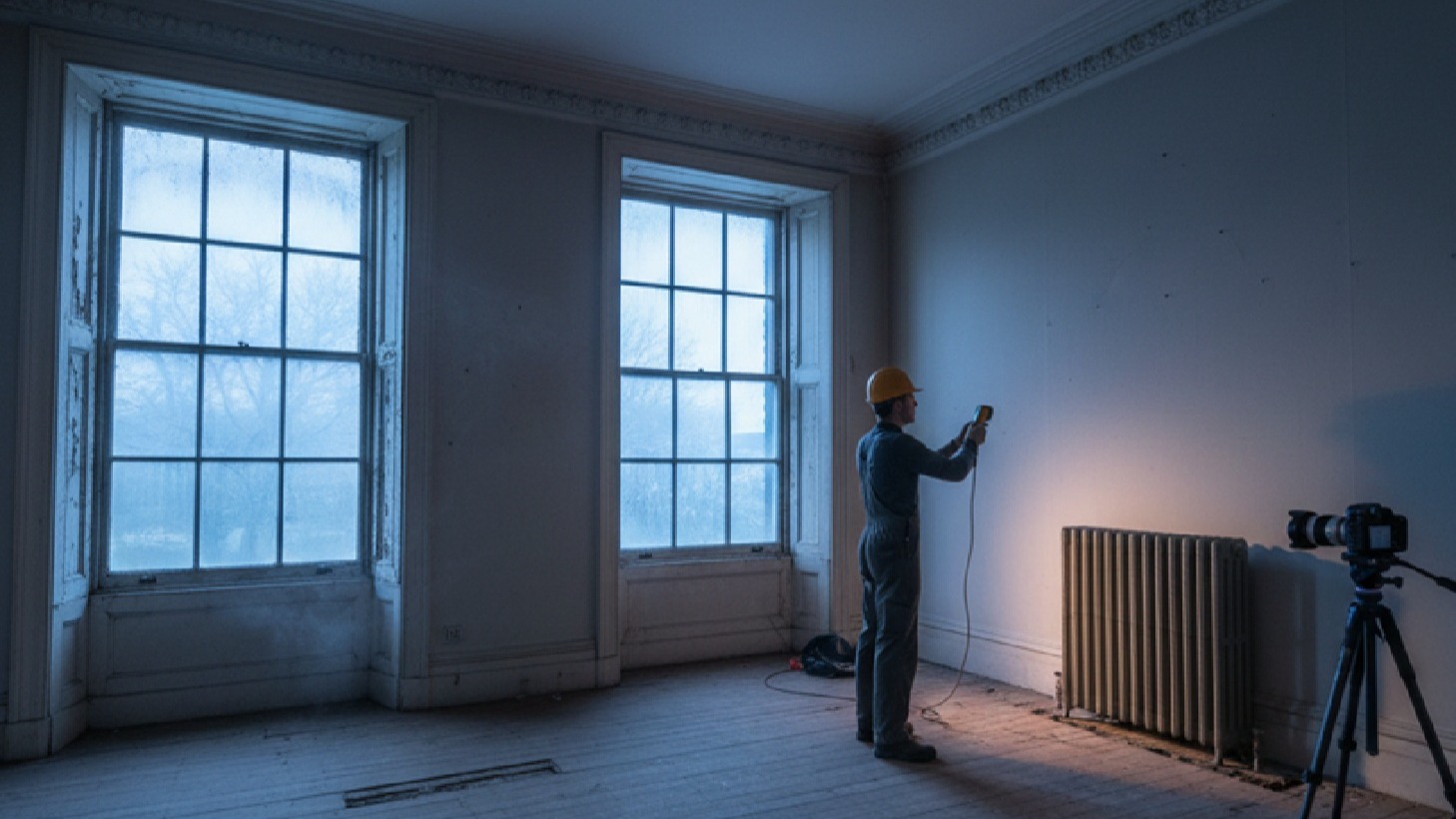
Period homes lose up to 50% of their heating energy through gaps in walls, floors, and windows, a reality that no amount of insulation can fully resolve without compromising the building's historic fabric. Hundreds of homeowners each year face the same dilemma: how to heat a beautiful Victorian or Edwardian property without astronomical energy bills or invasive renovations.
The answer lies in compensating through your heating system rather than fighting the building's inherent characteristics. Draughty period home heating requires a fundamentally different approach than modern construction, one that works with the property's breathing nature instead of against it.
Why Standard Heating Advice Fails Period Properties
Most heating guidance assumes modern construction standards: cavity walls, double glazing, and air-tight seals. Period homes operate on entirely different principles. They were designed to breathe, with lime mortar joints and single-pane sash windows that allow constant air movement.
Surveys of draughty house heating challenges typically reveal:
- Air changes per hour: 2-4 times (modern homes: 0.5-1 times)
- Wall U-values: 1.8-2.1 W/m²K (modern standard: 0.18 W/m²K)
- Window heat loss: 5.8 W/m²K single glazing (modern: 1.4 W/m²K)
These numbers explain why your heating runs constantly, yet rooms stay cold. The system isn't undersized; it's fighting physics it wasn't designed for.
Oversizing Radiators: The Primary Compensation Method
Increasing radiator output by 30-40% above calculated requirements in period property installations proves the most effective compensation strategy. This approach works because it allows radiators to deliver adequate heat at lower flow temperatures, improving efficiency despite the heat loss.
Standard heat loss calculations assume sealed rooms. For period homes, multiply your calculated BTU requirement by 1.4 for rooms with original sash windows, 1.3 for rooms with one external wall, and 1.5 for corner rooms with two external walls.
A typical Victorian reception room measuring 4m x 5m with 3m ceilings would normally require approximately 3,500 BTU. In practice, a 5,000 BTU capacity, either through larger radiators or multiple units, maintains comfortable temperatures.
Column radiators work particularly well in period properties because their increased surface area delivers heat at lower water temperatures (55-60°C instead of 70-75°C), reducing boiler cycling and improving condensing boiler efficiency. They also suit the aesthetic better than modern panels. Heating and Plumbing World stocks a comprehensive range of column radiators specifically suited to heritage properties.
Flow Temperature Optimisation for Leaky Buildings
Modern condensing boilers achieve 90%+ efficiency when return water temperatures drop below 55°C. In draughty homes, this seems impossible; the system runs constantly just to maintain temperature.
The optimal approach uses weather compensation controls that adjust flow temperature based on outside conditions:
- Mild days (10-15°C outside): 50-55°C flow temperature
- Cold days (5-10°C outside): 60-65°C flow temperature
- Severe cold (below 5°C): 70°C maximum flow temperature
This variable approach maintains comfort while allowing the boiler to condense during milder weather when you're heating most frequently. A property running at 60°C average flow temperature instead of 75°C saves approximately 12-15% on gas consumption annually.
Your boiler likely has weather compensation built in but disabled. Enabling it requires adjusting the heating curve; period homes typically need a curve of 1.5 or 1.6 (steeper than the standard 1.2-1.3) to account for higher heat loss. Quality controls from Honeywell or EPH Controls make this adjustment straightforward.
Strategic Radiator Placement for Draught Compensation
Standard practice places radiators under windows to counteract cold downdrafts. In period homes with severe draughts, this positioning fights a losing battle; heated air immediately escapes through gaps in window frames and floorboards.
Better results come from positioning radiators on internal walls where possible, particularly in:
Hallways and Landings
These spaces act as thermal buffers. Heating them adequately warms the air that infiltrates into adjacent rooms, reducing the temperature differential between spaces. A 2kW radiator in a central hallway often proves more effective than distributing that output across multiple reception rooms.
Chimney Breast Alcoves
Original fireplaces create natural convection currents. Positioning radiators in alcoves beside chimneys uses these air movements to distribute heat more effectively than fighting against window draughts.
Behind Doors
Draughts enter primarily around door frames and through gaps beneath doors. A radiator positioned behind where a door opens (when space allows) pre-heats incoming cold air before it reaches occupied areas of the room.
This approach contradicts standard heating design but reflects the reality of period properties where air infiltration patterns differ fundamentally from modern homes.
Thermostatic Control in High-Ventilation Spaces
Traditional thermostatic radiator valves (TRVs) struggle in draughty rooms because cold air infiltration constantly triggers them to open, causing overshooting and temperature swings. The radiator heats fully, warms the room briefly, then cold draughts cool the space again before the TRV responds.
Remote sensor TRVs solve this problem by measuring air temperature away from the radiator itself, typically in the centre of the room. They respond more accurately to actual comfort levels rather than localised radiator heat, reducing temperature swings from 4-5°C to 1-2°C in typical installations.
For rooms with particularly severe draughts, typically bay-windowed reception rooms, removing TRVs entirely and controlling heat through the room thermostat or smart radiator valves with better algorithms works better. Manual lockshield valves, balanced to deliver constant output, often maintain more stable temperatures than TRVs, constantly hunting for the setpoint.
Boiler Sizing for Continuous Operation
Period home heating systems rarely cycle off during the winter months. This continuous operation pattern requires different boiler sizing logic than modern properties, where systems cycle frequently.
Modulation range matters more than maximum output. A 30kW boiler that modulates down to 10kW (3:1 ratio) suits period homes better than a 24kW boiler modulating to 10kW (2.4:1 ratio), even if calculated heat loss suggests 22kW total requirement.
The wider modulation range allows the boiler to maintain lower flow temperatures during milder weather while still providing capacity for severe cold snaps. Measurements show 8-10% efficiency improvements from this approach compared to correctly-sized boilers with limited modulation.
System boilers generally outperform combis in draughty period homes because they maintain a cylinder of stored hot water, reducing the boiler's need to fire for intermittent hot water draws. Each time a combi fires for a 30-second hand wash, it typically runs for 90 seconds, wasting the final minute of heat. This inefficiency multiplies across daily usage. Gledhill cylinders pair exceptionally well with system boilers in period properties.
Zoning Strategies That Account for Heat Migration
Open-plan conversions in period properties create heating challenges because warm air migrates freely through original doorways, gaps in floorboards, and around ill-fitting doors. Standard zoning assumes rooms can be isolated; period homes rarely allow this.
Vertical zoning (heating by floor level rather than individual rooms) works better than horizontal zoning in most period properties. Ground floors typically suffer higher heat loss through suspended timber floors and external walls, while upper floors retain heat better but lose it through original roofs.
Separate heating circuits for each floor with independent controls, typically running ground floor systems 2-3°C warmer than upper floors, compensate for structural heat loss patterns rather than fighting air migration between rooms.
Time-based zoning also proves more effective than temperature-based zoning. Rather than attempting to maintain different temperatures in different rooms simultaneously (which fails when air moves freely between spaces), heating the entire property to comfortable levels during occupied hours and allowing temperatures to drop uniformly during sleeping hours works better.
This approach reduces the total heating hours from approximately 16 hours daily (trying to maintain different zones) to 10-12 hours (heating everything together when needed), despite appearing less sophisticated.
Addressing Floor-Level Draughts Specifically
Cold air sinking through gaps in floorboards accounts for 15-20% of heat loss in typical period properties, more than any single window. This creates the characteristic "cold feet, warm head" discomfort that no amount of radiator output fully resolves. It's like trying to fill a bath with the plug pulled; you're constantly replacing heat that's draining away at floor level.
Underfloor heating seems an obvious solution, but it proves problematic in period properties. Suspended timber floors move seasonally, cracking screeds and damaging heating pipes. Solid ground floors often lack the depth for insulation and heating pipes without raising floor levels, which impacts door clearances and period features.
Skirting heating systems provide better results for addressing floor-level cold. These systems mount heating elements in place of existing skirting boards, delivering heat at floor level where draughts enter while preserving original floors and ceiling heights.
Skirting heating runs at lower temperatures than radiators (40-50°C) because the heat source sits directly where cold air infiltrates. This creates a thermal curtain around room perimeters without the high flow temperatures that reduce boiler efficiency.
A typical 5m x 4m reception room needs approximately 12-14 linear metres of skirting heating at 140W per metre, delivering 1,700-2,000W, sufficient for floor-level draught compensation while wall-mounted radiators handle the remaining heat requirement.
Heat Recovery Without Mechanical Ventilation
Modern heat recovery ventilation systems (MVHR) require air-tight construction to function, exactly what period properties don't provide. Attempting to seal a period building sufficiently for MVHR typically costs £15,000-25,000 and risks moisture problems in walls designed to breathe.
Decentralised heat recovery units offer a compromise. These room-by-room devices extract stale air and pre-heat incoming fresh air without requiring ductwork throughout the property. Installing them primarily in bathrooms and kitchens, where moisture extraction matters most, makes sense.
A single decentralised unit recovers 60-70% of heat from extracted air, less than whole-house MVHR but achieved without sealing the building. In a property with existing high air infiltration, these units don't dramatically reduce total heat loss, but they do control where fresh air enters, reducing random draughts.
The cost difference proves significant: £800-1,200 per room for decentralised units versus £8,000-15,000 for whole-house MVHR plus sealing work. For period properties, the targeted approach delivers better value.
Smart Controls That Learn Thermal Lag Patterns
Period properties heat and cool slowly due to thermal mass in solid walls and floors. A Victorian house might take 3-4 hours to warm from 15°C to 20°C, but once warm, it cools slowly too, typically dropping just 2-3°C over 8 hours with heating off.
Weather-compensating smart controls that learn your property's specific thermal lag patterns optimise this characteristic. They begin heating earlier, before you wake or return home, accounting for the slow warm-up time, and they shut off heating before you sleep, using thermal mass to maintain temperature.
Properly configured learning thermostats in period homes deliver 12-18% gas savings compared to standard programmers, primarily by reducing overshoot and utilising thermal mass effectively. The key lies in the long learning period, typically 2-3 weeks, before the system understands your building's behaviour.
Standard programmers treat every day identically. Smart controls recognise that your period home needs heating started at 5:45 am on Monday (when it's been cooling since 10 pm Sunday) but only 6:15 am on Wednesday (when milder weather reduced overnight cooling).
A facilities manager once installed a standard programmer in a Grade II listed manor house, setting identical heating times for every day. The building's massive stone walls meant Monday mornings were freezing after weekend cooling, whilst Thursday mornings overshot by 3°C because the walls had retained midweek heat. Smart controls eliminated these swings within three weeks of learning the building's thermal patterns.
The Radiator Reflector Panel Reality Check
Reflective panels behind radiators supposedly bounce heat back into rooms rather than heating external walls. In period homes with solid walls, these panels make a minimal difference, typically 2-3% efficiency improvement at most.
The physics explains why: period home external walls have such poor insulation that heat conducts through them regardless of a thin reflective barrier. The wall itself absorbs and conducts heat; reflecting radiant heat from the radiator face doesn't prevent conductive heat loss through the wall.
Direct measurements using thermal imaging show walls behind radiators with reflective panels displaying only marginally lower temperatures than walls without panels, typically 1-2°C difference on a wall that's already 8-10°C warmer than outside temperature.
Save your money. The £40-60 spent on reflective panels for a typical home delivers perhaps £8-12 annual savings. Investing that same amount in smart TRVs or improved weather compensation returns 5-8 times more benefit.
Realistic Expectations and Cost Trade-Offs
Heating a draughty period home costs approximately 40-60% more than heating an equivalent modern property. This represents the premium for living in a characterful building without destroying its historic features through aggressive insulation.
A typical 150m² Victorian terraced house requires 25,000-30,000 kWh annually for heating compared to 12,000-15,000 kWh for a modern equivalent. At current gas prices (approximately 10p/kWh), this means £2,500-3,000 annually versus £1,200-1,500.
The compensation approach outlined here reduces this gap by approximately 20-25%, bringing annual costs to £1,900-2,300, still higher than modern homes but achieved without compromising the building's character or requiring five-figure renovation budgets.
The investment typically includes:
- Oversized radiators or column radiators: £2,000-3,500 for the whole house
- Weather compensation controls: £400-800 installed
- Remote sensor TRVs: £40-60 per radiator
- Boiler upgrade if required: £2,500-3,500
Total investment of £5,000-8,000 delivers annual savings of £400-600, providing payback in 8-12 years while immediately improving comfort, the real benefit for most homeowners.
Quality components from manufacturers like Grundfos for pumps and Danfoss for controls ensure reliable performance in demanding period property applications.
For specialist advice on heating system design for period properties, contact us for technical guidance tailored to your building's specific characteristics.
Working With Your Building's Nature
Drafty period homes demand a different heating philosophy than modern properties. Rather than attempting to seal and insulate buildings designed to breathe, effective heating compensation works with the property's characteristics: oversized radiators running at lower temperatures, strategic placement that accounts for actual air movement patterns, and controls that learn how thermal mass and infiltration affect your specific building.
The approach costs more to install than standard heating systems and more to run than modern homes, but it preserves the character that makes period properties desirable while delivering genuine comfort. Homeowners who accept their period property's inherent draughtiness and compensate through heating system design achieve better results and satisfaction than those who fight against the building's nature through aggressive sealing and insulation.
Your Victorian or Edwardian home will never achieve modern energy efficiency standards, but with proper heating system compensation, it doesn't need to. The goal isn't matching new-build performance but rather creating comfortable living spaces that respect both your budget and your building's historic value.