

Dual Fuel Heating: Combining Oil and Electric for Backup
When the oil boiler cuts out at 2am on the coldest night of the year, having a secondary heating source isn't a luxury; it's a lifeline. Dual fuel heating systems, which typically combine oil-fired primary heating with electric backup, offer exactly that safety net. They're particularly relevant for properties in rural areas where mains gas isn't available and where fuel delivery schedules can be unpredictable.
A dual fuel heating system uses two separate energy sources to heat a building, with one acting as the primary heat generator and the other providing backup or supplementary heating. The most common configuration pairs an oil boiler with electric heating elements. This approach delivers operational redundancy, flexibility, and improved energy efficiency compared to relying on a single fuel source.
Think of a dual fuel system like the hybrid engine in a modern car. While you primarily rely on the engine for long journeys, the electric motor provides support and ensures you aren't stranded if you run low on fuel. In a home, it ensures you stay warm even when the primary boiler needs repair.
Why Dual Fuel Makes Sense For Certain Properties
Not every building needs dual fuel capability. The configuration works best in specific scenarios where fuel security or load management justify the additional capital outlay. Remote or rural properties represent the primary use case. If you're reliant on oil deliveries and a harsh winter depletes your tank, electric backup keeps radiators warm until the tanker arrives. Heating and Plumbing World provides the necessary hardware for these off-grid configurations.
Commercial buildings with critical heating requirements also benefit significantly. Care homes and veterinary practices can't afford extended downtime. The backup system acts as an insurance policy against boiler failure, pump seizure, or fuel contamination issues that would otherwise halt operations. For many facilities managers, achieving true operational redundancy is the primary driver for these upgrades.
How Dual Fuel Heating Systems Are Configured
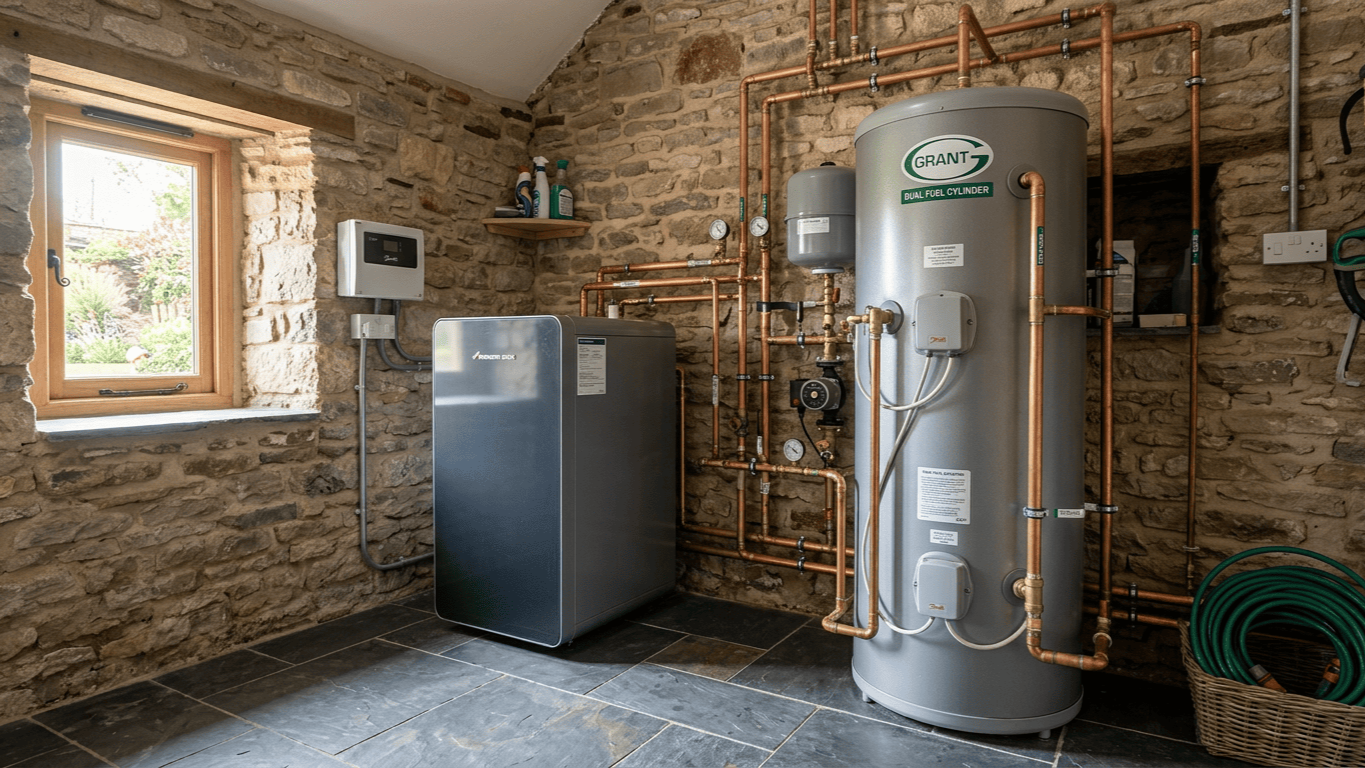
The physical arrangement of a system depends on whether you're designing for genuine backup or supplementary heating. The most straightforward configuration uses an oil-fired boiler as the main heat source, feeding a conventional wet radiator system. An electric immersion heater installed in the hot water cylinder provides immediate hot water if the boiler fails.
For better integration, you can install electric thermal stores that work alongside the oil boiler. The thermal store acts as a large insulated buffer tank, heated by the oil boiler during normal operation but equipped with an electric immersion heater that activates if the boiler fails or if you want to take advantage of cheaper rates.
More sophisticated installations use smart controllers that manage both fuel sources based on pre-set parameters. The controller might run the oil boiler during the coldest hours, then switch to electric during milder periods. You can specify heating controls that handle these switching decisions automatically based on outdoor temperatures to keep the system efficient.
Hybrid Cylinder Arrangements
For domestic hot water, a twin-coil cylinder provides the most elegant solution. The primary coil connects to the oil boiler, whilst a secondary coil or immersion heater connects to the electric supply. If the boiler fails, you still get hot water from the electric element. This is critical for properties without alternative water heating.
Using a twin-coil cylinder also allows for future expansion, such as solar thermal integration. Modern units are designed with appropriately sized immersion heaters and coil configurations that prevent thermal layering issues when switching between heat sources.
The Economics: When Does Dual Fuel Pay For Itself?
The financial case for dual fuel heating hinges on comparing the additional installation cost against the value of security and potential fuel savings. Running costs depend entirely on how you use each fuel source. Oil is generally cheaper per kWh, but the Economy 7 tariff provides a window of off-peak electricity that can be competitive for overnight heating.
Using electric heating during off-peak periods for background warmth, then firing the oil boiler only during peak demand hours, can reduce overall fuel consumption. However, you need to use a digital programmable thermostat to ensure you don't accidentally run both systems simultaneously, which would increase costs substantially. By aligning heavy electric loads with the Economy 7 tariff, you can maintain comfort without a massive spike in bills.
Practical Installation Considerations
Installing dual fuel capability isn't just about bolting on some heaters. Several technical factors require careful attention to ensure both systems work effectively. Adding significant electric heating load often requires an upgraded electrical supply. Before specifying, calculate the total connected load including existing appliances.
When both systems feed the same radiator circuit, you must prevent reverse circulation where hot water from one system flows backwards through the other. This requires properly positioned check valves or motorised zone valves that isolate each heat source. If your setup includes a heating control app, you can monitor these valve positions in real-time to ensure everything is operating correctly.
Maintenance Requirements For Dual Fuel Systems
Operating two separate heating systems means maintaining both, though the maintenance burden isn't necessarily doubled. Oil boiler servicing should continue annually as per manufacturer requirements and OFTEC regulations. Don't neglect this just because you have electric backup; a poorly maintained oil boiler is more likely to fail.
On a recent job, a senior engineer was training an apprentice at a converted chapel in rural Wales. The property had a dual fuel heating setup that hadn't been serviced in three years. While the electric panels were working, the oil boiler's nozzle was completely blocked and the electric immersion heater in the cylinder was thick with limescale. The apprentice learned that without annual functional testing of the switching logic, the backup could easily fail when the occupants needed it most. It was a clear lesson that operational redundancy only exists if the hardware is actually maintained.
Conclusion
Dual fuel heating systems deliver genuine value for properties where reliability is paramount. The configuration provides a level of operational security that prevents the complete loss of heating during boiler failures or fuel delivery delays. The technical implementation is straightforward, but the key is deciding whether you're designing for emergency backup or active fuel management.
For rural properties and care facilities, these configurations offer peace of mind that single-fuel systems simply can't match. When the oil boiler stops working at the worst possible moment, you'll appreciate having a backup that keeps your building warm.
If you're considering this upgrade, please contact our support team for expert advice on selecting the right components for your property.