
 -
- Dual Fuel Systems: Oil and Gas Boiler Integration
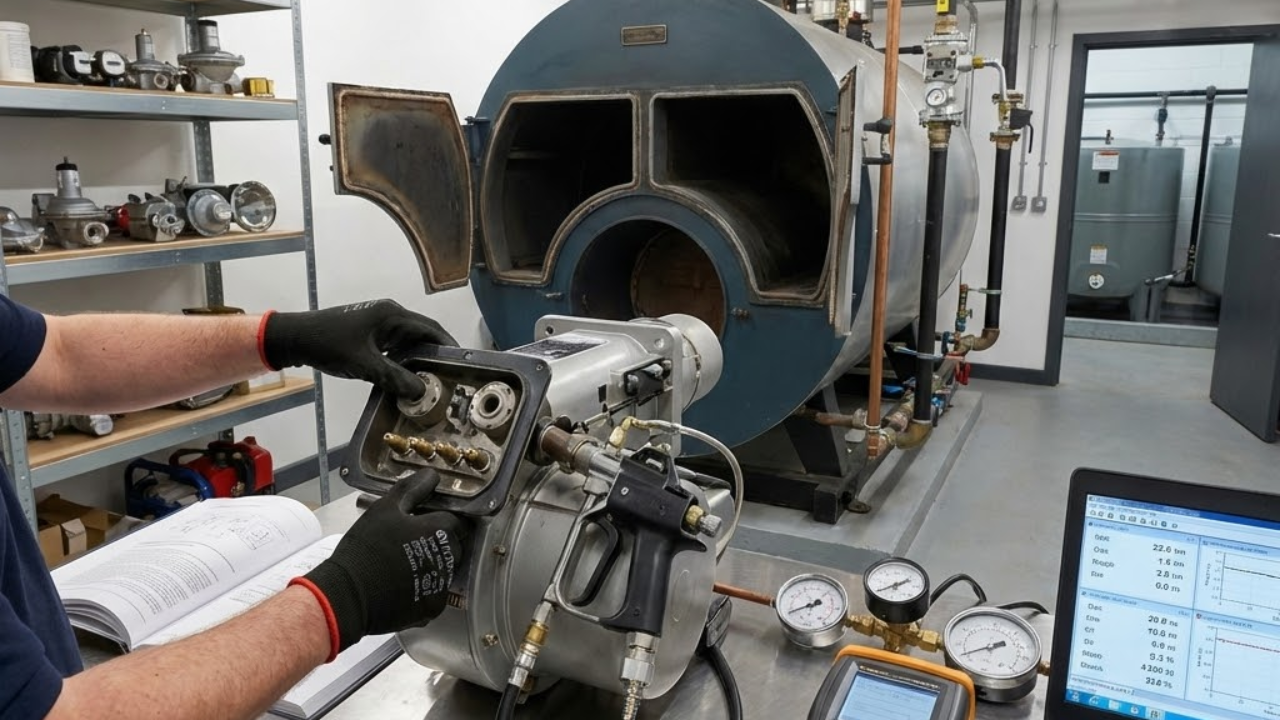
Large commercial buildings, hospitals, and industrial facilities can't afford to gamble on fuel supply. When one energy source becomes unavailable or pricing spikes unexpectedly, operations grind to a halt. That's why dual fuel boiler systems have become the backbone of resilient heating infrastructure across the UK's most critical facilities.
A dual fuel boiler system integrates both oil and gas firing capabilities within a single heating plant, allowing operators to switch between fuels based on availability, cost, or regulatory requirements. This isn't about having two separate boilers sat side by side, it's about engineering a single combustion system that handles both fuel types efficiently, often with automated changeover capabilities that respond to real-time conditions.
Heating and Plumbing World supplies the critical components that make these hybrid systems work reliably, from dual-fuel burners using advanced dual-fuel burner technology to sophisticated control packages that manage fuel switching without operator intervention.
Why Facilities Choose Dual Fuel Capability
The business case for dual fuel systems extends far beyond simple redundancy. Facilities managers face three primary drivers when specifying these installations.
Energy cost optimisation sits at the top of most decision matrices. Natural gas typically offers lower running costs, but pricing volatility means oil can become the economical choice during supply constraints or seasonal demand peaks. Automated fuel switching based on real-time tariffs can deliver 15-25% annual fuel cost reductions in facilities with high thermal loads.
Supply security matters even more in critical applications. Hospitals, data centres, and food processing plants can't tolerate heating interruptions. Gas supply disruptions, whether from network maintenance, capacity constraints, or emergency situations, become manageable risks when oil backup exists. The system simply switches fuels and maintains output.
Regulatory compliance increasingly demands fuel flexibility. Low emission zones, air quality regulations, and decarbonisation targets create shifting requirements that dual fuel systems can accommodate. When regulations tighten on one fuel type, operators retain the option to switch rather than face costly boiler replacement.
Think of it like a commercial vehicle fleet running on both diesel and electric power, you're not duplicating systems unnecessarily, you're building in the flexibility to respond to changing operational conditions without compromising service delivery.
How Dual-Fuel Burner Technology Works
The heart of any dual fuel installation is the burner assembly itself. Modern dual-fuel burners don't simply bolt two separate burners together, they're engineered to handle both fuel types through a single combustion head with fuel-specific components.
Gas firing uses a standard gas train with pressure regulation, safety shut-off valves, and modulating control. The burner head incorporates gas nozzles designed for the required turndown ratio, typically 5:1 or greater on commercial installations. Combustion air mixing happens through adjustable dampers that respond to oxygen trim sensors.
Oil firing requires additional components: a fuel pump, pre-heater (for heavy oils), atomising nozzle, and separate ignition electrodes positioned for oil spray patterns. The oil gun assembly retracts or pivots clear when the system operates on gas, preventing carbon buildup on unused components.
The changeover mechanism varies by manufacturer and application. Manual changeover systems require an engineer to physically switch fuel trains and adjust combustion settings, acceptable for seasonal fuel changes but impractical for dynamic optimisation. Automatic changeover systems use motorised valves and programmable controls that switch fuels based on pre-set conditions: fuel availability, price signals, or load requirements.
Combustion efficiency depends heavily on proper setup for each fuel. Gas and oil have different stoichiometric air requirements, flame characteristics, and combustion temperatures. A well-commissioned dual fuel system maintains 85-90% combustion efficiency across both fuels, with minimal adjustment needed during changeover.
The Grundfos pump range includes models specifically rated for fuel oil service, handling the viscosity and temperature requirements that oil firing demands.
System Design Considerations for Dual Fuel Integration
Integrating dual fuel capability into a heating plant involves more than swapping the burner. The entire fuel supply chain, safety systems, and control architecture must accommodate both energy sources.
Fuel Storage Infrastructure
Gas supply typically comes from the mains network, requiring adequate inlet pressure (usually 21 mbar for natural gas), appropriately sized pipework, and emergency shut-off valves positioned for safe isolation. Pressure boosting may be necessary for larger burners or sites with marginal supply pressure.
Oil storage demands dedicated tankage, bunding, leak detection, and secondary containment compliant with the Oil Storage Regulations. Tank sizing depends on delivery frequency and backup duration requirements, most facilities specify 7-14 days of oil storage at peak winter load. Fuel lines require trace heating in cold weather to maintain pumpability, particularly for heavier fuel grades.
Facilities running on kerosene (Class C2) face fewer storage restrictions than those using gas oil (Class D) or heavy fuel oil, but all installations require proper ventilation, spillage containment, and fire separation distances from buildings and boundaries.
Combustion Air and Flue Gas Management
Dual-fuel burners often require larger combustion air openings than single-fuel equivalents, particularly when burning oil. The air handling system must deliver sufficient volume at the required pressure across both operating modes, which may mean oversizing the fan slightly for oil firing.
Flue gas characteristics change between fuels. Oil combustion produces more particulates and typically higher flue gas temperatures than gas, affecting flue sizing and material selection. Stainless steel flues handle the condensing conditions and corrosive condensates from both fuel types, while traditional brick chimneys may need relining to cope with modern condensing operation.
Flue gas analysers should monitor both oxygen and carbon monoxide continuously, with different alarm setpoints for gas and oil firing reflecting their distinct combustion characteristics.
Control System Architecture
Modern dual fuel installations use programmable logic controllers (PLCs) or building management systems (BMS) that handle fuel selection, burner sequencing, and safety interlocks. The control system must manage:
- Fuel availability sensing (gas pressure monitoring, oil tank level)
- Automated fuel selection based on pre-set logic (cost, availability, emissions)
- Burner purge cycles appropriate to the fuel being used
- Flame detection suitable for both gas and oil flames
- Safety lockouts specific to each fuel type
- Combustion efficiency optimisation through O₂ trim and modulation
The Honeywell controls range includes burner management systems specifically designed for dual fuel applications, with proven safety integrity levels that meet insurance and regulatory requirements.
Commissioning and Efficiency Optimisation
A dual fuel boiler system only delivers its potential benefits when properly commissioned on both fuels. This isn't a job for inexperienced engineers, combustion setup requires flue gas analysis, burner adjustment, and safety testing for each operating mode.
Gas Firing Setup
Commission gas firing first, establishing baseline efficiency and emissions. Adjust the air damper to achieve 3-4% O₂ in the flue gas at full fire, then verify combustion quality across the burner's modulation range. CO levels should remain below 100ppm across all firing rates, with CO₂ readings of 9-10% indicating complete combustion.
Check gas pressure at the burner inlet under firing conditions, pressure drop in the gas train can cause poor combustion at high fire. The gas valve should modulate smoothly without hunting, and flame detection must prove reliable across the full turndown range.
Oil Firing Setup
Oil commissioning requires additional attention to fuel atomisation, ignition reliability, and smoke levels. Start with the oil pressure and nozzle size recommended by the burner manufacturer, then adjust combustion air to achieve 3-5% O₂ in the flue gas. Oil fires typically need more excess air than gas to ensure complete combustion.
Smoke readings (Bacharach scale) should register 0-1 at all firing rates, anything higher indicates incomplete combustion and wasted fuel. Check for oil misting or dripping from the nozzle during shutdown, which suggests worn components or incorrect fuel pressure.
Flame stability matters more with oil than gas. The flame should ignite cleanly within 2-3 seconds and extinguish immediately on shutdown, with no afterburn or smoke puffback.
Changeover Testing
Test automatic changeover under controlled conditions, verifying that the system switches fuels without nuisance lockouts or efficiency degradation. The control system should complete a full purge cycle before attempting ignition on the new fuel, clearing any residual gases or oil vapour from the combustion chamber.
Monitor the first few automatic changeovers closely. Some systems exhibit "learning curve" behaviour where control parameters need fine-tuning to handle the transition smoothly. Document the final settings for both fuels, future maintenance engineers will thank you.
Maintenance Requirements for Dual Fuel Systems
Dual fuel installations demand more rigorous maintenance than single-fuel installations, simply because there's more equipment to service and two distinct combustion processes to keep optimised.
Annual Service Intervals
Gas-side maintenance follows standard procedures: check burner seals, clean ignition electrodes, verify gas valve operation, and test all safety interlocks. Gas trains require annual tightness testing to BS 6891 standards, with particular attention to the main shut-off valves and pressure regulators.
Oil-side maintenance involves more hands-on work: change fuel filters, inspect and clean the oil nozzle, check fuel pump pressure and coupling alignment, and verify pre-heater operation. Oil burners accumulate carbon deposits on the combustion head and flame retention ring, clean these thoroughly to maintain efficient atomisation and flame stability.
The fuel oil tank needs inspection every 5 years for internal corrosion and sediment buildup. Budget for periodic tank cleaning and fuel polishing, particularly if the oil sits unused for extended periods.
Combustion Analysis
Run full combustion analysis on both fuels annually, documenting efficiency, emissions, and burner performance across the modulation range. Compare results to commissioning data, declining efficiency or rising CO levels indicate developing problems that need attention before they cause failures. Regular combustion efficiency optimisation maintains fuel economy and reduces emissions.
Facilities that rarely use one fuel mode should still fire the system on that fuel quarterly to keep components exercised and verify operational readiness. There's nothing worse than discovering your backup fuel system doesn't work when you actually need it during a supply emergency.
Component Replacement Cycles
Dual-fuel burners have consumable components that wear at different rates depending on fuel type and firing hours. Oil nozzles typically need replacement every 1-2 years, while gas nozzles last much longer. Flame sensors, ignition transformers, and combustion air damper motors follow standard replacement cycles regardless of fuel type.
Keep adequate spares on site for both fuel trains, particularly fuel pump seals, nozzles, and gaskets. When a fuel changeover is driven by supply interruption, you can't wait for parts to arrive.
Practical Applications and Performance Data
A large hospital in the Midlands runs a 2MW dual fuel heating system that switches between natural gas and kerosene based on real-time fuel pricing and grid demand response contracts. The system operates primarily on gas (approximately 85% of annual runtime), switching to oil during winter peak demand periods when gas prices spike or when the facility receives demand response payments for reducing gas consumption.
Annual fuel cost savings average £35,000 compared to gas-only operation, with the system paying back its additional capital cost in under four years. More importantly, the hospital maintains full heating capacity during gas supply interruptions, critical for patient care and regulatory compliance.
An industrial bakery in Scotland specified dual fuel capability primarily for supply security rather than energy cost optimisation. The facility operates 24/7 with zero tolerance for heating interruptions that would affect product quality and cold storage temperatures. The oil backup has activated three times in five years during gas network incidents, preventing production losses that would have exceeded £150,000 per event.
These aren't theoretical benefits, they're documented outcomes from facilities that engineered resilience into their heating infrastructure rather than gambling on single-fuel supply chains.
Cost Considerations and Payback Analysis
Dual fuel boiler systems cost 25-40% more than equivalent single-fuel installations when you factor in the burner upgrade, fuel storage infrastructure, additional controls, and commissioning complexity. A typical 500kW commercial installation might see an additional capital cost of £15,000-25,000 for dual fuel capability.
The payback calculation depends entirely on your facility's specific circumstances. If you're primarily seeking supply security and rarely switch fuels, payback comes from avoided losses during supply interruptions, difficult to quantify but potentially enormous in critical applications. If you're actively optimising fuel costs through regular switching, payback periods of 3-5 years are achievable in facilities with high thermal loads and significant fuel price differentials.
Don't forget to factor in increased maintenance costs, typically 15-20% higher than single-fuel systems due to the additional components and testing requirements. Insurance premiums may decrease slightly due to improved supply resilience, though this varies by insurer and facility type.
Integration With Modern Heating Systems
Dual fuel capability integrates seamlessly with contemporary heating plant design, including condensing boiler technology, weather compensation controls, and building management systems.
Condensing operation works with both gas and oil firing, though oil combustion produces flue gases with higher dew points that can increase condensate production and acidity. Ensure your condensate drainage and neutralisation systems can handle the higher volumes and lower pH associated with oil firing.
Weather compensation and load-following controls optimise system efficiency regardless of which fuel is burning. The control system adjusts firing rate and system temperatures based on outdoor conditions, maintaining comfort while minimising fuel consumption across both operating modes.
BMS integration allows facilities managers to monitor fuel consumption, track efficiency trends, and implement sophisticated fuel-switching strategies that respond to time-of-use tariffs, carbon intensity signals, or demand response events. Modern systems can even integrate with energy trading platforms that automatically select the most economical fuel based on forward pricing curves.
The Danfoss range of heating controls includes components specifically designed for complex commercial systems, providing the precision and reliability that dual fuel installations demand.
Regulatory and Safety Compliance
Dual fuel installations must comply with regulations governing both gas and oil firing, including Gas Safety (Installation and Use) Regulations, Building Regulations Part L, and the Oil Storage Regulations.
Gas installations require competent person certification under Gas Safe registration, with particular attention to ventilation requirements, emergency controls, and safety interlocks. Annual gas safety inspections are mandatory for commercial installations.
Oil installations need compliance with OFTEC standards for oil storage and burner installation, including proper bunding, overfill prevention, and fire safety measures. Local authority building control or approved inspectors must sign off on oil storage installations.
Emissions compliance increasingly affects fuel selection, particularly in smoke control areas and low emission zones. Ensure your chosen fuels and burner technology meet current and anticipated future emissions limits for your location.
Insurance companies often require specific safety features on dual fuel systems, including automatic fuel shut-off on fire alarm activation, remote emergency stops, and regular safety testing by qualified engineers. Verify requirements with your insurer before finalising system design.
Making the Decision: Is Dual Fuel Right for Your Facility?
Dual fuel boiler systems make compelling sense for facilities where heating interruption carries significant consequences, hospitals, care homes, food processing plants, data centres, and industrial processes with temperature-critical operations. They're also worth considering for large commercial buildings where fuel cost optimisation can deliver substantial savings.
They're probably not justified for small commercial buildings with low heating loads, facilities with reliable gas supply and low interruption risk, or applications where the additional capital and maintenance costs outweigh potential benefits.
The decision ultimately comes down to risk assessment and cost-benefit analysis specific to your facility. Calculate the cost of heating interruption, evaluate fuel price volatility in your region, and consider regulatory trends that might affect fuel availability or pricing over your equipment's 15-20 year service life.
For facilities where dual fuel capability makes sense, the technology is mature, reliable, and well-supported by equipment manufacturers and service providers. It's not an experimental approach, it's proven engineering that delivers measurable benefits when properly specified and maintained.
If you're evaluating heating plant options for a critical facility or looking to add resilience to existing infrastructure, contact us to discuss how dual fuel systems might fit your specific requirements. The conversation starts with understanding your facility's thermal loads, fuel availability, and operational priorities, from there, we can help you determine whether dual fuel integration delivers genuine value or represents unnecessary complexity.