

Emergency Freeze Protection: Temporary Heating Solutions
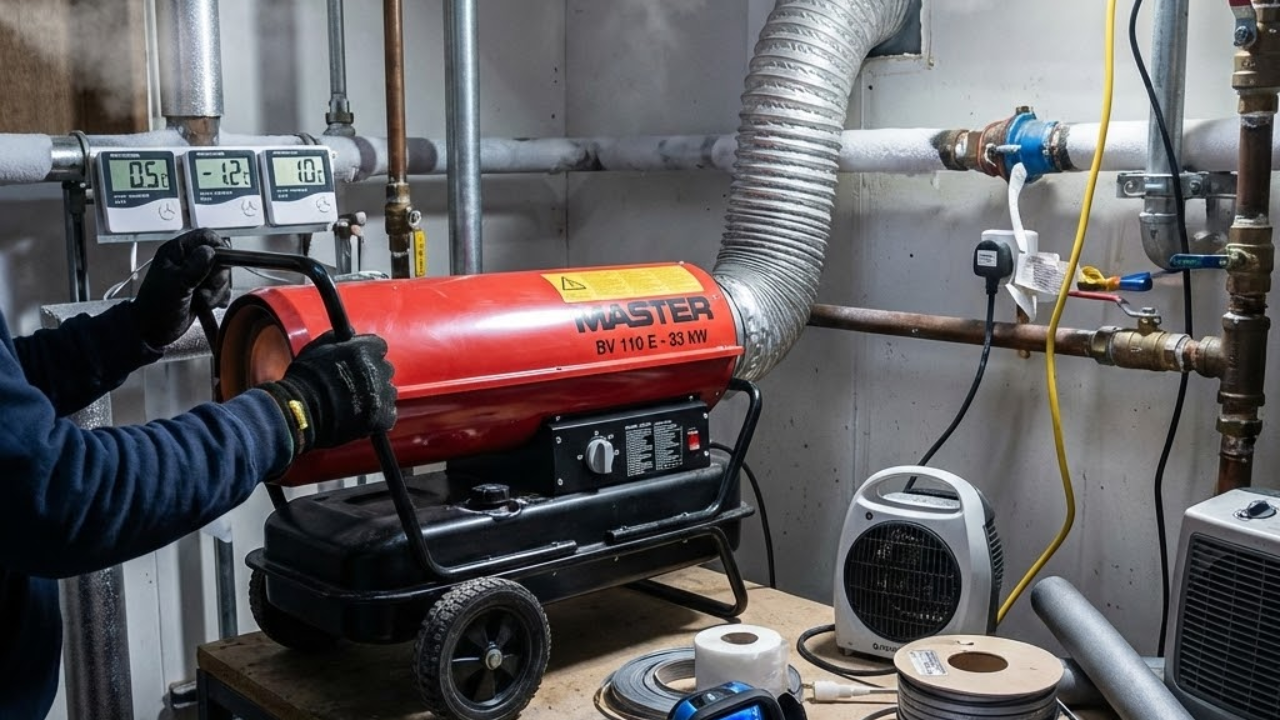
When a cold snap hits and temperatures plummet below freezing, building systems face immediate danger. Pipes burst, equipment fails, and water damage can cost tens of thousands in repairs, all within hours of a system losing heat. In these critical situations, emergency freeze protection isn't just about comfort - it's about preventing catastrophic failure.
The reality on site is stark. A commercial building loses heating on a Friday evening when outdoor temperatures drop to -5°C. By Monday morning, radiators have split, pipework has fractured, and water has flooded three floors. This scenario plays out more often than it should, particularly during unexpected cold weather events or when primary heating systems fail without warning.
Think of freeze protection like pumping out a flooding basement. You're not fixing the leak yet - that's the permanent repair job. You're just keeping water levels manageable whilst you work out how to fix the actual problem. Temporary heating does the same thing: it holds the line against freezing damage whilst you arrange proper repairs.
Temporary heating solutions serve as the first line of defence against freeze damage. They maintain minimum safe temperatures in vulnerable spaces, protect water-filled systems, and buy time for permanent repairs. But selecting and deploying these systems requires understanding both their capabilities and limitations. Heating and Plumbing World supplies the equipment needed for both emergency freeze protection and permanent system improvements.
Understanding Freeze Risk in Building Systems
Building systems contain significant volumes of water in pipework, radiators, cylinders, and heat exchangers. When water freezes, it expands by approximately 9%, generating pressures exceeding 2,000 psi. This force splits copper pipe, cracks cast iron radiators, and ruptures heat exchangers with alarming ease.
The risk isn't uniform across a building. Exposed pipework in roof spaces, external walls, and unheated areas freezes first. North-facing rooms lose heat faster than south-facing ones. Ground floor spaces above unheated basements create particular vulnerabilities, especially where services enter the building.
Critical temperature thresholds determine when action becomes urgent:
- Below 5°C: Risk begins for exposed pipework in unheated spaces
- Below 2°C: Risk extends to pipework in heated spaces that have lost heat
- Below 0°C: Immediate risk to all water-filled systems without active heating
- Below -5°C: Severe risk even to systems with minimal heating
Modern heating systems from manufacturers include frost protection modes, but these only function when the system has power and the boiler remains operational. When primary heating fails completely, mechanical frost protection becomes worthless.
Immediate Actions Before Deploying Temporary Heat
Before bringing in temporary heating equipment, take these critical first steps. They'll make your emergency heating more effective and prevent worsening the situation.
Assess the Vulnerable Areas Systematically
Walk the building with a thermal imaging camera if available, identifying cold spots and areas where temperatures have already dropped dangerously low. Priority zones include plant rooms, roof spaces, external walls, and any areas with exposed pipework.
Isolate Compromised Sections
If parts of the system have already frozen, isolating these sections prevents thawed water from flooding the building. Mark isolation points clearly. In an emergency, you'll need to find them quickly.
Maintain Water Pressure
Many modern boilers won't fire if system pressure drops too low. Check pressure gauges and top up as needed, but never add water to a system that may already be frozen. The additional water will freeze and worsen the damage.
Secure Power Supplies
Calculate electrical loads before connecting heaters. A typical 3kW fan heater draws 13 amps - running multiple units on a single circuit trips breakers and leaves you without heat. Plan your electrical distribution before temperatures drop further.
Portable Electric Fan Heaters
Electric fan heaters represent the quickest deployment option. They're widely available, require no fuel storage, and start providing heat immediately. For protecting small to medium spaces, they're often the most practical first response.
Industrial fan heaters rated between 3kW and 9kW suit most emergency applications. Unlike domestic heaters, industrial units feature robust construction, thermostat control, and continuous operation ratings. They'll run for days without overheating or failing.
Position heaters to create air circulation around vulnerable pipework and equipment. A single 3kW heater maintains frost protection in approximately 30-40 cubic metres of space, assuming reasonable insulation. For larger areas or poorly insulated spaces, calculate roughly 100 watts per cubic metre as a starting point.
Thermostat settings for freeze protection typically sit between 5-7°C. This maintains temperatures safely above freezing without excessive energy consumption. Higher settings waste electricity and risk overheating equipment once deployed.
However, electric heating carries significant limitations. Power consumption becomes expensive quickly. A 3kW heater running continuously costs approximately £10-12 per day at commercial electricity rates. Multiple heaters can overload existing electrical infrastructure, particularly in older buildings. And if the power fails, electric heaters provide zero protection.
Diesel and Paraffin Space Heaters
When electrical capacity limits fan heater deployment, or when heating larger volumes, fuel-fired space heaters offer substantially more heat output. Industrial diesel and paraffin heaters deliver 20-100kW of heat from portable units.
Indirect fired heaters use a heat exchanger to separate combustion gases from the heated air. They're essential for occupied spaces or areas with sensitive equipment. The clean, warm air output makes them suitable for protecting plant rooms, storage areas, and temporary workspaces.
Direct fired heaters burn fuel in the airstream, providing maximum efficiency but releasing combustion products into the heated space. They're only suitable for well-ventilated areas or unoccupied spaces. Never use direct fired heaters in confined areas. Carbon monoxide buildup creates life-threatening conditions within hours.
A 30kW diesel heater consumes approximately 3 litres of fuel per hour and heats roughly 300-400 cubic metres to frost-safe temperatures. This makes them cost-effective for larger spaces compared to multiple electric heaters.
Ventilation requirements can't be ignored. Combustion consumes oxygen and produces carbon dioxide and water vapour. Inadequate ventilation leads to incomplete combustion, carbon monoxide production, and excessive condensation. Ensure fresh air supply and exhaust paths before operating any fuel-fired heater.
Fuel storage and handling add complexity. Diesel and paraffin require proper containers, secure storage away from ignition sources, and careful handling. Spillages create slip hazards and fire risks. In emergency situations, securing adequate fuel supplies may prove challenging, particularly during widespread cold weather events.
Temporary Boiler Installations
For extended outages or when protecting complex heating systems, temporary boiler installations provide the most reliable solution. Portable boilers range from small 50kW units suitable for domestic properties to containerised 500kW+ installations for commercial buildings.
These systems integrate directly with existing heating circuits. They maintain normal system operation, keeping radiators hot, underfloor heating active, and cylinders at temperature. This comprehensive protection extends beyond freeze prevention to maintaining building functionality.
Installation requirements include:
- Secure positioning on level ground with adequate clearance
- Connection to existing heating pipework via flexible hoses
- Electrical supply for controls and pumps (typically 13A single phase for smaller units)
- Flue termination in a safe location away from air intakes and occupied areas
- Fuel supply (either bulk tank delivery or bottled gas depending on boiler type)
Temporary boilers typically run on LPG or diesel. LPG bottles offer convenience for smaller installations but require regular replacement. A 50kW boiler consumes approximately one 47kg bottle every 24 hours of continuous operation. Diesel units with bulk tanks suit longer-term installations.
The main limitation is deployment time. Unlike plug-in fan heaters, temporary boilers require professional installation, typically taking 4-8 hours from arrival to operation. This makes them unsuitable for immediate response but ideal for sustained freeze protection during extended repairs.
Heat Trace Cable Systems
For protecting specific pipework runs rather than entire spaces, electric heat trace cables provide targeted freeze protection. These cables run alongside or wrap around pipes, maintaining pipe temperature above freezing even in unheated areas.
Self-regulating heat trace cable adjusts its output automatically based on pipe temperature. As the pipe cools, the cable increases heat output; as temperature rises, output decreases. This automatic operation prevents both freezing and overheating without external controls.
Installation's straightforward for emergency applications. Clean the pipe surface, apply the cable along the bottom of horizontal runs (where water settles), secure with heat-resistant tape every 300mm, and insulate over the top. Power consumption typically ranges from 10-30 watts per metre depending on cable type and ambient temperature.
Heat trace works well for vulnerable pipe sections in roof spaces, external walls, or unheated areas. It's less suitable for protecting entire systems. The cost and power consumption make space heating more economical for larger volumes.
One major advantage: heat trace continues protecting specific vulnerable points even after primary heating restoration. Many installations become permanent additions, providing ongoing freeze protection for historically problematic pipe runs.
Protecting Specific System Components
Different system components require different protection strategies. Understanding these distinctions prevents focused damage even when overall building temperatures remain marginal.
Expansion Vessels and Pressurisation Units
Expansion vessels contain water but lack circulation. Static water freezes more readily than flowing water. Small expansion vessels in unheated areas need direct heat application. Position a small heater nearby or apply heat trace cable to connecting pipework.
Altecnic's valve solutions include expansion vessels and pressurisation components requiring careful freeze protection in vulnerable installations.
Pump Heads
Pump heads can freeze even when the motor remains warm. The stationary water in the pump body freezes first, potentially cracking the casing. If the system isn't running, manually rotate pump shafts daily to prevent ice formation locking the impeller.
Grundfos circulation pumps require protection from freezing in stationary systems during prolonged cold weather.
Heat Exchangers
Heat exchangers in thermal stores and buffer vessels contain large water volumes in compact spaces. These freeze more slowly than pipework but suffer more severe damage when they do. Plate heat exchangers are particularly vulnerable. Frozen plates crack and become irreparable. Maintain minimum 5°C temperatures in plant rooms containing heat exchangers.
Cylinder Coils
Cylinder coils in hot water cylinders rarely freeze if the cylinder body remains above freezing, as the thermal mass of stored water provides protection. However, if the entire cylinder drops below freezing, the coil typically fails before the cylinder body. Copper coil repairs are expensive and time-consuming.
Kingspan hot water solutions include thermal storage cylinders requiring comprehensive freeze protection during heating system failures.
Monitoring and Maintaining Temperature
Deploying temporary heating equipment isn't a "set and forget" operation. Continuous monitoring prevents equipment failure and ensures protection remains effective as conditions change.
Temperature monitoring should include multiple points throughout protected areas. Simple digital thermometers with remote sensors cost £20-30 and provide continuous readouts. Position sensors at the coldest expected locations (typically floor level in external corners or near doorways).
Modern wireless systems offer temperature monitoring with smartphone alerts. These systems notify you immediately if temperatures drop below set thresholds, allowing rapid response before damage occurs.
Honeywell controls offer wireless temperature monitoring suitable for freeze protection applications.
Daily inspections verify temporary heating equipment continues operating correctly. Check fuel levels on diesel and paraffin heaters, inspect electrical connections for overheating, verify thermostats function correctly, and confirm adequate ventilation. Equipment failures often show warning signs hours before complete shutdown.
Backup planning acknowledges that temporary equipment can fail. What happens if your diesel heater stops at 2am during a -10°C night? Having backup heaters available, maintaining spare fuel supplies, and keeping emergency contact numbers for equipment suppliers prevents temporary protection becoming temporary disaster.
On a large warehouse project, the facilities team deployed diesel space heaters after the main boiler failed during a cold snap. They positioned three 30kW units around the building perimeter and called it done. At 3am on the second night, one heater ran out of fuel and shut down. By 7am when staff arrived, temperatures in that section had dropped to -2°C and two radiators had split. The cost of those burst radiators exceeded the cost of setting up proper fuel monitoring and backup systems by a factor of ten.
Duration Considerations and Cost Management
Temporary heating protection costs money, sometimes substantial amounts. Understanding these costs helps make informed decisions about repair timelines and protection strategies.
Operating costs vary significantly by heating method:
- 3kW electric fan heater: £10-12 per day
- 30kW diesel space heater: £20-25 per day in fuel plus hire costs
- Temporary boiler installation: £500-1000 per week including fuel and hire
- Heat trace cable: £2-5 per day for typical installations
These costs compound quickly. A week of temporary heating for a medium commercial building easily exceeds £1,000. This makes rapid permanent repair economically imperative. Extended temporary protection often costs more than expedited permanent repairs.
Insurance considerations affect cost recovery. Most commercial property insurance covers temporary heating costs during emergency repairs, but documentation requirements are strict. Photograph installations, retain fuel receipts, log temperature readings, and maintain detailed records of all protection measures. Poor documentation leads to claim disputes and cost recovery failures.
When Professional Emergency Services Are Essential
Some situations exceed the capability of standard temporary heating solutions. Recognising these circumstances prevents inadequate protection and escalating damage.
Large commercial buildings with complex multi-zone heating systems require professional emergency heating specialists. These contractors deploy containerised boiler plants, manage fuel logistics, and provide 24/7 monitoring. Attempting DIY protection for 1000+ square metre facilities usually fails.
Critical facilities including hospitals, care homes, and data centres can't tolerate any interruption in environmental control. These situations require immediate professional response with redundant heating capacity and continuous monitoring. The cost of professional emergency heating is trivial compared to the consequences of protection failure.
Frozen system recovery requires specialist knowledge. If systems have already frozen, thawing them incorrectly causes more damage than the initial freeze. Professional services use controlled thawing techniques, pressure testing, and systematic inspection to minimise damage and ensure safe return to service.
Prevention: Long-Term Freeze Protection Strategies
Whilst temporary heating solves immediate emergencies, permanent freeze protection prevents recurrence. Learning from emergency situations drives better system design and protection.
Improved insulation around vulnerable pipework costs relatively little compared to emergency heating deployment. Pipe insulation, loft insulation upgrades, and draught sealing in plant rooms all reduce freeze risk and improve normal operation efficiency.
Frost thermostats wired to override normal heating controls activate the system when space temperatures drop below 5°C. These simple devices cost under £50 installed but provide automatic protection during boiler failures or control malfunctions.
Danfoss thermostatic valves include frost protection controls suitable for commercial installations, combining reliability with flexible configuration options.
System design improvements relocate vulnerable components to heated spaces. Moving expansion vessels from unheated roof spaces to plant rooms, rerouting exposed pipework through internal walls, and eliminating unnecessary external pipe runs all reduce inherent vulnerability.
Backup heating capacity in critical areas provides automatic protection. Small electric panel heaters with frost thermostats in plant rooms cost pennies per day to run but maintain safe temperatures during primary system failures.
Conclusion
Emergency freeze protection requires rapid assessment, appropriate equipment selection, and continuous monitoring. The cost of temporary heating (whether measured in equipment hire, fuel consumption, or electrical load) pales compared to the cost of burst pipes, flooded buildings, and damaged equipment.
Electric fan heaters provide immediate protection for small spaces with available electrical capacity. Diesel and paraffin space heaters suit larger volumes but demand careful ventilation and fuel management. Temporary boiler installations offer comprehensive protection during extended outages. Heat trace cables protect specific vulnerable pipe runs with minimal ongoing attention.
Success depends on matching the protection method to the specific situation, monitoring effectiveness continuously, and maintaining backup plans for equipment failures. The temporary nature of these solutions makes rapid permanent repair the ultimate goal. Extended temporary protection costs mount quickly and increase the risk of protection failure.
The best emergency freeze protection is the one you never need to deploy. But when cold weather strikes and primary heating fails, knowing how to protect vulnerable systems prevents minor failures becoming major disasters. Temperature monitoring, appropriate temporary heating, and rapid permanent repair form the three pillars of effective freeze protection. Master all three, and you'll navigate even severe cold weather events with minimal damage and disruption.
For urgent freeze protection advice or equipment, get expert advice from experienced heating engineers who understand emergency response requirements.