

Expansion Relief Valve vs Expansion Vessel: Which For Unvented Cylinders?
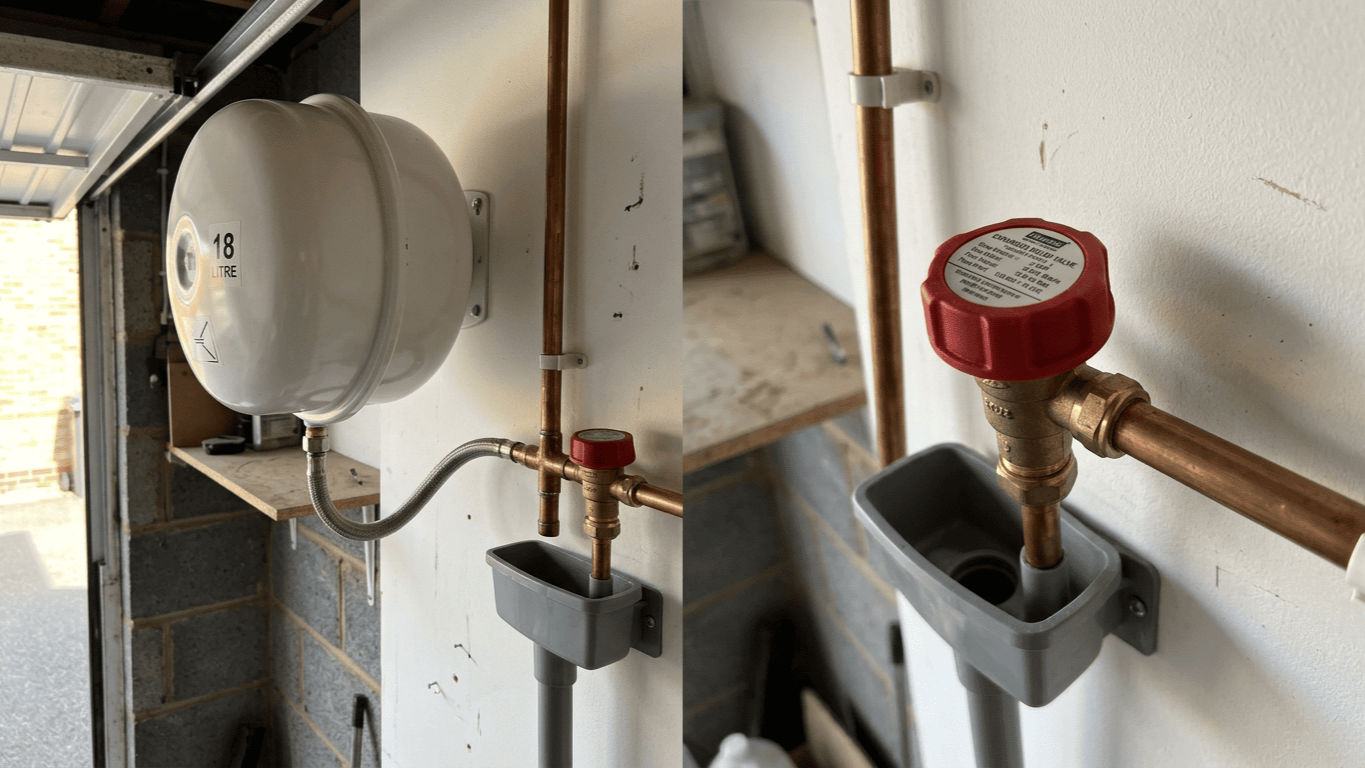
When water heats up in a sealed system, it naturally expands. Physics simply doesn't negotiate with poor plumbing. In an unvented hot water cylinder, that expansion creates massive pressure. If you don't manage it properly, you risk a catastrophic failure that could easily flood a property.
Here is the simple reality about the expansion relief valve vs expansion vessel debate. They aren't interchangeable options. They are complementary safety components that work together perfectly in every properly installed setup.
Understanding exactly what each component does separates competent installers from massive liability risks.
What Happens When Water Heats In A Sealed System
Unvented cylinders operate under mains pressure with absolutely no open vent to the atmosphere. When the water temperature rises from cold to 65°C, it expands significantly. In a standard 250-litre cylinder, that creates about 10 litres of expanded water with nowhere to go.
In an older open-vented system, this expansion simply pushes water back up into the loft tank. However, modern unvented systems have no such escape route. Consequently, the sealed system pressure rises incredibly rapidly during the heating cycle.
Without proper expansion accommodation, you'd see the sealed system pressure climb from 3 bar to potentially 10 bar. That is easily enough to split copper pipework or blow off compression fittings. You can find quality Heating and Plumbing World supplies to prevent this, but you must install them correctly. Understanding the expansion relief valve vs expansion vessel relationship prevents these exact blowouts.
The Role Of The Expansion Vessel
An expansion vessel handles the routine thermal expansion volume that occurs every single time the cylinder heats up. It is not an emergency safety device. Instead, it is an everyday functional necessity.
The unit is essentially a sealed steel container divided internally. It functions as a rubber diaphragm vessel, with compressed air on one side and system water on the other. When water expands, it pushes into the vessel and compresses the air cushion safely.
Once the hot water cools down, the compressed air pushes the water back out. It is a closed-loop process that happens dozens of times a day. If you are fitting a new Kingspan Albion Fortic tank, getting this sizing right is absolutely critical.
An undersized rubber diaphragm vessel simply cannot accommodate the full thermal expansion volume. This naturally forces your pressure relief valves to discharge regularly. Most manufacturers provide specific sizing charts based on the total thermal expansion volume, so there is absolutely no excuse for guessing.
On a recent commercial job, the previous installer fitted a tiny vessel to a massive 300-litre cylinder. The valve discharged on every single heating cycle, completely soaking the airing cupboard floor. The homeowner thought the cylinder was faulty, but it was just an incompetent installation.
The Role Of The Expansion Relief Valve
The expansion relief valve is your absolute last-resort safety device. It is specifically designed to open only if the sealed system pressure exceeds a dangerous threshold. Typically, this critical safety threshold sits around 6 bar to 7 bar.
This emergency valve sits directly on the hot outlet of the cylinder. It is spring-loaded and precisely calibrated to crack open at a specific pressure point. When it does, it discharges scalding water safely through a visible tundish funnel.
Here is the most critical point to remember. The expansion relief valve should almost never operate in normal service. If it discharges regularly, you are experiencing nuisance valve discharge, which means something is fundamentally wrong with the system.
This valve is not designed to handle routine expansion at all. Treat it strictly as an emergency safety cutout. Relying on it for everyday pressure regulation is asking for serious trouble.
Why You Need Both Components
Think of the vessel like your car's everyday suspension system, smoothing out the bumps comfortably on every drive. Conversely, think of the relief valve as your vehicle's emergency airbags. You need the suspension for every single journey, but you only ever want those airbags deploying during a genuine disaster.
You cannot skip the vessel and rely entirely on the relief valve. That valve will discharge constantly and waste huge amounts of water. Eventually, this constant nuisance valve discharge will cause the valve to fail completely. If you simply ignore regular nuisance valve discharge, you are risking massive property damage.
Equally, you absolutely cannot skip the relief valve. If the rubber diaphragm vessel fails over time, you desperately need that final safety cutout. Without it, you are one component failure away from a highly dangerous situation.
For example, if you replace a Bentone 90W burner motor and the system subsequently overfires, this valve is your final protection. Building Regulations Part G3 is totally explicit about this safety requirement. Every unvented hot water system must feature independent safety devices.
Common Installation Mistakes To Avoid
After two decades in this trade, I've seen the exact same errors repeated constantly. Here are the most frequent mistakes that cause unvented system failures:
- Undersized vessels: Installers often grab whatever is on the van instead of calculating the actual requirement.
- Failed air charges: The pre-charge air gradually leaks over the years, leaving the vessel waterlogged and completely useless.
- Incorrect valve plumbing: Valves installed upside down or horizontally will inevitably suffer premature failure.
- Missing tundishes: Discharging scalding water illegally into hidden cavity walls is incredibly dangerous.
To avoid these issues, always fit high-quality components from the start. Using a reliable Worcester boiler expansion vessel and installing it perfectly vertically solves many of these problems instantly.
Checking And Maintaining Your System
For homeowners, there are a few simple checks you can perform safely between annual services. Always look for weeping or wetness around the tundish funnel. Constant dripping indicates a serious problem that needs professional attention immediately.
Check the pressure gauge if your system has one fitted. Normal operating pressure sits securely between 3 bar and 4 bar when cold. If you are regularly seeing 5 bar, you should definitely call a qualified engineer. If your checks reveal a failing cylinder entirely, upgrading to a high-efficiency ACV Smartline SLE 160 indirect cylinder ensures top-tier reliability.
For professional engineers, your annual servicing must be incredibly thorough. You must check the pre-charge pressure with the system safely isolated. Furthermore, you must manually operate the valve to ensure your emergency safety cutout hasn't seized up completely.
When To Replace Safety Components
Vessels typically last around five to ten years before the internal diaphragm perishes. If you are topping up the pre-charge more than once a year, replacement is long overdue. Upgrading to a durable 18-litre wall-mounted vessel or similar is often the absolute best solution.
Relief valves should be replaced every five years as a strict matter of course. Once a valve has lifted during an emergency, it may never reseat perfectly again. Any persistent drip will only worsen over time.
Never try to repair either of these components. They are critical safety devices functioning as an emergency safety cutout with a finite, predictable service life. Always replace them with exact equivalents rated for your specific system.
Conclusion
You don't choose between an expansion relief valve vs expansion vessel when installing an unvented cylinder. You must install both, size them correctly, and maintain them properly. There are absolutely no acceptable compromises when dealing with high-pressure systems.
The vessel handles normal expansion safely dozens of times a day. Meanwhile, the relief valve sits quietly in the background as your ultimate failsafe. Together, they make your unvented systems perfectly safe and highly reliable.
I've seen the aftermath of failed installations too many times. Flooded homes and destroyed reputations are totally preventable with correct installation and regular maintenance. Please reach out to our experts if you need advice on securing premium heating components.