

Expansion Vessel Sizing: Matching To System Volume
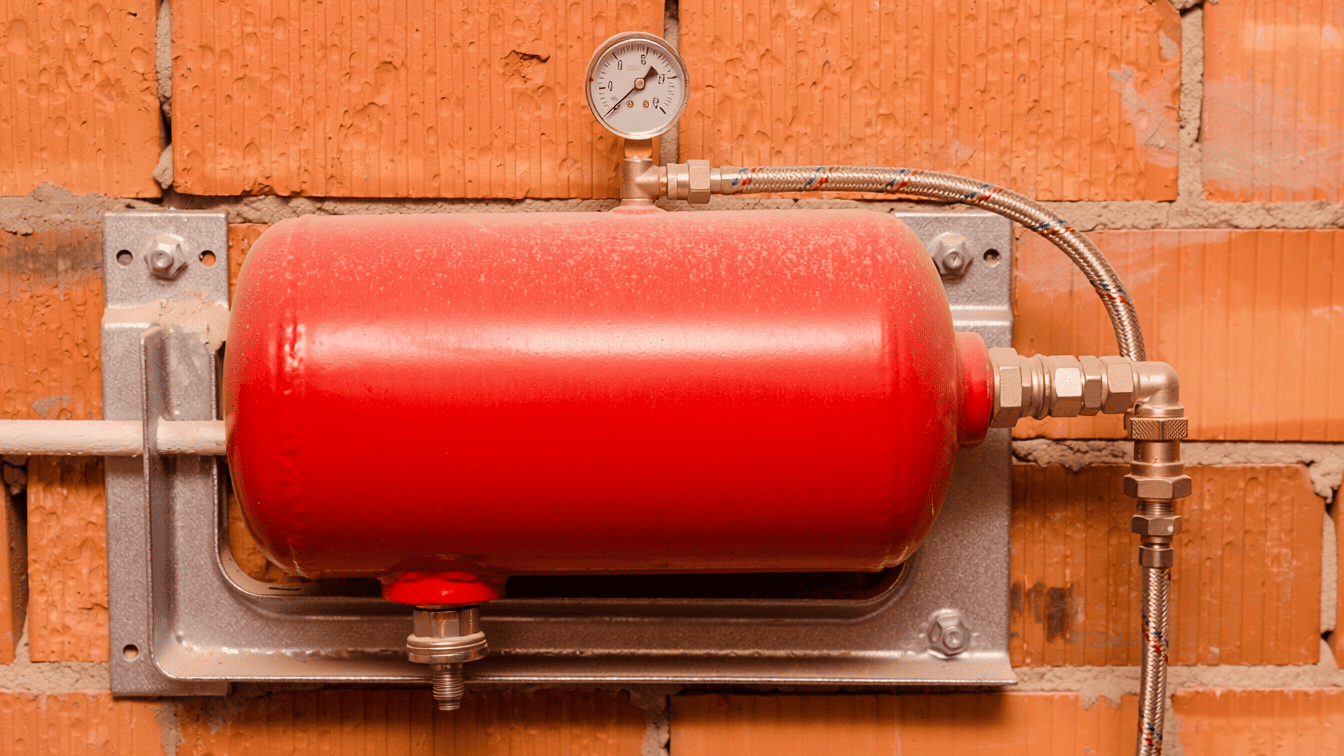
Every sealed heating system needs an expansion vessel to absorb the continuous increase in water volume as temperatures rise. Get the sizing wrong, and you will face frustrating nuisance pressure relief valve discharges, continuous boiler lockouts, or premature component failure. Yet far too many modern systems end up with severely undersized vessels simply because someone guessed rather than calculated the requirements.
Proper expansion vessel sizing isn't guesswork. It is a highly straightforward calculation based strictly on your system's total water content, operating temperatures, and static pressure settings. A correctly sized unit maintains perfectly stable system pressure across the full heating cycle, actively protecting primary pumps, boilers, and heat emitters from the intense mechanical stress of constant pressure swings.
The consequences of poor sizing show up remarkably fast. An undersized unit cannot accommodate thermal expansion safely, heavily forcing the pressure relief valve to open repeatedly. That is not just wasted water; it actively introduces fresh, oxygenated water into the system every time you top it up, rapidly accelerating internal corrosion and thick sludge formation. Oversizing isn't necessarily better either, as it needlessly wastes client money and valuable installation space.
Understanding System Volume And Thermal Expansion
Water expands highly predictably when heated. From 10°C to 80°C, water increases in overall volume by approximately 3.5 percent. That might sound relatively trivial, but in a 300-litre heating system, it represents over 10 litres of additional volume that must safely go somewhere.
Think of the expansion vessel exactly as the system's shock absorber. Just as you wouldn't fit light suspension designed for a tiny hatchback onto a heavily loaded transit van, you cannot specify a 12-litre vessel for a massive 400-litre commercial system and expect reliable performance. The vessel must heavily match the structural job.
System volume explicitly includes every single component that actively holds water. This includes the main boiler heat exchanger, all pipework, radiators, buffer vessels, and the cylinder coil if it is part of the sealed circuit. Establishing the exact system water content is your very first step.
To ensure your calculations lead to successful installations, sourcing premium components through Heating and Plumbing World guarantees your systems can handle these intense thermal loads efficiently for decades.
Calculating The Correct Expansion Vessel Size
The mathematical formula for proper expansion vessel sizing flawlessly accounts for the total volume, the expansion coefficient, and the pressure differential between the pre-charge and the maximum operating pressure.
For domestic systems operating between 20°C and 80°C, you generally use a 3.5 percent expansion factor. You calculate the expanded volume first, then actively apply a pressure correction factor strictly based on your starting and maximum permitted pressures.
For example, if you have a 120-litre system, a 1.0 bar pre-charge, and a 3.0 bar maximum pressure, the maths dictates an exact requirement. You would typically need a 6.3-litre capacity to handle the load safely. In this scenario, you must always specify the next standard size up, meaning an 8-litre expansion vessel is strictly required. Never round down, as you will instantly compromise the built-in safety margins.
Determining Total System Water Content
Accurate calculations strictly separate professional engineering from amateur guesswork. You cannot size anything correctly without knowing the precise system water content you are actually accommodating across the entire property.
Radiators hold significantly more water than most installers expect. When calculating loads for modern central heating radiators, check the detailed manufacturer data sheets for exact capacities. A standard double-panel convector radiator contains roughly 10 to 12 litres. Multiply that across fifteen radiators, and you are already pushing incredibly large volumes.
Pipework adds hidden capacity rapidly. A typical domestic system might easily have 30 metres of 15mm copper, 40 metres of 22mm, and 10 metres of 28mm. That is over 21 litres sitting in the pipework alone before you have even accounted for the heat emitters or the boiler's internal pathways.
Pre-Charge Pressure And System Pressure Settings
The unit's internal pre-charge pressure must strictly match the system static fill pressure. Set it too high, and the unit will not accept water when the system is fully cold. Set it too low, and the internal vessel diaphragm will be pushed aggressively against the air side, heavily reducing its effective working capacity right from the start.
For most standard domestic installations, the pre-charge should sit 0.2 to 0.3 bar below the cold fill pressure. On taller buildings, you must absolutely account for the static head. Each metre of vertical height adds approximately 0.1 bar of baseline pressure.
If you are designing extensive heating pipe systems across three modern storeys with the plant room in the basement, you need a pre-charge of at least 1.0 bar just to overcome the static head alone. Your absolute maximum system pressure is typically set by the relief valve rating, and the unit must accommodate the full expansion long before this critical limit is ever reached.
Common Sizing Mistakes And How To Avoid Them
The most frequent error in expansion vessel sizing is wildly underestimating the total volume. Installers often eyeball the job casually and fit the exact same 12-litre unit they use on every single domestic call.
On a recent commercial retrofit, an installer made exactly this lazy mistake. He eyeballed the job and fitted his standard 12-litre vessel without running the numbers. The actual volume turned out to be 180 litres instead of 100, and the pressure relief valve wept constantly every time the heating fired up, flooding the client's utility room and destroying the plasterboard. The furious callback cost him a full day of entirely unpaid labour.
If you are managing a complex heating expansion vessel installation, do not rely on lazy rules of thumb like specifying one litre of vessel per ten litres of system water. These crude approximations completely ignore the vital pressure settings, which have a massive mathematical impact on the required physical capacity.
Practical Sizing For Different System Types
Domestic sealed systems featuring a single boiler and ten standard radiators typically need 8 to 12-litre capacities for 80 to 120 litres of system water content. A standard three-bedroom house usually falls safely into this exact operational range.
However, underfloor heating systems hold far more water than equivalent radiator networks. A 120-square-metre floor area can easily contain over 100 litres in the continuous pipework alone. Add the mixing manifolds and you are easily looking at 150 to 200 litres total.
Heat pump systems operate at much lower temperatures, heavily reducing the thermal expansion slightly. Yet many of these systems include incredibly large buffer tanks to aggressively improve cycling efficiency. A 12kW air source unit equipped with heavy-duty heating pumps and a 200-litre buffer needs a unit sized for 300 litres total, typically resulting in a massive 35 to 50-litre requirement.
Testing And Commissioning Considerations
Once you have installed the correctly sized unit, proper commissioning ensures it functions precisely as designed. Start by checking the pre-charge pressure with the unit physically isolated from the system. Use a highly accurate tyre pressure gauge applied directly onto the Schrader valve.
If the pre-charge does not perfectly match your calculated system static fill pressure, adjust it carefully using a manual pump or a small compressor. Release any excess pressure by depressing the Schrader valve core very gently. Over-inflating prevents the unit from accepting water and entirely defeats its purpose.
With the pressure set correctly, reconnect the unit and fill the network to the design cold fill pressure. Fire up the boiler and monitor the gauges as it heats to full operating capacity. Using intelligent heating controls allows you to securely log these pressure differentials electronically. Check for total vessel diaphragm failure by pressing the valve core with the system cold; if water comes out instead of air, the internal barrier has split completely.
Selecting Quality Expansion Vessels
Not all units are manufactured equally. A cheap, unbranded 12-litre unit might cost twenty pounds, while a premium model costs forty. That extra twenty pounds buys you a significantly thicker vessel diaphragm, vastly better corrosion resistance, and a component that will still be functioning safely in fifteen years.
When specifying hardware for a critical expansion vessel fitting, look exclusively for models featuring entirely replaceable diaphragms. On larger commercial installations, being able to swap the internal membrane without replacing the massive steel housing saves immense client cost and total system downtime.
Always check the manufacturer's installation instructions regarding the correct mounting orientation. Incorrect mounting heavily accelerates internal wear and compromises the total effective capacity over the lifespan of the equipment. Furthermore, manually check your system static fill pressure annually through the highly accessible Schrader valve to ensure minor pressure losses haven't slowly compromised your primary safety margins.
Conclusion
Proper expansion vessel sizing is a highly fundamental requirement of sealed heating system design, yet it is frequently treated as an afterthought. The calculation is not overly complex, but it strictly demands sharp attention to detail regarding total system volumes and target pressures.
Undersize the unit, and you will definitely face continuous nuisance lockouts, pressure relief discharges, and rapidly accelerated internal corrosion from frequent fresh oxygen intake. Start every single job with a thorough water content calculation, add a rigid ten percent safety margin, and apply the engineering sizing formula using your actual pre-charge settings.
Quality matters immensely. A properly sized, superbly manufactured unit will easily outlast cheap alternatives by a decade or more. If you are uncertain about any aspect of these intense calculations for a specific commercial or domestic project, please speak to our team today for application-specific guidance that strongly guarantees long-term system stability.