

Exploring Biomass Boilers for Residential Heating
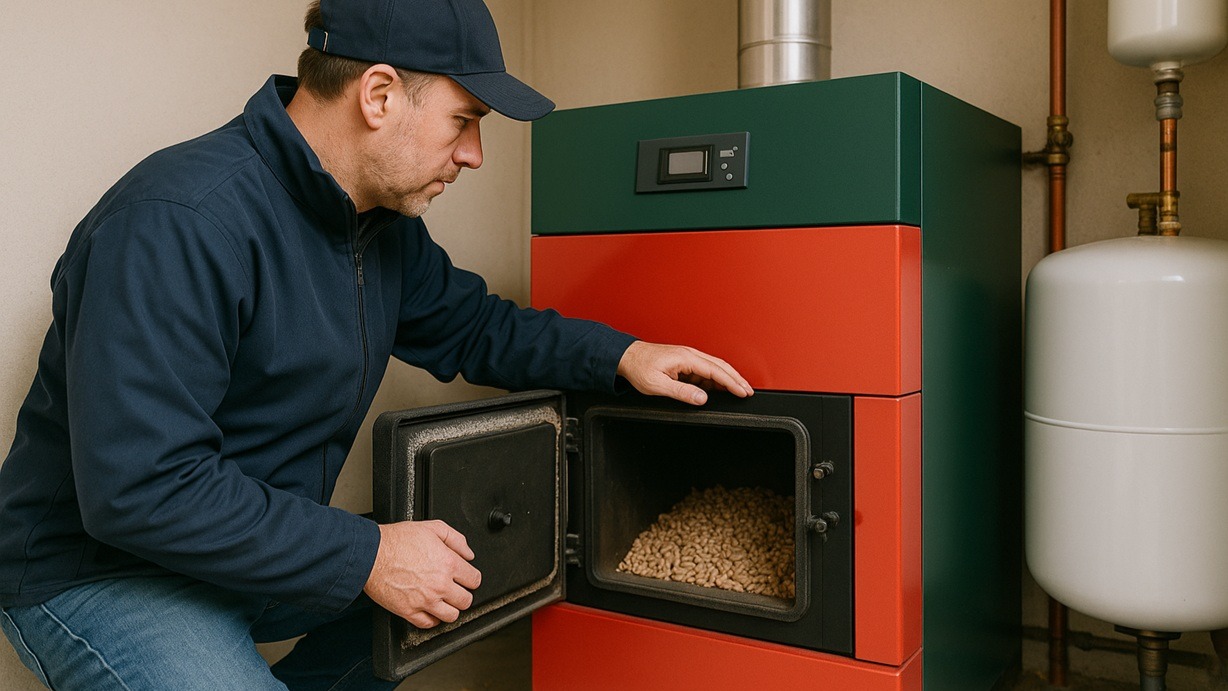
For years, heating in the UK meant gas if you had the connection, or oil if you didn’t. But times change, and so do priorities. As homeowners look for cleaner, more sustainable ways to stay warm, some are turning their heads towards biomass boilers for homes.
It’s not a new idea, far from it. The principle of burning wood for heat goes back centuries. What’s changed is the technology. Modern residential biomass heating brings automation, control, and efficiency that would have amazed previous generations. But before deciding if it’s the right move for your property, it’s worth knowing what’s really involved in owning and running one.
Understanding Biomass Boilers: The Basics
A biomass boiler works much like a traditional boiler. The difference lies in the fuel, instead of gas or oil, it burns organic material, mainly wood in one form or another.
Think of it as a controlled, highly efficient wood fire that provides both heating and hot water through your central heating system.
The Key Components
Every system shares the same core parts:
- Combustion chamber – where the fuel burns and heat is generated.
- Heat exchanger – transfers that heat to the system water.
- Ash collection – gathers residue from combustion; needs periodic emptying.
- Fuel store – keeps pellets, chips, or logs dry and ready.
- Feed mechanism – automatically or manually moves fuel into the chamber.
- Controller – manages the burn rate, temperature, and safety interlocks.
As with any wet system, performance relies on quality hardware: reliable pumps such as Grundfos, Lowara, or Stuart Turner; and good pipework and fittings from Polypipe and Fittings.
The Fuels That Power Biomass Heating
Most domestic systems in the UK use wood-based fuels, typically one of three forms:
1. Wood Pellets
Small, compressed cylinders made from sawdust and shavings. Clean, uniform, and ideal for automated systems. Delivered in bags or blown straight into silos, pellets are the most convenient choice for most homes.
2. Wood Chips
Used more often in large properties or farm setups. They’re cheaper per kWh but need serious storage and handling space, plus a large feed mechanism.
3. Logs
Best for homeowners with access to their own timber. Cheap, if you’re willing to do the work. Logs need seasoning, drying under cover for at least a year, to burn efficiently.
Whatever the type, dry fuel is essential. Damp wood wastes energy boiling off moisture instead of heating your home.
Biomass Boilers vs. Room Stoves
It’s worth separating biomass boilers for homes from simple log or pellet stoves. A stove heats the space it sits in. A biomass boiler feeds into a full central heating system, warming every radiator and cylinder, just as a gas boiler would.
For whole-home heating, the boiler is the proper tool for the job.
Main Types of Biomass Boilers for Homes
Automated Pellet Boilers
These are the closest thing to a “set-and-forget” experience. They handle ignition, fuel feeding, and sometimes ash removal automatically. They can run for weeks with minimal user input if you have a large hopper.
They do, however, rely on consistent pellet quality and regular delivery. Stick with ENplus A1 pellets and ensure your store stays dry.
Manual Log Boilers
Old-school charm meets modern engineering. You load logs once or twice daily. They burn in bursts, producing high heat output quickly, then release that energy into a thermal buffer tank for steady use.
They’re straightforward but hands-on, expect regular loading, ash removal, and cleaning. Ideal for homeowners with land or access to affordable wood.
Wood Chip Boilers
Not common in typical houses, but excellent for rural estates or larger properties. They’re fully automated but demand major space for storage and delivery. Their fuel’s cheap and often local, but the setup costs and scale make them better suited for semi-commercial use.
Fuel Storage and Handling: The Practical Side
This is where residential biomass heating differs from the convenience of gas.
Pellet systems need a dry storage area or hopper, ideally close to the boiler for automatic feeding. Think ahead about access for delivery trucks or pallet drop-offs.
Log systems need a large, ventilated store, usually outdoors, to season timber properly. It’s a bit like running your own mini fuel depot.
For chip systems, a purpose-built silo or shed is common, complete with an auger feed. It’s effective but not for the faint-hearted or tight on space.
Running Costs and Fuel Prices
Fuel cost depends on the type and region. Pellets are roughly comparable to oil per kWh, sometimes cheaper, and usually below LPG or direct electric heating. Logs are cheapest if self-sourced; bought-in, they’re still competitive.
Biomass prices tend to fluctuate less than fossil fuels, offering some long-term stability. The main variable is availability; rural areas tend to have better supply chains.
Advantages of Biomass Boilers for Homes
Renewable and Sustainable
The main draw is the renewable fuel source. Wood is carbon-neutral when grown and harvested responsibly. Each new tree planted offsets the carbon released when burning mature timber.
Carbon Savings
If you’re switching from oil or LPG, you can cut your home’s heating emissions by up to 80%. It’s one of the few renewable options that feels “traditional”, with flames, warmth, and tangible heat.
Lower Running Costs for Off-Grid Homes
For rural properties without mains gas, biomass can be more economical over time.
Reliable Heat Output
Unlike some electric systems that depend heavily on outside temperatures, biomass delivers steady performance.
Compatibility
A biomass boiler connects to standard heating circuits, radiators, and cylinders, easy pairing with components from Myson, Gledhill, or Kingspan.
Efficient operation also depends on dependable controls from Honeywell Home or Danfoss.
Challenges and Drawbacks
High Upfront Cost
Expect to spend more on installation than for a gas or oil system. You’re paying for both the boiler and the storage setup.
Space Requirements
Between the boiler, buffer tank, and fuel storage, you’ll need ample room, usually a utility area, garage, or outbuilding.
Ongoing Involvement
Fuel ordering, delivery, storage, and (for logs) manual loading take time.
Maintenance
Even automated systems need ash removal and annual servicing. Components like valves (Altecnic Ltd) and pumps must be kept in good working order.
Emissions and Compliance
You’ll need a proper flue and, if you’re in a Smoke Control Area, an appliance approved for that zone. Always check local council regulations before committing.
Suitability: When Biomass Makes Sense
Residential biomass heating shines in larger, rural homes off the gas grid. These properties tend to have space for the plant, easy delivery access, and higher heating demand, perfect for achieving payback faster.
If you’ve got a farmhouse, barn conversion, or detached home with outbuildings, you’re in prime territory for biomass. Compact urban properties, on the other hand, usually struggle with the logistics.
Key Considerations
- Space: Enough room for the boiler and storage.
- Fuel Supply: Reliable local suppliers or self-sourced wood.
- Budget: Installation costs vs. long-term savings.
- Lifestyle: Willingness to maintain, clean, and manage fuel.
Financial Support and Regulation
The old Renewable Heat Incentive (RHI) is now closed, but the Boiler Upgrade Scheme (BUS) still offers grants for eligible installations. It’s worth checking current eligibility at gov.uk.
Grants focus on off-grid properties meeting air quality standards. Always confirm before planning around them.
Living with Biomass: The Reality
When set up properly, biomass boilers run quietly, steadily, and reliably. The warmth feels consistent, more radiant, less dry than with gas.
You’ll spend a little time managing the system, but many find the process rewarding, knowing their heat comes from renewable material rather than fossil fuel.
Think of it as being more involved with your home’s energy, a blend of tradition and technology.
Engineering for Reliability
Behind every smooth-running system is solid engineering. From correct flue design to robust circulation, every detail counts.
- Pumps: Grundfos, Lowara, or Stuart Turner keep the water moving.
- Cylinders: Gledhill and Kingspan store your hot water efficiently.
- Radiators: Myson ensures balanced, even heat.
- Valves: Altecnic Ltd provides long-term dependability.
- Pipework: Polypipe and Fittings reduce heat loss and maintain flow rates.
When appropriately integrated, these components help maintain efficiency and lifespan.
Anecdote: Real-World Example
A client in rural Cumbria swapped an oil boiler for a 20kW pellet system. We fitted a Kingspan twin-coil cylinder, Grundfos pump, and Honeywell Home control. The initial outlay was steep, but after the first winter, they reported fuel bills down 35% and “no oil smell in the garden.”
That’s the kind of outcome you get when design, installation, and fuel quality all line up.
Conclusion: A Sustainable Heating Option That Rewards Engagement
There’s no doubt biomass boilers for homes can make a real dent in carbon emissions and running costs, particularly for rural, off-grid properties.
They demand more involvement than gas boilers, but for many, that’s part of the appeal. Residential biomass heating suits homeowners who value independence, sustainability, and a bit of hands-on practicality.
For everything else, cylinders, radiators, valves, pumps, and controls, Heating & Plumbing World provides the components to keep your system efficient and reliable.
If you’re ready to take the renewable route, get your design checked by a biomass specialist, and build the system around solid, proven parts. With care and the right setup, you’ll enjoy warm rooms, stable bills, and a heating system you can feel good about.