

Flue Gas Analysers: Testing Boiler Combustion Efficiency
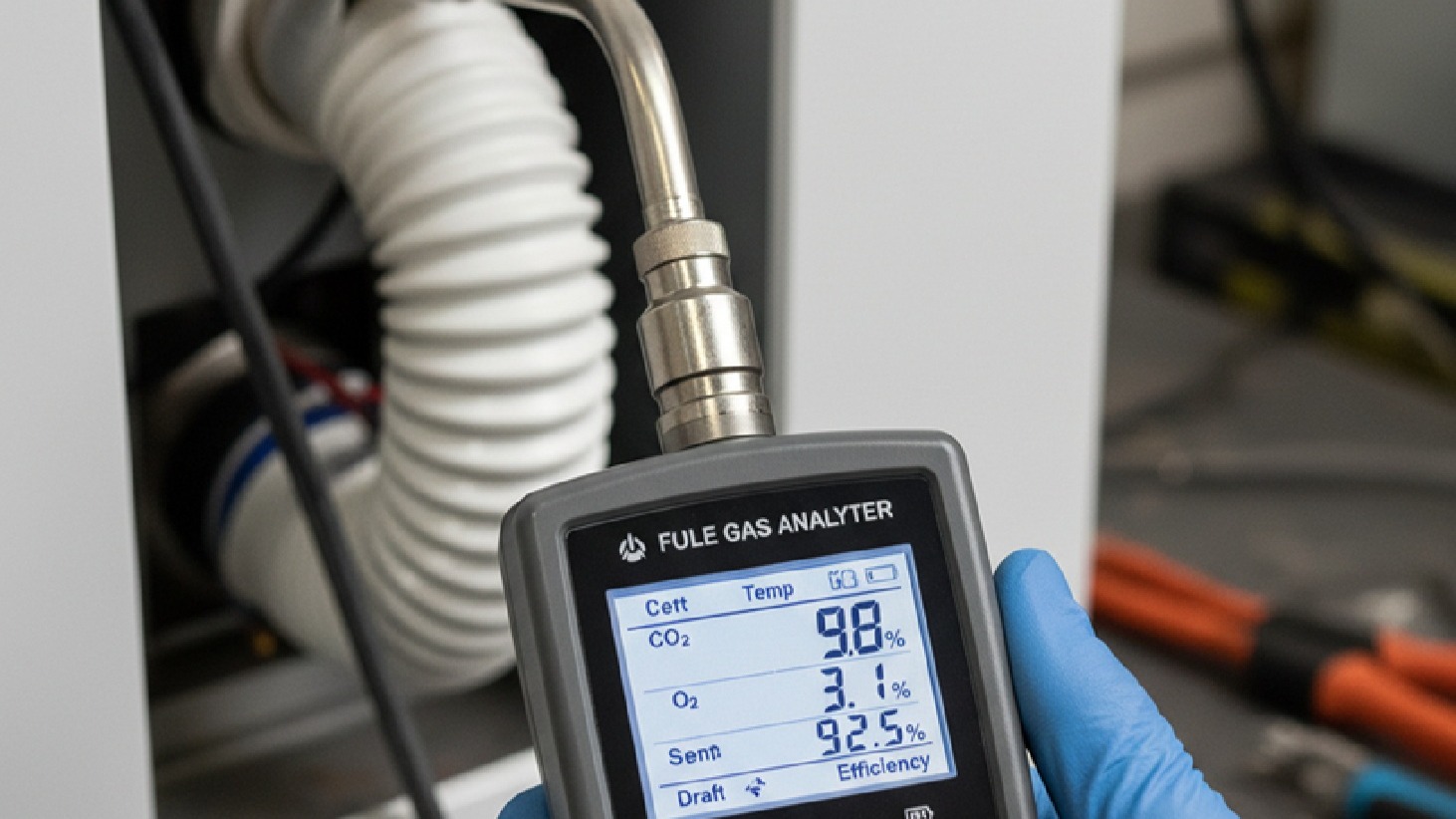
A properly functioning boiler doesn't just keep homes warm; it protects health, saves money, and prevents carbon monoxide poisoning. Yet thousands of boilers across the UK operate below optimal efficiency without anyone noticing until something goes wrong. Flue gas analysers solve this problem by measuring exactly what's happening inside the combustion chamber, turning invisible gases into actionable data.
These devices measure the composition of exhaust gases leaving a boiler, revealing combustion efficiency, potential safety hazards, and compliance with Building Regulations. For heating engineers, they're not optional equipment; they're essential diagnostic tools that separate guesswork from precision.
What Flue Gas Analysers Actually Measure
When fuel burns in a boiler, it produces a cocktail of gases. The proportions tell you everything about combustion quality. Flue gas analysers capture a sample from the flue and measure several key components:
Oxygen (O₂): Excess oxygen indicates too much air in the combustion mix, which reduces efficiency because you're heating air that doesn't contribute to combustion. Readings typically range from 3% to 10% depending on fuel type.
Carbon dioxide (CO₂): This shows how completely the fuel is burning. Higher CO₂ (within safe limits) generally means better combustion efficiency. Gas boilers should produce 10-12% CO₂, whilst oil boilers aim for 12-13%.
Carbon monoxide (CO): This deadly gas should be minimal or absent. Even small amounts (above 50ppm for gas, 200ppm for oil) indicate incomplete combustion and potential danger. Elevated CO levels mean immediate action is required.
Flue gas temperature: Excessively hot flue gases mean heat is escaping rather than transferring to the water system. This directly impacts efficiency.
Combustion efficiency percentage: Modern analysers calculate this automatically, typically showing values between 70% and 95% depending on boiler age and condition.
The relationship between these measurements reveals what's happening inside the combustion chamber. Low CO₂ with high O₂ suggests too much air. High CO with low O₂ points to insufficient air. These patterns guide adjustments that improve performance and safety. Think of it like blood test results, individual values matter, but the relationships between them tell the real story.
Why Combustion Testing Matters for Safety and Efficiency
Gas Safe Register requires combustion analysis on every gas boiler service. This isn't bureaucratic box-ticking, it's life-saving protocol. Carbon monoxide kills roughly 50 people annually in the UK and hospitalises thousands more. A flue gas analyser detects CO before concentrations reach dangerous levels.
Beyond safety, efficiency directly affects running costs. A boiler operating at 75% efficiency wastes £1 in every £4 spent on fuel. Over a heating season, that's hundreds of pounds disappearing up the flue. Testing identifies inefficiencies that adjustments can correct, often improving efficiency by 5-10 percentage points.
Boilers that appeared to work perfectly have tested at 68% efficiency due to incorrect gas pressure. After adjustment and retesting, efficiency jumped to 88%, a transformation that cut heating bills by nearly 20%. Without a flue gas analyser, that problem would have persisted indefinitely.
Building Regulations Part L requires new and replacement boilers to meet minimum efficiency standards. Compliance documentation must include combustion test results. For heating engineers, this means every installation and service needs proper testing with calibrated equipment.
How to Use a Flue Gas Analyser Properly
Accurate flue gas analyser readings depend on the correct technique. Rushed or improper testing produces misleading data that can mask serious problems.
Preparation
Ensure the boiler has been running for at least 10 minutes to reach a stable operating temperature. Cold starts produce skewed readings. Check that the analyser is calibrated; most manufacturers recommend calibration every 6-12 months.
Probe Placement
Insert the probe into the flue at the manufacturer's specified location, usually within 300mm of the boiler outlet. The probe must sit in the centre of the flue, not touching the walls, to capture representative gases. For condensing boilers, position carefully to avoid condensate affecting sensors.
Taking Readings
Allow 30-60 seconds for readings to stabilise. Modern analysers display real-time data and alert you when measurements are steady. Record O₂, CO₂, CO, flue temperature, and calculated efficiency. Many devices store results digitally or print receipts for customer records.
Interpreting Results
Compare flue gas analyser readings against manufacturer specifications and regulatory limits. Gas boilers should show CO below 50ppm (ideally under 10ppm), CO₂ between 9-12%, and O₂ around 3-5%. Values outside these ranges require investigation and adjustment.
Making Adjustments
If readings are unsatisfactory, adjust the air/fuel ratio according to manufacturer instructions. This typically involves adjusting the burner pressure or air damper. After each adjustment, wait for the boiler to stabilise and retest. Repeat until readings fall within acceptable parameters.
Quality heating controls from Honeywell and other reputable manufacturers make achieving optimal combustion easier, but verification with a flue gas analyser remains essential.
Choosing the Right Flue Gas Analyser
The market offers analysers ranging from £200 budget models to £2,000+ professional systems. Functionality varies dramatically.
Basic models measure O₂, CO, and flue temperature, calculating efficiency from these values. They suit occasional users or those on tight budgets but lack advanced features like data logging or Bluetooth connectivity.
Mid-range analysers (£400-£800) add CO₂ measurement, digital storage, and often include draft/pressure measurement capabilities. These represent the sweet spot for most heating engineers: reliable, feature-rich, and reasonably priced.
Premium systems offer wireless connectivity, smartphone apps, automatic report generation, and extended warranties. They're worth the investment for high-volume users who value time-saving features and comprehensive documentation.
Key Features to Consider:
Sensor technology: Electrochemical sensors are an industry standard. Check replacement costs and lifespan (typically 2-4 years).
Calibration: Some models offer field calibration; others require factory service. Factor this into total ownership costs.
Durability: Look for robust cases, protective probe storage, and water resistance. Analysers face serious abuse on job sites.
Battery life: A full day's testing requires 6-8 hours of battery. Lithium-ion batteries outlast older technologies.
Compliance: Ensure the device meets BS 7967 standards for combustion efficiency measurement.
Quality testing equipment from Heating and Plumbing World paired with reliable components like Grundfos pumps, ensures complete system performance.
Common Combustion Problems Flue Gas Analysers Reveal
Certain patterns appear repeatedly during testing, each pointing to specific issues.
High CO Readings
Carbon monoxide above safe limits usually stems from insufficient combustion air, blocked burners, or incorrect gas pressure. Dirty burners prevent proper fuel/air mixing. Blocked flues prevent exhaust evacuation, causing incomplete combustion. These problems require immediate attention; never leave a boiler operating with elevated CO.
Low Efficiency with High O₂
Excess air dilutes the combustion process and carries away heat. Causes include incorrectly adjusted air dampers, leaking combustion chambers, or oversized fan speeds. Reducing excess air improves efficiency without compromising safety.
Excessive Flue Temperature
If exhaust gases exceed 200°C on modern boilers, heat isn't transferring efficiently to the water system. This suggests scaled heat exchangers, incorrect water flow rates, or failed components. Descaling or component replacement typically resolves this.
Fluctuating Readings
Unstable measurements indicate intermittent problems, perhaps a partially blocked flue, variable gas pressure, or a failing gas valve. These issues require systematic diagnosis because they may not present consistently.
Low CO₂ Levels
Readings below manufacturer specifications suggest incomplete combustion or excessive dilution. Check for air leaks in the combustion chamber, incorrect burner setup, or fuel supply problems.
A particularly memorable case involved a boiler producing 800ppm CO, sixteen times the acceptable limit. The homeowner reported no symptoms, but the analyser revealed a life-threatening situation. Investigation found a bird's nest blocking the flue terminal. Without testing, that family faced serious danger.
An engineer serviced a seemingly well-functioning boiler in an elderly couple's home. Routine flue gas analyser readings showed 650ppm CO and an efficiency of just 71%. The couple had lived with gradually declining performance for years, attributing higher bills to rising fuel costs. The burner was severely sooted, and the heat exchanger showed heavy carbonisation. After a thorough clean, replacement of the burner assembly, and air/fuel ratio adjustment, readings stabilised at 8ppm CO and 89% efficiency. The couple's next heating bill dropped by £45 monthly, and £540 annually was saved by proper testing and maintenance.
Proper system design using quality plumbing fittings and components prevents many combustion issues, but regular testing catches problems that inevitably develop over time.
Maintaining Your Flue Gas Analyser
These instruments contain sensitive sensors that drift over time. Proper maintenance ensures accuracy and longevity.
Regular Calibration
Manufacturers specify calibration intervals, typically 6-12 months. Calibration involves exposing sensors to known gas concentrations to verify accuracy. Some devices offer field calibration kits; others require factory service. Budget £80-150 annually for calibration.
Sensor Replacement
Electrochemical sensors degrade with use and age. CO sensors typically last 2-3 years, O₂ sensors 3-4 years. Replacement costs vary (£50-200 per sensor), but degraded sensors produce inaccurate readings that compromise safety and compliance.
Physical Care
Store the analyser in its protective case when not in use. Keep the probe clean; condensate and soot buildup affect readings. Many manufacturers provide cleaning kits. Avoid dropping the unit or exposing it to extreme temperatures.
Battery Management
Lithium-ion batteries require proper charging habits. Avoid complete discharge and don't leave them plugged in continuously. Replace batteries when the runtime noticeably decreases.
Software Updates
Modern analysers receive firmware updates that improve functionality or add features. Check manufacturer websites periodically and follow updated instructions.
Leak Testing
Before each use, perform a leak test (most analysers have built-in procedures). This verifies the sampling system isn't drawing in ambient air, which would dilute readings and produce false results.
Proper maintenance protects your investment and ensures every reading is trustworthy. An uncalibrated analyser is worse than no analyser; it provides false confidence whilst missing real problems.
Regulatory Requirements and Documentation
Gas Safe Register mandates combustion analysis for all gas appliance servicing. Engineers must record results and provide copies to customers. Electronic record-keeping has simplified this requirement; many analysers now generate PDF reports via smartphone apps.
Documentation Should Include:
- Date and time of testing
- Appliance make, model, and serial number
- All measured values (O₂, CO₂, CO, flue temperature)
- Calculated efficiency
- Engineer details and Gas Safe registration number
- Any remedial actions taken
These records protect both the customer and the engineer. They demonstrate compliance, provide baseline data for future comparisons, and create an audit trail if problems emerge later.
Building Regulations Part L requires efficiency testing for new installations and boiler replacements. Without documented proof of compliance, installations don't meet regulatory standards. Local authority building control or approved inspectors may request this documentation.
For landlords, combustion testing forms part of the annual gas safety check required by The Gas Safety (Installation and Use) Regulations. Certificates must include confirmation that appliances are operating safely and efficiently.
The professional standards are clear: every service, every installation, and every safety check requires proper combustion analysis with calibrated equipment. This protects everyone involved and ensures heating systems operate as intended.
Integrating Flue Gas Analysis into Your Service Routine
Combustion testing shouldn't be an afterthought tacked onto the end of a service; it's central to the entire process. Effective service routines structure work around test results rather than treating testing as a final checkbox.
Start with an initial test before any work begins. This baseline reveals existing problems and guides your service priorities. If CO is elevated, address that immediately before proceeding with routine maintenance.
After completing service work, cleaning, adjustments, part replacements, retest to verify improvements. This before-and-after comparison demonstrates value to customers and confirms that your work achieved the intended results.
For customers with older boilers, combustion testing provides objective data about remaining lifespan and efficiency. A 15-year-old boiler testing at 72% efficiency presents a clear case for replacement, especially when compared to modern condensing boilers achieving 92-95% efficiency. The data makes the conversation about replacement straightforward and factual rather than sales-focused.
Quality components from manufacturers like Andrews and Halstead help maintain optimal combustion over time, but regular testing remains essential to verify performance.
Essential Tools for Professional Heating Engineers
Flue gas analysers transform invisible combustion processes into measurable data that protects safety, ensures compliance, and optimises efficiency. They detect carbon monoxide before it reaches dangerous concentrations, identify efficiency losses that waste hundreds of pounds annually, and provide objective evidence of boiler condition.
For heating engineers, these devices are non-negotiable professional tools. Gas Safe Register requires combustion analysis, Building Regulations demand efficiency documentation, and customers deserve assurance that their boilers operate safely and economically. Beyond regulatory compliance, flue gas analysers guide diagnostic work, verify repair quality, and demonstrate professional competence.
The investment in quality testing equipment pays for itself through improved service quality, reduced callbacks, and enhanced customer confidence. When paired with reliable components and proper maintenance practices, combustion testing ensures heating systems deliver the performance, efficiency, and safety that homeowners expect and regulations require.
Every heating engineer should view their flue gas analyser as essential as their spanners; it's the tool that reveals what's actually happening inside the boiler, turning uncertainty into precision and protecting both property and life.
For technical guidance on combustion testing equipment or boiler efficiency optimisation, contact us for expert support from Gas Safe-registered engineers.