

Foul Water vs Surface Water Drainage Charges
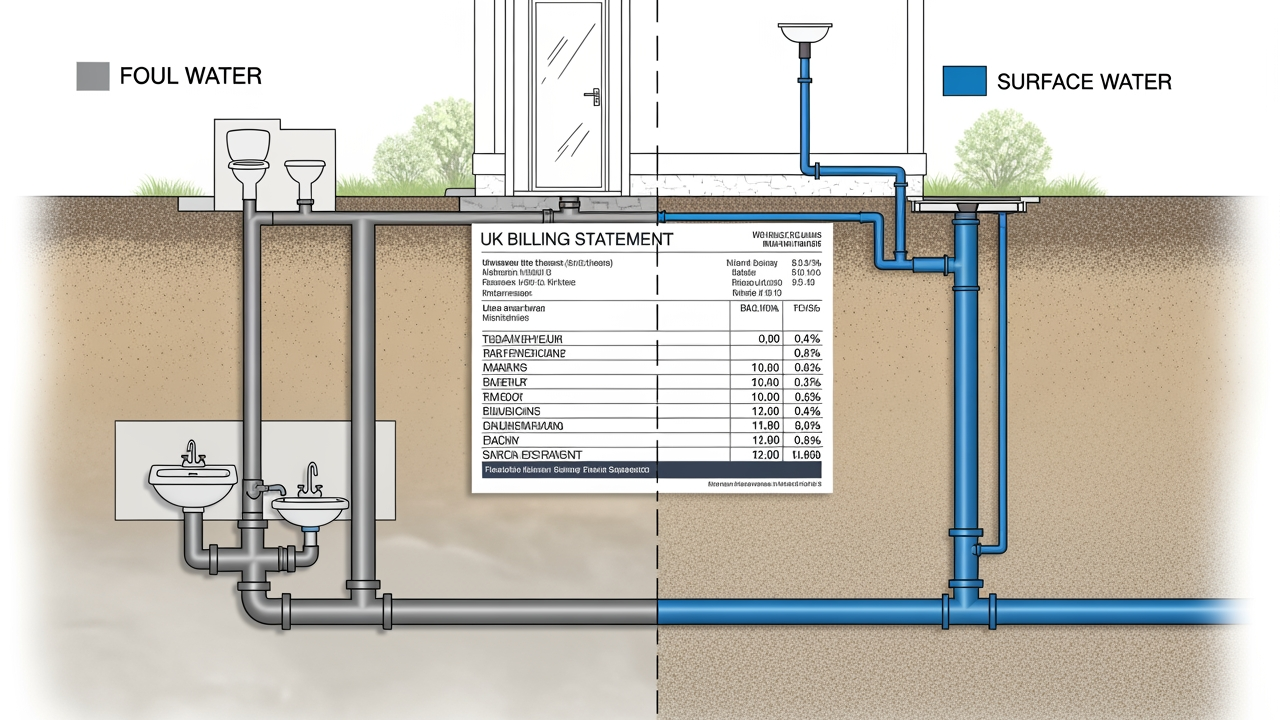
Your water bill includes two separate drainage charges that many property owners pay without understanding the difference. These charges, foul vs surface water drainage, fund distinct systems that handle different types of wastewater. Understanding this distinction can save you hundreds of pounds annually if your property qualifies for an exemption or reduction under the drainage charges UK regulations.
What Foul Water Drainage Actually Covers
Foul water drainage handles waste from your toilets, sinks, showers, baths, washing machines, and dishwashers. This contaminated water flows through dedicated pipes to sewage treatment plants, where it undergoes processing before returning to the environment.
Collection and transportation of sewage from your property, treatment at sewage works, maintenance of the foul water network, and disposal of treated effluent all fall under this charge.
Water companies calculate this charge based on your property's rateable value or a flat rate, depending on whether you have a water meter. For metered properties, the charge typically ranges from £95 to £165 annually, though this varies by region and water company.
Surface Water Drainage Explained
Surface water drainage manages rainwater from your roof, gutters, driveways, and paved areas. This relatively clean water flows through separate pipes, either to local watercourses, soakaways, or the public surface water sewer system.
Unlike foul water, surface water doesn't require treatment before discharge. The infrastructure simply channels rainfall away from properties to prevent flooding and directs it to rivers, streams, or the sea.
The annual charge ranges from £40 to £100 for most properties. You'll see this listed separately on your water bill as "surface water drainage" or "highway drainage."
Why These Systems Stay Separate
Modern drainage systems keep foul vs surface water drainage separate for critical reasons. Combined systems, where both types flow through the same pipes, overwhelm sewage treatment plants during heavy rainfall. This causes untreated sewage to discharge directly into rivers and coastal waters through Combined Sewer Overflows (CSOs).
Separation achieves several objectives: reducing the volume entering sewage works, allowing rainwater to reach watercourses naturally, minimising treatment costs and energy use, and preventing sewage backup into properties during storms.
Properties built after 1970 almost universally feature separate systems. Older properties may still use combined drainage, though many water companies incentivise separation through reduced charges. Quality pipework from manufacturers like Polypipe ensures reliable separation between foul and surface water systems.
How Water Companies Assess Your Charges
Water companies assume your property uses their surface water drainage system unless you prove otherwise. This assumption means roughly 30% of UK properties pay for services they don't actually receive.
Assessment considers property age and construction records, local drainage infrastructure, building control documentation, and site surveys when evidence is unclear.
If your surface water drains to a soakaway, watercourse, or private system rather than the public sewer, you shouldn't pay the surface water charge. Yet water companies collect an estimated £250 million annually in incorrect surface water charges because property owners don't realise they qualify for exemption.
When You Can Stop Paying Surface Water Charges
You qualify for exemption if your surface water drains to a soakaway on your property, a watercourse (stream, river, ditch), a private drainage system, or directly to ground through permeable surfaces.
Properties with these arrangements receive no service from the water company's surface water network, making the charge legally unenforceable once you provide evidence.
Many properties feature partial connections: some surfaces drain to a soakaway, while others use the public sewer. Your roof drains to a soakaway, but your driveway connects to the public system, or you've recently installed sustainable drainage solutions for part of your property. In these cases, you're entitled to proportional reductions in drainage charges UK billing.
Proving Your Drainage Setup
Water companies require evidence before removing charges. The strength of your evidence determines approval speed; weak documentation leads to rejected claims or requests for expensive CCTV surveys.
Strong evidence includes building control completion certificates showing soakaway installation, original property plans indicating drainage routes, photographs of soakaways, inspection chambers, or outfalls, written confirmation from the property developer, and land registry documents mentioning drainage arrangements.
If you lack documentation, a drainage survey costs £150-£400 but pays for itself within 2-3 years through eliminated charges. The survey maps your drainage system using dye testing or CCTV cameras to prove where water actually flows. Kingspan manufactures inspection chambers and drainage components that meet Building Regulations standards.
The Application Process
Each water company operates its own application process, though the general steps remain consistent:
Contact your water company's surface water drainage team; don't use general customer service numbers. Request their specific application form for surface water drainage rebates.
Complete the form with property details and describe your drainage system. Attach all supporting evidence as clear photographs or scanned documents.
Submit the application through their preferred method (online portal, email, or post). Request confirmation of receipt and a reference number.
Water companies must respond within 20 working days under industry standards. They'll either approve the rebate, request additional information, or reject the claim with reasons.
Approved rebates typically apply from the date you submitted your application, not retrospectively. However, if you can prove your drainage setup existed before you moved in and you've been incorrectly charged, some companies backdate refunds up to six years.
Common Rejection Reasons
Water companies reject approximately 40% of initial applications, usually for fixable reasons:
Insufficient evidence: Photographs of gutters or drains don't prove where water flows. You need images showing the actual soakaway, outfall point, or connection to a watercourse.
Partial connection: If any part of your surface water connects to the public sewer, companies may deny the entire rebate rather than offering a partial reduction. Challenge this, you're entitled to proportional charges.
Assumed connection: Companies sometimes claim your property "must" connect to their system based on local infrastructure, even when evidence proves otherwise. Persist with appeals backed by physical proof.
Historic records: Water companies occasionally produce old plans showing a public sewer connection. If you've since installed a soakaway or can prove the connection was never made, their records are irrelevant.
Appeals and Escalation
If your water company rejects your claim, don't accept the decision as final. Request a detailed explanation citing specific reasons for rejection.
Review their response against your evidence. Often, companies misinterpret photographs or overlook key documentation. Resubmit with clearer evidence or additional photographs addressing their concerns.
If the second rejection seems unreasonable, escalate to the Consumer Council for Water (CCWater). This free service handles complaints about water companies and achieves resolution in 85% of cases.
CCWater will review your evidence and the company's decision, then mediate between both parties. Water companies take CCWater involvement seriously, and many reverse decisions at this stage.
For unresolved disputes, the Water Redress Scheme (WATRS) provides free, independent arbitration. WATRS decisions are binding on water companies and can order refunds plus compensation for poor service.
Regional Variations in Charges
Surface water drainage charges vary significantly by region due to different infrastructure costs and rainfall patterns:
Thames Water charges £103 annually for surface water drainage, while Severn Trent charges £56. This £47 difference reflects infrastructure density and maintenance costs rather than service quality.
Scottish Water includes surface water drainage in overall charges without separate line items, making exemptions harder to identify and claim.
Northern Ireland Water operates differently again, with surface water charges calculated as a percentage of rateable value rather than flat fees.
These variations mean identifying your specific water company's policies matters more than general advice. Check your bill for the exact company name; some regions have multiple suppliers, then research their specific rebate process.
Impact of Property Improvements
Installing sustainable drainage solutions like permeable paving, rain gardens, or additional soakaways can qualify you for reduced charges even if you currently use the public system.
Water companies increasingly offer incentives for properties that disconnect from surface water sewers. These schemes reduce strain on ageing infrastructure while cutting your bills.
Before proceeding, confirm your water company offers rebates for the specific improvement, ensure work complies with building regulations, document everything with photographs and certificates, and apply for the rebate immediately after completion.
The typical payback period for a £2,000 soakaway installation is 15-20 years through eliminated surface water charges. However, the flooding prevention benefits and property value increase often justify the investment independently. Proper fittings ensure your soakaway connects reliably to downpipes and surface drains.
What Happens If You Move House
Surface water drainage rebates don't automatically transfer between owners. When you sell, the new owner pays standard charges until they submit their own application.
Include drainage documentation in your property information pack. This helps buyers claim their rebate quickly and can serve as a selling point, especially in areas with high water charges.
Conversely, when buying a property, check whether the previous owner claimed a surface water rebate. If so, request copies of their approval and supporting evidence. This streamlines your own application and confirms the drainage setup before completion.
Future Changes to Drainage Charges
Water companies are consulting on reformed charging structures that better reflect actual service usage. Proposed changes include:
Tiered surface water charges based on property size and impermeable surface area. Larger properties with extensive paving would pay more than smaller properties with gardens.
Automatic rebates using mapping technology to identify properties with soakaways or alternative drainage. This would eliminate the application process but might miss edge cases.
Incentive schemes offering rebates for installing water butts, rain gardens, or permeable surfaces. These would operate similarly to smart meter programmes in the energy sector.
These reforms could affect 8-10 million properties currently paying incorrect charges. However, implementation dates remain uncertain due to regulatory approval processes and infrastructure investment requirements.
Conclusion
The distinction between foul vs surface water drainage directly impacts what you should pay for water services. While foul water charges apply to virtually all connected properties, surface water charges depend entirely on where your rainwater actually drains.
If your property uses a soakaway, drains to a watercourse, or never connected to the public surface water system, you're paying for a service you don't receive. The average rebate of £70-100 annually compounds to £700-1,000 over a decade, enough to justify the hour spent gathering evidence and submitting an application.
Water companies won't proactively identify incorrect charges. The responsibility falls on property owners to understand their drainage setup, gather supporting evidence, and submit rebate applications. With 30% of UK properties potentially overcharged, checking your own drainage arrangement represents one of the simplest ways to reduce household expenses without sacrificing services you actually use.
For drainage components that comply with UK Building Regulations and ensure proper system separation, Heating and Plumbing World stocks a comprehensive range from trusted manufacturers.