

French Drains for Garden Water Management
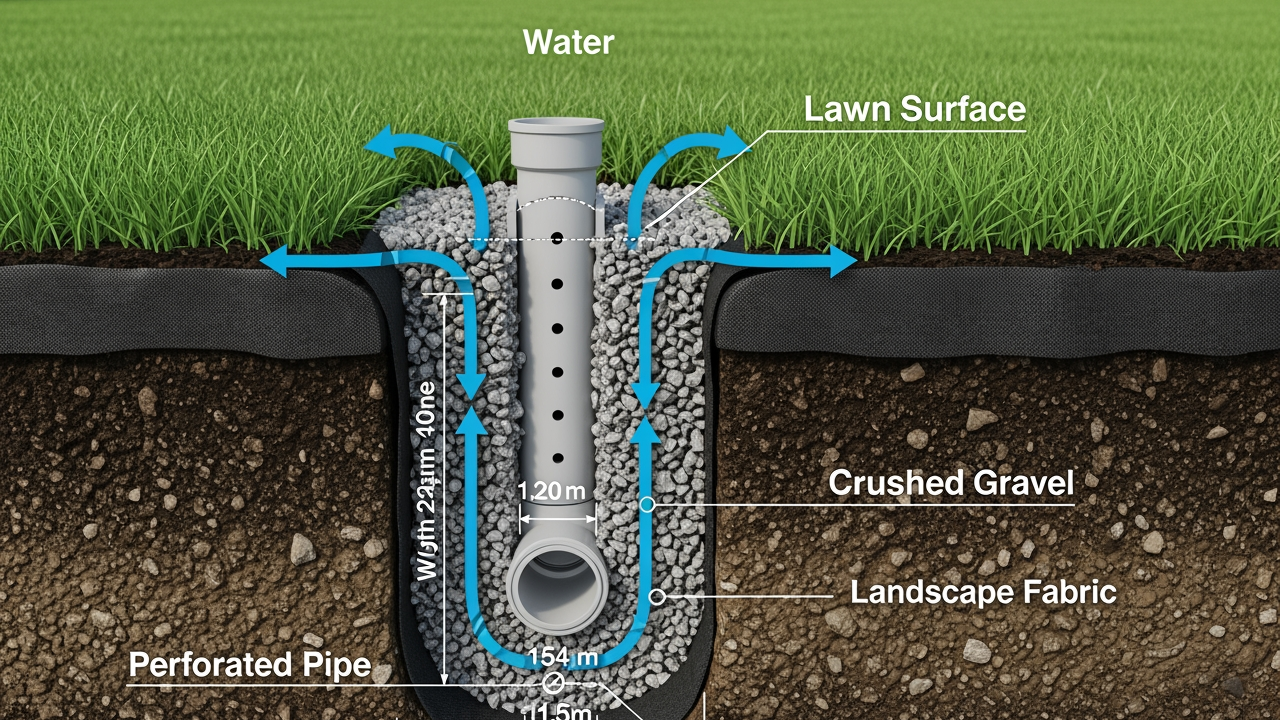
Standing water in your garden doesn't just kill plants; it undermines foundations, breeds mosquitoes, and turns outdoor spaces into unusable swamps. French drains solve this problem by intercepting water before it pools, redirecting it through gravel-filled trenches that let soil breathe while moving excess moisture away from vulnerable areas.
A properly installed French drain can handle 50-100 gallons per minute, enough to manage heavy rainfall in most residential gardens. The system works through gravity and permeability: water follows the path of least resistance into a perforated pipe surrounded by gravel, then flows to a designated drainage point away from structures and plantings.
How French Drains Actually Work
The mechanics are straightforward. You dig a sloped trench (minimum 1% grade), line it with landscape fabric, add 2-3 inches of gravel, place perforated pipe with holes facing down, cover with more gravel, wrap the fabric over the top, and backfill with soil.
Water seeps through soil into the gravel layer faster than it can penetrate clay or compacted earth. The gravel acts as a highway; its air pockets provide minimal resistance compared to dense soil. Water collects in this gravel, finds the perforated pipe, and gravity pulls it downslope to wherever you've directed the outlet.
The fabric prevents soil particles from migrating into the gravel over time. Without it, fine sediment clogs the air spaces within 3-5 years, turning your drain into an underground clay pipe that holds water instead of moving it.
Where to Install French Drains in Gardens
Low spots where water pools are obvious candidates. If you see standing water 6 hours after rain stops, that area needs drainage. Install the drain upslope from the pooling point to intercept water before it accumulates.
Along property boundaries where neighbouring yards slope toward yours. A French drain creates an invisible barrier that captures runoff before it floods your garden beds or lawn.
Around raised garden beds and retainers, where water concentrates at the base. The drain prevents saturation that causes wood rot, stone displacement, and root diseases in adjacent plantings.
Between buildings and gardens, where roof runoff or foundation drainage creates wet zones. Position the drain to intercept this water and redirect it away from both the structure and planting areas.
Upslope from patios or hardscaping where water naturally flows toward these features. The drain stops erosion and prevents water from undermining pavers or concrete.
Sizing Your French Drain System
Pipe diameter matters. For typical garden applications, a 4-inch perforated pipe handles most residential drainage needs. Upgrade to a 6-inch pipe if you're managing water from areas larger than 1,000 square feet or dealing with clay soil that drains slowly.
Trench depth should reach 18-24 inches for effective drainage. Shallow trenches work in sandy soil, but clay and loam need depth to intercept subsurface water moving through soil layers. The trench width typically runs 6-8 inches, wide enough for pipe and adequate gravel coverage.
Slope requirements are non-negotiable. Minimum 1% grade (1 inch drop per 8 feet of length) keeps water moving. Steeper slopes work better; a 2-3% grade prevents any settling water that could stagnate or back up during heavy rain.
Calculate trench length by following the natural water flow path from the problem area to your drainage outlet. Add 20% to account for curves and connections. A 50-foot straight run becomes 60 feet once you factor in realistic installation paths around existing features.
Material Selection for Longevity
Perforated pipe choices include corrugated plastic (flexible, easy to work with, lasts 30-40 years) and rigid PVC (more durable, better for straight runs, 50+ year lifespan). Corrugated plastic handles curves and obstacles better. Rigid PVC maintains grade more consistently but requires careful planning around turns.
Quality piping systems from manufacturers like Polypipe offer reliable drainage solutions designed for long-term underground applications. Their plastic piping systems provide the durability needed for demanding garden drainage installations.
Gravel specifications matter more than most installers realise. Use clean, angular stone, ¾ inch diameter works best. Round river rock looks attractive, but doesn't create the air pockets needed for rapid drainage. Crushed stone with sharp edges locks together whilst maintaining void spaces where water flows freely.
Avoid pea gravel (too small, clogs easily) and large decorative rock (too much space between stones, allows soil infiltration). The ¾-inch crushed stone hits the sweet spot between drainage capacity and structural stability.
Landscape fabric quality determines system lifespan. Commercial-grade non-woven geotextile fabric (4-6 oz weight) resists tearing during installation and prevents soil migration without restricting water flow. Cheap woven fabrics clog quickly. Skip the fabric entirely, and your drain fails within 5 years as silt fills the gravel.
Installation Step-by-Step
Mark your trench path with spray paint or stakes. Call utility location services, hitting a water line or electrical cable turns a weekend project into a £2,500 repair bill.
Dig the trench to your planned depth, maintaining a consistent slope. Check the grade every 6 feet using a level and measuring tape. A laser level speeds this process, but it isn't necessary for runs under 50 feet.
Compact the trench bottom by walking it or using a hand tamper. Loose soil settles over time, creating low spots where water pools instead of draining.
Line the trench with landscape fabric, leaving 12-18 inches of excess on each side to wrap over the top layer of gravel. Add your first 2-3 inches of crushed stone and level it.
Place the perforated pipe with holes facing down (counterintuitive but correct, water enters through the bottom where it accumulates in gravel). Connect pipe sections with couplings and seal them with waterproof tape. Secure connections require proper pipe fittings that resist ground movement and maintain watertight seals throughout the system's lifespan.
Cover the pipe with 4-6 inches of gravel. The pipe should sit in the bottom third of the gravel layer, not on top where it's less effective at collecting water.
Wrap the excess landscape fabric over the gravel, overlapping by at least 6 inches. This top layer prevents soil from washing down into the gravel during the first several rains before grass or ground cover establishes.
Backfill with excavated soil (if it's decent topsoil) or fresh topsoil if you removed clay or poor-quality earth. Mound the backfill 2-3 inches high, it will settle to grade level within a few months.
Outlet Options and Considerations
Daylight outlets where the pipe emerges at grade level work when you have a natural low point at your property edge or a slope that drops away. Add a stone splash pad at the outlet to prevent erosion.
Dry wells collect water underground in gravel-filled pits where it percolates into the surrounding soil. Size the dry well based on soil permeability; sandy soil needs less volume than clay. A typical residential dry well measures 3 feet in diameter and 3-4 feet deep, handling water from 50-75 feet of French drain.
Connection to storm drains requires permits in most municipalities. Check local codes before tying into public drainage systems. Some areas prohibit this entirely; others require backflow preventers or specific connection methods.
Rain gardens make excellent outlets, combining drainage function with ornamental value. Size the rain garden to hold the volume from a typical storm event, usually 200-300 gallons for every 50 feet of French drain.
Maintenance Requirements
French drains need minimal attention when installed correctly, but they're not zero-maintenance. Inspect outlets twice yearly (spring and autumn) to ensure water flows freely. Clear leaves, debris, or sediment that might block the exit point.
Flush the system every 3-5 years by running a garden hose into the upslope access point for 15-20 minutes. This pushes accumulated fine particles through the system before they compact and restrict flow.
Watch for surface settling along the trench line. Minor settling (1-2 inches) is normal in the first year. Add topsoil and reseed. Significant settling (3+ inches) suggests the gravel layer has compressed or shifted, possibly indicating inadequate initial compaction or fabric failure.
Root intrusion rarely affects garden French drains unless you've planted trees within 10 feet of the trench. Tree roots seek water and can penetrate pipe joints or crush corrugated plastic over time. Keep large woody plants at least 15 feet from drain lines.
Common Installation Mistakes
Insufficient slope tops the list. Many DIY installations fail because the installer didn't maintain a consistent grade. Water needs gravity to move; flat sections create pools where sediment settles and clogs develop.
The wrong gravel type undermines even properly sloped drains. Round decorative stone, pea gravel, or mixed aggregate with sand content all clog faster than clean crushed stone.
Skipping landscape fabric saves £15 and costs £1,600 when you excavate and rebuild the drain in 5 years. The fabric isn't optional; it's the component that determines whether your drain lasts a decade or half a century.
Inadequate depth in clay soil means the drain sits above the saturated layer where water actually moves. Clay doesn't drain vertically well, and water travels horizontally through soil layers. Your drain needs to intercept these layers, which requires depth.
Poor outlet planning leaves you with a functional drain that dumps water in an equally problematic location. Consider the entire water path from the problem area to the final destination before you start digging.
Integration with Other Drainage Solutions
French drains for garden water management work alongside other water management approaches. Combine them with proper gutter systems to manage roof runoff before it reaches garden areas. Direct downspouts to French drain entry points for comprehensive property drainage.
Pair French drains with swales (shallow vegetated channels) for surface water management. The swale handles immediate runoff from heavy rain; the French drain manages subsurface saturation and overflow from the swale during extreme weather.
Use French drains to supplement rain gardens in heavy clay soil. The drain prevents the rain garden from becoming a permanent pond whilst still allowing it to function as intended during normal rain events.
For properties requiring more sophisticated water movement solutions, pressure systems from brands like Stuart Turner can supplement gravity-fed drainage when water needs lifting to higher discharge points. Their mains boost systems handle scenarios where natural drainage slopes aren't available.
When integrating French drains with existing plumbing infrastructure, quality components matter. Manufacturers such as Danfoss supply reliable connection fittings and control valves that ensure drainage systems work harmoniously with other property services.
Cost Considerations
Material costs for a typical 50-foot French drain run £165-330, depending on pipe type and gravel quality. Add £80-125 for fabric, fittings, and outlet materials. DIY installation requires a weekend of labour, call it 16-20 hours for someone with basic landscaping experience.
Professional installation runs £20-40 per linear foot, or £1,000-2,000 for that same 50-foot drain. The premium buys proper slope calculation, experience with local soil conditions, and warranty coverage if the system underperforms.
The cost-benefit calculation favours installation when you consider alternatives. Replacing dead plants year after year costs money. Foundation repairs from water damage start at £4,000. Mosquito breeding grounds affect property value and livability. A £400 French drain that solves these problems pays for itself quickly.
Effective Garden Water Management Solutions
French drains transform waterlogged gardens into functional outdoor spaces by intercepting and redirecting water before it pools. The system's elegance lies in its simplicity, gravity, gravel, and perforated pipe working together to move water along the path of least resistance.
Success depends on three factors: adequate slope (minimum 1% grade), appropriate materials (¾-inch crushed stone and commercial-grade fabric), and proper outlet planning (water must have somewhere to go). Get these right, and your French drain will manage garden water for decades with minimal maintenance.
The investment, whether £250 for DIY materials or £1,600 for professional installation, prevents costlier problems down the line. Standing water kills more than plants. It undermines structures, creates health hazards, and makes outdoor spaces unusable. A properly installed French drain solves all these issues whilst remaining invisible beneath your lawn or garden beds.
Heating and Plumbing World stocks the essential drainage components, pipe systems, and connection fittings needed for professional-grade French drain installations. For technical advice on selecting appropriate materials for your specific soil conditions and drainage requirements, get in touch with specialists who understand effective water management installations.