

G3 Discharge Pipe Sizing: 15mm vs 22mm For Different Cylinder Capacities
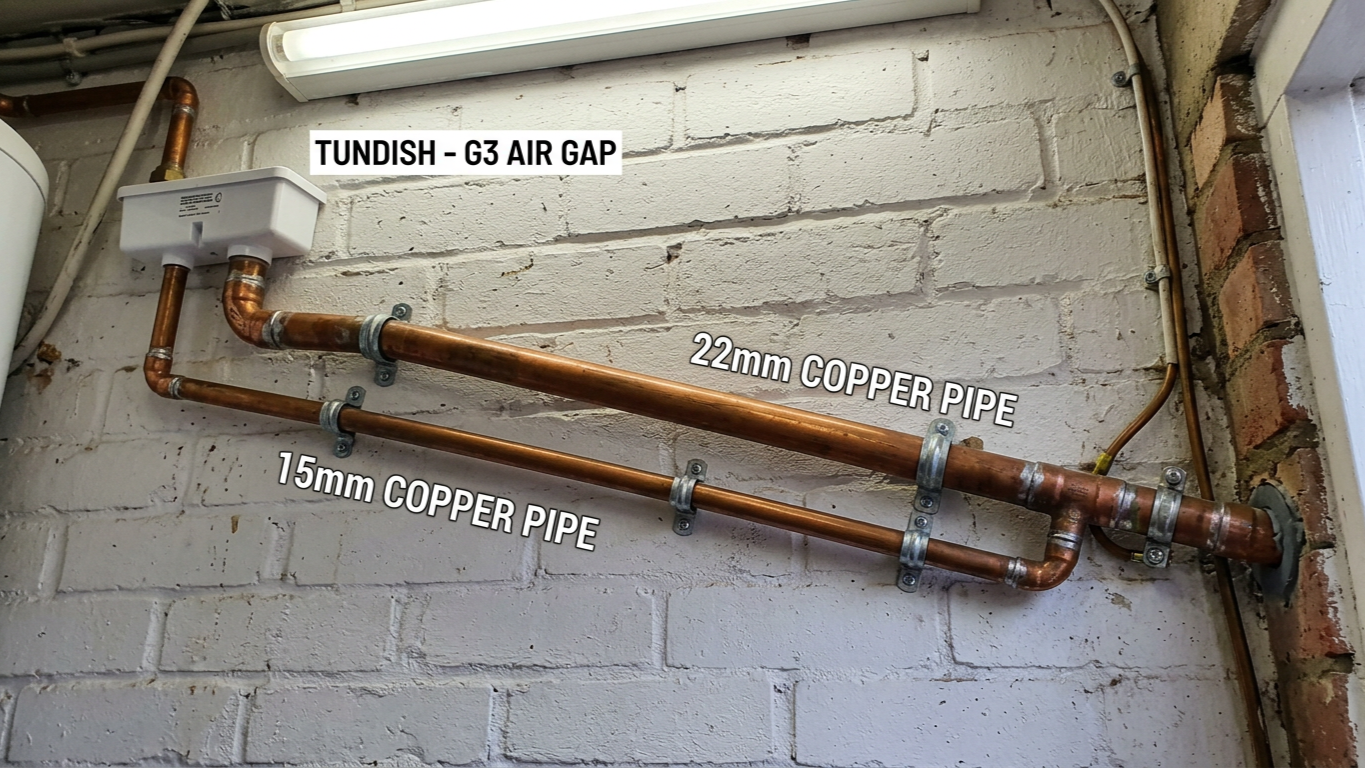
When you are installing or replacing an unvented hot water cylinder, one of the most critical safety decisions you will make is selecting the correct discharge pipe size. Get it wrong, and you aren't just risking a failed inspection. Instead, you're creating a genuine safety hazard that could result in severe scalding injuries or major property damage.
The regulations exist for a very good reason. They are specifically designed to ensure that if a safety valve activates, the discharge can safely escape without building dangerous pressure or spraying boiling water where it shouldn't. Think of discharge pipework like a busy motorway during rush hour. A standard 15mm pipe is a single lane, while a 22mm pipe is a dual carriageway. When a valve suddenly releases high-pressure steam and boiling water, you absolutely need that extra lane to prevent a dangerous, explosive traffic jam.
After years of maintaining unvented cylinders across commercial and residential properties, we've seen the terrifying consequences of undersized pipework. I once attended a callout where a 300-litre cylinder had restricted piping running over six metres to an external point. When the valve lifted during a control failure, the pipe couldn't handle the sheer volume. The result was water backing up, steam escaping at joints, and a very distressed homeowner. Proper G3 discharge pipe sizing prevents this entirely.
Understanding G3 Discharge Requirements
The Building Regulations Approved Document G3 sets out highly specific rules for your discharge pipe sizing. These aren't just helpful suggestions. They are strict legal requirements that must be met for any unvented hot water system installation in England and Wales. Scotland and Northern Ireland have equivalent regulations that follow highly similar safety principles.
When sourcing premium heating and plumbing supplies, you must remember that proper G3 discharge pipe sizing accounts for pressure drop, flow resistance, and extreme temperatures.
Accurate G3 discharge pipe sizing ultimately depends on three key factors:
- The total capacity of the cylinder, which dictates the potential discharge volume.
- The total length of the intended discharge pipe run.
- The total number of bends or elbows integrated into the pipework.
For most domestic installations, you are choosing between standard copper pipe sizes. The temptation is always to use the smaller option because it is cheaper and takes up less space. However, that decision must be driven entirely by the Building Regulations Approved Document G3, not installer convenience.
15mm Discharge Pipe: When It Is Adequate
A 15mm copper pipe is perfectly acceptable for smaller cylinder capacities and much shorter pipe runs. According to the official guidance, a 15mm copper pipe can be used for cylinders up to 500 litres capacity, but only under highly specific conditions.
For a perfectly straight vertical drop with absolutely no elbows, a 15mm copper pipe is acceptable up to a maximum length of 9 metres. However, that is a best-case scenario that rarely exists in real-world installations. The moment you introduce a bend to route a temperature and pressure relief valve, that maximum length reduces significantly.
Here are the maximum lengths for this pipe size:
- Up to 9 metres for a straight vertical drop with zero bends.
- Up to 6 metres with one elbow or bend.
- Up to 4.5 metres with two elbows or bends.
- Up to 3 metres with three elbows or bends.
- Up to 2 metres with four elbows or bends.
In practice, most domestic installations require at least two bends. You need one to route the pipe through the wall and another to direct it toward the safe discharge point. This immediately limits your run to 4.5 metres maximum. I've used this size successfully on compact installations, such as a 150-litre cylinder in an upstairs airing cupboard with a direct route through an external wall.
22mm Discharge Pipe: The Safer Default
For anything beyond the absolute simplest installations, a 22mm copper pipe becomes the most practical, sensible choice. The increased internal diameter dramatically improves flow capacity and massively reduces pressure drop. Consequently, this gives you much more flexibility in your routing.
With a 22mm copper pipe, you can run up to 18 metres on a straight vertical drop with no bends. That is exactly double the capacity of the smaller alternative. More importantly, the length reductions for adding elbows are far less severe when using a 22mm copper pipe.
Here are the maximum lengths for the larger pipe size:
- Up to 18 metres for a straight vertical drop with zero bends.
- Up to 12 metres with one elbow or bend.
- Up to 9 metres with two elbows or bends.
- Up to 7.5 metres with three elbows or bends.
- Up to 6 metres with four elbows or bends.
This incredible flexibility matters in real-world installations. Commercial properties, multi-storey homes, or properties with complex plumbing layouts frequently require longer runs with multiple direction changes. Trying to squeeze these demanding runs into tight limits creates unnecessary danger.
Cylinder Capacity And Pipe Sizing
The relationship between cylinder capacity and your required pipe size isn't perfectly linear. However, there are highly practical guidelines that work flawlessly for most installations.
For smaller cylinders up to 150 litres, the smaller pipe is generally adequate if the run is extremely short and direct. These smaller cylinders are incredibly common in flats, small homes, or properties with very low hot water demand. A typical installation might involve a cylinder tucked into a kitchen cupboard with the pipe running straight through the external wall behind it.
When you move to 200-250 litre cylinders, you are firmly in the territory where the larger pipe becomes the only sensible choice. The increased water volume means much higher potential discharge flow rates. If you are fitting a premium Tribune indirect cylinder, these mid-sized installations often involve more complex routing to reach a suitable discharge point. For anything above 300 litres, the larger pipe is effectively mandatory.
Practical Installation Considerations
The regulations provide strict minimum standards, but good practice often exceeds them significantly. When planning an installation, you must deeply consider what happens during an actual, explosive discharge event.
A temperature and pressure relief valve typically operates at 90-95°C and 6-7 bar pressure. When a temperature and pressure relief valve lifts, you are dealing with a violent mixture of water and steam under immense pressure. The pipe needs to convey this safely without creating dangerous back pressure.
Key installation factors include:
- Always slope pipes continuously downward to perfectly prevent water traps.
- Avoid unnecessary bends that create dangerous flow restrictions.
- Ensure the final discharge point is visible, safe, and away from windows.
- Fit a proper tundish air gap within 600mm of the initial valve.
The tundish air gap requirement is frequently misunderstood by novice installers. This small funnel-shaped fitting creates a vital break between the valve and the main pipe. It perfectly prevents backflow contamination while providing a clear visible warning if the system is discharging. Even when securing components like a Worcester trap washer set, ensuring proper drainage visibility is paramount.
Common Mistakes And How To Avoid Them
The most frequent error is heavily underestimating the total pipe length. Installers measure the straight-line distance from the cylinder to the discharge point and blindly assume that dictates the size. However, you absolutely must account for the actual route the pipe will follow, including all vertical and horizontal runs.
Another very common mistake is failing to account for elbows and bends entirely. Each direction change adds severe flow restriction. A run that theoretically fits the limits might actually fail once you factor in three or four bends. Sometimes, a faulty Gledhill temperature sensor might trigger a false discharge, but the pipework must still safely handle the flow.
On a recent commercial fit-out, an apprentice tried to save money by running a narrow pipe through four tight 90-degree elbows to reach an outside drain. During the commissioning test, the severe restriction caused boiling steam to blow straight back through the tundish air gap. It completely stripped the paint off the utility room wall, forcing us to rip it all out and upsize the entire run.
Some installers attempt to mix sizes, starting large and then reducing it for the final section. This totally defeats the purpose. The entire discharge path must be flawlessly sized for the maximum flow. Introducing a restriction anywhere in the system creates a massive potential failure point.
Sizing For Multiple Cylinders
When you are installing multiple cylinders in a commercial or large residential property, your calculations become significantly more complex. You simply can't combine discharge pipes from multiple cylinders without drastically increasing the overall pipe size.
If you have two 150-litre cylinders and you want to combine their discharge pipes, you must size the combined section as if it is serving a single 300-litre cylinder. That typically means stepping up to 28mm or even 35mm pipe for that specific combined section.
In commercial installations, we frequently run completely separate discharge pipes for each cylinder to deliberately avoid this complex math. If one unit experiences an over-pressure event caused by a failed IMIT capillary limit thermostat, having separate, isolated runs provides significantly better safety margins.
Testing And Commissioning
Once the pipework is fully installed, it must be thoroughly tested as part of the overall system commissioning. This isn't optional. It is a strict regulatory requirement and essential for property safety.
The pipe should be visually inspected to confirm it strictly meets the size and routing requirements dictated by the Building Regulations Approved Document G3. Check that it slopes continuously downward, has the required air gap fitted, and terminates at a perfectly safe, visible location.
During commissioning, you must manually operate the valve to verify that the discharge flows freely and doesn't create back pressure. Even if you are just replacing a Baxi temperature sensor on an existing system, you should see a strong, unrestricted flow from the discharge point. If the flow seems restricted or you hear unusual noises, the routing needs immediate review.
Documentation And Compliance
Every unvented cylinder installation requires a formal Building Regulations notification. The installer must be fully G3 qualified, and the work must be inspected and legally certified. Correct G3 discharge pipe sizing is a foundational part of this strict compliance.
Keep highly detailed records of your installation. This should include the cylinder capacity, pipe size, total pipe length, number of bends, and the precise location of the discharge point. This documentation proves compliance and provides essential information for future maintenance.
If you are replacing an existing cylinder, never blindly assume the existing pipework is adequate for the new unit. Cylinder capacities have drastically increased over the years, and older installations might completely fail to meet current safety standards.
Conclusion
Choosing between these two pipe sizes isn't about finding the cheapest option. It is entirely about meeting strict safety regulations and providing adequate protection for building occupants. For most installations, the larger pipe is the safer, significantly more flexible choice that beautifully accommodates longer runs and complex routing.
Small cylinders up to 150 litres can use the smaller pipe if the route is incredibly short and direct. However, once you introduce multiple bends or longer distances, up-sizing becomes absolutely necessary. For anything above 200 litres, the larger size should be your immediate default.
The additional material cost is completely minimal compared to the total installation cost, and the safety margin it provides is substantial. When a valve lifts during a genuine emergency event, you want pipework that handles the flow without any restriction. Undersized pipes don't just fail inspections. They create genuine safety hazards that easily result in scalding injuries. If you are ever uncertain about your calculations, always contact our technical team to ensure your next installation is fully compliant and perfectly safe.