

Gate Valves vs Ball Valves: Choosing the Right Shut-Off
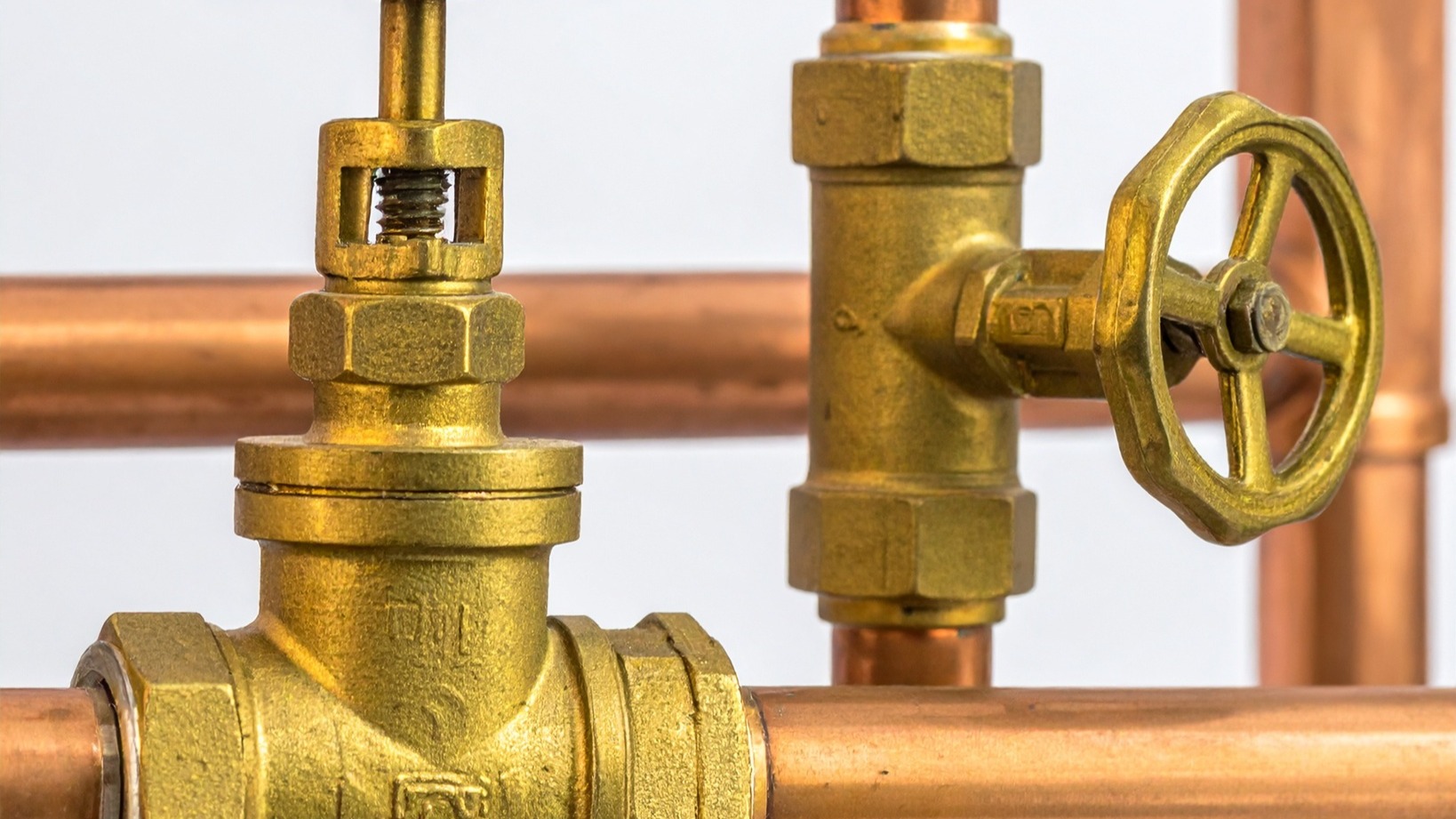
Choosing between gate valves vs ball valves determines whether your shut-off system works reliably for decades or fails when you need it most. Both serve as isolation devices in heating and plumbing systems, but they operate differently and excel in distinct applications.
The wrong valve choice costs more than the initial purchase price. A gate valve installed where you need frequent operation will wear out within months. A ball valve placed in a slurry line will seize up from particle buildup. Understanding the gate vs ball distinction prevents expensive replacements and emergency repairs.
How Gate Valves Work
Gate valves use a wedge-shaped disc (the gate) that slides perpendicular to the flow path. When you turn the handwheel, a threaded stem raises or lowers this gate into the flow stream. The gate sits completely outside the flow path when fully open, creating an unobstructed passage.
This design makes gate valves ideal for applications requiring minimal pressure drop. The straight-through flow path means the fluid encounters virtually no resistance when the valve opens fully. In large heating systems where every psi of pressure drop matters, this characteristic becomes critical.
Gate valves take multiple turns to open or close, typically 5 to 7 full rotations for a 2-inch valve. This slow operation prevents water hammer in systems where sudden flow changes could damage pipes or equipment. The gradual closure also makes gate valves suitable for systems with particulate matter, since the gate can slice through debris rather than trapping it against a seat.
The main weakness shows up with partial opening. Operating a gate valve at 50% creates turbulence that erodes both the gate and seat. This erosion causes leaks that worsen over time. Gate valves work best in two positions: fully open or fully closed.
How Ball Valves Work
Ball valves contain a spherical disc with a hole drilled through the centre. The ball rotates 90 degrees to align the hole with the pipe (open position) or block flow (closed position). A single quarter-turn moves the valve from fully open to fully closed.
This quick operation makes ball valves perfect for emergency shut-offs. When a pipe bursts or equipment fails, you need immediate isolation. The 90-degree turn takes seconds, not the extended cranking required for gate valves. It's like comparing a light switch to a dimmer knob; both control the flow, but one responds instantly while the other requires gradual adjustment.
Ball valves seal tightly in both directions. The ball presses against elastomeric or PTFE seats that create bubble-tight shut-off. This bidirectional sealing works regardless of flow direction, making ball valves versatile for systems where flow might reverse.
The design handles frequent operation better than gate valves. Ball valves in applications requiring daily cycling have operated for 15+ years without leaking. The rotating motion creates less wear than the sliding action in gate valves. Heating and Plumbing World stocks quality ball valves from leading manufacturers designed for demanding applications.
Pressure Drop Comparison
Both valve types offer minimal pressure drop when fully open, but the details matter for specific applications.
Gate valves create pressure drops of 0.1 to 0.3 psi in typical residential applications. This negligible resistance makes them ideal for main isolation points in heating systems where you want maximum flow capacity. The unobstructed flow path also prevents erosion at high velocities.
Ball valves show slightly higher pressure drops, typically 0.2 to 0.5 psi in the same applications. The ball's bore diameter is usually slightly smaller than the pipe ID, creating minor turbulence even when open. For most heating and plumbing applications, this difference doesn't affect system performance.
Full-port ball valves eliminate this concern. These valves have bore diameters matching the pipe size, creating pressure drops equivalent to gate valves. They cost 30-40% more than standard-port ball valves but deliver the same flow characteristics as gate valves with faster operation.
Temperature and Pressure Ratings
Gate valves handle higher temperatures and pressures than ball valves in most configurations. Bronze gate valves commonly rated for 200 psi at 150°C work reliably in commercial heating systems and high-temperature water applications.
The metal-to-metal seating in gate valves tolerates temperature extremes that would destroy ball valve seats. Gate valves specified for systems operating at 180°C perform where ball valve seats would fail within months.
Ball valves with PTFE seats typically max out at 180°C, though some high-performance seats extend this to 230°C. The elastomeric materials that provide excellent sealing at moderate temperatures degrade under sustained high heat. For residential and light commercial applications running below 100°C, this limitation rarely matters.
Pressure ratings favour gate valves in larger sizes. A 2-inch bronze gate valve commonly handles 200 psi, while comparable ball valves are rated for 150 psi. This difference becomes significant in multi-storey buildings or systems with high static pressures.
Maintenance Requirements
Gate valves need minimal maintenance when used correctly, fully open or fully closed. The main failure mode involves seat erosion from partial operation or debris caught between the gate and seat. Once leaking starts, you typically replace the entire valve rather than rebuilding it.
Stem packing requires occasional adjustment. As the packing ages, you'll notice water seeping around the stem. Tightening the packing nut usually stops minor leaks. Complete packing replacement takes 20-30 minutes and costs less than £10 in materials.
Ball valves require even less attention. The sealed design prevents debris from entering the valve body. The main maintenance involves exercising the valve quarterly, rotating it fully open and closed to prevent the ball from seizing. In systems with mineralised water, calcium deposits can lock the ball in place if left unmoved for years.
Replacing ball valve seats and seals is straightforward when needed. Most ball valves allow seat replacement without removing the valve from the line. This serviceability extends valve life significantly compared to gate valves, which typically require complete replacement when worn.
Installation Considerations
Gate valves need more vertical space than ball valves. The rising stem extends above the valve body by the full stroke length, typically 6-8 inches for a 2-inch valve. This vertical clearance requirement complicates installation in tight spaces or below floor joists.
Non-rising stem gate valves solve this problem by threading the gate onto the stem rather than lifting the stem. The stem rotates but doesn't rise, reducing clearance requirements. These valves cost 20-30% more but work well in confined spaces.
Ball valves need minimal clearance beyond the space to operate the handle. The compact design makes them ideal for tight installations. You can mount them close to walls, in valve boxes, or anywhere vertical space is limited. The handle orientation is adjustable on most models, allowing you to position it for easy access.
Both valve types install in any orientation, horizontal, vertical, or angled. Ball valves work equally well regardless of flow direction. Gate valves should have the stem vertical or angled upward to prevent debris from settling in the bonnet.
Cost Analysis: Gate vs Ball
Initial purchase prices favour gate valves for larger sizes. A 2-inch bronze gate valve costs £45-65, while a comparable ball valve costs £55-85. This gap widens for larger sizes; a 3-inch gate valve costs about 60% of an equivalent ball valve.
The cost equation shifts when you factor in service life and maintenance. Ball valves in applications requiring frequent operation last 2-3 times longer than gate valves. The initial premium pays back through extended service life and fewer replacements.
For isolation applications where the valve operates twice yearly (autumn/spring system startup/shutdown), gate valves offer better value. The lower initial cost and adequate service life (20+ years with minimal operation) make them economical choices for main shut-offs.
Ball valves make financial sense for frequently operated locations. Zone isolation valves, drain valves, and service connections that cycle weekly or daily justify the higher initial cost through superior reliability and longer service life.
Application Guidelines: Gate Valves vs Ball Valves
Use Gate Valves For:
Main system isolation - The primary shut-off for heating systems or water supplies, where you need maximum flow capacity and minimal pressure drop. These valves might operate twice yearly for system maintenance.
Large diameter lines - Pipes 2 inches and larger, where the cost difference between gate and ball valves becomes significant. The full-bore flow path justifies the slower operation time.
High temperature applications - Systems operating above 150°C where ball valve seats would degrade. Boiler isolation and high-temperature water systems benefit from gate valves' metal-to-metal seating. Quality boiler components from Andrews often pair with gate valves in high-temperature installations.
Slurry or debris-laden fluids - The guillotine action of the gate cuts through particles rather than trapping them. This makes gate valves suitable for systems with sediment or scale.
Use Ball Valves For:
Frequent operation - Any location requiring daily, weekly, or even monthly cycling. Zone valves, drain points, and service valves that see regular use.
Emergency shut-offs - Locations where you need rapid isolation. The quarter-turn operation stops flow in seconds during leaks or equipment failures.
Tight spaces - Installations with limited vertical clearance where a rising stem gate valve won't fit. The compact design works in valve boxes, below floors, or in crowded mechanical rooms.
Bidirectional flow - Systems where the flow direction might reverse or isn't consistent. Ball valves seal equally well regardless of flow direction.
Moderate temperatures - Applications below 120°C where PTFE seats perform reliably. This covers most residential and commercial heating systems with pumps from Grundfos or Lowara.
Common Mistakes to Avoid
Installing gate valves for frequent operation causes premature failure. A commercial building had gate valves fitted on boiler zone isolations that cycled daily. Within 18 months, every valve wept around the stem. The replacement project cost £4,000, three times what specifying ball valves initially would have cost. These locations need ball valves designed for repeated operation.
Operating gate valves partially open accelerates wear dramatically. The turbulence created at partial opening erodes both the gate and seat. If you need flow control, install a separate throttling valve downstream of the gate valve.
Choosing standard-port ball valves for high-flow applications creates unnecessary pressure drop. The cost difference between standard and full-port ball valves (£15-25) is minimal compared to the energy wasted pumping against the additional restriction over the system's lifetime.
Neglecting to exercise ball valves leads to seized valves. Calcium deposits and mineral buildup lock the ball in place after years without movement. Quarterly rotation prevents this issue and takes less than a minute per valve.
Making the Right Choice
Select valves based on operation frequency first, then consider other factors. A valve that cycles weekly needs a ball valve regardless of other considerations. A valve that operates twice yearly can be either type, with the decision based on cost, space, and temperature requirements.
For new installations, ball valves typically suit all service and zone isolation points, with gate valves reserved for main shut-offs and large-diameter lines. This approach balances cost against long-term reliability and maintenance requirements.
Retrofit situations often dictate valve type based on existing space constraints. Replacing a gate valve in a location with limited clearance might require switching to a ball valve. The installation labour saved by avoiding extensive pipe rework usually justifies the higher valve cost.
Quality fittings and valves from suppliers like Heating and Plumbing World ensure reliable performance regardless of which valve type you choose. For technical guidance on valve selection for your specific application, contact us for expert support.
Both gate valves and ball valves serve essential roles in heating and plumbing systems. Understanding their distinct characteristics helps you specify the right valve for each application, preventing premature failures and unnecessary maintenance while optimising system performance and cost.