

Gledhill StainlessLite Plus Range: Complete Product Guide
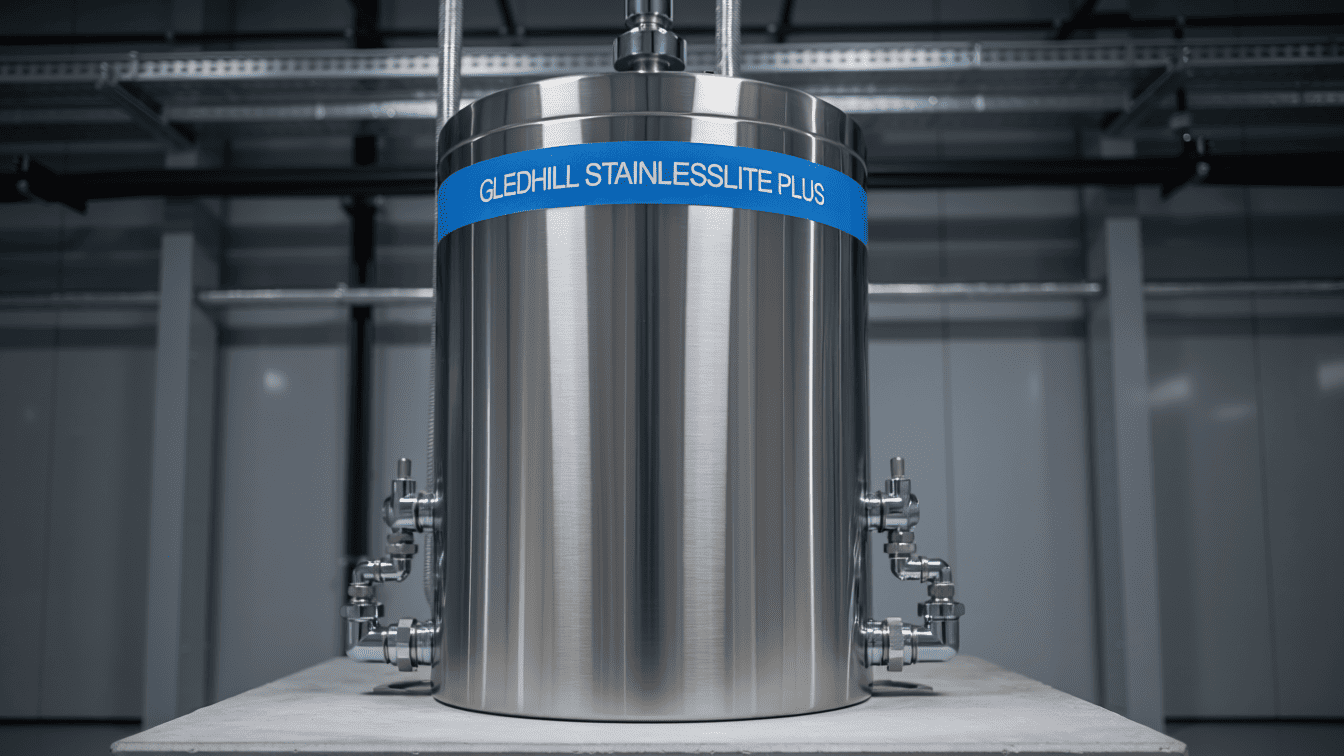
When it comes to unvented hot water storage, the difference between a highly reliable system and one that will have you back on-site within months often comes down to your initial cylinder choice. The Gledhill StainlessLite Plus range has rightfully earned its stellar reputation among heating engineers for very good reason. It is built around a duplex stainless steel construction that aggressively addresses the single biggest failure point in conventional cylinders: internal corrosion.
You do not want to be the engineer explaining why a cheap tank failed after four years. Understanding exactly what makes this range stand out in a highly crowded field, and knowing precisely how to specify the right model for different applications, separates professional installers from the rest of the pack.
What Sets The StainlessLite Plus Apart
The core innovation here isn't complicated. It is entirely about the material. Whilst traditional copper cylinders rely heavily on sacrificial anodes and careful water chemistry to prevent internal corrosion, this range uses a premium duplex 2205 grade stainless steel throughout the entire pressure vessel.
This isn't just a marketing gimmick. Think of duplex stainless steel like reinforced concrete. By combining the absolute best properties of two different structures, austenitic and ferritic steels, you get unparalleled ultimate strength. It offers roughly double the mechanical strength of standard stainless steel and provides exceptional resistance to chloride stress corrosion cracking.
In highly practical terms, you are looking at a cylinder that actively handles aggressive water conditions without the usual maintenance headaches. There are no anode replacement schedules and no gradual degradation from hard water areas. The duplex 2205 grade material simply doesn't react the way copper or cheaper steels do, protecting the client from devastating chloride stress corrosion cracking for decades.
The range also incorporates high-density polyurethane foam insulation as standard. We are talking about standing heat loss figures that easily meet and exceed current Building Regulations requirements, which is critical when you are specifying for new builds where SAP calculations actually matter.
Range Overview And Capacity Options
Gledhill tightly structures this range to cleanly cover most domestic and light commercial applications. You will find models spanning from 90 litres right up to 300 litres, offering both direct and indirect configurations depending on the primary heat source you are working with. Providing reliable unvented hot water storage requires matching these models accurately to the property.
Direct models suit properties with immersion-only heating or where you are deeply integrating solar thermal arrays. The heating element sits directly in the stored water, making it incredibly simple, effective, and extremely easy to commission.
Indirect models feature a high-efficiency coil for connection to a primary boiler or heat pump. Gledhill designed these heavily finned coils with rapid recovery in mind, so your clients aren't left with extended reheat times that frustrate them.
If you need guaranteed stock availability for an upcoming project, Heating and Plumbing World consistently supplies this entire range, giving trade professionals access to highly dependable cylinder solutions exactly when the site requires them.
Installation Considerations And Footprint
One massive aspect that often gets overlooked until you are physically on-site is floor loading. A 300-litre Gledhill StainlessLite Plus cylinder filled entirely with water weighs close to 350kg before you even factor in the dry weight of the cylinder itself. That massive load is not going on a standard first-floor timber joist without a proper structural assessment first.
The cylindrical design maximises internal volume whilst minimising the floor space, but you absolutely still need to plan your access routes. Getting a massive 300-litre tank up a narrow, winding staircase and through a tiny loft hatch isn't happening. That is a conversation worth having with clients long before ordering.
Clearance requirements around the cylinder aren't just about initial servicing. The expansion vessel, safety valves, and control thermostats all need dedicated access. You need roughly 500mm of clear space around the cylinder for highly practical maintenance. Give it less than that, and you are making life exceptionally difficult for whoever services it next.
Control Systems And Safety Features
Building Regulations Part G3 isn't optional. It is the rigid legal framework that governs every unvented installation in the country. This product range meets these complex requirements straight out of the box, but understanding what is actually protecting the system immensely helps with both installation and future fault diagnosis.
Implementing dual thermostat protection is a strictly standard feature. The operating thermostat controls normal heating cycles, whilst a high-limit safety stat completely cuts the power if the water temperature exceeds safe operational levels. If the secondary safety stat trips, you are actively looking for the serious fault that caused the severe overheating event, as these aren't simple reset buttons to push blindly.
The temperature and pressure relief valve is your absolute last line of defence. It is precisely calibrated to open at 90°C or 7 bar, whichever extreme comes first.
Furthermore, checking the expansion vessel pressure properly during the initial commissioning phase ensures that the internal diaphragm can safely handle the volumetric expansion that occurs naturally as the cold water heats up.
Connecting To Different Heat Sources
These indirect models work seamlessly with virtually any modern heat source, but the precise connection details drastically dictate system performance.
Boiler connections are incredibly straightforward. You are simply running flow and return pipework from the boiler directly to the cylinder coil. But coil sizing profoundly affects your recovery time. A standard 22mm primary circuit can only transfer so much heat. If you are working with a high-output boiler, you must consider whether the coil surface area is the limiting factor.
Heat pump integration requires much more careful consideration. Heat pumps operate at significantly lower flow temperatures than boilers, typically 45-55°C rather than 70-80°C. This automatically means slower heat transfer and heavily extended recovery times. These cylinders work brilliantly with heat pumps, but you might need to step up a capacity size just to maintain an acceptable reheat performance profile.
Maintenance Requirements And Longevity
Here is where the advanced construction genuinely pays huge dividends. Traditional copper cylinders in hard water areas definitely need anode replacement every three to five years. Miss that exact service interval, and you are looking at highly premature cylinder failure. This premium range doesn't use sacrificial anodes at all, as the core material itself provides the necessary resistance to chloride stress corrosion cracking.
Annual servicing must still cover checking the safety valves, verifying the expansion vessel pre-charge, and ensuring the dual thermostat protection is functioning securely without any signs of mechanical drift.
The warranty coverage strictly reflects the manufacturer's deep confidence in the vessel's construction. You are typically looking at 25 years on the pressure vessel itself. That is among the longest warranty periods in the industry, and it is only possible because the fundamental cylinder construction is incredibly robust.
Comparing With Alternative Cylinder Technologies
You have several distinct options when specifying unvented hot water storage. Copper cylinders featuring an internal enamel coating are cheaper upfront. They work absolutely fine in soft water areas with very good maintenance. But in hard water regions, you are gambling on their longevity. The enamel can easily crack through continuous thermal cycling, exposing the vulnerable copper underneath.
When looking at a premium unvented cylinder system as an alternative, material grades matter immensely. Some models use standard austenitic stainless steel, which is good, but it simply isn't as structurally strong as the duplex 2205 grade used here, which guarantees a 25-year service life.
Thermal stores offer some excellent advantages for highly complex systems running multiple heat sources, but they are not direct equivalents. They heavily store heat rather than pre-heated water, which heavily affects the final delivery temperature and requires completely different design thinking.
Sizing Calculations And Real-World Demand
Here is where theory meets reality. BS 6700 gives you baseline design guidance, but the actual hot water demand varies wildly based entirely on occupant behaviour.
A useful rule of thumb allows 35-50 litres per person per day for standard domestic use. But if you have power showers or massive luxury baths, those figures climb staggeringly quickly. A 150-litre bath at 40°C easily requires roughly 100 litres of stored 60°C water when mixed heavily with cold.
Simultaneous demand is the absolute killer. Two power showers running at 10 litres per minute will entirely drain a 150-litre cylinder in under eight minutes if there is no active recovery happening. The indirect models recover whilst delivering, which wonderfully extends the usable capacity, but only if the primary heat source can actually keep up.
Installation Best Practices
Beyond the manufacturer's instructions, a few practical points make these specific installations significantly cleaner and far more reliable.
Support the weight properly. The cylinder needs to sit on a firm, completely level base strictly capable of handling the heavily loaded weight. Pre-charge the expansion vessel perfectly before filling the system, because once the system is full, you cannot easily adjust the vessel pressure without draining everything down.
When fitting a smart trv or upgrading the overall zone controls, commission the cylinder stats properly. Set the operating thermostat to 60°C minimum to actively prevent Legionella growth, and verify the high-limit stat during your handover. Don't ever assume the factory settings are flawlessly correct.
Common Issues And Troubleshooting
Even impeccably installed systems can develop frustrating faults. If the safety valve is constantly dripping, it usually indicates expansion vessel failure or an incorrect initial pre-charge.
I was recently called out to a luxury 5-bedroom property where the homeowner complained of a constantly dripping discharge pipe. The original installer had completely failed to pre-charge the expansion vessel during the rushed commissioning phase. Because the vessel couldn't absorb the thermal expansion, the safety valve was doing all the heavy lifting, dumping water every morning. It took ten minutes to correctly pressurise the vessel, completely solving a problem the homeowner had suffered with for six months.
If you are experiencing exceptionally slow recovery, it could be a failed heating element, a heavily scaled coil, or inadequate primary flow.
Before tearing the cylinder apart, always verify that your external heating system components are functioning correctly. Boiler faults and seized primary pumps very frequently present themselves incorrectly as cylinder problems.
Integration With Modern Heating Controls
Modern heating systems increasingly rely on advanced smart controls and dynamic weather compensation. The Gledhill StainlessLite Plus works seamlessly with these systems because it is fundamentally a superbly insulated storage vessel with highly standard control interfaces.
Zone valves used for priority hot water heating are highly straightforward to integrate. When the cylinder calls for heat, the primary zone valve instantly diverts all boiler output directly to the cylinder until it is satisfied.
Using intelligent central heating components danfoss integrates beautifully, providing both precise control and vital remote monitoring functions. These modern controllers also easily manage the essential weekly high-temperature pasteurisation cycles required for strict bacterial safety.
Conclusion
The Gledhill StainlessLite Plus range represents a mature, highly proven approach to domestic water storage. The advanced material construction permanently addresses the fundamental weakness of older cylinders without introducing unnecessary complexity or exotic maintenance schedules.
For busy heating engineers and professional installers, it is a premium specification that severely reduces your callbacks and frustrating warranty claims. The 25-year pressure vessel warranty isn't marketing fluff; it reflects genuine, hard-earned confidence in the exceptional material durability.
Sizing remains incredibly critical. No cylinder will ever perform well if it is heavily undersized for the application. Take the time to fully understand actual demand patterns. If you need any assistance matching these premium cylinders to your specific project constraints, contact our support team today for expert technical advice.