

Ground Source Heat Pumps: Costs and Benefits
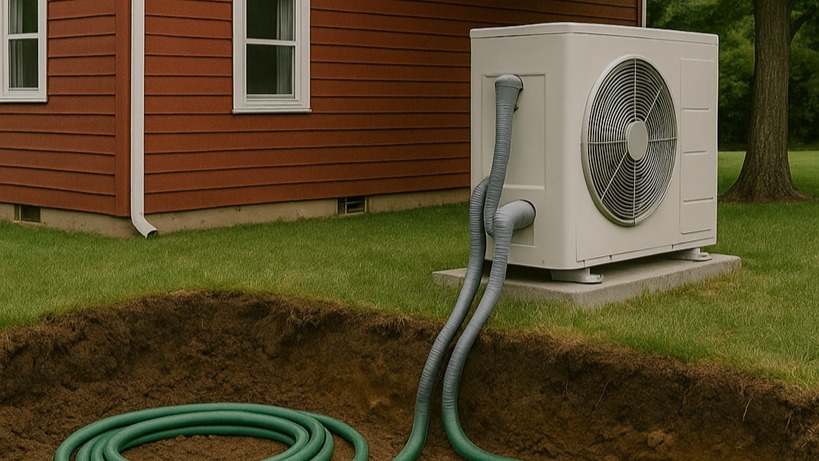
Across the UK heating industry, the move toward renewable technology has accelerated rapidly in the past decade. For installers, specifiers, and facilities managers, the ground source heat pump has become one of the most reliable, long-term options for decarbonising buildings. Yet the conversation always begins with two critical questions: what are the ground source heat pump benefits, and what is the true ground source heat pump cost?
The answer is more nuanced than a simple price tag. For professionals designing and maintaining heating systems, understanding the principles behind ground source technology, how it performs, where it delivers best results, and what installation factors affect its payback is essential. This knowledge ensures every system you install or recommend provides efficiency, comfort, and value for decades.
How Ground Source Heat Pumps Work
A ground source heat pump (GSHP) operates on a simple thermodynamic cycle. Instead of burning fuel, it transfers heat from one place to another, drawing energy from the relatively stable temperature of the ground. Below the frost line, soil temperature in most parts of the UK remains around 10–12°C year-round. This steady heat source enables the system to operate efficiently even during freezing winter conditions.
A loop of pipework is buried either horizontally in trenches or vertically in boreholes. Inside that pipe circulates a water-glycol mixture, which absorbs low-grade heat from the ground. The warmed fluid enters the heat pump unit, where the refrigerant circuit extracts and amplifies that energy. Through compression, the refrigerant’s temperature rises sharply, and the resulting heat is transferred into the property via radiators, underfloor circuits, or a hot-water cylinder.
The compressor uses electricity to perform this process, but for every kilowatt of electricity consumed, the system can generate three to four kilowatts of heat energy. This ratio, called the Coefficient of Performance (COP), is what makes GSHPs so efficient. In well-designed systems, the COP can reach 4:1 or higher.
A Practical Analogy
To explain it in practical terms, think of a GSHP as a fridge working in reverse. A refrigerator extracts heat from the food inside and releases it into your kitchen. A ground source heat pump extracts heat from the ground and releases it inside the property. Both rely on evaporation and condensation within a sealed refrigerant circuit; the difference lies in where the heat is being delivered.
This simple concept hides a complex reality: performance depends heavily on ground conditions, loop design, and correct sizing of components such as expansion vessels, pumps, and controls. That’s why professional knowledge and product selection matter as much as the underlying technology.
Components That Make Up a Ground Source System
Every GSHP installation relies on a network of well-chosen components working in harmony. The quality of these parts directly affects reliability, service life, and energy performance.
The Ground Loop
The buried pipework forms the backbone of the system. It can be installed in two configurations:
- Horizontal loops, laid in trenches about 1.5 to 2 metres deep, where land area allows.
- Vertical boreholes, drilled to depths of 70 to 150 metres, are used where space is limited.
The loop material is usually high-density polyethene with fusion-welded joints to prevent leaks. The loop circulates a glycol-based antifreeze fluid, which must be carefully balanced to protect against freezing without reducing thermal transfer.
The Heat Pump Unit
Inside the property sits the main heat pump assembly, containing the compressor, evaporator, condenser, and expansion valve. Brands differ in design, but the principle is identical: the refrigerant absorbs low-grade heat from the ground loop and upgrades it to a higher temperature for the heating circuit.
The Circulation Pump
A high-efficiency circulator drives the glycol mixture through the buried loop and the heat exchanger. For dependable operation, trade professionals often specify variable-speed models from Grundfos or Lowara. The ability to modulate flow according to demand improves efficiency and extends component life.
The Expansion Vessel
Pressure stability is vital in any closed-loop heating system. A robust expansion vessel, such as those supplied by Altecnic Ltd, accommodates changes in volume as the fluid expands and contracts with temperature. Without it, pressure fluctuations can trigger system faults or damage seals.
The Buffer Cylinder and Thermal Store
To smooth out variations in demand, many systems include a buffer vessel or a combined thermal store. Manufacturers such as Gledhill and Kingspan offer insulated cylinders designed for use with renewable heat sources. These allow multiple heat inputs, such as solar or backup boilers, to work in tandem with the GSHP.
The Controls and Valves
Smart controls, zoning, and weather-compensating thermostats make a huge difference to running efficiency. Trade-trusted names like EPH Controls, Honeywell, and Danfoss provide a range of options suited to ground source systems. When integrated properly, these maintain a low flow temperature and maximise seasonal performance.
Real-World Installation Case Study
At a commercial care facility in Yorkshire, a facilities team recently replaced three ageing gas boilers with a 100-kilowatt ground source heat pump array. The project involved drilling multiple boreholes to 120 metres, connecting them to a manifold, and linking them with a buffer tank and Altecnic expansion vessel for stable pressure.
Post-commissioning data revealed a 58 per cent reduction in annual energy costs and a near-50 per cent cut in CO₂ emissions. More importantly, the heating output is constant and silent. With Grundfos variable-speed pumps handling the loop circulation, maintenance requirements are minimal. For that site, the payback period is projected at under ten years, an excellent demonstration of the long-term ground source heat pump benefits.
Understanding Ground Source Heat Pump Costs
When evaluating ground source heat pump cost, it’s important to separate capital expenditure from lifetime value. The upfront investment includes several major elements:
- Drilling or trenching for the ground loop.
- Supply and installation of the heat pump unit.
- Ancillary components such as buffer vessels, expansion vessels, pumps, and controls.
- Commissioning, glycol charging, and balancing.
Domestic systems typically range between £12,000 and £30,000, depending on property size and soil conditions. Larger commercial projects can easily exceed £100,000, but these often serve multiple zones or entire building complexes.
Although this is higher than an equivalent gas boiler installation, energy efficiency offsets that difference over time. With a performance ratio of 3:1 or 4:1, the running cost per kilowatt-hour of delivered heat is far lower.
Electricity remains the only input, so the operational cost is predictable and less affected by gas price volatility. When paired with off-peak tariffs or on-site solar generation, annual savings can be dramatic.
Long-Term Financial Considerations
Professionals evaluating the ground source heat pump cost for a client should look beyond installation expense. The full economic picture includes:
- Operating Cost Savings: Lower energy consumption results in reduced running costs year after year.
- Maintenance Costs: GSHPs have fewer moving parts than combustion boilers, reducing service requirements.
- System Longevity: The buried ground loop can last over half a century; the heat pump unit itself often exceeds 20 years.
- Government Incentives: The Boiler Upgrade Scheme currently offers grants of up to £7,500 for eligible installations in England and Wales, cutting payback time dramatically.
- Carbon and Compliance Value: As carbon pricing rises and efficiency standards tighten, low-emission systems increase property value and future compliance.
For commercial clients, particularly those managing large estates or social housing stock, these long-term savings and regulatory advantages are often the deciding factors.
Technical Advantages and Benefits
The practical ground source heat pump benefits extend far beyond efficiency figures. For installers and specifiers, they include tangible operational and design advantages.
Consistent Year-Round Performance
Unlike air source systems, which lose efficiency during cold snaps, GSHPs benefit from stable underground temperatures. Whether the outside air is minus five or fifteen degrees, the soil remains relatively constant, ensuring consistent output.
Enhanced System Efficiency
A correctly installed GSHP can reach seasonal performance factors (SPF) of 3.5 or higher. That means 350 percent efficiency over the year, far beyond any condensing gas boiler.
Low Maintenance Requirements
Routine inspection of filters, pressure levels, and glycol concentration is typically all that’s needed. Components such as Altecnic vessels and Grundfos pumps provide reliability proven across commercial plantrooms.
Reduced Carbon Footprint
Every kilowatt of renewable heat reduces carbon emissions. Over its lifespan, a domestic GSHP can cut several tonnes of CO₂ compared to a fossil-fuelled system.
Quiet Operation
With no combustion or external fan noise, GSHPs suit environments like schools, hospitals, and residential developments where noise control matters.
Integration Flexibility
Ground source units pair seamlessly with thermal stores and cylinders from Gledhill or Kingspan, enabling designers to combine heat pumps with solar thermal collectors, biomass, or backup boilers.
Engineering Considerations Before Installation
Before specifying or installing a GSHP, a few essential design checks should always be completed.
Ground Conditions and Space
Thermal conductivity and available land area determine the loop design. Clay, sand, and chalk behave differently. Where open fields exist, horizontal loops may suffice; in urban or constrained sites, vertical boreholes are often the only option.
Building Load and Heat Emitters
Heat loss calculations should dictate the system size. Oversizing reduces efficiency and capital value, while undersizing leads to cold complaints. Radiators must be selected for low flow temperatures, ideally 35–45°C. Underfloor systems deliver the best results due to their large surface area.
Pressurisation and Expansion
Every closed-loop installation requires a pressure-stabilising device. A correctly sized Altecnic expansion vessel protects against pressure spikes and helps maintain glycol balance throughout the circuit.
Circulation Pump Sizing
Flow rate affects heat exchange efficiency. An undersized pump results in poor performance; an oversized one wastes electricity. Variable-speed circulators from Grundfos or Lowara allow precise control and energy savings.
Control Strategy
Smart zoning and weather compensation provided by Danfoss, EPH Controls, or Honeywell equipment help maintain low flow temperatures and avoid unnecessary compressor cycling.
Common Mistakes and How to Avoid Them
Ground source technology is forgiving, but certain design errors can compromise performance.
Undersized Ground Loops: This is the most frequent mistake. Inadequate loop length leads to ground freezing, poor efficiency, and eventual system shutdowns. Always perform accurate thermal response testing and ground conductivity calculations.
Incorrect Pump or Vessel Selection: Oversized pumps waste power and cause noise. Undersized expansion vessels result in pressure alarms. Sizing must be calculated precisely for system volume and temperature range.
Poor System Balancing: Air trapped in the loops or distribution circuits will destroy COP performance. Use reliable fittings such as Fittings products for leak-free joints and easy venting.
Inadequate Commissioning: Without proper glycol concentration checks and performance monitoring, the system will never meet design expectations. Every GSHP should be commissioned with calibrated instruments and data logging.
Lack of User Education: Many clients misunderstand control systems. Clear handover documentation and training prevent unnecessary call-backs.
Human Analogy: The Circulatory System
A useful way to explain system dynamics to apprentices is to compare a GSHP to the human body. The ground loop acts as the body’s veins, carrying fluid that gathers warmth from the ground. The heat pump unit is the heart, compressing and circulating energy throughout the system. The expansion vessel functions like a lung, expanding and contracting as pressure changes. And the controls are the brain, regulating flow and temperature to keep everything balanced.
If any one of these parts fails or is poorly designed, the entire system’s performance suffers. This analogy reminds engineers that a heating system is a living network, every component must work in harmony.
System Lifespan and Reliability
A professionally installed ground source system can outlast most mechanical plant. Ground loops, once buried, can remain operational for fifty years or more. The compressor and electronic components typically require replacement after two decades, which is still double the lifespan of a gas boiler.
With quality components, Altecnic expansion vessels, Grundfos pumps, Honeywell or Danfoss controls, the system remains easy to service. Regular annual maintenance, such as pressure checks and filter cleaning, ensures uninterrupted operation.
Long-Term Efficiency and Environmental Gains
From an environmental perspective, the ground source heat pump benefits are hard to ignore. Every system installed helps reduce dependence on fossil fuels and supports national carbon-reduction goals. When powered by renewable electricity, GSHPs deliver near-zero-carbon heating.
Even when powered by the standard grid mix, carbon emissions are roughly two-thirds lower than those from gas heating. As the UK grid continues to decarbonise, the relative benefit grows year on year.
For specifiers managing sustainability targets under frameworks such as BREEAM or LEED, GSHPs contribute valuable points and demonstrate a forward-thinking energy strategy.
Operational Considerations for Facilities Managers
In commercial settings, facilities managers must weigh system control, reliability, and total cost of ownership. Key operational advantages include:
- Predictable Running Costs: Electricity input remains stable, avoiding gas price volatility.
- Reduced Service Interruptions: With no combustion or flues, fewer mechanical failures occur.
- Centralised Monitoring: Modern systems integrate with building management systems (BMS) for remote diagnostics and optimisation.
- Scalability: Modular GSHPs can be cascaded to meet large or variable loads, ideal for schools, hospitals, or office parks.
Maintenance contracts can focus on annual glycol testing, pressure verification, and control calibration, simple tasks compared with full burner strip-downs.
Installer Insights and Field Experience
Experienced engineers often remark that the success of a GSHP project hinges on planning rather than installation labour. One senior installer summarised it well on a recent housing project:
“Once you’ve got the ground loop sizing right and used quality components, the system just runs. The call-backs you get are usually control-related, not mechanical. Spend the time on the design, and you won’t be back with a spanner.”
That attitude reflects what every professional understands: attention to detail at the design stage saves countless hours later.
Regulatory and Compliance Notes
Every installation must adhere to relevant British Standards and Microgeneration Certification Scheme (MCS) requirements. Key references include:
- MIS 3005: The MCS installation standard for heat pumps.
- BS EN 14511 and BS EN 14825: Standards for testing and performance rating of heat pumps.
- Building Regulations Part L: Sets minimum efficiency requirements for heating systems.
- BS 7593: Water treatment and system cleanliness, still essential for mixed heating circuits.
Using certified components and maintaining proper documentation ensures eligibility for grant funding and compliance audits.
Maximising Performance Through Design Optimisation
To achieve the best return on investment, engineers should focus on a few optimisation principles:
- Design for Low Flow Temperature: Keep emitter temperatures low to raise COP.
- Install High-Quality Pumps and Controls: Variable-speed circulators from Grundfos and intelligent thermostats from EPH Controls maintain stability.
- Include Adequate Buffer Volume: Prevent short cycling and extend compressor life.
- Insulate All Pipework: Prevents parasitic losses.
- Monitor Performance: Data logging through BMS or smart controllers enables fine-tuning and early fault detection.
The Future of Ground Source Technology in the UK
With the government targeting net-zero carbon by 2050, heat pumps are central to the transition away from fossil fuels. Ground source units will play a particularly strong role in rural and large-scale developments where efficiency and durability outweigh upfront costs.
Manufacturers continue to innovate with new refrigerants, smarter controls, and modular designs. For trade professionals, understanding the principles now positions you to lead in the next generation of heating technology.
The industry is also exploring hybrid configurations, pairing ground source systems with solar PV, battery storage, or air source units to balance loads and further reduce emissions.
As adoption rises, supply chains such as Heating and Plumbing World will remain crucial, providing engineers with access to the trusted brands and components that keep installations reliable and compliant.
Support and Product Sourcing
Engineers and specifiers looking to source renewable-compatible parts, pumps, expansion vessels, controls, or cylinders can find a wide range of options on the Heating and Plumbing World website.
For technical guidance or assistance selecting the right product for a project, it’s easy to get in touch with the Heating and Plumbing World team. Their expertise covers all major brands, including Altecnic, Grundfos, Lowara, Gledhill, Kingspan, Danfoss, and EPH Controls, ensuring installers receive the correct equipment for every job.
Final Perspective
For today’s heating engineer, the decision to specify a ground source heat pump isn’t simply about meeting environmental targets; it’s about delivering reliable, low-cost heat that stands the test of time.
Yes, the ground source heat pump cost is higher upfront, but the ground source heat pump benefits, in energy efficiency, lifespan, and compliance, far outweigh that investment. With careful design, quality components, and correct commissioning, these systems can run almost silently for decades, offering clients both comfort and confidence.
In many ways, specifying a GSHP mirrors any good engineering decision: you pay attention to fundamentals, use proven equipment, and think beyond the first installation day. Done right, a ground source heat pump isn’t just another renewable system; it’s the backbone of a future-ready heating network.