

Grundfos UPS vs MAGNA3 Pumps: Which Range Suits Your Project?
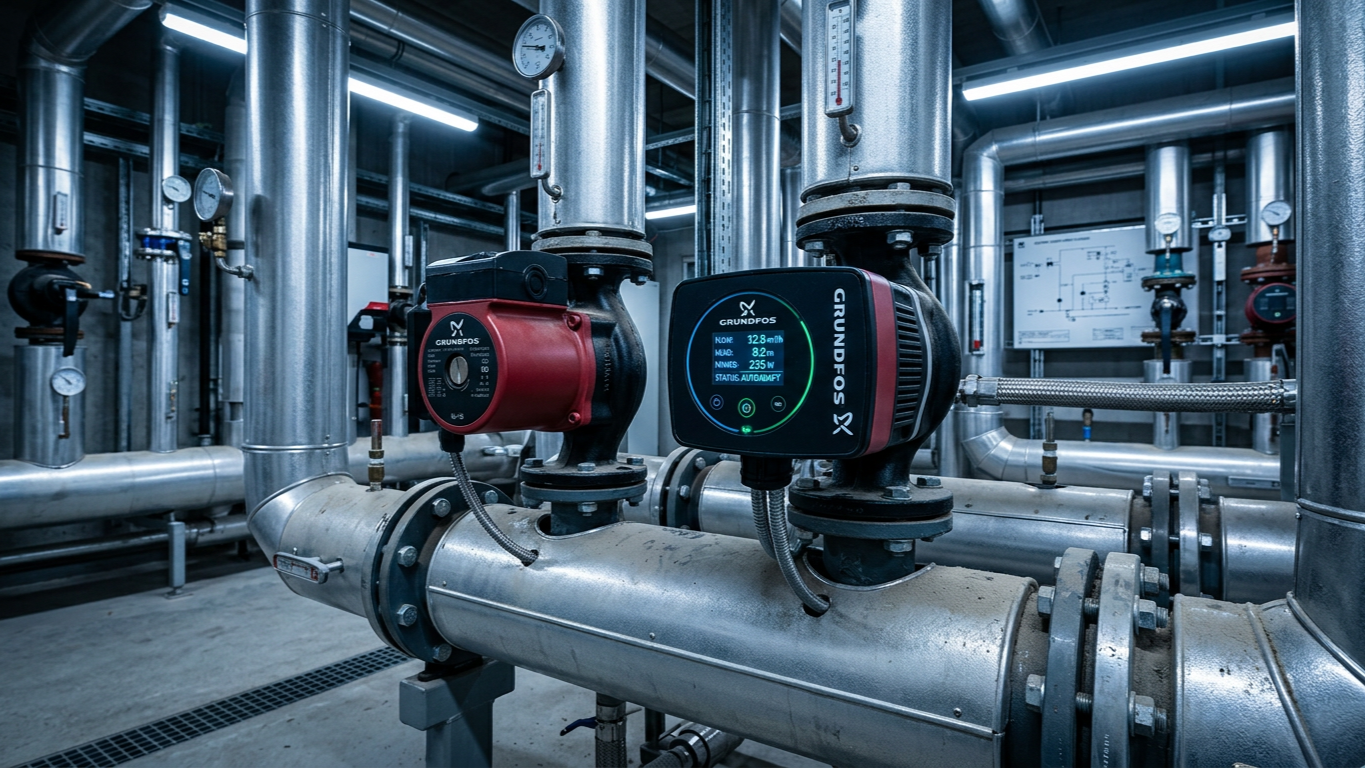
Choosing the right circulator pump can make or break a heating system's performance. Get it wrong, and you're looking at excessive energy bills, poor heat distribution, and callbacks that eat into your profit margin. Get it right, and the system runs quietly, efficiently, and trouble-free for years.
Grundfos offers two distinct pump ranges that dominate UK heating installations: the traditional UPS series and the modern MAGNA3. Both have earned their place on countless projects, but they serve different purposes and suit different applications. Understanding which one fits your specific project requirements isn't just about reading a spec sheet. It is about matching pump characteristics to real-world system demands.
The UPS range represents proven, reliable technology that has been a workhorse in domestic and light commercial systems for decades. The MAGNA3 series brings variable-speed, intelligent control, and significant energy savings to larger installations. Neither is universally better; they're designed for different scenarios, budgets, and performance expectations.
Understanding the Grundfos UPS Range
The Grundfos UPS series built its reputation on straightforward, dependable operation. These are fixed-speed or three-speed circulators that do exactly what they're designed to do: move water around a heating system without fuss. You'll find them in millions of domestic installations across the UK, securely connected with standard push fit plumbing fittings or traditional copper, often running continuously for fifteen to twenty years without major issues.
Key characteristics of the Grundfos UPS range include simple speed selection where most models offer three fixed speeds, selected manually via a switch on the pump body. The design has been refined over decades, featuring well-understood failure modes and highly straightforward servicing. They offer a lower upfront cost and feature wet rotor construction where the motor is cooled by the system water, completely eliminating the need for external cooling fans.
The UPS2 models, the most common variant you'll encounter, feature a straightforward construction that makes them incredibly easy to service. When a pump fails, it's usually the bearings or the stator, both of which are relatively simple to diagnose. The three-speed selector gives you basic control over flow rates, which is adequate for most domestic systems where load conditions don't vary dramatically. However, these pumps run at constant speed regardless of actual system demand. If you've set the pump to speed three to overcome initial system resistance, it continues running at that speed even when only one radiator calls for heat.
The MAGNA3 Advantage: Intelligence and Efficiency
The Grundfos MAGNA3 series represents a fundamental shift in circulator design. These are variable-speed pumps with integrated intelligence that continuously adjusts motor speed to match actual system demand. Instead of running flat-out regardless of load, they ramp up and down based on real-time pressure and flow requirements.
Think of a fixed-speed pump like a car driving at a constant 60 mph regardless of traffic. A variable-speed pump acts like adaptive cruise control, automatically adjusting its output to the exact road conditions to save fuel. This isn't just marketing speak. The difference is measurable and significant.
A modern MAGNA3 uses an electronically commutated motor that is inherently more efficient than the asynchronous motors found in traditional pumps. Combined with modern heating controls, this dynamic response matches pump performance to actual load conditions, typically dropping energy consumption by 60% compared to fixed-speed alternatives. The pump continuously monitors system conditions and features built-in diagnostics to provide real-time performance data.
Comparing Performance Characteristics
Let's get specific about how these pumps differ in measurable terms. Consider a typical domestic heating system with a 24kW combi boiler serving ten radiators across two floors. The system requires approximately 20 litres per minute flow rate and 4 metres of head when all zones are open.
With a standard fixed-speed pump, you'd typically set the speed to ensure adequate flow during peak demand. Power consumption runs at approximately 45W continuously, and the pump delivers the exact same performance whether one radiator is open or all ten.
With a Grundfos MAGNA3 on the exact same system, the pump automatically adjusts from 5W to 45W based on actual demand. Flow and proportional pressure adapt to match the number of open zones, ensuring optimal radiator performance without forcing excess water through restricted pipes. The energy savings are real and substantial, but they do come at a higher initial purchase price.
Application Scenarios: Where Each Range Excels
I've specified both pump ranges across hundreds of installations, and certain patterns emerge about where each performs best. It's not just about the pump's capabilities. It involves matching those capabilities to the system design, usage patterns, and client priorities.
At Heating and Plumbing World, we regularly advise that fixed-speed pumps make sense when budget constraints are tight. Social housing retrofits, landlord replacements, and value-focused domestic installations often can't justify a premium. They also suit simple systems where a basic eight-radiator house with no zoning doesn't benefit much from highly intelligent control.
Variable-speed pumps justify their cost on zoned systems. Multiple heating circuits with independent control benefit enormously from adaptive pump speed. Consider a small office building with four distinct zones, including reception and staff areas. Each zone operates on different schedules dictated by a temperature control system, with meeting rooms only heating when bookings exist.
On a recent commercial project, an engineer swapped an old fixed-speed pump for a variable-speed unit without balancing the existing radiator circuits. Within days, several zones failed to reach temperature. A quick adjustment to the proportional pressure curve resolved the issue, proving that intelligent pumps still need proper commissioning.
Installation and Commissioning Differences
Getting a traditional pump running is straightforward. You mount it correctly with the motor horizontal, wire it to the appropriate supply, select an initial speed setting, and check for adequate flow. Commissioning takes perhaps fifteen minutes once the system is filled and bled. The simplicity is genuinely valuable when you're working on tight installation schedules.
Intelligent pump installation requires more thought. The pump itself mounts identically, but commissioning involves selecting the appropriate control mode and setting parameters to match the system characteristics. The proportional pressure mode works brilliantly for most heating applications. You set a maximum differential pressure, and the pump automatically reduces this in proportion to flow reduction. When radiator valves close and flow drops, the pump reduces speed to maintain the required pressure rather than ramping up to fight closed valves.
Long-Term Reliability and Maintenance
Both pump ranges have proven themselves over time, but their maintenance characteristics differ. Standard pumps fail in predictable ways: bearings wear, stators burn out, or impellers corrode. When failure occurs, diagnosis is straightforward. The pump either runs or doesn't. Most failures are simple to address, and a seized rotor often frees with manual rotation of the shaft.
Intelligent pumps introduce electronic control systems, which adds potential failure points. However, the electronically commutated motor design is inherently more reliable than traditional asynchronous motors. There are fewer moving parts, better cooling, and drastically reduced mechanical stress. The electronics are well-protected and surprisingly robust, though they can't be field-repaired like older components. The built-in diagnostics are genuinely useful, allowing you to diagnose problems remotely before visiting the site.
Energy Consumption: Real-World Numbers
Let's move beyond general claims and look at actual consumption data from comparable installations. These figures come from monitoring real systems over full heating seasons, not laboratory conditions or theoretical calculations.
In a domestic system comparison featuring a three-bedroom house, a standard pump running continuously might cost £768 over ten years. A Grundfos MAGNA3 under the same conditions drops that running cost to around £192. The pattern is clear: larger, more complex systems with variable loads see much better returns from intelligent technology.
Making the Right Choice for Your Project
The decision isn't about which circulator pump is objectively better. It's about matching pump characteristics to project requirements, budget realities, and client expectations. Both ranges have earned their place in the market by excelling at what they're designed to do. Choose basic pumps when the initial budget is constrained and the system is simple. Choose intelligent variable-speed pumps when energy efficiency is a strict specification requirement or the installation features multiple independent zones.
Conclusion
The choice between traditional and intelligent circulator pumps ultimately comes down to matching technology to the application. Basic pumps deliver reliable, straightforward circulation for countless domestic and light commercial systems where simplicity and cost-effectiveness matter most. Their fixed-speed operation and proven design make them the sensible choice for basic installations and replacements.
Variable-speed pumps bring intelligence that transforms energy consumption and system performance on larger, more complex installations. The adaptive control, built-in diagnostics, and substantial energy savings justify the premium on commercial systems, zoned residential installations, and highly regulated projects.
Understanding your system's actual requirements allows you to specify the exact right pump for the job. If you need technical guidance on pump sizing, system design, or control integration, contact our support team for expert advice from engineers who understand real-world requirements.