

Hard Water in the UK: Regional Guide and Solutions
Your kettle builds up limescale within weeks. White residue coats your taps and showerheads. Your heating system loses efficiency year after year. These aren't signs of poor maintenance; they're the hallmarks of hard water, and they affect 60% of UK households.
Hard water in the UK costs the average household £200 annually in additional energy bills, damaged appliances, and cleaning products. The mineral deposits that create these problems vary dramatically by region, with some areas experiencing water hardness levels three times higher than others.
What Makes Water Hard
Water hardness measures dissolved calcium and magnesium minerals, expressed in milligrams per litre (mg/l) or parts per million (ppm). As rainwater filters through limestone and chalk deposits underground, it absorbs these minerals before reaching your taps.
The UK classifies water hardness on this scale:
Soft: 0-100 mg/l Moderately soft: 100-150 mg/l Slightly hard: 150-200 mg/l Moderately hard: 200-250 mg/l Hard: 250-300 mg/l Very hard: Over 300 mg/l
Water suppliers must publish hardness data annually, but most homeowners only notice the problem when appliances fail prematurely or energy bills climb unexpectedly.
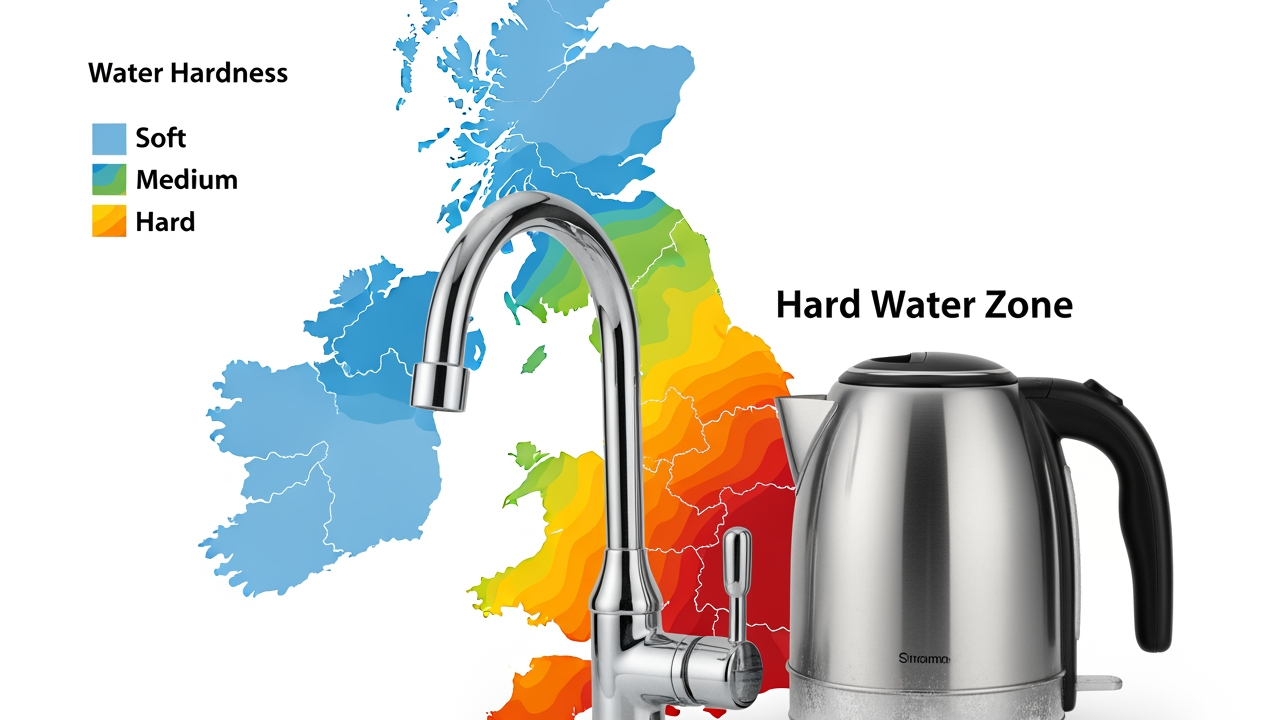
UK Hard Water Map: Regional Breakdown
Southeast England and East Anglia
These regions have the UK's hardest water, regularly exceeding 300 mg/l. The Thames Valley, Essex, Kent, and Cambridgeshire sit on extensive chalk and limestone aquifers. London's water averages 280-320 mg/l, depending on the borough.
Homeowners in these hard water areas in the UK replace kettles every 18-24 months versus the national average of 4-5 years. Combination boilers in hard water regions require descaling every 12-18 months to maintain efficiency.
Midlands
Water hardness varies significantly across the Midlands. Lincolnshire and Northamptonshire face similar challenges to the Southeast, with readings above 250 mg/l. Birmingham and the West Midlands experience moderately hard water (200-250 mg/l), whilst Staffordshire sees slightly softer supplies.
Southwest England
Cornwall and Devon benefit from granite bedrock, producing some of the UK's softest water at 50-100 mg/l. However, Bristol and Bath sit on limestone, pushing hardness levels to 200-250 mg/l. This geological divide creates a 200 mg/l difference within 80 miles.
Yorkshire and Northeast England
Yorkshire's water hardness splits dramatically. East Yorkshire faces hard water from chalk aquifers, whilst West Yorkshire draws from Pennine reservoirs with soft water (under 100 mg/l). Newcastle and the Northeast generally enjoy moderately soft water at 100-150 mg/l.
Northwest England and Wales
Manchester, Liverpool, and most of Wales have soft to moderately soft water (50-150 mg/l) thanks to upland reservoirs and granite geology. These areas see 70% less limescale buildup than Southeast England.
Scotland and Northern Ireland
Scotland's predominantly granite and igneous rock produces very soft water, typically 50-100 mg/l. Glasgow and Edinburgh residents rarely encounter limescale problems. Northern Ireland's water varies from soft in mountainous regions to moderately hard in lowland areas.
How Hard Water Damages Your Heating System
Limescale accumulation reduces heating efficiency by 1.5% per millimetre of deposit thickness. A 5mm buildup, common in neglected systems in hard water areas, cuts efficiency by 7.5%, adding £150-200 to annual heating costs for an average home.
Boiler Heat Exchangers
Heat exchangers operate at 60-80°C, the optimal temperature for rapid limescale formation. Scale deposits create an insulating barrier between the flame and water, forcing your boiler to work harder and longer. Manufacturers report that 80% of premature boiler failures in hard water regions stem from scale-related issues.
We've seen combination boilers in Essex and Kent lose 25% efficiency within three years without proper treatment. The heat exchanger develops a 3-4mm scale layer that reduces heat transfer and triggers frequent cycling. Quality boilers from manufacturers like Andrews and Morco still require proper water treatment to maintain efficiency in hard water areas.
Radiators and Pipework
Limescale narrows pipe diameters and settles at the bottom of radiators, creating cold spots. A 15mm copper pipe can reduce to a 12mm effective diameter within five years in very hard water areas. This restriction increases pump workload and reduces system efficiency.
Cold radiator bases indicate settled sludge, a mixture of limescale and corrosion products. Flushing removes existing deposits, but without water treatment, the problem returns within 12-18 months. Myson radiators and quality Polypipe systems still suffer from scale accumulation without proper treatment.
Pumps and Valves
Scale deposits jam pump impellers and seize valve mechanisms. Motorised valves controlling heating zones fail 60% more frequently in hard water regions. The mineral buildup prevents smooth operation, leading to stuck valves and uneven heating. Even reliable Grundfos circulation pumps require regular maintenance in hard water areas to prevent scale-related failures.
Testing Your Water Hardness
Free Water Quality Reports
Every UK water supplier publishes hardness data by postcode on their website. These reports provide accurate baseline measurements, though hardness can vary slightly between streets in boundary areas.
Home Test Kits
Test strips cost £5-15 and deliver results in 60 seconds. Dip the strip in cold tap water, wait for the colour change, and match it to the reference chart. These kits measure total hardness with ±20 mg/l accuracy, sufficient for determining treatment needs.
Professional Testing
Plumbing and water treatment specialists offer a comprehensive analysis, including temporary hardness (calcium bicarbonate) versus permanent hardness (calcium sulphate). This distinction matters for selecting treatment methods, as temporary hardness precipitates when heated, whilst permanent hardness remains dissolved.
Effective Solutions for Hard Water
Water Softeners
Ion exchange water softeners replace calcium and magnesium with sodium ions, reducing hardness to near zero. These systems install on the mains supply, treating all household water except the kitchen drinking tap (which must remain unsoftened under UK regulations).
A properly sized softener for a four-person household costs £500-1,200 installed. Salt costs £40-60 annually. The system pays for itself within 3-5 years through reduced energy bills, extended appliance life, and eliminated descaling products.
Scale Inhibitors
Magnetic and electronic scale inhibitors alter mineral crystal structure, preventing adhesion to surfaces. These devices cost £100-400 and require no plumbing modifications; they clamp around the incoming water pipe.
Effectiveness varies. Laboratory tests show 40-60% scale reduction under optimal conditions, but results depend on water chemistry, flow rates, and pipe materials. We've found them most effective in moderately hard water (200-250 mg/l) rather than very hard supplies.
Chemical Dosing Systems
Polyphosphate dosing units inject food-grade chemicals that coat pipe surfaces and keep minerals suspended. These systems cost £150-300 and need refilling every 6-12 months, depending on water usage.
Commercial properties and landlords favour dosing systems for protecting heating equipment across multiple units. The chemicals prevent scale formation without altering water chemistry for drinking.
Point-of-Use Solutions
Individual appliance protection suits renters and those unable to install whole-house systems. Inline filters on washing machine and dishwasher supplies cost £20-40 and last 6-12 months. Kettle filters extend element life by 200-300%.
Maintaining Systems in Hard Water Areas
Annual Boiler Servicing
Gas Safe engineers should inspect heat exchangers for scale buildup during annual services. Descaling chemicals can restore efficiency, but severe deposits require heat exchanger replacement, a £400-800 repair on most combination boilers.
Ask your engineer to check the flow temperature differential. A gap exceeding 20°C between flow and return pipes indicates restricted circulation from scale or sludge.
Power Flushing
This process forces cleaning chemicals through your heating system at high velocity, dislodging scale and sludge. Professional power flushing costs £300-600 for an average house and takes 4-6 hours.
We recommend power flushing every 5-6 years in hard water areas in the UK, or immediately if you experience cold radiator spots, noisy boilers, or slow heating. The procedure extends system life by 3-5 years and can recover 10-15% lost efficiency.
Inhibitor Dosing
Central heating inhibitors protect against both limescale and corrosion. These liquid chemicals cost £15-25 per bottle and last 5 years. Add inhibitor after power flushing or when filling a new system.
Quality inhibitors from recognised manufacturers prevent 85% of scale formation in treated systems. Check inhibitor concentration annually using test strips; a degraded inhibitor provides no protection.
Descaling Appliances
Kettles and coffee machines need descaling every 4-8 weeks in very hard water areas. White vinegar (500ml, heated then left for an hour) removes light deposits. Citric acid powder (30g dissolved in 500 mL of water) handles heavier buildup.
Washing machines and dishwashers benefit from monthly maintenance washes with descaling products. Run an empty hot cycle with 200ml white vinegar to clear internal components and heating elements.
The Cost of Hard Water
Energy Efficiency
The Energy Saving Trust estimates that limescale costs UK households £500 million annually in wasted energy. A boiler operating with 3mm of scale deposits uses 9% more gas to deliver the same heat output.
For a household spending £1,000 yearly on heating, that's £90 wasted. Over a boiler's 12-15 year lifespan, scale buildup costs £1,000-1,500 in excess fuel consumption, more than the cost of water treatment.
Appliance Replacement
Hard water reduces appliance lifespan by 30-50%. Washing machines in soft water areas average 11 years of service versus 7 years in very hard water regions. The difference stems from scale damage to heating elements, pumps, and valves.
Replacing a washing machine (£400), dishwasher (£350), and kettle (£40) every 7 years instead of every 11 years costs an extra £565 over that period. Water softeners prevent this premature replacement.
Cleaning Products
Hard water reduces soap and detergent effectiveness by 50%, forcing households to use double the recommended amounts. The minerals prevent lather formation and leave residue on surfaces, dishes, and clothing.
Families in hard water areas spend £120-150 annually on additional cleaning products, descalers, and fabric softeners compared to soft water regions. Softened water cuts these costs by 70-80%.
Protecting Your Heating System
Hard water in the UK affects 13 million households, with Southeast England and East Anglia experiencing the most severe problems. The dissolved minerals that create limescale reduce heating efficiency, damage appliances, and increase household costs by £200-300 annually.
Understanding your regional water hardness guides effective solutions. Very hard water areas (over 300 mg/l) justify whole-house water softeners that eliminate scale formation and pay for themselves within 3-5 years. Moderately hard regions (200-250 mg/l) may find scale inhibitors or chemical dosing sufficient, whilst soft water areas need no treatment.
Regular maintenance matters regardless of treatment method. Annual boiler servicing, power flushing every 5-6 years, and proper heating system inhibitors protect your investment and maintain efficiency. These preventive measures cost far less than premature boiler replacement or ongoing efficiency losses.
Check your water supplier's hardness data, test your system's current condition, and implement appropriate protection. The combination of water treatment and regular maintenance extends equipment life by 5-10 years whilst cutting energy costs by 8-12%, for most households in hard water areas, which represents thousands of pounds in savings over a decade.
For comprehensive water treatment solutions, scale inhibitors, and heating system protection products from trusted manufacturers like Altecnic and Danfoss, Heating and Plumbing World stocks everything needed for combating hard water problems. Should you need expert advice on selecting the right water treatment system for your area, get in touch with our technical team.