

Heating Listed Buildings: Navigating Planning Restrictions
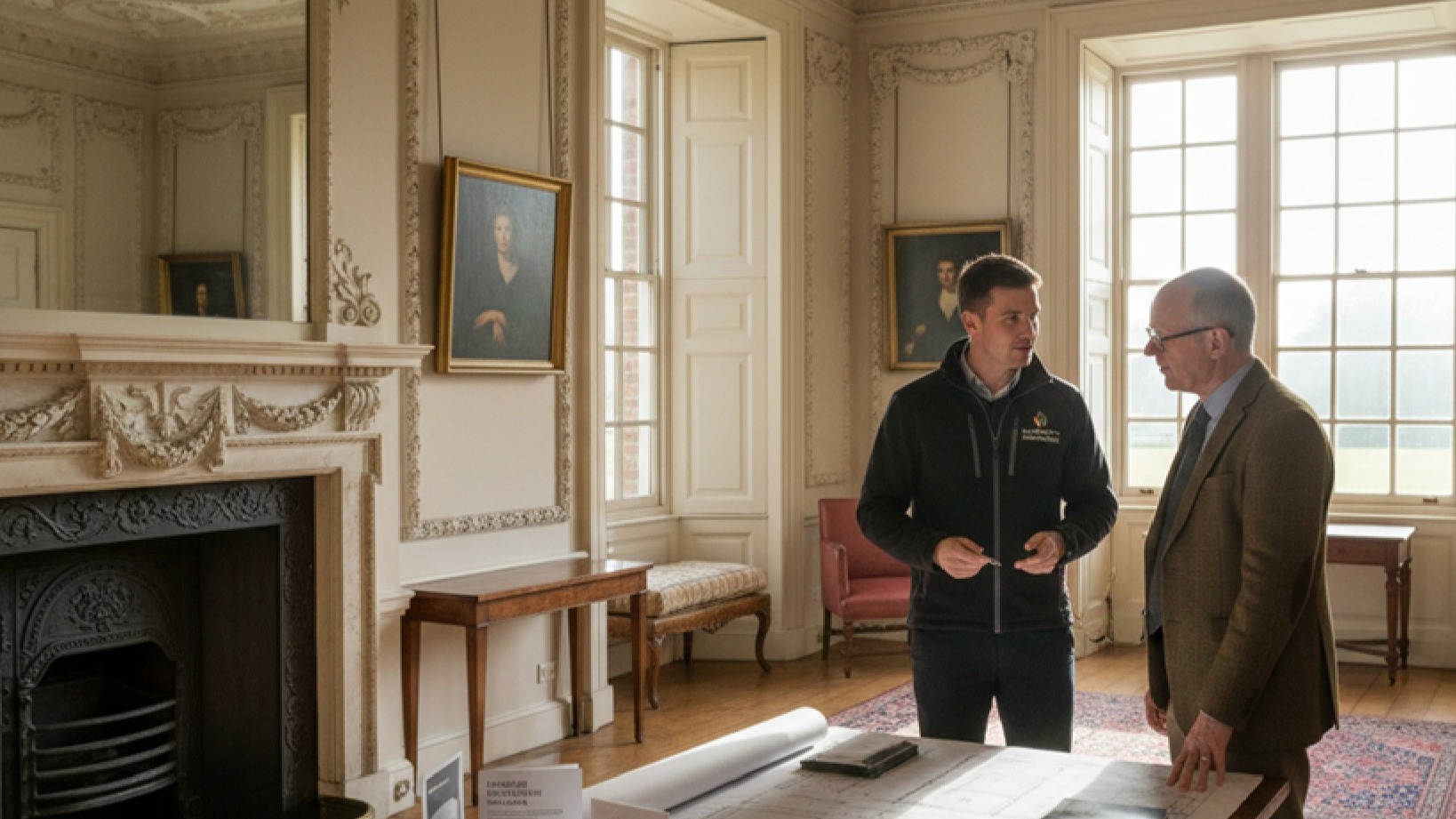
Listed buildings protect Britain's architectural heritage, but they create unique challenges when existing heating systems fail. Property owners face a complex web of planning restrictions, conservation requirements, and modern efficiency standards that often seem at odds with each other.
The stakes are high. Install the wrong system and you risk damaging historic fabric, facing enforcement action, or spending thousands on corrections. Yet 40% of England's residential listed buildings still rely on inefficient heating systems installed before 1980, according to Historic England's 2023 survey. These properties lose heat three times faster than modern homes while their owners navigate regulations that can make straightforward upgrades surprisingly complicated.
What Makes Heating Listed Buildings Different
Listed building consent operates separately from standard planning permission. You might replace a boiler in a modern home with a simple notification to Building Control, but heating listed buildings requires approval for any work that affects their character. This includes heating installations that involve:
- Altering original fireplaces or chimneys
- Running pipework through historic walls
- Installing radiators that require wall fixings
- Fitting external equipment like heat pumps or flues
- Removing or modifying period features
The definition of "character" varies by conservation officer and local authority. Cases exist where replacing Victorian cast-iron radiators required consent, yet another authority approved modern panel radiators in a similar Grade II property. The inconsistency frustrates homeowners, but it reflects the reality that each building presents unique conservation considerations.
Grade I and Grade II* buildings face the strictest scrutiny. These represent just 8% of listed properties but account for 60% of refused heating applications, based on data from the Listed Property Owners Club. Grade II buildings, the vast majority, still require consent but generally receive approval for sensitive modern heating solutions.
Understanding Your Building's Heating Constraints
Before specifying any system, assess what your building's listing actually protects. The listing description identifies features of architectural or historic interest, but it legally covers the entire structure, inside and out. Original floorboards, wall plaster, and roof timbers all fall under protection, even if not explicitly mentioned.
Historic heating systems themselves often hold significance. A 1920s gravity-fed system with original pipework might warrant preservation; a 1970s retrofit usually doesn't. Conservation officers distinguish between historic fabric (protected) and later additions (negotiable).
Physical constraints matter as much as regulatory ones. Solid stone walls in Georgian properties conduct heat differently than Victorian cavity walls. Medieval timber frames can't support heavy radiators without reinforcement. Georgian sash windows create draughts that undermine even the most efficient heating system components, making insulation improvements critical, yet these too require careful consent applications.
Heat Pumps in Listed Properties: The Current Reality
Heat pumps dominate government policy for decarbonising heating, but their application in listed buildings remains contentious. The technology works, when properly specified, but installation often conflicts with conservation principles.
Air Source Heat Pump Challenges
External units: These require wall mounting or ground placement, both visible alterations. Conservation officers typically refuse front-facing installations and scrutinise side or rear positions based on sight lines from public areas. Acoustic screening adds another visual element requiring justification.
Pipework routes: Running refrigerant lines and flow/return pipes through solid historic walls means drilling cores, potentially damaging lime mortar, historic brickwork, or decorative stonework. Pipework routes through existing service penetrations wherever possible, but this isn't always feasible.
Radiator upgrades: Heat pumps operate at lower flow temperatures (45-50°C versus 70-80°C for boilers), requiring larger radiators or underfloor heating. Replacing period radiators usually requires strong justification. Installing underfloor heating means lifting historic floors, rarely approved in principal rooms.
Ground Source Considerations
Ground source heat pumps avoid visible external units but require extensive groundworks. The trenching or drilling needed for ground loops can damage archaeological remains, a consideration that applies to all listed properties but particularly those on historic sites. A 2023 case in Somerset saw consent refused when trial trenches revealed 17th-century garden features.
Despite these planning restrictions, 23% of listed building heat pump applications succeeded in 2023, according to Historic England. Approved installations typically involve:
- Discreet unit placement in existing outbuildings or service yards
- Use of appropriate boiler components for hybrid systems
- Retention of period radiators supplemented with concealed underfloor heating in less significant spaces
- Careful routing of pipework through non-historic fabric
Boiler Replacements: The Path of Least Resistance
Modern condensing boilers remain the most straightforward heating upgrade for listed buildings. The technology fits within existing system footprints, uses established flue routes, and works with current radiators.
Consent Requirements by Installation Type
Internal boiler swaps: Replacing a boiler in an existing location with a similar external appearance rarely needs listed building consent, only Building Regulations approval. However, if the existing boiler sits in a room with historic features (period kitchen ranges, decorative plasterwork, original fitted cupboards), even a like-for-like replacement may require consent.
Flue alterations: New condensing boiler flues must comply with current regulations for terminal positions and plumbing condensate. If this means relocating the flue or adding visible external pipework, consent is necessary. Conservation officers generally approve discreet flue positions but refuse prominent installations on primary elevations.
System upgrades: Adding modern controls, thermostatic radiator valves, or zone valves improves efficiency without affecting building character. These modifications fall under Building Regulations rather than listed building control. Honeywell heating controls and EPH Controls both offer programmable systems suitable for historic properties.
The efficiency gap between old and new boilers justifies upgrade costs. A pre-2005 non-condensing boiler typically achieves 70-75% efficiency; modern condensing units reach 92-94%. For a typical listed property using 20,000 kWh annually, this represents £400-500 yearly savings at current gas prices.
Radiator Strategies That Gain Approval
Period radiators present a dilemma. Original cast-iron column radiators suit historic interiors but deliver heat less efficiently than modern panels. They also lack the surface area needed for low-temperature heat pump systems.
Effective Approaches
Restoration and reuse: Original radiators can be reconditioned, pressure tested, and reconnected. This preserves historic fabric during improvements through better controls and system balancing. Reconditioning costs £150-300 per radiator but usually gains immediate consent approval.
Period-style replacements: Modern reproductions match Victorian or Edwardian aesthetics while providing better heat output and compatibility with modern systems. Conservation officers often approve these in less significant rooms or where originals are beyond restoration.
Concealed modern radiators: Low-surface temperature radiators can hide behind period grilles or within alcoves, heating rooms without visible modern equipment. This works particularly well in properties where original radiators have already been removed.
Hybrid solutions: Retain visible period radiators in principal rooms, using modern panels in service spaces, bedrooms, and bathrooms. This balances conservation requirements with heating performance.
Underfloor Heating in Historic Properties
Underfloor heating suits listed buildings in specific circumstances. The technology delivers even heat distribution and works efficiently with heat pumps, but installation impacts historic floors, joists, and ceiling heights.
Acceptable Applications
New extensions: Purpose-built additions to listed buildings, garden rooms, kitchen extensions, link buildings, provide ideal locations for underfloor heating. These spaces lack historic fabric constraints during connection to the main property's heating system.
Non-original floors: Many listed buildings have replacement floors installed during 20th-century updates. Where these lack historic significance, conservation officers may approve lifting them to install underfloor heating, particularly in kitchens, bathrooms, and utility areas.
Suspended timber floors: Retrofitting systems between existing joists avoids disturbing floor surfaces. Aluminium spreader plates and insulation fit within joist depths, with pipework running in existing service voids. This approach works in properties with accessible underfloor voids and sufficient joist depth (minimum 150mm).
Historic floor surfaces, original flagstones, Georgian boards, and Victorian encaustic tiles rarely receive consent for underfloor heating installation. The risk of damage during lifting, the need for insulation layers that raise floor levels, and the potential for moisture problems in solid floors outweigh the energy benefits.
Insulation: The Overlooked Priority
Heating system upgrades deliver limited benefits in poorly insulated buildings. Listed properties lose heat through solid walls, single-glazed windows, uninsulated roofs, and draughty floors, yet improving thermal performance faces its own consent challenges.
Approved Insulation Strategies
Roof insulation: The most effective intervention and usually the easiest to approve. Adding insulation above ceiling level or between rafters rarely affects character, provided it doesn't compress historic timbers or trap moisture. Properties with later roof coverings can often accommodate breathable insulation during re-roofing.
Internal wall insulation: Lime-based insulation boards or breathable insulation systems can be applied to internal wall surfaces, improving U-values from 2.1 W/m²K to 0.6 W/m²K. This approach works in service rooms and later additions but faces refusal in rooms with decorative plasterwork or where it would obscure architectural details.
Secondary glazing: Installing slim secondary units inside existing windows cuts heat loss by 60% while preserving the original glazing. Modern systems achieve near-invisible profiles, gaining consent even in sensitive locations. This intervention often delivers better cost-benefit returns than heating system upgrades alone.
Draught-proofing: Sealing gaps around doors, windows, and floorboards requires no consent and can reduce heat loss by 20%. Use reversible methods that don't damage historic fabric.
Properties that combine modest insulation improvements with efficient heating systems achieve comfort levels matching modern homes while respecting conservation requirements. The combined approach also reduces running costs more effectively than heating upgrades alone.
Building Your Consent Application
Successful applications demonstrate understanding of conservation principles during presentation of practical heating solutions. Conservation officers approve schemes that show this balance clearly.
Essential Application Elements
Document existing conditions: Photograph current heating systems, radiators, and any features affected by proposed work. Measure radiator positions, note pipework routes, and identify any historic heating elements worth preserving.
Explain why change is necessary: Quantify current system problems, failure rates, efficiency losses, and inability to heat specific rooms. Conservation officers weigh proposals against genuine need, not preference for marginal improvements.
Show reversibility: Proposals that avoid permanent alterations gain approval more readily. Radiators that fix to existing brackets, pipework that routes through existing holes, and equipment that can be removed without trace all demonstrate reversible intervention principles.
Provide alternatives: Present multiple approaches, showing why your preferred option best balances conservation and performance. This demonstrates engagement with conservation principles rather than predetermined solutions.
Use specialists: Heritage heating engineers and conservation-accredited installers understand listed building constraints. Their involvement signals a serious approach and often smooths approval processes. Their specifications also ensure quality components appropriate for historic properties.
Applications typically take 8-12 weeks for determination. Factor this timing into project planning, particularly if existing systems have failed. Some authorities offer pre-application advice services, which are worth using for complex projects.
Working With Conservation Officers
Conservation officers balance heritage protection with owners' needs to maintain comfortable, efficient homes. They're not obstacles but specialists ensuring changes don't damage what makes listed buildings significant.
Approach them early. Informal discussions before formal applications help identify issues and acceptable solutions. Most officers appreciate proactive engagement and provide guidance that shapes viable proposals.
Understand their perspective. Conservation officers must justify approvals to Historic England and potential appeals. Applications that acknowledge conservation concerns and explain how designs address them make their job easier, increasing approval likelihood.
Be prepared to compromise. Your ideal solution may not gain consent, but modified versions often do. Flexibility on radiator styles, equipment positions, or installation methods usually finds an acceptable middle ground.
The Cost Reality
Heating listed buildings costs more than heating modern properties. Equipment specifications, specialist installation requirements, and consent processes all add expenses.
Budget Additions to Consider
- Listed building consent application fees: £100-300
- Heritage consultant reports for complex projects: £500-1,500
- Specialist installation premiums: 20-40% above standard rates
- Bespoke solutions for routing services: £1,000-3,000
- Period-appropriate radiators and fittings: 50-100% premium over standard equipment
However, grants partially offset costs. The government's boiler upgrade scheme provides £7,500 toward heat pump installations, including those in listed buildings. Some local authorities offer additional listed building improvement grants covering heating upgrades. Historic England's Heritage Action Zones occasionally fund pilot projects demonstrating low-carbon heating in historic buildings.
Long-term savings justify upfront investment. Properties with upgraded heating and modest insulation improvements typically reduce heating costs by 40-50% during improvement of comfort and protection of historic fabric from condensation and temperature cycling damage. Quality components from manufacturers like Grundfos and Danfoss ensure reliable performance that respects heritage constraints.
Making It Work
Heating listed buildings requires balancing conservation obligations with occupants' reasonable expectations for comfortable, efficient homes. The regulatory framework exists not to prevent improvements but to ensure changes respect the heritage significance that warranted listing protection.
Success comes from understanding your building's specific constraints, choosing appropriate technologies, and presenting proposals that demonstrate this understanding. Modern heating solutions can work in historic properties when properly specified and sensitively installed.
Start by assessing what your listing actually protects and where flexibility exists. Engage conservation officers early to identify acceptable approaches. Specify systems that deliver performance without compromising character. The process takes longer and costs more than standard installations, but the outcome, a warm, efficient historic home with its significance intact, justifies the additional effort.
The 400,000 listed buildings across England represent irreplaceable architectural heritage. Heating them effectively during the protection of their character for future generations requires care, expertise, and sometimes compromise, but it's entirely achievable with the right approach, for guidance on suitable heating components and system design for heritage properties, Heating and Plumbing World stocks professional-grade equipment from specialist manufacturers. For technical advice on navigating planning restrictions specific to your property, experienced advisors can provide support on compliant heating solutions.